Executive Overview
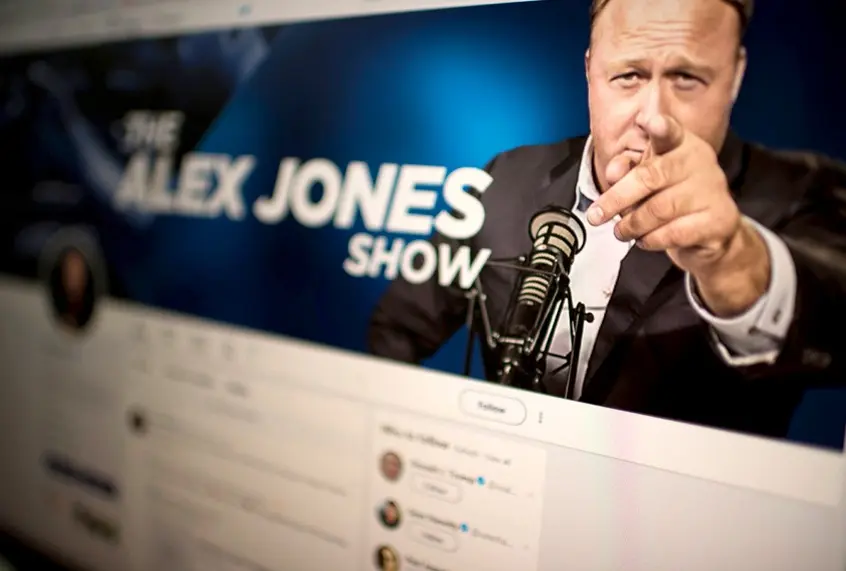
In a watershed moment for content moderation and the governance of public discourse on digital infrastructure, Twitter enacted a temporary seven-day suspension against far-right conspiracy theorist and InfoWars founder Alex Jones in August 2018. This punitive measure represented a stark, sudden reversal from the company’s long-standing policy of defending Jones’s right to maintain an active presence on the platform. Prior to this enforcement action, Twitter had consistently maintained that Jones’s provocative and inflammatory posts—though widely criticized—did not explicitly cross the threshold into direct violations of the platform’s terms of service.
The disciplinary action arrived at the tail end of a coordinated, industry-wide crackdown by major technology giants. In the span of a single week, competitors such as Apple, Facebook, Spotify, and YouTube (owned by Alphabet/Google) purged Jones and InfoWars from their ecosystems, citing egregious and repeated violations of hate speech policies. Twitter initially resisted joining this digital exodus, with CEO Jack Dorsey arguing that corporate moderation teams must remain objective rather than yielding to public pressure or ideological whims.
However, a specific breach involving a call to arms directed at media adversaries forced Twitter’s hand. Jones urged his followers to ready their "battle rifles" against opponents, triggering an immediate evaluation under policies prohibiting the promotion or use of violence against civilians. This report provides an in-depth examination of the events surrounding the August 2018 suspension, the philosophical and operational dilemmas faced by Twitter leadership, the broader context of Jones’s incendiary digital footprint, and the lasting implications of the platform’s enforcement shift.
Detailed Chronology of the August 2018 Crackdown
The dismantling of Alex Jones’s multi-platform digital empire did not happen in a vacuum; rather, it was the culmination of years of mounting public outcry, advocacy pressure, and increasingly severe violations of platform guidelines. The timeline leading up to Twitter’s intervention highlights a domino effect across Silicon Valley:
Early August 2018: The Industry-Wide Purge
- Sunday, August 5, 2018: Apple takes the first major definitive step by removing the vast majority of InfoWars podcasts from the Apple Podcasts directory, citing rules against hate speech and the promotion of discriminatory content.
- Monday, August 6, 2018: Within hours of Apple’s announcement, a cascade of tech platforms follows suit. Facebook permanently removes four pages associated with Jones and InfoWars for violating policies regarding hate speech and harassment. Spotify removes multiple episodes of The Alex Jones Show podcast. Simultaneously, YouTube terminates the primary InfoWars channel—which boasted over 2.4 million subscribers—alongside several secondary channels, pointing to persistent violations of community guidelines concerning hate speech and harassment.
- Mid-Week, August 2018: Pinterest and other smaller services quietly scrub Jones-related content from their platforms, leaving Twitter as the final major mainstream holdout permitting Jones to broadcast and post.
Tuesday, August 14, 2018: Twitter Breaks Its Silence
- The Inciting Incident: Jones publishes a video on Twitter in which he explicitly urges his supporters to get their "battle rifles" ready to combat various adversaries, specifically naming the mainstream media and political opponents.
- The Enforcement Action: Prompted by public reports and internal reviews, Twitter determines that the post violates its core safety policies regarding the incitement of violence against civilians. The company applies a restrictive "timeout" to Jones’s personal account and the primary InfoWars account, stripping them of core functionalities for seven days.
Wednesday, August 15, 2018: Dorsey’s Defense and Clarification
- The NBC News Interview: Twitter CEO Jack Dorsey sits down with NBC News anchor Lester Holt for an exclusive interview. Dorsey defends the company’s prior reluctance to ban Jones, emphasizing the need for procedural consistency over emotional or politically motivated demands. However, he defends the seven-day suspension as a necessary behavioral corrective measure.
- Public Clarification via Tweet: Following the release of the interview preview clips, Dorsey takes to Twitter to clarify his remarks, noting that timeouts are part of a broader escalation framework and that the platform does not assume a single temporary suspension will instantly reform a bad actor’s behavior.
Supporting Context & Metrics: The Anatomy of a Conspiracy Empire
To understand the weight of Twitter’s 2018 decision, one must examine the scale of the audience Alex Jones commanded and the nature of the narratives he propagated. For over two decades, InfoWars operated as a central node in the alternative-media ecosystem, generating significant web traffic, monetization revenue, and cultural influence.
The Reach and Impact of InfoWars
At its peak prior to the August 2018 bans, Jones’s digital footprint spanned multiple mediums:
- YouTube: The primary InfoWars channel had accumulated over 2.4 million subscribers and billions of views, serving as a primary revenue generator through automated advertising and merchandise links.
- Social Media Cross-Pollination: On Twitter and Facebook, Jones utilized short-form messaging, video clips, and algorithmic amplification to drive millions of users back to the centralized InfoWars web store, which sold unverified health supplements, survival gear, and merchandise.
- Live Streaming: Following the YouTube ban, Jones heavily utilized Periscope (a live-streaming application owned by Twitter) to continue broadcasting to his base, making Twitter’s subsequent policy enforcement critical to halting his uninterrupted video distribution.
A History of Dangerous Hoaxes
The pressure on tech executives to remove Jones was driven by a documented history of spreading harmful, targeted misinformation. Independent researchers and advocacy groups, such as Media Matters for America, meticulously cataloged Jones’s output:
- Sandy Hook Elementary School Denial: For years, Jones claimed that the 2012 mass shooting at Sandy Hook Elementary School—which resulted in the deaths of 20 children and six staff members—was a "false flag" operation staged by the government utilizing crisis actors. This relentless harassment campaign subjected grieving parents to severe online and offline abuse, eventually culminating in multi-million-dollar defamation lawsuits filed against Jones in Texas and Connecticut.
- 9/11 "Truther" Conspiracies: Jones consistently promoted fringe theories regarding the terrorist attacks of September 11, 2001, alleging orchestration or complicity by elements within the United States government.
- Targeted Harassment and False Accusations: Jones routinely launched attacks against public officials, journalists, and private citizens. Notable targets included Special Counsel Robert Mueller and various political figures whom Jones accused of egregious criminal acts without evidence.
Official Statements and Leadership Philosophy
The conflict between free expression and platform safety crystallized around the statements issued by Twitter CEO Jack Dorsey during the August 2018 controversy. The discourse highlighted the ideological friction within Silicon Valley regarding how to moderate powerful, high-profile bad actors without establishing dangerous precedents for censorship.
Jack Dorsey’s Perspective
During his interview with NBC News, Dorsey outlined the deliberate friction built into Twitter’s policy enforcement protocols:
"We can’t build a service that is subjective just to the whims of what we personally believe… I feel any suspension, whether it be a permanent or a temporary one, makes someone think about their actions and their behaviors."
When pressed by Lester Holt on whether a seven-day timeout would realistically alter Jones’s long-term conduct, Dorsey offered a pragmatic and measured response:
"Whether it works within this case to change some of those behaviors and change some of those actions, I don’t know. But this is consistent with how we enforce."
Seeking to eliminate ambiguity after the interview aired, Dorsey published a follow-up statement on Twitter to clarify his stance on progressive enforcement thresholds:
"To clarify: I was speaking broadly about our range of enforcement actions, when asked why we timeout functionality on Twitter. I don’t assume everyone will change their actions. Enforcement gets tougher with further reported violations."
Criticisms from Civil Society and Advocacy Groups
Civil rights organizations and tech accountability watchdogs offered a contrasting view. Critics argued that treating Jones’s violations as isolated incidents failed to account for the systemic harm caused by sustained targeted harassment and hate speech. Activists pointed out that companies like Apple, Facebook, and Spotify demonstrated that private platforms possess both the legal right and the moral obligation to protect users from stochastic terrorism and the monetization of malicious falsehoods.
Future Outlook and Legacy of the 2018 Enforcement Shift
The decision by Twitter in August 2018 to temporarily suspend Alex Jones served as a crucial stepping stone in the evolution of modern content moderation. While a seven-day suspension appears minor in hindsight compared to the permanent platform bans that later became standard industry practice for severe violations, it marked a fundamental philosophical turning point for Twitter under Jack Dorsey’s leadership.
Key Takeaways and Industry Shifts
- The Death of Pure Neutrality: The episode signaled the end of the era where major social media networks could hide behind the defense of absolute platform neutrality. Platforms recognized that unchecked hosting of bad-faith actors actively degrades the health of public discourse, driving away mainstream users and advertisers.
- Escalation Frameworks: Twitter’s deployment of the "timeout" mechanism established a clearer tiered enforcement model, where temporary restrictions serve as warning shots prior to permanent deplatforming.
- The Precedent for Future Bans: Following subsequent violations of Twitter’s rules regarding abusive behavior and targeted harassment, Alex Jones’s personal and organizational accounts were ultimately subjected to permanent bans later that year—a fate shared across virtually all major consumer technology platforms.
Ultimately, the August 2018 Alex Jones suspension laid bare the complex realities of governing global digital town squares. It illustrated the delicate balancing act technology executives must perform between preserving open communication and enforcing basic safety standards to protect the public from coordinated misinformation and incitements to violence.