In the dead of winter in Boston, amidst a frozen Charles River, a Harvard research assistant named Zachary Kelso swung a hammer through a solid sheet of ice. His mission was not born of cold-weather bravado, but of a persistent, half-century-old scientific mystery that has haunted neurobiology labs since the 1960s: Are memories truly confined to neural synapses within the brain, or can they be physically transferred—or even consumed—from one organism to another?
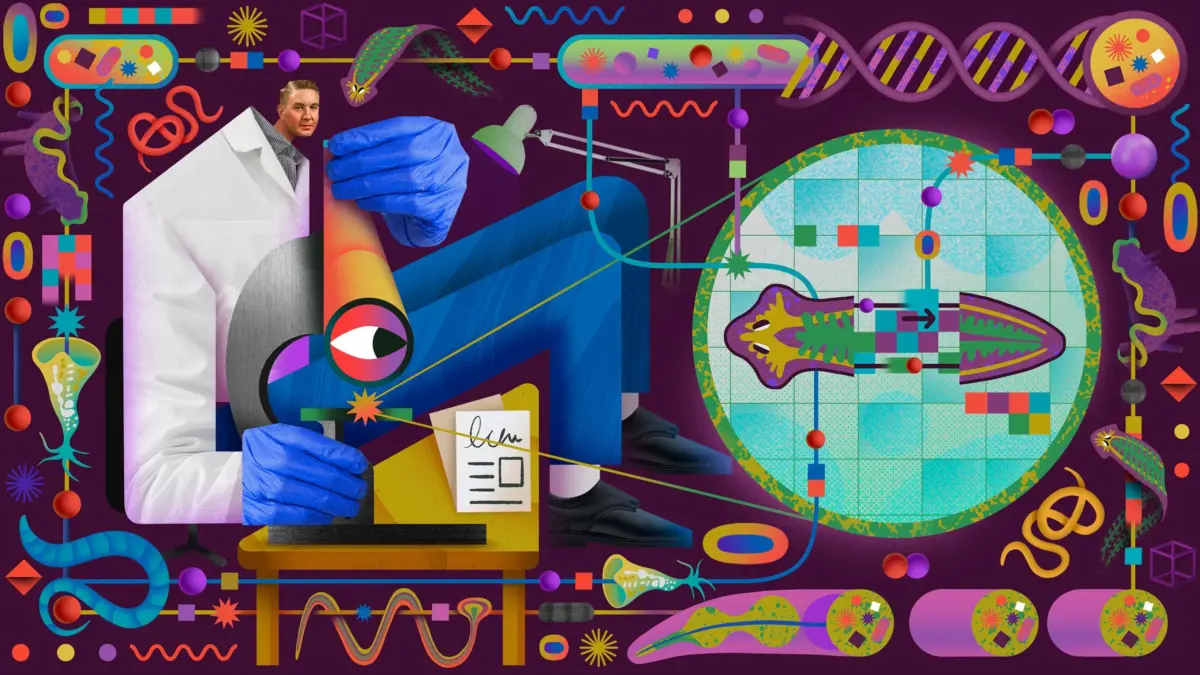
Kelso, working under Harvard neuroscientist Sam Gershman, was hunting for planarians—arrow-headed flatworms possessing a rudimentary, bilaterally symmetric nervous system. Their goal was simple yet audacious: to replicate and decode the legendary, eccentric experiments of James McConnell, a behavioral psychologist who once convinced the scientific establishment that planarians could be classically conditioned and that their acquired memories could be passed on to naïve peers via cannibalism.
For decades, McConnell’s work was cast into the scientific shadowland, dismissed as a methodological fluke or scientific folklore. Yet, as modern neuroscience begins to explore memory storage outside traditional neural networks—probing phenomena in single-celled ciliates, sea slugs, and microscopic roundworms—Gershman’s lab sought to settle the matter definitively.
However, an unexpected anomaly emerged: despite meticulous adherence to historical protocols, the modern descendants of McConnell’s test subjects stubbornly refused to learn. This deep-dive investigation explores the chronology of planarian research, the sociological pressures of mid-century science, and the modern revival of memory-transfer biology that suggests McConnell may have been fundamentally right, even if he bet on the wrong worm.
Detailed Chronology: From McConnell’s Menagerie to Modern Harvard
The 1950s–1960s: The Rise of the Planarian Fad
The saga of planarian memory began in the early 1950s when James McConnell, then a graduate student at the University of Texas, applied standard classical conditioning paradigms—originally designed for rats—to flatworms. By repeatedly pairing a bright light with an electric shock, McConnell observed that the worms eventually learned to anticipate the stimulus, scrunching their bodies whenever the light flashed.
What made planarians uniquely fascinating, however, was their astonishing regenerative capacity. A fragment as small as 1/279th of an original worm can regrow into a normal adult in weeks. This prompted McConnell to ask a radical question: When a trained worm is chopped in half, do both halves retain the memory?
Moving to the University of Michigan in the 1960s, McConnell began decapitating trained worms. Astonishingly, worms regenerating from headless tails demonstrated the light-shock association just as well as those regenerating from severed heads. Pushing further, McConnell ground up trained worms and fed them to untrained, cannibalistic peers. The "cannibal" worms adapted to the light-flash test immediately, behaving as if they remembered rather than learned the response.
Convinced that memories were chemical engrams encoded in RNA, McConnell broadcast his findings through mainstream media outlets like Time and Esquire, and distributed his countercultural journal, The Worm Runner’s Digest, blending serious scientific discourse with satire and science fiction.
The 1965–1970s: The Backlash and Scientific Exile
As public acclaim grew, institutional skepticism mounted. In 1965, Nobel Prize-winning biochemist Melvin Calvin attempted to replicate McConnell’s memory transfer experiments and failed, publishing results that sparked fierce debates over experimental protocols and worm handling.
By the 1970s, as researchers shifted their focus to mammals and insects, planarian memory transfer fell out of favor. As science historians Harry Collins and Trevor Pinch noted, "Memory transfer was never quite disproved; it just ceased to occupy the scientific imagination." McConnell closed his lab in 1971, and the field was relegated to a cautionary tale shared in graduate seminars.
Spring 2025–2026: The Harvard Replication Attempt
Determined to anchor modern molecular studies of memory to a behavioral baseline, Sam Gershman and postdoc Maddie Snyder set out to reproduce the rigorous protocols of Alan Jacobson, one of McConnell’s former students.
Kelso and Snyder traveled extensively—sourcing wild planarians from the icy Charles River, streams in Eugene, Oregon, and lakes in Michigan. They even consulted nonagenarian former McConnell lab members Daniel and Reeva Kimble, who preserved historical print archives of The Worm Runner’s Digest in their basement.
Despite following historical instructions to the letter, Gershman’s lab hit an insurmountable wall: the modern planarians failed to learn entirely. Their findings, published on bioRxiv in April 2026, laid bare a profound biological discrepancy.
Supporting Context & Metrics
To understand the scope of the planarian memory puzzle, several historical and biological metrics must be evaluated:
1/279th: The fraction of a planarian’s original body mass required to regenerate a fully functioning adult worm complete with a functional nervous system.
2,500: The peak global subscriber count for The Worm Runner’s Digest, a publication that combined peer-reviewed scholarship with poetry, cartoons, and science fiction.
36: The number of independent laboratories in the 1960s that published supportive findings regarding planarian conditioning and memory transfer.
12: The total number of distinct planarian strains and wild populations tested by the Harvard lab in 2025–2026, none of which demonstrated learnability under historical paradigms.
Official Statements and Perspectives
The friction between historical accounts and contemporary replication efforts highlights complex questions about scientific bias, evolutionary physiology, and institutional culture.
"We wanted a behavioral basis to be able to study the circuits that are driving memory in these extremely unstable animals. Are those circuits at all being used for memory consolidation or storage? Because if you lose your head and all those circuits are gone, then what is the mechanism of storing memory?"
— Maddie Snyder, Postdoctoral Researcher, Harvard University
"I thought, I’m going to look crazy because I’m using a hammer to beat through the ice. So I wore the more business end of business casual."
— Zachary Kelso, Research Assistant, recounting his Charles River field expeditions.
"I just hope we’re not going down another rabbit hole… A wormhole, on the other hand—that’s for certain."
— Sam Gershman, Neuroscientist, Harvard University
Reflecting on why mid-century scientists observed learning while modern researchers do not, Snyder noted the vulnerability of researchers to contemporary biases and scoring inconsistencies:
"Throughout this entire project, I was like, What are the things that I am taking for granted now in our models of neuroscience, and our assumptions of what is known and unknown, that I should really notice?"
Future Outlook: The Revival of Molecular Memory Transfer
While planarian learning appears to be a biological dead end—potentially rendered unnecessary by the animal’s supreme regenerative defenses against physical trauma—the broader concept of memory transfer is experiencing a robust scientific renaissance.
The Sea Slug Paradigm (2018): UCLA neuroscientist David Glanzman successfully transferred sensitization memory between Aplysia californica sea slugs via direct RNA injections, validating the chemical basis of engrams.
The Roundworm Breakthrough (2021): Princeton geneticist Coleen Murphy demonstrated that Caenorhabditis elegans can acquire learned pathogen avoidance by consuming trained peers, identifying a retrotransposon called Cer1 that mediates the transfer of genetic memory information.
Extracellular Vesicles (2025): Recent publications from the Indian Institute of Science indicate that trained C. elegans release lipid-bound extracellular vesicles capable of imparting training metrics to naïve counterparts.
At Harvard, Gershman is actively shifting his lab’s focus from planarians to C. elegans. While roundworms lack the regenerative immortality of flatworms, they offer a consistent, tractable model organism with well-documented learning behaviors. Ultimately, history suggests that James McConnell was not a charlatan, but an eccentric pioneer who caught a glimpse of a profound biological truth—even if the mechanism required a different microscopic vehicle to finally bring it to light.