Executive Overview
As humanity prepares for the next great leap in astrophysical discovery, NASA is putting the finishing touches on an instrument designed to fundamentally rewrite our understanding of the cosmos. Scheduled to launch as soon as August 30 from the Kennedy Space Center in Florida, the Nancy Grace Roman Space Telescope represents a paradigm shift in observational astronomy. Boasting a field of view roughly 100 times larger than that of the legendary Hubble Space Telescope while matching its razor-sharp resolution, Roman is engineered to be an ultimate discovery machine.
For decades, modern astrophysics has wrestled with an uncomfortable truth: the visible universe—every star, planet, glowing nebula, and glittering galaxy we can see—constitutes a mere 15 percent of all matter. The remaining 85 percent is composed of dark matter, an invisible, gravitational scaffolding that weaves through space and holds galaxies together. Compounding this mystery is dark energy, a ghostly, repulsive force that drives the accelerated expansion of the cosmos.
Named in honor of NASA’s first chief astronomer, the Nancy Grace Roman Space Telescope will spend its five-year primary mission peering into these invisible realms. Operating from Lagrange Point 2—nearly a million miles from Earth—the observatory will map expansive swaths of the sky, tracking more than a billion galaxies and capturing up to 200,000 new exoplanets. By capturing unprecedented volumes of cosmological data, Roman aims to resolve deep-seated tensions in contemporary physics, potentially solving some of the greatest riddles of our time and heralding a new century of discovery regarding the very large.
Detailed Chronology
The journey toward the Roman Space Telescope began decades ago, rooted in the foundational work of visionary scientists and the gradual accumulation of cosmological anomalies that exposed the limits of our standard model of the universe.
- The Late 20th Century: The existence of dark matter and dark energy transitions from theoretical speculation to established cosmological consensus. Observations of galactic rotation curves and distant supernovae reveal that the universe is not only massive beyond reckoning, but its expansion is accelerating.
- 2010: The Decadal Survey on Astronomy and Astrophysics (Astro2010) recommends a top-priority mission known as the Wide-Field Infrared Survey Telescope (WFIRST). The concept is designed to tackle dark energy, exoplanet demographics, and infrared astrophysics on a grand scale.
- 2016: NASA officially formalizes the WFIRST project, moving it into mission formulation and development phases, and securing key architectural designs for its massive wide-field instrument.
- 2020: In a historic tribute to the mother of Hubble, NASA officially renames WFIRST the Nancy Grace Roman Space Telescope, honoring Dr. Roman’s instrumental role in establishing NASA’s space astronomy program.
- 2021–2024: Engineers and technicians assemble and rigorously test the telescope’s hardware components, optical systems, and specialized instruments amid global supply chain challenges and pandemic-related adjustments.
- August 2025 (Projected): Final integration culminates at the Kennedy Space Center in Florida, where the spacecraft prepares for its imminent liftoff aboard a powerful commercial launch vehicle, setting its course for Lagrange Point 2.
- Post-Launch (5-Year Primary Mission): Roman will execute expansive sky surveys, utilizing weak gravitational lensing and microlensing techniques to map dark matter, track cosmic expansion, and catalog hundreds of thousands of hidden worlds.
Supporting Context & Metrics
To appreciate the revolutionary nature of the Roman Space Telescope, one must examine the hard metrics and technological capabilities that set it apart from previous and contemporary observatories.
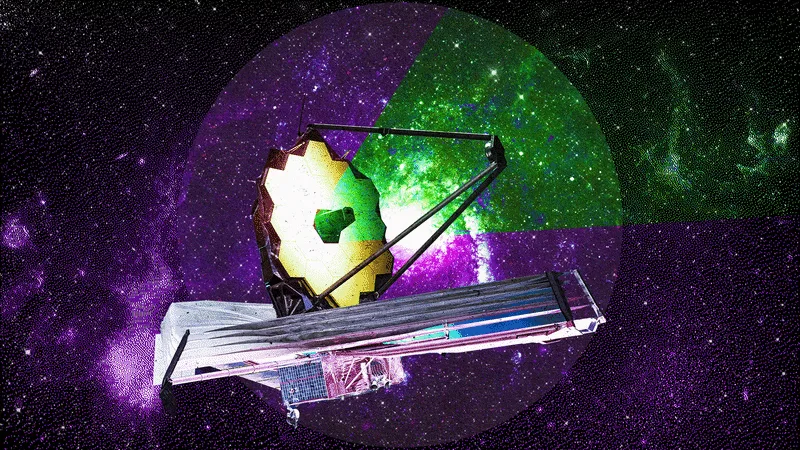
Working in tandem with the James Webb Space Telescope (JWST), Roman shares a preference for infrared observations and a stable orbital home at Lagrange Point 2 (L2), where it can effectively shield its sensitive optics from the thermal and optical glare of the sun, Earth, and moon. However, where Webb functions as a specialized deep-field microscope—focusing on tiny, highly isolated patches of the sky to examine the infant universe—Roman operates as a cosmic wide-angle lens.
| Observational Metric / Feature | James Webb Space Telescope (JWST) | Nancy Grace Roman Space Telescope |
|---|---|---|
| Primary Field of View | Highly targeted, tiny fractions of the sky | ~100 times larger than Hubble’s field of view |
| Primary Mission Focus | Deep-universe spectroscopy, early galaxies, atmospheric chemistry | Wide-field surveys, dark energy, dark matter, exoplanet census |
| Exoplanet Discovery Potential | Confirms targeted systems via transit & spectroscopy | Projected 200,000+ new exoplanets via transit and microlensing |
| Galaxy Mapping Capacity | Hundreds to thousands per deep field | Over one billion galaxies mapped in detail |
| Orbital Location | Lagrange Point 2 (~1 million miles from Earth) | Lagrange Point 2 (~1 million miles from Earth) |
The Power of Microlensing
While traditional planet-hunting missions rely on the transit method—waiting for a planet to cross in front of its host star—Roman will employ an advanced gravitational technique known as microlensing. When a foreground star passes precisely in front of a background star, the foreground star’s gravity acts as a magnifying lens, warping and brightening the distant light. If that foreground star hosts a planet, its localized gravity creates a secondary, distinct spike in magnification.
This technique allows Roman to detect planets situated much farther away from their host stars, without needing to wait for those worlds to complete full, multi-year orbits. Furthermore, Roman’s exceptional sensitivity will enable it to spot free-floating "rogue" planets ejected from their parent star systems, as well as tiny sub-Mercury-mass worlds.
Confronting Cosmological Tensions
Astrophysics is currently experiencing a crisis defined by three major anomalies that threaten to break the standard model of cosmology:

- The Hubble Tension: The universe is expanding significantly faster today than predicted by models derived from the cosmic microwave background (the afterglow of the Big Bang).
- Cosmic Clumpiness: Matter across the universe is distributed far more smoothly and evenly than theoretical frameworks suggest it should be.
- Weakening Dark Energy: Recent data from instruments like the Dark Energy Spectroscopic Instrument (DESI) in Arizona hint that dark energy’s repulsive force may be dynamically weakening over time rather than remaining constant.
Roman is specifically engineered to test these anomalies. By cataloging tens of thousands of supernovae and mapping the growth of large-scale dark matter structures over billions of years, the telescope will provide the definitive dataset required to confirm or refute these paradigm-shifting possibilities.
Official Statements
The scientific community recognizes the Roman Space Telescope not merely as an incremental upgrade, but as an engine of unforeseen discovery.
Julie McEnery, NASA’s Senior Project Scientist for the Roman Space Telescope:
"An observatory like Roman is intrinsically a discovery machine. We’re going to find rare things, unusual things, new things, surprising things. We’re not measuring the property of something in the universe; we’re understanding how the universe we’re in fundamentally works."
Regarding the telescope’s capacity to address modern cosmological tensions, McEnery notes the tantalizing nature of current data:
"It’s kind of tantalizing, because there’s hints that something is very wrong. If dark energy is weakening, we’re pretty much guaranteed to be able to confirm what they’re seeing, because it’s exactly the thing we were designed to do."
Looking forward to the uncharted territory ahead, McEnery emphasizes that the most profound insights may defy anticipation:
"We had a major breakthrough in the last century on the very small with the development of quantum mechanics and the discovery of elementary particles. Maybe this is the century of understanding the very big. The most exciting science from Roman may well be something that we can’t even imagine now."
Rachel Mandelbaum, Astrophysicist at Carnegie Mellon University:

"If we consider what the James Webb Space Telescope is doing, it’s optimized towards looking at the very distant universe—but just a tiny patch of the sky. In contrast, Roman is able to look at a large area of the sky at once. We’re trying to answer fundamental questions about the universe, and it turns out to be incredibly challenging to do that. We need really powerful observatories like Roman."
Explaining how Roman will trace the invisible scaffolding of the cosmos through weak gravitational lensing, Mandelbaum adds:
"Anytime we have a light ray from one galaxy that has to pass through the universe, including all kinds of structures, to us, the path of that light ray is getting slightly perturbed. By comparing those perturbed light rays from many galaxies, we can trace the cosmic web of dark matter that surrounds and connects clusters of galaxies."
Matthew Penny, Exoplanet Researcher at Louisiana State University:
"This method can detect planets that are farther away from their stars than other methods. You don’t need the planet to complete an entire orbit before you see it. Our solar system is potentially quite unique, although we don’t really know at this point. There’s a lot of potentially lucky coincidences in the solar system that make life possible. Without a complete census of the whole range of possible planets, we don’t really know how common planets like Earth are, or planetary systems like our own."
Future Outlook
As launch day approaches at the Kennedy Space Center, the global astronomical community stands on the precipice of a new era. The Nancy Grace Roman Space Telescope promises to bridge the vast chasm between our theoretical models and observational reality.
Over its five-year primary mission, Roman will assemble an astronomical database of unprecedented scale. By charting the distribution of over a billion galaxies, meticulously mapping the invisible filaments of dark matter, and uncovering upwards of 200,000 alien worlds, the observatory will provide researchers with the raw material needed to answer humanity’s oldest and most profound questions.
Whether it resolves the tensions in cosmic expansion, confirms the shifting nature of dark energy, or discovers entirely unanticipated phenomena in the deep void, Roman is poised to redefine our place in the universe. As data begins streaming back from Lagrange Point 2 in the months and years following its launch, humanity will take its most comprehensive look yet at the grand, mysterious architecture of the cosmos.