Executive Overview
As global enterprises aggressively move past the initial wave of Generative AI (GenAI) experimentation, technology leaders face a stark transition from proof-of-concept novelty to production-grade implementation. This shift has exposed a critical intelligence void across C-suites: while raw technology is advancing exponentially, objective, defendable data regarding infrastructure efficiency, architectural security, and multi-vendor orchestration remains scarce.
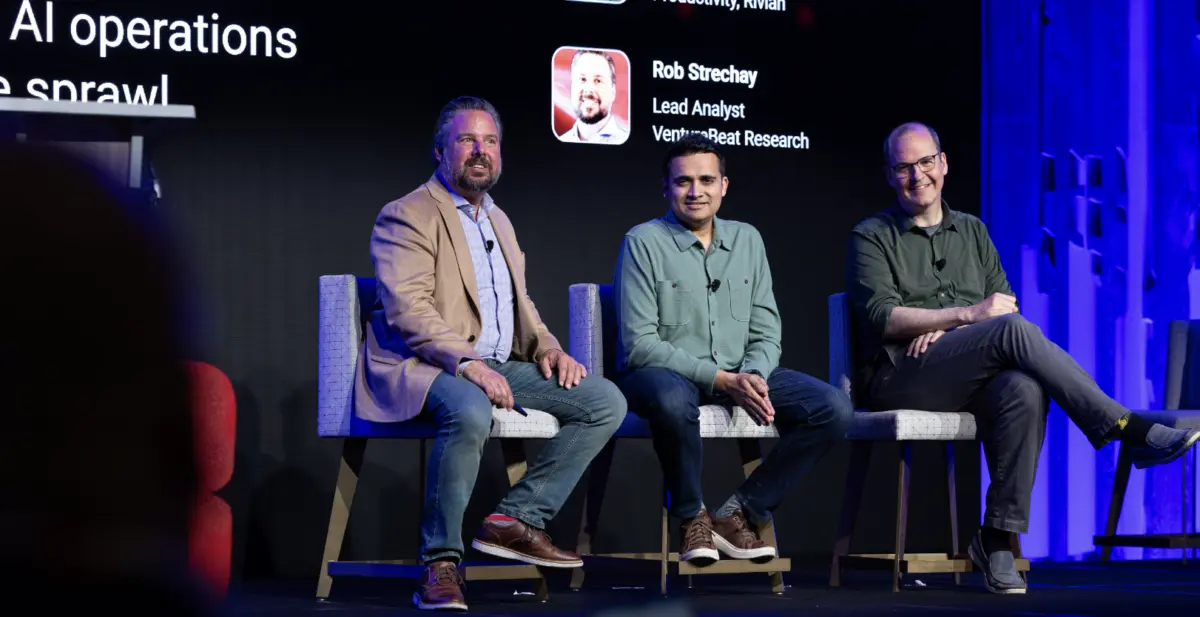
To bridge this operational gap, VentureBeat has officially launched a specialized research practice tailored specifically for high-level technical decision-makers—including Chief Technology Officers, Chief Information Officers, Vice Presidents of Engineering, and Enterprise Architects. Guiding this strategic initiative is industry veteran Rob Strechay, who joins VentureBeat as its first Lead Analyst and Founding Analyst of VentureBeat Research.
Strechay, previously Managing Director and Principal Analyst at theCUBE Research, steps into the role to lead an intelligence framework focused on the underlying architecture of the enterprise AI stack. With enterprise IT infrastructure undergoing its most radical architectural overhaul in decades, VentureBeat Research will deliver empirical, data-driven insights designed to guide leaders through high-stakes software procurement, hardware allocation, security hardening, and platform engineering decisions.
+-----------------------------------------------------------------------------------+
|                        VENTUREBEAT RESEARCH CORE MATRIX                           |
+-----------------------------------------------------------------------------------+
|  Focus Areas:                                                                     |
|  • Advanced Cloud & Compute Infrastructure (GPU Utilization & Allocation)          |
|  • Platform Engineering & DevOps Orchestration                                    |
|  • Agentic AI Security, Identity & Governance                                     |
|  • Data Infrastructure & Retrieval-Augmented Generation (RAG) Context Layers      |
+-----------------------------------------------------------------------------------+
Detailed Chronology: Three Decades of Ecosystem Experience
Strechay’s appointment marks the culmination of nearly thirty years spent navigating every facet of the enterprise technology landscape. His background spans hands-on engineering, startup executive leadership, cloud provider strategy, and independent market analysis—a multi-dimensional perspective that sets VentureBeat Research apart from traditional, surface-level tech commentary.
CAREER TIMELINE & TECTONIC SHIFTS IN ENTERPRISE TECH

[1990s - 2000s] ---------------------> [2010s] ------------------------> [2020s - Present]
Practitioner & Operations              Startup & Cloud Executive        Analyst & Research Leader
• Datacenter Architecture              • Exec roles at Zerto            • Senior Analyst at ESG
• Enterprise Storage & Systems         • Analytics Lead at AWS          • Managing Director at theCUBE
                                                                        • Lead Analyst, VentureBeat
The Practitioner and Executive Era
Before transitioning to technology analysis, Strechay built his career inside the datacenters and product organizations driving enterprise IT:
- Startup Executive Leadership: Strechay held senior leadership positions across high-growth technology startups, most notably serving as an executive at business continuity and disaster recovery firm Zerto, where he oversaw product management and strategy leading up to its eventual acquisition by Hewlett Packard Enterprise (HPE).
- Cloud Infrastructure Scale: At Amazon Web Services (AWS), he served as a key product leader responsible for helping architect and scale new enterprise-grade analytics services, gaining direct visibility into the operational friction of cloud computing, massive data ingestion, and distributed systems.
- Enterprise Storage and Virtualization: Across various executive roles in datacenter infrastructure, Strechay directly managed the capital deployment, storage array configurations, and compute virtualization strategies that underpinned large-scale IT transformations over two decades.
The Analyst Era
Leveraging his background as a builder, Strechay pivoted to industry research:
- Enterprise Strategy Group (ESG): As a Senior Analyst, he covered the rapid evolution of hybrid cloud infrastructure, data management, and storage automation.
- theCUBE Research & SiliconANGLE: Most recently, as Managing Director and Principal Analyst, Strechay spearheaded coverage across cloud infrastructure, data orchestration, and AI systems. During his tenure, he hosted hundreds of live executive interviews, analyzed complex cloud-native ecosystems, and produced deep-dive research evaluating real-world deployment barriers.
Integration into VentureBeat Research
Strechay’s integration into VentureBeat began earlier this year, serving as a catalyst for the publication’s empirical research division:
- May 2024: Strechay published a landmark analysis addressing the hidden fiscal crisis in AI hardware: "GPU Utilization: The $40.1 Billion AI Infrastructure Problem Enterprise Can’t Keep Ignoring." The paper dissected how inefficient resource allocation, compute idle rates, and poor scheduling software waste enterprise capital.
- Spring 2024: He worked directly alongside VentureBeat’s internal intelligence unit to refine the technical methodologies behind the VB Pulse monthly enterprise survey platform.
- Current Rollout: As Lead Analyst, Strechay formalizes VentureBeat’s transition toward specialized, quantitative technology research, combining monthly enterprise surveys with architectural evaluation.
Supporting Context & Metrics: Deconstructing the Enterprise AI Crisis
The expansion of VentureBeat Research comes at a volatile moment for corporate technology investments. As boardrooms demand clear return on investment (ROI) for artificial intelligence capital expenditures, technical leaders face complex architectural roadblocks.
The Fiscal Burden of Low GPU Utilization
A core focus of Strechay’s work centers on hardware optimization. As organizations rush to secure access to high-performance compute—primarily NVIDIA H100, H200, and emerging Blackwell clusters—infrastructure budgets are draining at unprecedented rates.
Strechay’s research highlights that raw compute access does not equate to effective compute utilization. Due to poorly optimized software stacks, sub-optimal data pipelines, and inadequate workload schedulers, many enterprise GPU clusters operate at a fraction of their theoretical throughput. This mismatch between capital expenditure and operational delivery represents a tens-of-billions-of-dollars inefficiency across global enterprise IT.
GPU Compute Allocations vs. Realized Processing Output

+------------------------------------------------------------------+
| Total Purchased/Leased GPU Capacity                              |
+--------------------------------------------------+---------------+
| Effective Workload Compute (Training/Inference)  | Idle / Blocked|
| ~30-40% Realized Efficiency                      | ~60-70% Waste |
+--------------------------------------------------+---------------+
  *Failure points: Memory bottlenecks, network latency, idle wait time.
Insights from the VB Pulse Survey Engine
To deliver empirical baseline data for technical buyers, VentureBeat built VB Pulse—a monthly survey engine monitoring enterprise deployments across five critical pillars:
                  +-----------------------------------+
                  |      5 PILLARS OF VB PULSE        |
                  +-----------------------------------+
                                    |
     +-----------------+------------+------------+------------------+
     |                 |                         |                  |
     v                 v                         v                  v
[Agentic       [Agent Reliability        [Agentic Security   [AI Infrastructure
 Orchestration] & Evals]                 & Identity]         & Compute]
                                                 |
                                                 v
[Context Layers & RAG]- Agentic Orchestration: Mapping how complex multi-agent frameworks pass context, execute tool calls, and maintain state.
- Agent Reliability & Evals: Establishing quantitative metrics to measure hallucinations, failure modes, and task execution accuracy.
- Agentic Security & Identity: Tracking permissioning models, zero-trust frameworks, vector database access controls, and prompt-injection defenses.
- AI Infrastructure & Compute: Monitoring GPU cluster provisioning, cloud-versus-on-premise cost topologies, dynamic scaling, and hardware abstraction.
- Context Layers (RAG): Dissecting data ingestion pipelines, vector database performance, chunking strategies, and hybrid retrieval-augmented generation architectures.
Multi-Vendor Model Strategy & The Resiliency Imperative
The validity of this quantitative approach was demonstrated in VentureBeat’s June Agentic Orchestration Report, which surveyed 145 enterprise technology executives.
Enterprise Model Sourcing Strategy (June Survey Sample, N=145)

[ Single-Vendor Standardized Stack ] ================> 33.3%
[ Multi-Vendor / Hedged Architecture ] ============> 66.7%
The survey revealed that 66.7% (two-thirds) of enterprises actively refused to lock their applications into a single foundational model provider. Instead, enterprise architects engineered abstraction layers capable of dynamically routing queries across multiple proprietary and open-source Large Language Models (LLMs).
This multi-vendor approach proved critical in mid-2024, when major single-provider cloud service outages—including disruptions affecting Anthropic’s Claude models—temporarily halted operations for single-threaded applications. Organizations that had implemented multi-vendor fallback architectures preserved business continuity, validating the necessity of infrastructure-level resilience.
Official Statements: The Mandate for Objective Analysis
As part of the formal launch of VentureBeat Research, both editorial leadership and Strechay articulated the strategic thesis behind the launch.
Bridging the Technical Buyer’s Information Void
VentureBeat’s editorial direction focuses on addressing the specific needs of modern technical decision-makers. High-level summaries and marketing collateral are insufficient for teams responsible for building secure, scalable, and cost-effective AI systems.
"The enterprise AI stack is being rewritten in real time, and the decision-makers I talk with are starved for objective, defendable data," stated VentureBeat Editorial Leadership. "Rob Strechay has the mix of technical rigor and operating experience needed to dissect the architecture behind the next phase of enterprise AI deployment. As organizations move past experimentation toward production deployment, they want to know how to orchestrate multi-vendor environments, where security gaps in agentic pipelines sit, and how to fix utilization problems draining budgets. Answering those questions requires more depth than news coverage alone provides."
Empirical Metrics Over Vendor Hype
Reflecting on his new role, Rob Strechay emphasized his commitment to delivering rigorous, data-driven analysis for enterprise builders:
"VentureBeat has built an audience of enterprise builders and technology buyers that any analyst would want to serve," said Rob Strechay, Lead Analyst at VentureBeat Research. "My goal is to use deep empirical metrics and VentureBeat’s proprietary tracking data to help enterprise buyers and the people building for them make sound platform and infrastructure decisions during the most disruptive transition enterprise technology has seen."
Future Outlook: Unvarnished Blueprints for Production AI
With Strechay leading research operations, VentureBeat is rolling out an expanded framework of written, quantitative, and media assets designed to give technology leaders direct visibility into real-world deployments.
                      VENTUREBEAT RESEARCH DELIVERABLES
                                      |
         +----------------------------+----------------------------+
         |                                                         |
         v                                                         v
[ Written & Quantitative ]                                 [ Multimedia ]
• Monthly VB Pulse Reports                                 • "VB In Conversation" Video Series
• Benchmarks & Deep Dives                                  • Architectural Case Studies
• Infrastructure Security Studies                          • Unvarnished Technical Interviews
Revamping "VB In Conversation"
A central component of this initiative is the expansion of VentureBeat’s flagship video interview series, VB In Conversation, hosted directly by Strechay.
Departing from typical high-level promotional discussions, the revamped series serves as an analytical forum focusing on engineering reality:
- Architectural Blueprints: Unpacking real-world system designs, vector store integration patterns, and orchestration topologies.
- Production Friction: Directly analyzing real-world deployment barriers, including data latency, GPU memory constraints, context-window overhead, and system failure rates.
- Unvarnished Tooling Evaluations: Examining how emerging platform engineering suites, security boundaries, and observability platforms perform under enterprise-scale stress.
The series is distributed natively on VentureBeat and the official VentureBeat YouTube Channel, running alongside Strechay’s written technical analyses.
Long-Term Research Roadmap
Looking ahead, VentureBeat Research will expand its empirical benchmarks to evaluate the operational friction points shaping enterprise IT:
- Platform Engineering & DevOps: Examining how traditional CI/CD pipelines are evolving to support dynamic model fine-tuning, continuous evaluation, and LLM-ops deployment.
- Security at the AI Intersection: Analyzing the convergence of identity access management (IAM), zero-trust network access (ZTNA), and secure data boundaries within agentic workflows.
- Data Layer Evolution: Tracking the integration of modern data lakes, graph databases, and transactional data engines into context-aware RAG pipelines.
Enterprise technology executives, engineering practitioners, and IT decision-makers seeking to participate in upcoming monthly VB Pulse intelligence surveys or schedule analyst briefings with Rob Strechay can directly contact the research team at [email protected].