Executive Overview
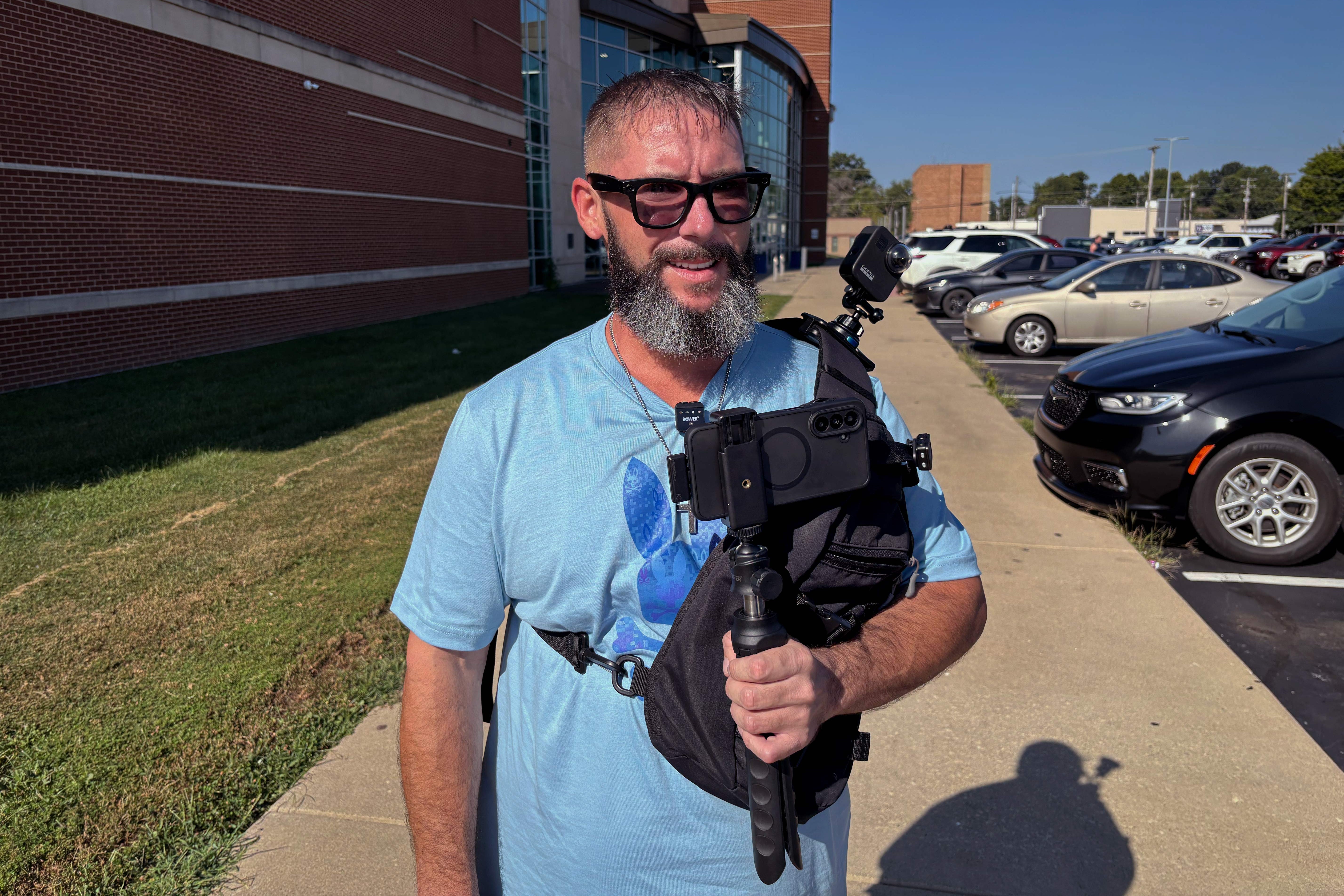
On a sweltering September morning, the air outside the City of Marion Housing Authority in southern Illinois hums with the static of summer bugs and the quiet rustle of scrubby grass. Most visitors arrive with mundane business: dropping off rent, paying utility bills, or requesting maintenance. But Jeremy Bartlett is not here for housing assistance.
Dressed in a black tactical vest outfitted with a 360-degree GoPro camera, a wireless microphone clipped to his cornflower-blue T-shirt, and a digital ankle monitor peeking out from beneath a red-and-blue Spider-Man sock, Bartlett is at work. He is a "First Amendment auditor"—part of a sprawling, highly decentralized online subculture whose participants traverse public buildings, agency offices, libraries, and sidewalks to film government workers and private institutions. Their explicit mission is to stress-test constitutional boundaries and assert the public’s right to record in public spaces. Their implicit mission, critics argue, is often to provoke viral conflict for digital clout and profit.
For years, this movement has thrived on platforms like YouTube, where channels boasting hundreds of thousands—sometimes millions—of subscribers have turned confrontations with police officers, bureaucrats, and startled citizens into lucrative full-time careers. However, a seismic shift is underway. A massive wave of recent demonetizations by YouTube has upended the financial ecosystem of the auditing community, while local governments, legal scholars, and law enforcement agencies push back with new ordinances, training clinics, and criminal charges.
As First Amendment auditors find themselves at the center of a national debate over public privacy, institutional distrust, and digital civility, one fundamental question remains: Are these creators brave defenders of constitutional liberties, or are they digital agitators weaponizing the Bill of Rights for clickbait?
Detailed Chronology: A Day in the Life of an Auditor
Bartlett’s operation at the Marion Housing Authority illustrates the calculated routine of a modern First Amendment audit. Moving through the nondescript lobby—complete with standard government-issue chairs and bulletin boards crammed with local notices—Bartlett trains his camera meticulously on the service counter and the employees behind it. He consciously avoids filming ordinary citizens, focusing his lens instead on public servants.
Within minutes, an employee approaches to offer assistance. Bartlett pivots, utilizing the moment to request a blank Freedom of Information Act (FOIA) form, standard practice for many auditors seeking employee names, salary scales, and hire dates.
As Bartlett walks toward a semi-private office area, an employee working at her desk looks up, initially amused before quickly turning frustrated.
"What are you doing?" she asks, a hint of laughter fading from her voice.
When Bartlett informs her that he is a member of the public simply taking a look around, she tells him he needs permission to record. Bartlett calmly replies that no such permission is required. Following a brief verbal back-and-forth, she shuts her office door, marches past the lobby through an employee-only exit, and summons the executive director.
"We have privacy issues here, we have people’s important information," the executive director tells Bartlett upon arriving. "Just barging in and going into her office is not acceptable."
Bartlett maintains his composure, insisting he never crossed the threshold into a private office.
"The onus is on you to protect [the information], not me," he retorts.
The tension eventually plateaus into bureaucratic friction. Denied a pre-printed FOIA form, Bartlett is handed a blank sheet of paper and a pen. While he waits, three officers from the Marion Police Department arrive on the scene. One officer recognizes Bartlett by name from a previous audit at a nearby Department of Children and Family Services office. However, after a brief, quiet consultation with the housing authority staff in the back rooms, the officers depart without issuing warnings or citations.
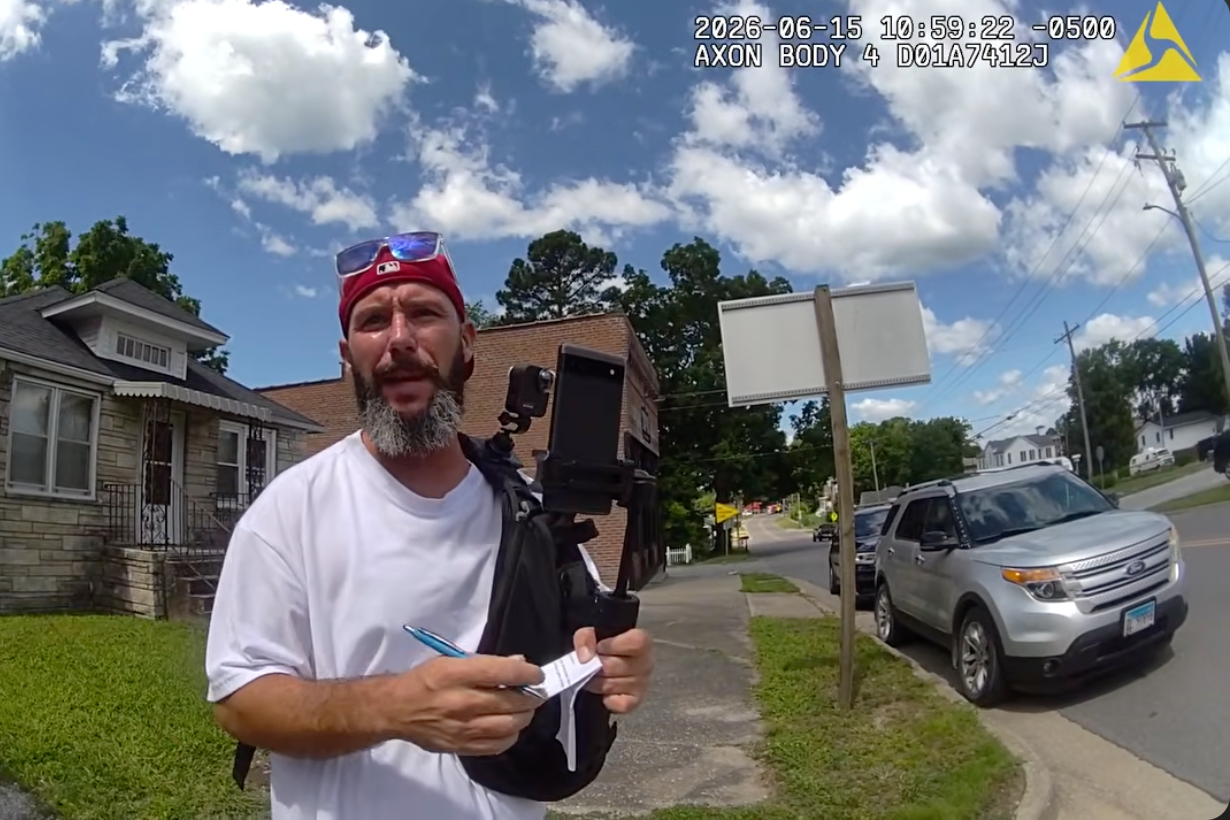
For Bartlett, the encounter ends without arrest—a relatively peaceful outcome compared to his broader legal battles. Yet, the entire spectacle, captured from multiple camera angles, is quickly packaged for his YouTube channel, Southern Illinois Accountability, complete with the sensationalized annotations and dramatic edits that characterize the genre.
Supporting Context & Metrics: The Evolution and Economics of Auditing
The phenomenon of First Amendment auditing is roughly a decade old, tracing its roots to early 2013 videos documenting rural speed traps in Florida or tense exchanges at transit stations. However, its ideological lineage is much deeper. Scholars and historians trace the modern auditor directly to the "copwatching" movement initiated by the Black Panther Party in the 1960s—an effort to monitor law enforcement and deter police misconduct.
Over the decades, this practice evolved through various iterations, heavily influencing modern criminal justice activism and the documentation of high-profile police brutality cases. Today, however, auditors have expanded far beyond law enforcement surveillance. They routinely target city halls, post offices, public libraries, courthouses, and—increasingly—commercial banks.
Creators like Mike Norton, who operates the popular channel KULT News, target financial institutions under the banner of corporate accountability. Norton points to massive corporate settlements, such as Bank of America’s $72 million settlement with Jeffrey Epstein victims and Wells Fargo’s $3 billion fine over fake account scandals, as justification for scrutinizing banks.
"It’s important to shine a bright light on unethical behavior, whether it’s the banking industry or city government," Norton explains. "We are at a point in American history where the government has become very, very emboldened."
The Creator Economy and the "Armageddon" of Demonetization
For top-tier creators, auditing was historically not just an ideological crusade; it was a viable business model. Channels like Long Island Audit (run by Sean Paul Reyes), Amagansett Press, and First Amendment Protection Agency amassed massive followings ranging from hundreds of thousands to over a million subscribers. Successful auditors supplemented their ad revenue with merchandise sales, sporting baseball caps emblazoned with "We the People" and t-shirts bearing slogans like "Less 1984, More 1776."
At their peak, creators like Norton and Reyes reported earning between $10,000 and $12,000 a month through YouTube’s partner program. That financial foundation was severely fractured on August 31, 2026—a date now viewed by many in the community as "First Amendment audit Armageddon." On this day, YouTube initiated a sweeping wave of demonetizations, stripping ad revenue from numerous prominent auditing channels.
Official Statements and Legal Realities
The crackdown has sparked fierce accusations of collusion and censorship from creators, juxtaposed against a nuanced defense of platform policies and constitutional law.
YouTube’s Position
In a formal statement to media outlets, a YouTube spokesperson clarified the platform’s stance:
"While we value citizen journalism and public interest content, creators in the YouTube Partner program must follow our Creator Responsibility policy, which protects our community both on and off the platform. Accordingly, we’ve suspended monetization for channels that dedicate a significant portion of their content to filming people in a way that provokes, harasses, or instigates conflict."
The Creator Conspiracy Theories
Prominent creators refuse to accept the platform’s policy explanation at face value. Sean Paul Reyes of Long Island Audit posted a fiery response video alleging that the demonetization was a coordinated political attack. Reyes pointed to public friction between his channel and Louis Civello, president of the Suffolk County Police Benevolent Association, who has publicly dismissed auditors as "keyboard cowards" running a "con job." Reyes suggested that police union lobbying, intersecting with federal law enforcement leadership at national conventions, pressured tech platforms to economically silence the government accountability community.
The U.S. Department of Justice firmly rejected these claims, issuing a statement labeling the allegations "completely false."
The Legal Landscape: Navigating the Gray Area
Legally, First Amendment auditors operate in a complex, shifting jurisdiction. Clare Norins, director of the First Amendment Clinic at the University of Georgia School of Law, notes that the U.S. Supreme Court has yet to directly address the absolute right to record in public spaces, leaving lower federal circuit courts to shape the doctrine.
"The Constitution is meant to protect unpopular ideas," notes Anna McGarrh, an attorney who has written extensively on the phenomenon. "Maybe people don’t really like the First Amendment auditors. But one thing people often forget is that the Constitution is meant to protect unpopular ideas."
At the same time, courts and local municipalities are drawing lines around "limited public forums." For instance, recent rulings in federal appellate courts have affirmed that spaces housing sensitive government functions—such as tax assessor offices or courtrooms where citizens conduct mandatory state business—can enforce reasonable restrictions on recording to protect personal privacy and operational security.
To help local governments navigate these encounters without triggering costly civil rights lawsuits—such as a $55,000 settlement paid out by a Georgia city following an auditor’s arrest—academic clinics now offer specialized training. These programs advise public officials to implement clear, neutral time-place-manner restrictions and to maintain calm, de-escalatory postures, emphasizing that public discomfort does not legally equate to operational disruption.
Future Outlook
The future of First Amendment auditing hangs in a precarious balance between digital suppression and legal tenacity.
On the legal front, auditors continue to face severe personal and professional fallout. Jeremy Bartlett’s ongoing legal battle—stemming from a stalking charge filed by a local business owner after Bartlett filmed near a commercial property—resulted in a 23-day stint behind bars before his release on electronic monitoring. His trial, scheduled for early January, will test the boundaries of public-space recording versus local privacy expectations. Similarly, auditors across the country face increasing numbers of disorderly conduct charges, trespassing citations, and retaliatory local ordinances designed to curb their access to municipal buildings.
Yet, despite the loss of platform monetization, tightened municipal regulations, and widespread public animosity, the underlying drivers of the movement show no signs of abating. Distrust in public institutions, combined with the ubiquitous presence of mobile recording technology, ensures that the impulse to "audit" authority will persist.
Whether viewed as digital vigilantes, public nuisances, or necessary gadflies holding power to account, First Amendment auditors have irrevocably altered the dynamic between ordinary citizens and the state. As David R. Dewberry, a communication professor at Rider University, observes:
"Nice, pleasant people with pleasant ideas don’t need their speech protected. It’s the people who challenge things… Even though we may not like it because sometimes they’re just kind of, like, well, they’re assholes. But being an asshole is not illegal, right?"