Executive Overview
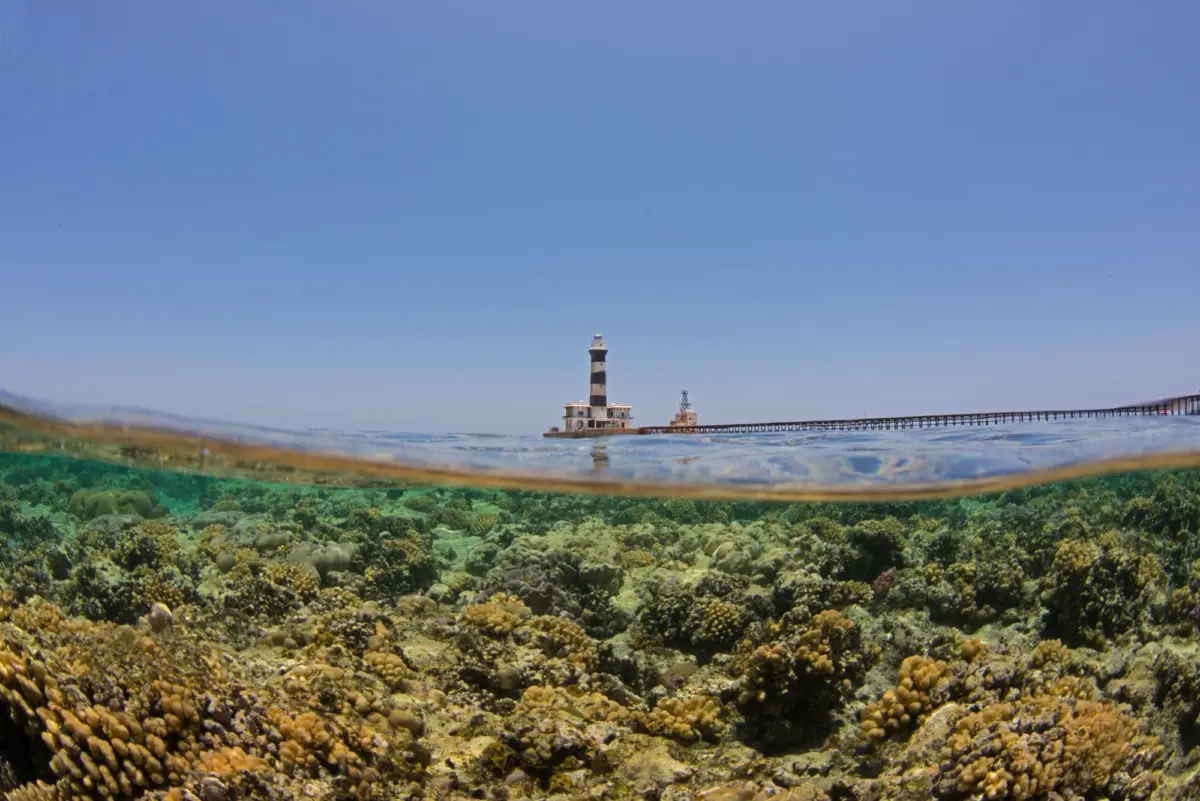
For years, marine biologists looked to the crystal-clear waters of Egypt’s Red Sea with a mixture of awe and cautious optimism. While mass bleaching events decimated coral reefs across the Great Barrier Reef, the Caribbean, and Southeast Asia, Red Sea corals stubbornly persisted. As ocean temperatures climbed to unprecedented highs, scientists frequently pointed to these northern Egyptian reefs as a sanctuary—some even predicting they could become the Earth’s last-remaining coral ecosystems if global heating continued unchecked.
That narrative of invulnerability, however, suffered a severe blow during the scorching summers of 2023 and 2024. Intense marine heat waves strained these supposedly "super-coral" ecosystems, leading to widespread bleaching observed during recent surveys by the Hurghada Environmental Protection and Conservation Association (HEPCA). While northern reefs demonstrated relative hardiness—with less than 10 percent of surveyed colonies affected—southern regions saw up to half of their corals bleach.
This sudden vulnerability has triggered an urgent scientific scramble. Researchers are no longer simply studying how much heat these corals can withstand; they are racing to uncover the exact mechanisms that protected them for so long, and whether those protective forces are failing. The debate centers on a profound ecological mystery: Is the resilience of Red Sea coral written in their evolutionary DNA, or is it merely a geographical trick of ocean currents?
As scientists debate the causes, governments and international bodies are stepping up conservation efforts. Yet, experts agree that local protections can only buy time. Without aggressive global action to curb greenhouse gas emissions, even the most resilient corals on Earth may face a ticking clock.
Detailed Chronology: The Breakdown of a Sanctuary
To understand the current crisis, one must trace how the Red Sea’s famous resilience was tested and ultimately shaken over a two-year window of extreme climate pressure.
2023: The First Warning Signs
For decades, the marine narrative in the Red Sea was defined by stability. While surrounding seas cooked under marine heat waves, Egyptian reefs maintained their vibrant colors and dense biodiversity. However, the summer of 2023 introduced an alarming shift. Extended periods of stagnant, overheated water began to test the physiological limits of Red Sea stony corals. Although catastrophic mass mortality was largely avoided that year, marine biologists noted distress signals across various reef tracts, serving as a warning shot for what was to come.
2024: The Stagnant Heat Wave
The situation escalated dramatically in the summer of 2024. A HEPCA survey led by Professor Mahmoud Hanafy of Suez Canal University documented widespread bleaching across the Red Sea. The geographic distribution of the damage was stark:
- The Northern Red Sea: Less than 10 percent of surveyed coral colonies showed signs of bleaching, maintaining a semblance of their historical resilience.
- The Southern Red Sea: The impact was devastating, with approximately 50 percent of corals succumbing to bleaching.
The 2024 event was exacerbated by anomalous meteorological and oceanographic conditions. The sea remained unusually calm for roughly six weeks during the peak of the heat wave. This prolonged stagnation disrupted the natural ocean mixing processes that typically flush and cool the shallow reefs. Furthermore, exceptionally low tides in July 2024 exposed shallow coral communities to the blazing sun and atmosphere for extended periods, compounding thermal stress with desiccation and UV radiation damage.
2024–2025: Signs of an Incredible Rebound
Despite the severity of the 2024 bleaching, the Red Sea demonstrated why it earned its "super-coral" reputation in the first place. Preliminary estimates compiled by HEPCA one year after the bleaching event revealed astonishing recovery rates ranging from 75 to 88 percent, varying by species and specific location. This rapid rebound stands in stark contrast to global recovery metrics, where damaged reefs elsewhere in the world often languish for years or experience total phase shifts into algae-dominated rubble fields.
Supporting Context & Metrics: The Biology and Physics of Bleaching
To appreciate the gravity of the Red Sea situation, it is necessary to examine the foundational biology of coral reefs and the unique environmental mechanics of the region.
The Mechanism of Bleaching
Corals are marine invertebrates that live in a delicate symbiotic relationship with microscopic, photosynthetic algae known as zooxanthellae. These algae reside within the coral polyps, providing them with up to 90 percent of their energy through photosynthesis while giving the coral its vibrant coloration.
When ocean temperatures spike even 1 to 2 degrees Celsius above normal summer maximums for an extended period, the zooxanthellae begin to malfunction, producing toxic reactive oxygen species. To protect its own tissues from oxidative damage, the coral host is forced to expel the algae. Stripped of its food source and its color, the coral turns a ghost-white. If the heat wave subsides quickly enough, corals can re-absorb algae and recover; if the heat persists, the coral starves to death.
The Macro Impact on Marine Biodiversity
While corals cover less than 1 percent of the ocean floor, they function as the rainforests of the sea, supporting at least 25 percent of all marine life. According to the United Nations Environment Programme (UNEP), these habitats shelter complex food webs, commercial fisheries, and countless species—including deep-reef organisms only recently discovered by science. When a reef dies, the cascading collapse of the ecosystem threatens coastal protection, local economies, and global marine biodiversity.
The Great Scientific Debate: Evolution vs. Circulation
Why did Red Sea corals resist this fate for so long while reefs elsewhere perished? Scientists are currently divided into two primary camps:
-
The Evolutionary Filter Hypothesis:
Eslam Osman, a marine ecologist at King Abdullah University of Science and Technology (KAUST), argues that evolutionary history is the primary driver. Corals originally populated the Red Sea by migrating through the Bab al-Mandab Strait at the southern end—a body of water characterized by naturally high temperatures. Osman posits this warm passage acted as a rigorous evolutionary filter. Only heat-tolerant species and genotypes survived the journey, and their hardy offspring subsequently spread northward into cooler waters. -
The Ocean Circulation Hypothesis:
Mahmoud Hanafy remains unconvinced that genetics tell the whole story, pointing instead to physical oceanography. The northern Red Sea is subjected to complex current shifts that trigger vertical mixing. This hydrodynamic process draws cool water up from the deep ocean abyss and flushes it across the shallow reefs, buffering the corals against ambient heat spikes.
Hanafy suggests that the 2024 bleaching event was not a failure of coral genetics, but rather a failure of physics: the six-week stagnation period stalled the cooling currents, leaving the corals defenseless against trapped thermal energy. While Osman acknowledges that calm seas exacerbated the damage, he maintains that temperature remains the foundational variable. Both forces are likely at play, but determining their exact interplay is crucial for predicting future survival rates.
Official Statements and Expert Perspectives
The shifting realities of the Red Sea have prompted urgent dialogue among leading regional scientists, conservationists, and policymakers.
"We definitely need more stable financial resources, because conservation is not a single-year act."
— Eslam Osman, Marine Ecologist, KAUST
Osman emphasizes that while emergency responses to bleaching events are vital, long-term monitoring requires institutional backing and consistent funding streams that extend far beyond cyclical grant periods.
"Therefore, the key is to reduce carbon dioxide and greenhouse gases. Any other solution will just buy time."
— Mahmoud Hanafy, Professor of Marine Biology, Suez Canal University & HEPCA Consultant
Hanafy underscores the uncomfortable truth underlying all local marine conservation efforts: regional management can protect reefs from overfishing, anchoring, and localized pollution, but it is entirely powerless against the thermodynamic reality of a warming planet.
Institutional and Governmental Responses
Recognizing the irreplaceable value of these marine assets, the Egyptian government has ramped up protective measures. New marine protected areas (MPAs) are being designated along the coastline to limit human disturbances such as unchecked tourism and coastal development.
Furthermore, Egypt is actively partnering with international entities—including the United Nations Development Programme (UNDP) and the Global Fund for Coral Reefs—to implement sustainable coastal management frameworks. These initiatives focus on bolstering local resilience, regulating diving tourism, and establishing early-warning monitoring networks to track thermal stress before mass bleaching occurs.
Future Outlook: A Race Against Time
The Red Sea’s remarkable 75 to 88 percent recovery rate following the 2024 bleaching events proves that its corals possess extraordinary regenerative capacity. However, conservationists warn against complacency.
As global greenhouse gas emissions continue to track upward, the frequency and intensity of El Niño cycles and marine heat waves are projected to accelerate. If climate change alters the foundational wind patterns and current circulations that drive the northern Red Sea’s vertical mixing, even the physical buffering effect protecting these waters could collapse.
Ultimately, the consensus among marine scientists is clear. Egypt’s "super corals" represent one of humanity’s best natural laboratories and conservation hopes. Yet, local interventions, marine protected areas, and sustainable tourism strategies are merely defensive stopgaps. Without swift, uncompromising global reductions in carbon dioxide emissions, even the most resilient sanctuary in the world will eventually push past its breaking point, transforming the Red Sea from a beacon of hope into one of climate change’s final casualties.