Executive Overview
When Tesla formally reintroduced its long-delayed, highly anticipated next-generation Roadster, it promised a machine that would challenge the very boundaries of physics. Alongside an angular, aggressive design and a blistering, almost unbelievable 0-60 mph acceleration time of under one second, CEO Elon Musk debuted a feature that immediately captured the global imagination: the car can "fly."
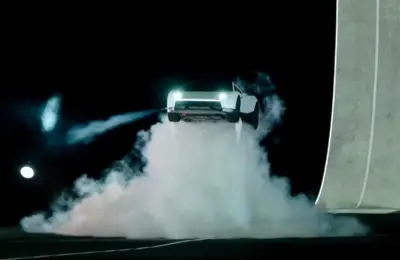
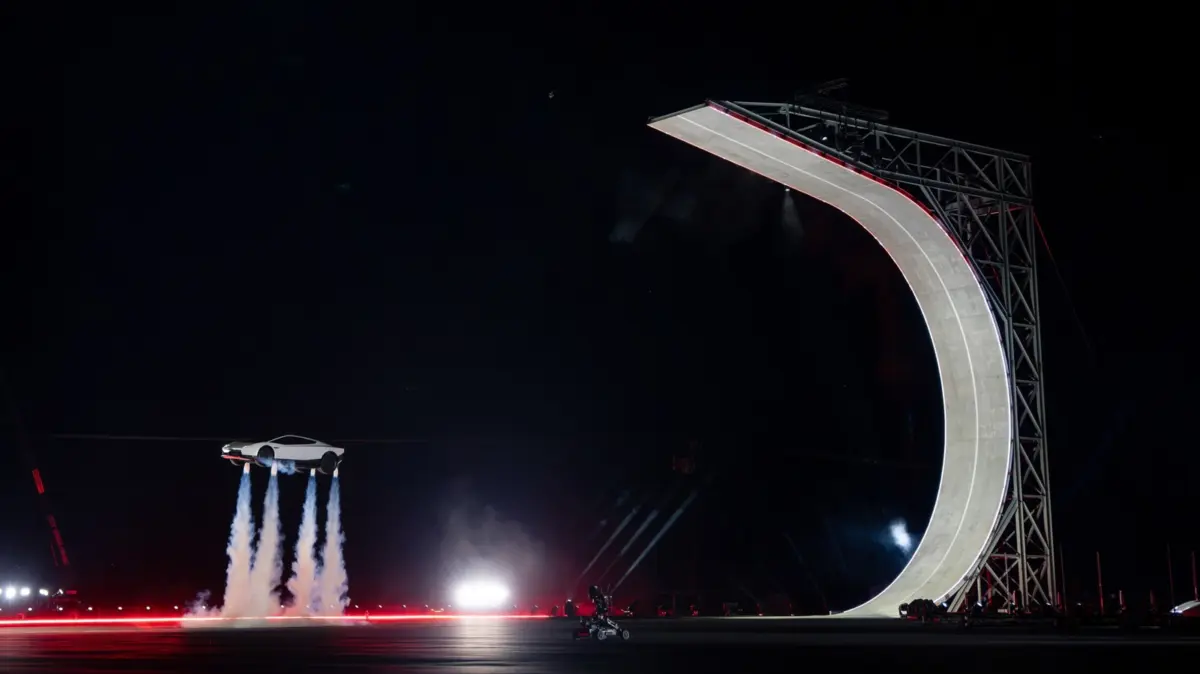
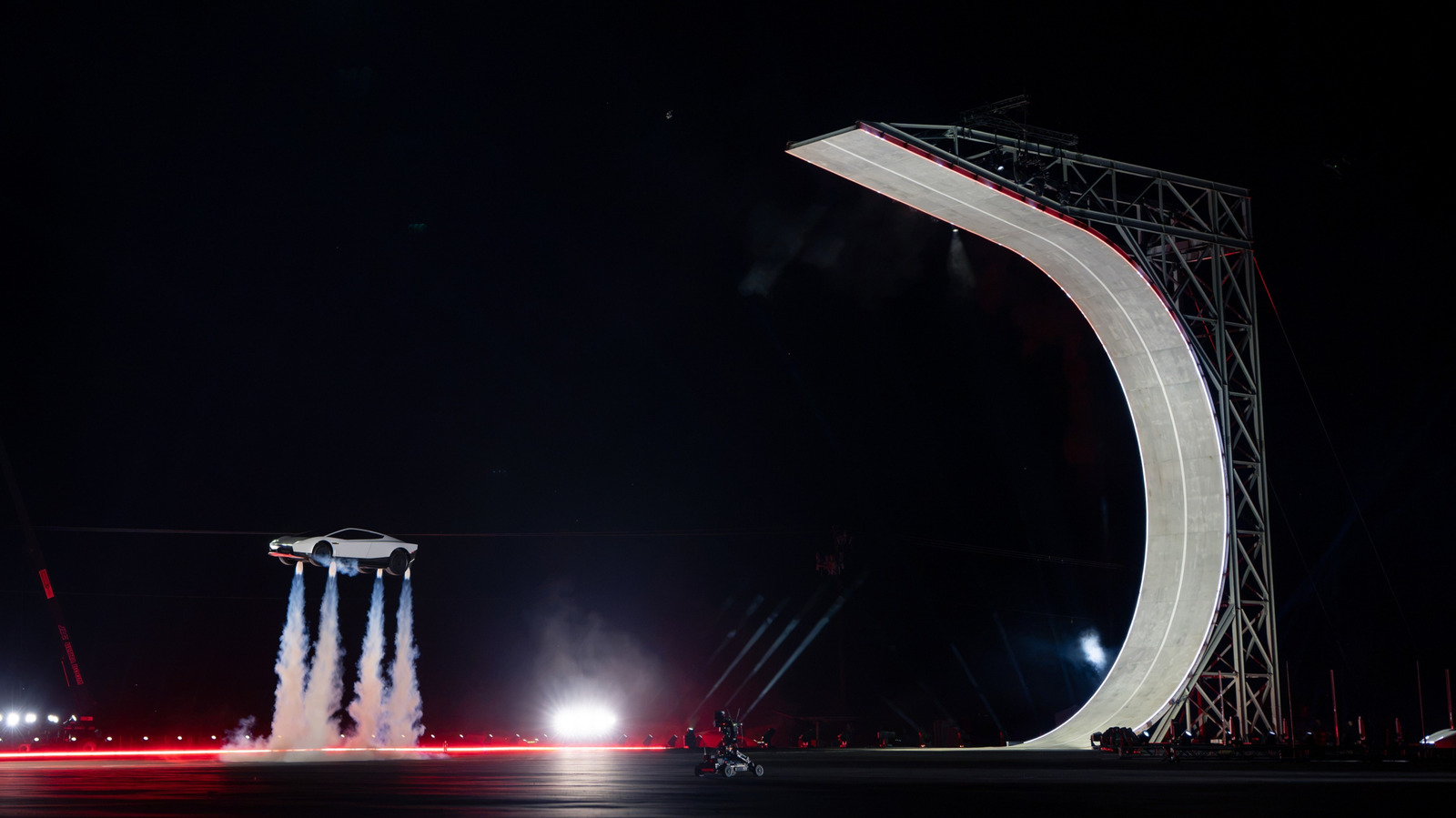
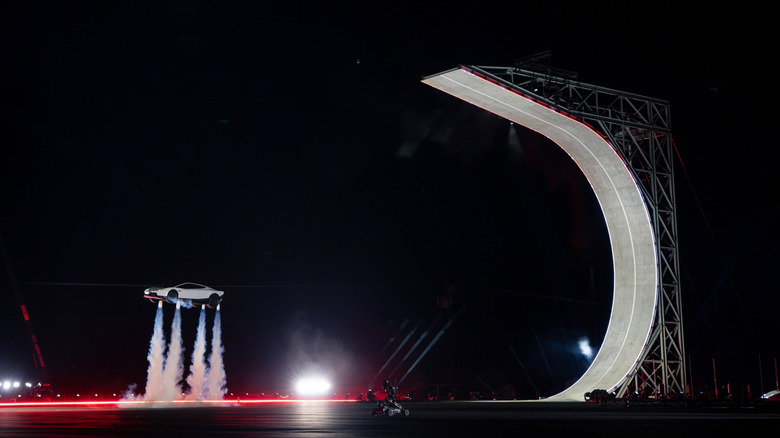
While this does not mean consumers will be piloting hovercars reminiscent of Back to the Future Part II, the vehicle achieves controlled airborne maneuvers—including short jumps, hovering moments, and precise flips—through an integrated system of compressed-air thrusters.
To the casual observer, the concept of a production sports car utilizing aerodynamic thrusters for terrestrial acrobatics seems entirely unprecedented. However, aerospace and defense historians quickly noted that the fundamental engineering principles underpinning the Roadster’s maneuvers are far from new. The utilization of rapid-fire thrusters for directional micro-adjustments in mid-air bears a striking, structural resemblance to technology developed by defense contractor Lockheed Martin over two decades ago. Specifically, the mechanical lineage traces back to experimental missile defense systems designed to hunt and destroy intercontinental ballistic missiles (ICBMs) in the cold vacuum of space, known as Multiple Kill Vehicles (MKVs).
This article explores the engineering parallels between Tesla’s consumer-facing supercar innovation and classified Cold War-to-modern military defense tech. By examining the mechanics of cold-gas thrusters versus hot-fire propulsion, the regulatory hurdles of public-road operation, and the historical evolution of mid-course interceptor technology, we uncover how kinetic problem-solving bridges the gap between hyper-luxury automotive performance and national missile defense.
Detailed Chronology: From Star Wars Defense to Silicon Valley Supercars
To understand how thrusters migrated from top-secret military testing grounds to the chassis of a high-end electric vehicle, one must trace a timeline spanning more than forty years of aerospace and automotive development.
The Genesis: Strategic Defense Initiative (1980s)
The intellectual property and conceptual framework governing multi-directional thruster maneuvering did not originate in Silicon Valley. During the Reagan administration, the United States government launched the Strategic Defense Initiative (SDI)—colloquially dubbed the "Star Wars" program. SDI sought to develop a space-based shield capable of intercepting incoming Soviet ICBMs.
Within this framework, engineers conceptualized kill vehicles that could independently maneuver in the exosphere, using bursts of propulsion to intercept fast-moving targets and decoys. While SDI never fully materialized in its original grand scope, it laid the foundational hydrodynamic and aerodynamic steering theories that private defense contractors would refine for decades.
The Military Leap: Lockheed Martin’s MKV Program (2004–2009)
The direct historical ancestor to the modern thruster-controlled vehicle concept gained serious traction in 2004. The US Missile Defense Agency (MDA) awarded Lockheed Martin a massive $760 million contract to develop the Multiple Kill Vehicle (MKV). The objective was ambitious: build the first missile defense system capable of destroying multiple ballistic missile threats and complex decoys with a single launch.
The MKV system relied on a carrier payload containing several smaller, highly agile kill vehicles. Once deployed, these interceptors used an array of onboard thrusters to execute rapid, violent course corrections, slamming directly into incoming ballistic threats at hyper-velocities.
However, shifting geopolitical priorities and severe budget constraints led the Department of Defense to terminate the MKV program in April 2009. Despite its cancellation, the engineering data, propulsion testing, and maneuverability algorithms remained archived within the annals of American defense history—waiting for a new application.
The Automotive Evolution: Tesla’s Roadster Announcements (2017–Present)
Tesla first unveiled the concept of a new-generation Roadster in November 2017, promising staggering performance metrics that raised eyebrows across the automotive industry. Yet, updates remained sparse for years as Tesla prioritized the production scaling of the Model 3, Model Y, and the Cybertruck.
The project roared back into the public consciousness when the Roadster was formally reintroduced. Alongside updated performance trims, Tesla revealed the integration of a "cold-gas thruster system"—an option specifically tied to the vehicle’s high-end "Rocket" trim. Tesla’s engineering team adapted the principles of aerospace stabilization for a terrestrial vehicle, demonstrating that high-pressure air tanks and strategically placed nozzles could alter a car’s momentum in mid-air.
Supporting Context & Metrics: Cold-Gas vs. Hot-Fire Propulsion
While the visual spectacle of a vehicle executing mid-air adjustments draws an immediate parallel between Lockheed Martin’s MKV and Tesla’s Roadster, a deep technical audit reveals distinct differences in propulsion chemistry, operational environment, and safety profiles.
Propulsion Mechanics: Air Versus Combustion
The most fundamental difference between the two systems lies in how they generate thrust:
- Tesla’s Cold-Gas Thrusters: Tesla utilizes a system comprising two high-pressure carbon-composite air tanks feeding ten distinct nozzles distributed across the vehicle’s body. Because it relies entirely on compressed air, no chemical combustion occurs. The gas expands rapidly through the nozzles, creating localized vectors of force without generating extreme heat or burning volatile propellants. Tesla claims the vehicle can even recapture and compress ambient air or utilize onboard electric compressors to refill the tanks.
- Lockheed Martin’s MKV Propulsion: In contrast, historical documentation and press releases from Lockheed Martin regarding the MKV indicate that the defense system relied on "hot-fire tests." These systems burned solid or liquid chemical propellants to achieve the immense, instantaneous thrust required to maneuver in the thin atmosphere or vacuum of near-space. Hot-gas systems offer significantly higher specific impulse (efficiency) and raw power, but they involve volatile chemical reactions and extreme thermal management challenges.
Trim Levels and Engineering Limitations
Tesla’s implementation is not uniform across all versions of the upcoming sports car. The structural weight and spatial requirements of the thruster system mean buyers must choose their trim level carefully:
- The Performance Trim: Features standard electric drivetrain upgrades, advanced torque vectoring, and enhanced aerodynamic active elements, but lacks thrusters entirely.
- The Thruster Trim: Integrates a limited array of thrusters positioned exclusively at the rear of the vehicle, primarily designed to assist with straight-line acceleration limits and traction breaking.
- The Rocket Trim: The full, uncompromised package. This version features the complete ten-nozzle layout powered by high-pressure composite air tanks, enabling the viral kickflips, short hops, and stabilization maneuvers demonstrated in promotional materials.
| Metric / Feature | Lockheed Martin Multiple Kill Vehicle (MKV) | Tesla Roadster (Rocket Trim) |
|---|---|---|
| Primary Domain | Upper atmosphere / Near-space | Terrestrial roads & closed tracks |
| Propulsion Type | Hot-fire chemical propulsion | Cold-gas compressed air |
| Primary Objective | Intercepting ballistic missiles and decoys | High-performance driving stabilization & stunts |
| Operational Lifespan | Single-use terminal engagement | Multi-use, refillable onboard tanks |
| Regulatory Status | Military classified / decommissioned | Not approved for public road use |
Official Statements & Regulatory Hurdles
The intersection of aerospace defense tech and consumer automotive design brings a unique set of safety, legal, and regulatory challenges. Autonomous and semi-autonomous driving features are already heavily scrutinized by global transport authorities; introducing a street-legal (or near-street-legal) vehicle capable of altering its vertical trajectory via pneumatic force has raised immediate red flags among safety regulators.
The Regulatory Reality: Off-Road Only
Tesla has been explicitly clear regarding the legal deployment of the Roadster’s airborne capabilities. Company representatives have stated that the thrusters "aren’t approved for public road use."
This distinction is crucial for liability and certification purposes. If a vehicle were to discharge high-pressure air nozzles while navigating a crowded public highway, the potential for unexpected aerodynamic instability, loss of control, or debris projection poses severe hazards to surrounding motorists and pedestrians. Consequently, the full "Rocket" mode functionality is expected to be geofenced or restricted exclusively to closed tracks, private testing facilities, and specialized automotive demonstration events.
Industry and Defense Reactions
Aerospace engineers who worked on ballistic missile defense platforms during the 2000s have expressed a mixture of amusement and professional respect regarding Tesla’s adaptation of kinetic control theory.
"The math governing center-of-mass adjustment via localized thruster firing is universal," notes a former Lockheed Martin propulsion engineer who spoke on the condition of anonymity. "Whether you are stabilizing an interceptor vehicle closing in on a warhead at Mach 10 or countering body roll on a supercar during an aggressive weight-transfer maneuver, the physics equations are identical. What Tesla has done is successfully miniaturize and containerize high-pressure pneumatics into a passenger car chassis—something we never had to worry about packaging alongside leather seats and an infotainment screen."
Future Outlook: The Convergence of Aerospace and Automotive Engineering
As the automotive industry looks toward the horizon, the cross-pollination of defense technology and consumer mobility is accelerating. While flying cars envisioned in mid-century science fiction remain largely impractical due to energy density limits and air-traffic management nightmares, the hybridization of ground-based vehicles with aerospace stabilization systems opens up fascinating new design paradigms.
What Lies Ahead for the Roadster?
As Tesla works toward finalizing the production version of the Roadster, the primary engineering hurdles will center on durability, weight management, and regulatory compliance. Maintaining high-pressure composite tanks capable of withstanding the vibrations and thermal cycles of aggressive driving over a 10-to-15-year vehicle lifecycle requires material science borrowed directly from rocket manufacturing—an area where Tesla’s corporate sibling, SpaceX, provides direct synergy.
Furthermore, the software required to orchestrate ten independent thrusters in microsecond intervals alongside traditional brake-by-wire, steer-by-wire, and torque-vectoring systems represents a monumental computational challenge. The vehicle’s onboard computers must calculate attitude, yaw, pitch, and roll in real-time, firing compressed air bursts with surgical precision to ensure the car lands squarely on its tires rather than entering an uncontrolled spin.
Broader Industry Implications
Beyond Tesla, the realization that military-grade attitude-control systems can be successfully scaled down to enhance terrestrial vehicle dynamics may inspire other performance manufacturers. As electric supercars push past the limits of conventional tire-to-road grip, mechanical downforce is increasingly supplemented by active aero and, potentially, pneumatic stabilization.
The journey from Lockheed Martin’s drawing boards and the cancelled MDA programs of the 2000s to the sleek carbon-fiber body of a modern electric supercar demonstrates a vital truth of technological evolution: great engineering solutions rarely disappear. When a problem requires instantaneous, precise kinetic intervention in space or on asphalt, the physics remain absolute—and the thrusters will always find a way to fire.