Executive Overview
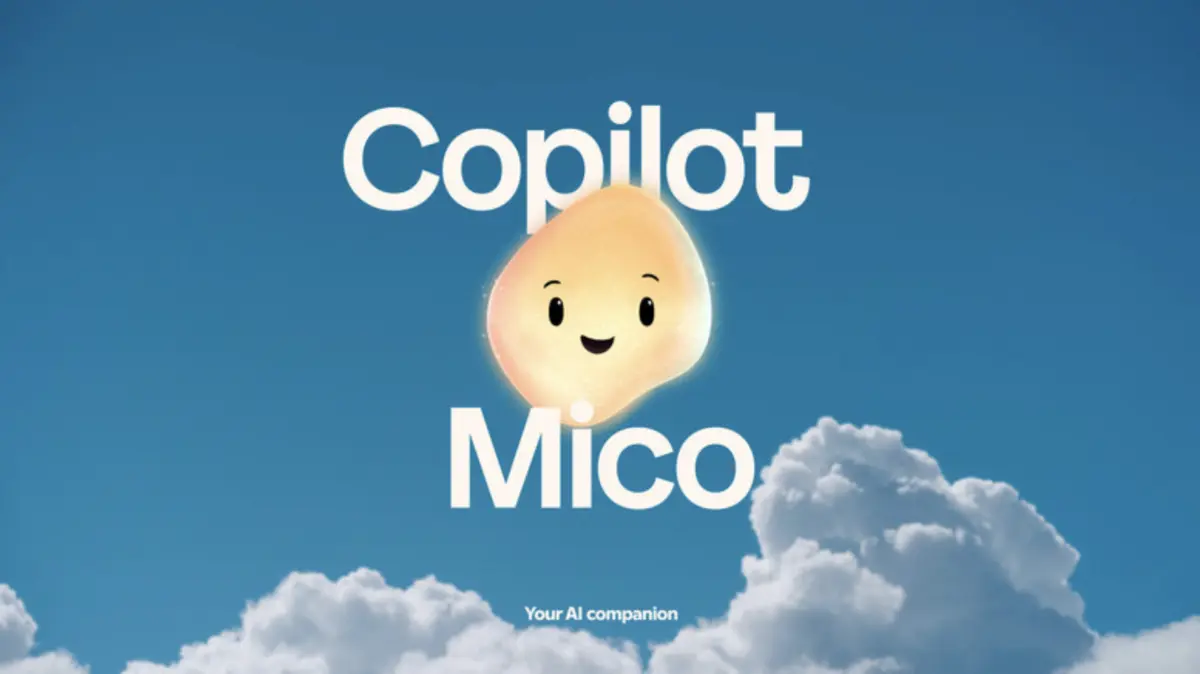
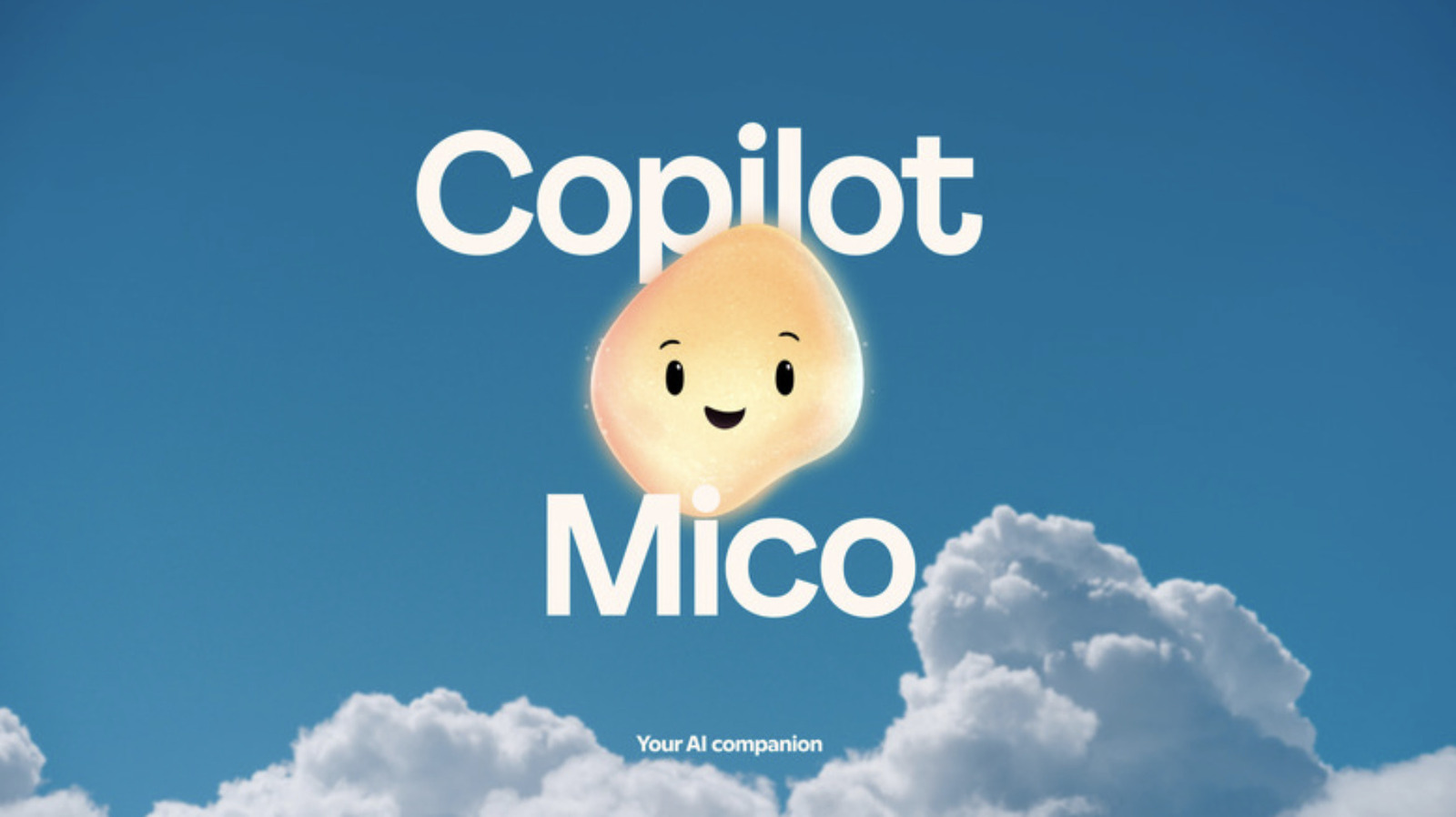
In the fast-paced and hyper-competitive landscape of generative artificial intelligence, tech giants are constantly searching for ways to humanize their software. For decades, companies have deployed anthropomorphized mascots, digital companions, and conversational agents to bridge the gap between cold, algorithmic code and the everyday user. Microsoft, a pioneer in this domain—for better or worse—attempted to capture lightning in a bottle once again in October 2025 with the introduction of Mico, a quirky, amorphous, cartoony yellow blob designed to be the friendly face of Copilot Voice.
However, the tenure of Microsoft’s latest mascot in the company’s flagship voice assistant has proven to be remarkably short-lived. In a move that has drawn chuckles, nostalgia, and inevitable comparisons to tech history’s most infamous digital assistants, Microsoft has officially "demoted" Mico. Less than a year after its high-profile debut, the blob has been quietly stripped of its duties within Copilot Voice and relocated to the Learn Live hub, where it will pivot to a role as an educational "tutor."
This editorial examines the rapid rise and abrupt fall of Mico, contextualizing the decision within Microsoft’s rich, complicated history of corporate mascots. By analyzing official statements, industry reactions, and the broader psychological implications of giving AI a physical or semi-physical persona, we explore why Mico ultimately failed to secure a permanent home in Copilot Voice and what its new role in educational tech means for the future of human-computer interaction.
Detailed Chronology: The Brief, Colorful Life of Mico
To understand Mico’s sudden departure from the mainstream Copilot experience, one must retrace the trajectory of its development and deployment across Microsoft’s ecosystem.
October 2025: The Birth of a Blob
When Microsoft rolled out Mico in October 2025, the tech giant positioned the character as a much-needed injection of personality into its Copilot AI chatbot. As voice interactions became the bleeding edge of consumer AI technology—with competitors like OpenAI, Google, and Apple pushing natural language processing to new heights—Microsoft recognized that raw algorithmic efficiency wasn’t enough. Users needed emotional resonance.
Mico arrived as an amorphous, bright yellow, whimsical figure. It was designed to animate dynamically during voice conversations, reacting to user queries with subtle shifts in shape, color, and expression. Industry analysts immediately dubbed it "Clippy for the AI age," drawing an inevitable parallel to the infamous paperclip assistant that had haunted Microsoft Office applications decades prior.
Unlike Clippy, however, Mico was built for the audio-first, multimodal era. It wasn’t hovering over a spreadsheet; it was living inside the Copilot mobile and desktop applications, serving as a visual anchor for auditory dialogues. Microsoft touted Mico as a breakthrough in human-AI interaction, claiming that the blob helped developers understand how warmth and visual expressiveness could foster deeper user engagement.
The Honeymoon Phase and User Reception
During its initial months on the market, Mico received a mixed reception. Tech enthusiasts and early adopters found the character charmingly weird—a stark contrast to the sterile, minimalist interfaces preferred by corporate design teams. For some, watching the yellow blob morph and pulse while chatting with Copilot added a layer of playful novelty to everyday tasks like drafting emails, summarizing documents, or brainstorming ideas.
Yet, cracks in the strategy quickly began to show. While conversational voice AI relies heavily on speed, accuracy, and contextual awareness, adding an eccentric cartoon character to the mix polarized users. For every person who found Mico endearing, another found it distracting, juvenile, or entirely unnecessary. Unlike a voice assistant that fades seamlessly into the background, Mico demanded screen real estate and visual attention, which occasionally clashed with productivity workflows where minimalism is prized.
Summer 2026: The Quiet Demotion
By mid-2026, the writing was on the wall. Without warning or a massive press rollout, Microsoft updated its support documentation and user interface architecture, revealing that Mico was being removed from Copilot Voice entirely.
Rather than executing a complete execution of the digital mascot—a fate that befell many of Microsoft’s earlier software experiments—the company opted for a strategic reassignment. Mico’s new home would be the Learn Live hub. In this educational environment, the yellow blob would transition from a general-purpose conversational companion to a dedicated digital "tutor," designed to guide students and learners through structured educational content.
As part of this transition, Microsoft confirmed that any personalized, Mico-specific settings configured by users within the general Copilot Voice interface would not carry over to the Learn Live hub. The character was effectively being wiped from the primary consumer product line and boxed into a specialized niche.
Supporting Context & Metrics: The Shadow of Clippy and the Psychology of AI Personas
Mico’s demotion does not happen in a vacuum. It is the latest chapter in Microsoft’s decades-long psychodrama regarding digital avatars, mascots, and assistants.
The Ghost of Microsoft Past
To fully appreciate the Mico saga, one must look back at Microsoft’s historical missteps in anthropomorphism:
- Clippy (1997–2007): The undisputed king of unwanted digital assistance. Introduced in Microsoft Office 97, Clippy was an animated paperclip designed to offer proactive tips. Instead, it became a global symbol of software intrusiveness, earning a permanent place in pop culture infamy before being retired in 2007.
- Rover, Merlin, and Dot: Microsoft’s Office Assistant gallery also featured a goofy dog, a mystical wizard, and a red dot, all of which met similar fates as users repeatedly hit the "Hide" button.
- Microsoft Bob (1995): An attempt to make Windows 3.1 user-friendly by wrapping it in a virtual house interface populated by cartoon characters. It is widely considered one of the greatest commercial failures in software history.
When Mico was introduced, tech journalists and historians immediately recognized the structural similarities. While modern AI models are infinitely more intelligent than the rule-based scripts of the late 1990s, the human aversion to intrusive or overly cutesy software interfaces remains remarkably consistent.
Why Mascot-Driven AI Struggles in Productivity Spaces
Industry researchers studying human-computer interaction (HCI) have long noted a dichotomy in how users perceive AI tools. When software is marketed as a utility or productivity suite (such as Microsoft 365 or Copilot), users generally prefer transparency, efficiency, and invisibility. They want the tool to work seamlessly without demanding emotional labor or forcing users to interact with a distinct persona.
Conversely, when software is positioned as a companion, a pet, or an educational tool, users are far more forgiving—and even welcoming—of distinct personalities and visual mascots. This psychological reality explains why Microsoft’s decision to move Mico to the Learn Live hub makes strategic sense. In an educational tutoring context, a friendly, reactive yellow blob is far less jarring than it is when a user is aggressively trying to finish quarterly financial reports or debug complex code.
Furthermore, metrics surrounding voice AI engagement suggest that users lean toward utilitarian minimalism during voice sessions. While flashy animations look great in product launch videos, they quickly become fatiguing during extended daily use.
Official Statements and Corporate Spin
Microsoft’s handling of Mico’s demotion has been a masterclass in corporate soft-pedaling. Rather than admitting that the experiment failed to capture mainstream consumer enthusiasm, the company framed the transition as a natural evolution and a graduation of sorts.
In its official support documentation, Microsoft offered the following rationale:
"Mico helped us learn about warmth, expressiveness, and how people want to talk with AI. Those learnings are shaping Copilot going forward. Learn is where the character has the most room to grow, with tutoring sessions that give Mico more to react to and teach through."
Tech commentators were quick to point out the phrasing, noting that describing Mico’s move to the educational hub sounded suspiciously like a parent telling a child that the family dog had been sent to live happily on a farm.
Despite the spin, Microsoft maintains that the underlying voice interaction capabilities of Copilot remain fully intact. The removal of Mico is strictly a visual and experiential pruning—a recognition that the core Copilot consumer experience needs to be streamlined, mature, and focused entirely on utility rather than quirky character design.
Future Outlook: What Mico’s Reassignment Means for Copilot and Generative AI
Mico’s journey from Copilot Voice mascot to educational tutor offers several vital lessons for the broader generative AI industry as it matures through 2026 and beyond.
1. The Death of the Universal AI Companion Face
For a brief window, companies believed that every AI platform needed a singular, recognizable face or avatar—a digital equivalent of a Disney character or a corporate mascot. However, user data increasingly shows that consumers want customization, modularity, or complete invisibility. Forcing a single, amorphous yellow blob onto millions of users who simply want efficient text generation or rapid transcription is a recipe for friction. The future of AI interfaces is likely to lean toward hyper-customizable avatars or zero-UI audio experiences that do not rely on distracting visual gimmicks.
2. Specialized Placement Over Broad Integration
Mico’s survival in the Learn Live hub demonstrates that character-driven AI can thrive when placed in the right vertical. Education, children’s software, and language-learning apps have historically welcomed animated mascots because they reduce anxiety and gamify the learning process. By pivoting Mico away from enterprise productivity and general consumer chat and toward structured tutoring, Microsoft has found a sustainable, low-stakes environment where the blob’s expressiveness is an asset rather than a distraction.
3. The Enduring Legacy of Microsoft’s Quirky Experiments
As Microsoft continues to refine Copilot into an indispensable suite of AI tools across Windows, Office, and the cloud, the company is shedding the experimental fat of its early generative AI rollout. Mico will go down in tech lore alongside Clippy—not as an unmitigated disaster, but as a fascinating, well-intentioned detour in the ongoing quest to figure out how humans and machines can converse comfortably.
As for Mico itself? The weird little AI guy has packed its digital bags, left the bustling metropolis of Copilot Voice behind, and settled down in the quieter pastures of the Learn Live hub. For the rare user who genuinely grew fond of the yellow blob, the door isn’t entirely closed—you just have to go to school to see it.