Executive Overview
In the high-stakes world of endurance athletics, the prevailing cultural narrative has long been one of ruthless asceticism. The traditional archetype of the marathon runner is forged in the crucible of pre-dawn discipline: athletes leaping out of bed at 5:00 AM, ignoring physical discomfort, logging brutal mileage in sub-optimal weather, and adhering to uncompromising, rigid schedules. For millions of everyday people, this exclusionary aesthetic creates an insurmountable psychological barrier to entry. Running is frequently mischaracterized as a punishment for sedentary habits rather than an accessible, joyful practice of movement.
However, a quiet paradigm shift is underway within the modern urban fitness landscape, spearheaded by unconventional athletes who refuse to sacrifice comfort, professional ambition, or social fulfillment at the altar of performance. Hong, a Berlin-based designer, international flight attendant, and veteran endurance athlete currently training for her seventh marathon, embodies this modern synthesis. Her journey dismantles the antiquated dichotomy dictating that serious athletic achievement requires misery.
Hong’s methodology proves that consistency and comfort are not mutually exclusive. By expertly weaving high-intensity training blocks with intentional rest phases, community-driven social engagement, creative outlets, and a refusal to abandon her preference for a leisurely morning routine, she has crafted a sustainable blueprint for longevity in sport. At 30 years old, she reports being physically healthier and possessing greater cardiovascular fitness than during her twenties—all while maintaining a demanding international career in aviation. This report examines Hong’s weekly training chronology, dissects the physiological and psychological mechanisms behind her sustainable approach, explores the evolving sociology of modern running communities, and outlines the broader implications of redefining endurance sports for the everyday athlete.
Detailed Chronology: A Week in the Life of a Modern Marathoner
To understand how high-performance endurance goals can coexist with a bustling professional and social calendar, one must examine the granular architecture of a typical training week. Hong’s schedule does not resemble the clinical, sterile routines of elite professional runners; rather, it is a masterclass in dynamic time management, emotional regulation, and self-compassion.
Monday: The Rhythm of the Start and Creative Coping Mechanisms
The psychological friction of a training week often peaks on Monday. Juggling the exacting visual demands of design work with the unpredictable, jet-lag-inducing schedules of an international flight attendant leaves little room for cognitive overload. To combat potential lethargy, Hong relies on an auditory anchor: her curated running playlist.
"I don’t always listen to music when I run," Hong explains, "but when I feel unmotivated, it is absolute life-saving." Her auditory arsenal spans genres designed to elevate cadence and mood, heavily featuring driving house, energetic disco, and hypnotic techno beats that mirror the pulsing subterranean rhythm of her adopted home of Berlin.
Yet, music is not her only psychological tool. On runs where physiological fatigue threatens to derail her pace, Hong employs an unusual yet brilliantly effective countermeasure: she begins to sing. When breathlessness sets in, the physical act of vocalization forces an immediate deceleration, compelling her to regain control over her respiratory rate. This spontaneous vocal intervention transforms a grueling struggle into a moment of levity. Passersby frequently offer amused smiles at the sight of a runner serenading the pavement, injecting a vital dose of playfulness into the exercise.
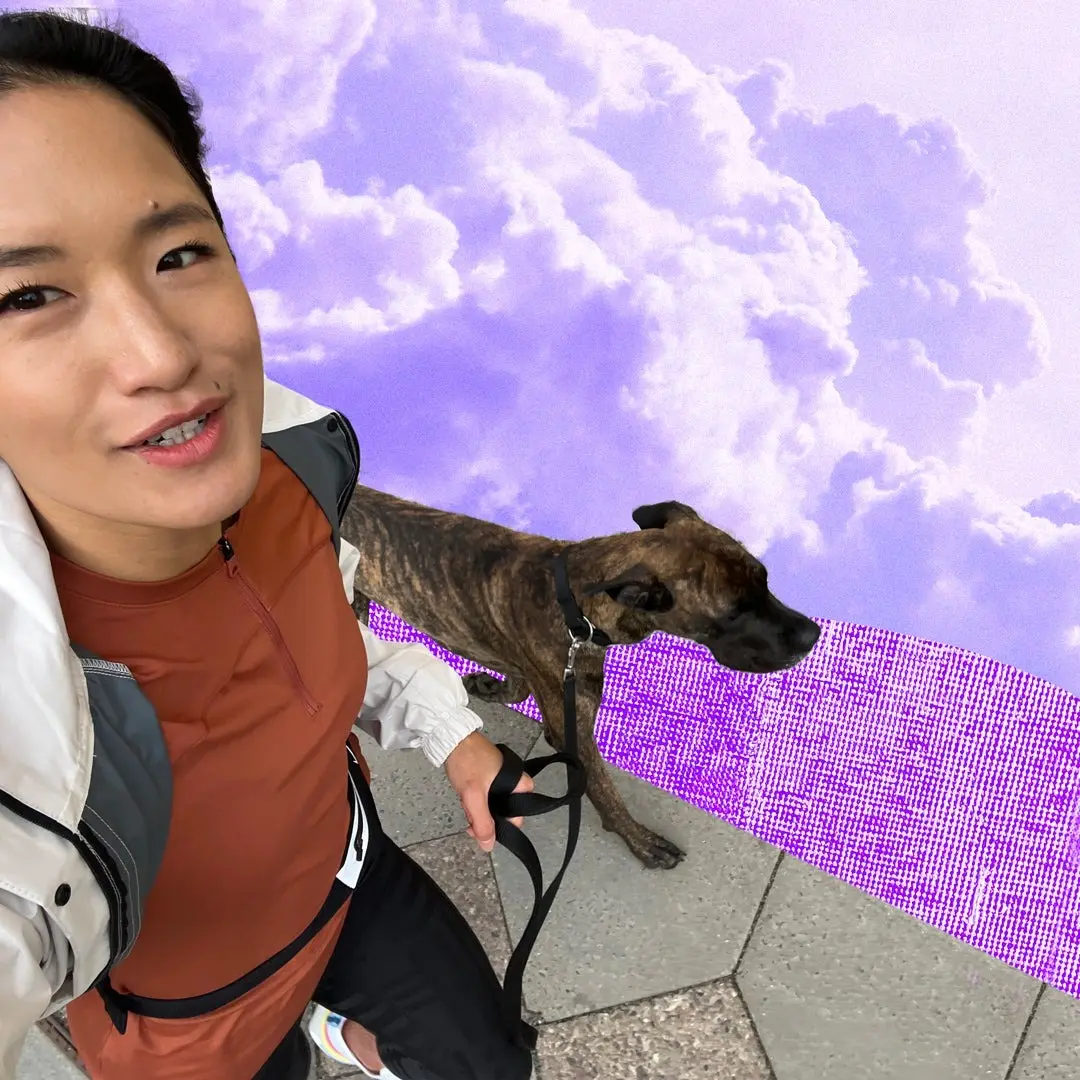
Adding a further layer of dynamic engagement to Monday’s outing, Hong incorporates canine companionship by borrowing a friend’s high-energy dog, Mia. The interspecies running partnership introduces a fascinating pacing dynamic: Mia pulls her forward during moments of sluggishness, while Hong’s superior endurance eventually dictates the latter half of the route. This symbiotic interplay highlights a core tenet of Hong’s philosophy—exercise need not be a solitary, monastic endeavor; it can be shared, dynamic, and unpredictable.
Tuesday: Cross-Training and the Architecture of Longevity
Blindly accumulating running miles without structural reinforcement is a direct path to the orthopedics clinic. Tuesday marks a deliberate departure from pavement-pounding, focusing instead on injury mitigation and structural integrity. Hong’s regimen eschews the "run-only" trap, incorporating dedicated sessions of yoga, targeted strength training, and professional physiotherapy.
This holistic scaffolding is not merely supplementary; it is foundational. By building a robust musculoskeletal framework, Hong ensures that when she eventually pushes past her comfort zone during intense track workouts, her body possesses the shock absorption and tensile strength required to absorb the mechanical stress. Furthermore, this multidisciplinary approach safeguards against the nervous system burnout that plagues many amateur runners. By distributing the physical load across varied movement patterns, she preserves her systemic energy reserves, ensuring that a grueling workout is invariably followed by a restorative recovery window rather than chronic depletion.
Wednesday: The Sacred Space of Recovery and Social Integration
In the physiology of endurance sports, rest is not the absence of training; it is the catalyst for adaptation. Wednesday serves as a crucial physiological buffer in Hong’s weekly cadence. However, as an aviation professional who spends extensive periods traversing time zones, her personal metric of recovery extends far beyond physical stillness. It encompasses emotional and social replenishment.
When she touches down in Berlin, her priority list expands to include deep-rooted social connections. Rather than isolating herself in pursuit of athletic purity, Hong spends Wednesday engaging with her cultural and social ecosystem—frequently opting to explore contemporary art exhibitions with friends. This deliberate injection of cultural stimulation feeds her identity as a designer, proving that an athlete’s mental bandwidth is enriched by interests extending far beyond split times and heart rate monitors.
Thursday: Pushing Limits and the Psychology of Speed
While comfort is a cornerstone of Hong’s philosophy, true marathon preparation demands periods of acute discomfort. Thursday represents the crucible of her weekly training block: the high-intensity track workout.
Dispelling the myth that elite-level preparation comes effortlessly, Hong openly admits to bargaining with her alarm clock. "Some people think marathon runners bounce out of bed at 5:00 AM and effortlessly knock out 20 kilometers," she notes with a laugh. "In reality, I sometimes need an extra dose of motivation."
On the track, the objective is deliberate physiological stress: testing velocity thresholds and sustaining high-tempo outputs over prolonged intervals. To mitigate the brutal impact forces associated with track sessions, gear selection becomes paramount. Hong relies on performance footwear engineered for maximum energy return and structural protection, noting that her preferred running shoes provide a secure footing across varied substrates while delivering a responsive, cushioned ride that dampens the harsh feedback of the synthetic track.
Friday: The Integration of Rest and Urban Exploration
Following the high-stress physiological demands of Thursday’s track session, Friday is designated as an active recovery day, punctuated by a gentle yoga flow and a strict moratorium on high-intensity running.
True to her lifestyle-centric philosophy, Hong maximizes her presence in Berlin. She meets friends for gallery visits and culinary exploration. This cyclical rhythm—pushing the biological envelope on Thursday and intentionally withdrawing on Friday—exemplifies sustainable periodization. It teaches the nervous system that stress is temporary and always answered by deliberate restoration.
Saturday: The Ritualistic Long Run Along the Landwehrkanal
Saturday morning in Berlin carries a distinct ritualistic weight. Hong’s standard long-run route tracks the historic Landwehrkanal, offering a textured urban topography that transitions seamlessly from hard asphalt to forgiving grass and damp earth.
This weekly fixture is a masterclass in sensory calibration. Equipped with a gripping narrative podcast or simply attuned to the ambient acoustic ecology of awakening neighborhoods, Hong uses this time to achieve a state of mental detachment. The run is not measured purely by aerodynamic efficiency, but by the richness of observation—watching the city wake up, noting the cadence of fellow urbanites, and absorbing the kinetic energy of the metropolis.
The conclusion of Saturday’s run is sacred: a deliberate, unhurried culinary reward consisting of artisanal coffee and a warm snack sourced directly from a local market stall in Kreuzberg. This post-run ritual anchors the physical exertion to a tangible sensory pleasure, conditioning the brain to associate running with indulgence rather than deprivation.
Sunday: Community Synergy and the Long-Distance Brotherhood
No modern training week is complete without communal validation. On Sunday, Hong joins her running collective—the Joy Run Collective—for a comprehensive long-distance run through the sprawling expanses of the Tiergarten.
Running long distances in shifting weather conditions requires meticulous preparation. Hong layers strategically to combat the chill, relying on the collective kinetic energy of her running group to push through the psychological barriers of distance. The shared suffering and collective triumph forge profound social bonds.
True to the community-centric ethos of modern running culture, the conclusion of the Tiergarten long run is marked by a deliberate social ritual: a group brunch. On this particular Sunday, the centerpiece of the gathering is a batch of homemade dumplings meticulously prepared by a host—a culinary reward that Hong admits to anticipating throughout the entire week’s training blocks.
Supporting Context & Metrics: The Paradigm Shift in Urban Endurance
To properly contextualize Hong’s journey, one must examine the broader socioeconomic and cultural transformation of running over the past decade. Historically categorized as a solitary, utilitarian pursuit dominated by hyper-competitive demographies, running has evolved into a vibrant lifestyle movement.
| Metric / Dimension | Traditional Endurance Paradigm | Modern Lifestyle Endurance Paradigm |
|---|---|---|
| Primary Motivation | Strict performance, medals, podium finishes | Holistic health, mental clarity, community, self-discovery |
| Training Philosophy | "No pain, no gain," high psychological friction | Sustainable consistency, structural comfort, intuitive pacing |
| Recovery Protocol | Passive rest, viewed as a necessary evil | Active recovery, social engagement, cultural stimulation |
| Gear & Environment | Purely utilitarian, clinical, sterile aesthetics | Performance-meets-aesthetics, community hubs, urban exploration |
| Social Structure | Solitary suffering or elite clubs | Inclusive collectives (e.g., Joy Run Collective), post-run social rituals |
The Physiology of Sustainable Pacing
From a sports science perspective, Hong’s methodology aligns closely with polarized training models championed by exercise physiologists. Elite and sub-elite endurance coaches increasingly recognize that approximately 80% of training volume should be performed at a low, conversational intensity, with only 20% dedicated to high-intensity threshold work.
By prioritizing "cozy" runs, singing when breathless, and refusing to turn every outing into a maximal time trial, Hong naturally protects her aerobic base (Zone 2 training). This prevents the chronic elevation of cortisol—the stress hormone—associated with overtraining. Consequently, her body adapts efficiently, building capillary density and mitochondrial efficiency without triggering the inflammatory breakdowns that sideline amateur athletes.
The Sociology of Running Collectives
The rise of grassroots running collectives in major metropolitan hubs like Berlin represents a fundamental democratization of sport. Traditional athletic clubs often intimidate newcomers with strict membership criteria, intimidating time trials, and hierarchical structures. In contrast, modern collectives operate as horizontal social networks where pace is secondary to presence.
These groups function as vital urban third places—spaces distinct from home and work where individuals forge meaningful social bonds. For professionals like Hong, whose careers involve frequent geographic displacement due to aviation schedules, these collectives provide an immediate sense of place, safety, and belonging upon returning to home soil.
Official Statements and Personal Philosophy
Reflecting on her four-year transformation from a self-proclaimed non-runner to a seasoned marathoner preparing for her seventh 42-kilometer race, Hong offers profound insights into the psychological architecture of endurance sports:
"I used to be one of those people who thought they weren’t a runner. Now, I am training for my seventh marathon. I exercise almost every day, and it is totally important to me that I feel comfortable while doing it. Because I like things cozy. Like anyone else, I like hitting the snooze button a few times, and before my morning coffee, I am completely useless."
Addressing the false dichotomy between relentless ambition and personal well-being, Hong emphasizes that sustainable achievement requires structural grace:
"I’ve learned that consistency and comfort do not have to be mutually exclusive. I can set new limits for myself and still feel completely at ease while doing it. Next stop: my 7th marathon."
This philosophy challenges the pervasive hustle-culture narrative within endurance athletics. It asserts that mental resilience is not forged through self-punishment, but through the patient, compassionate cultivation of habits that honor both physical limits and emotional needs.
Future Outlook: The Evolution of Everyday Endurance
As the global wellness economy continues to mature, the archetype of the suffering athlete is rapidly giving way to the holistic movement practitioner. Hong’s trajectory—moving effortlessly between the demands of international aviation, creative design work, rigorous cross-training, and joyful community runs—serves as a compelling harbinger for the future of endurance sports.
The barrier to entry for marathons and endurance events is lowering, not because the physical distance of 42.195 kilometers has changed, but because the cultural narrative surrounding the journey has been rewritten. When athletes like Hong demonstrate that running can coexist with sleeping in, singing on the pavement, eating dumplings with friends, and prioritizing mental well-being, the sport transforms from an exclusive test of grit into an inclusive celebration of human capability.
For the growing legion of urban professionals seeking balance in an increasingly fragmented world, Hong’s three foundational pillars offer a clear, actionable roadmap to athletic fulfillment:
- Prioritize ergonomic and structural comfort (invest in quality gear that supports varied terrain and reduces physiological friction).
- Curate an emotional and auditory ecosystem (leverage playlists, creative pacing tricks, and shared canine or human companionship to maintain psychological engagement).
- Anchor physical exertion to social and sensory rewards (blend long miles with community collectives, cultural exploration, and deliberate culinary celebrations).
As Hong laces up her running shoes for her seventh marathon campaign, she carries with her not just the accumulated mileage of an endurance athlete, but the triumphant realization that strength and softness are not opposing forces—they are the twin engines of a sustainable, joyful life in motion.