Executive Overview
For decades, the global conversation surrounding educational reform has been dominated by standardized metrics, test-driven accountability, and data-obsessed curricula. While these systems aim to ensure academic rigor, they frequently sideline the vital, organic elements of intellectual growth: curiosity, creative exploration, and, above all, profound wonder.
Recent pedagogical developments, however, suggest a transformative shift is underway. Educators, academic researchers, and policymakers are increasingly turning their attention away from mechanical knowledge delivery and toward the cultivation of wonder.
From innovative K-5 outdoor learning laboratories to doctoral research frameworks, educational pioneers are asking a radical question: What would happen if we placed wonder at the very center of the educational ecosystem—starting not with the students, but with the educators themselves?
Recent field studies, notably a landmark March 2026 phenomenological study conducted by Clemson University researchers Andrew Gilbert and Steph N. Dean, demonstrate that wonder-infused learning environments do more than simply engage students; they foster resilience, collaborative problem-solving, and a lifelong appetite for discovery.
Yet, the data also reveals a deeper truth: teachers cannot successfully facilitate wonder in their classrooms if they have lost their own capacity to experience it. By embracing "shared vulnerability," breaking away from the burden of having all the answers, and treating education as a collaborative quest, schools can transition from rigid institutional factories into vibrant ecosystems of genuine intellectual inquiry.
Detailed Chronology: The Evolution of Wonder-Centric Pedagogy
To understand where modern education is heading, it is essential to trace how the discourse around creativity, curiosity, and critical thinking has evolved over the last fifteen years.
2011: Early Warnings Against Institutional Stagnation
The modern pushback against mechanistic schooling gained significant momentum in the early 2010s. In May 2011, psychologist and researcher Dr. Todd Kashdan published a seminal piece titled "3 Ideas to Prevent Schools from Killing Creativity, Curiosity, and Critical Thinking."
Responding directly to these concerns, educational advocates began drafting frameworks to protect and foster intrinsic motivation in the classroom. This included proposals such as "The Creative State of the Union: 6 Bold, Wonder-Centered Ideas for Obama’s Education Initiative," which argued that national educational policy needed to pivot away from hyper-standardization and toward cultivating open-ended problem-solving skills.
2017: Reshaping Teacher Preparation
As the theoretical framework matured, researchers began investigating how foundational teacher training programs influenced pedagogical approaches.
A 2017 qualitative study by Andrew Gilbert and Byers, focusing on pre-service elementary teachers at George Mason University, marked a critical turning point. The study evaluated how wonder-based pedagogical training altered prospective teachers’ relationships with complex subjects like science.
The findings were striking: when future educators were trained to view science through the lens of wonder rather than rote memorization, they fundamentally re-envisioned their professional identities, moving away from authority figures with definitive answers and toward co-investigators of the natural world.
The Mid-2020s: Empirical Validation and Adult Awakening
By the mid-2020s, the philosophy of wonder graduated from theoretical discourse into empirical validation. Researchers began launching extended, immersive studies to measure the qualitative impact of wonder-infused curricula.
Simultaneously, a groundswell of grassroots professional interest emerged. Educators like Angela Stockman began publicly re-evaluating educational assessment tools, contrasting the traditional pursuit of "curiosity" with the deeper, more contemplative practice of "tracking wonder."
Stockman noted in her professional writings that tracking wonder slows educators down, gives curiosity real substance, treats bewilderment as a legitimate intellectual posture, and ultimately provides the emotional documentation that hope and professional renewal require.
March 2026: The Clemson Phenomenon
The empirical peak of this movement arrived in March 2026 with the publication of Gilbert and Dean’s phenomenological study out of Clemson University.
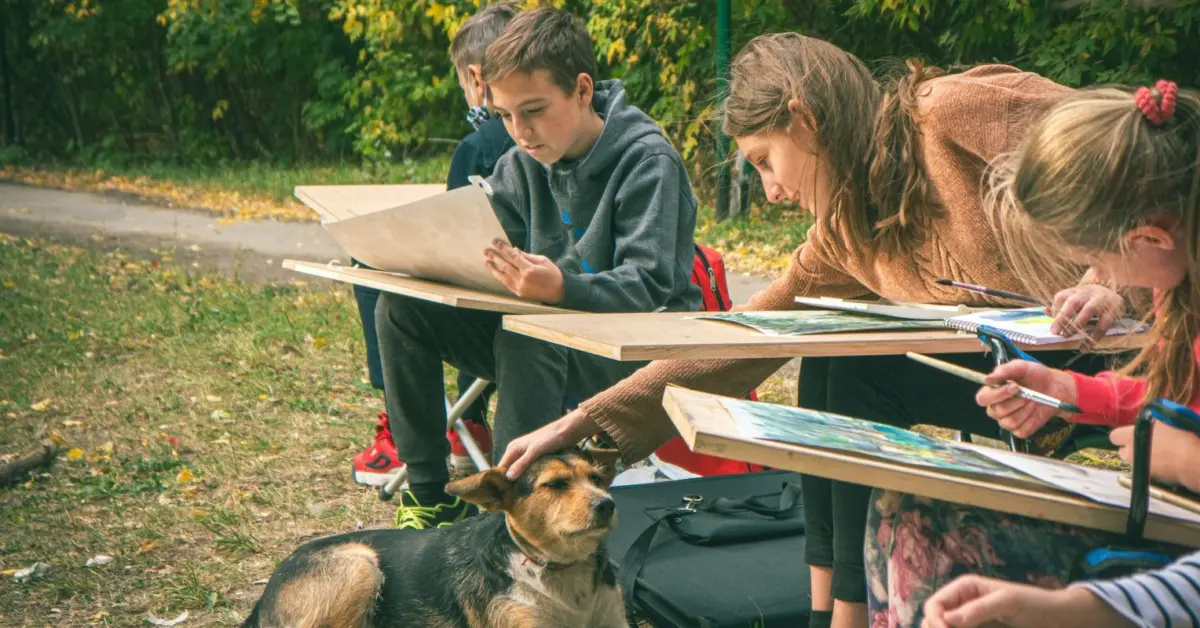
By analyzing an intensive eight-week "wonder-infused" outdoor project involving third- through fifth-grade students, the researchers provided concrete evidence of how unstructured, passion-driven scientific exploration reshapes young learners.
The study captured not only the intellectual breakthroughs of the students but also the profound psychological shifts experienced by the participating teachers, cementing wonder as a viable, measurable pedagogical outcome.
Supporting Context & Metrics: What the Research Reveals
The push for wonder-based education is underpinned by a growing body of qualitative and quantitative research. Scholars of education, such as Wolbert and Schinkel—noted for their theoretical work on "wonder-full education"—make a clear structural distinction between two types of cognitive engagement:
- Inquisitive Wonder ("Wondering About"): Highly aligned with traditional definitions of curiosity, this cognitive state drives individuals to seek specific information, fill knowledge gaps, and solve discrete problems.
- Contemplative Wonder ("Wondering At"): A deeper, more philosophical state where learners confront the sheer complexity, beauty, and mystery of a phenomenon without the immediate pressure of finding a definitive solution.
The Clemson University Case Study (March 2026)
The Clemson study provided a practical blueprint for merging these two forms of wonder. In an outdoor learning laboratory, elementary students rotated through field-study stations designed around open-ended scientific phenomena. Rather than following rigid worksheets, the students maintained "wonder journals," documented spontaneous observations, and formulated their own testable hypotheses.
Key takeaways from the project included:
- Immediate Practical Relevance: Students reported that the freedom to explore helped "open up" their minds, preparing them for real-world problem-solving by encouraging self-directed inquiry.
- The Normalization of "Joyful Struggle": Researchers observed that when students encountered obstacles—such as formulating a shared hypothesis or agreeing on experimental parameters—the overarching atmosphere of wonder reframed frustration as a game rather than a failure. This "joyful struggle" is precisely the resilience mechanism that long-term educational leaders strive to cultivate.
- Shared Vulnerability: Teachers involved in the Clemson project reported a profound psychological shift. By admitting that they did not always know the answers to the natural phenomena they were observing alongside their students, teachers dismantled traditional hierarchies of authority, replacing them with a culture of mutual discovery.
Adult Education and the Radical Nature of Wonder
A common misconception in pedagogical design is that wonder is exclusively a developmental tool for young children. Pioneers in the field have long argued otherwise, noting that "Wonder is not kids’ stuff; wonder is radical grown-up stuff."
Workshops conducted with undergraduate populations at Western Connecticut State University and doctoral candidates at Boston College reveal a striking sociological trend: adults across all academic disciplines experience palpable relief when given explicit permission to wonder openly.
Decades of professional pressure to project absolute certainty often leaves educators and professionals intellectually exhausted. Creating spaces where adults can reconnect with the aspects of learning that initially drew them to their professions acts as a powerful antidote to burnout.
Official Statements & Expert Perspectives
The paradigm shift toward wonder-centered learning has captured the attention of theorists, practitioners, and institutional leaders alike.
On Shifting Documentation and Professional Practice:
Educational facilitator Angela Stockman reflects on the transformative power of slowing down through documentation:
"How might tracking wonder, rather than curiosity, offer richer rewards? How might it make my documentation practice more meaningful? I’m not sure. But… a practice that slows us down enough to stay open, that gives our curiosity something real to work on, that treats bewilderment as a legitimate place to stand… that seems like a profoundly rewarding practice that might help me find surprising answers."
On Student Empowerment and World-Readiness:
A participating elementary student in the Clemson University outdoor research project summarized the experiential shift of wonder-based learning with remarkable clarity:
"Well, it kind of helps you open up your mind… it helps get you ready for the world. It helps you figure out answers on your own."
On Teacher Identity and Contemplative Practice:
Researchers Wolbert and Schinkel emphasize that teacher burnout and student disengagement are symptoms of a mechanical approach to curriculum delivery. They argue that authentic educational transformation requires teachers to inhabit both contemplative and inquisitive wonder:
"Teachers’ own capacity to wonder is essential to cultivating wonder in students. Such teachers do not simply view wonder as some mechanical element to deliver a lesson, but they more or less inhabit contemplative wonder… and inquisitive wonder."
Furthermore, this pedagogical stance requires confronting personal limitations. As educational observers note, wonder exposes vulnerability because it underscores the vast expanses of human ignorance. When teachers embrace this vulnerability, they create the psychological safety necessary for true learning to occur.
Future Outlook: Reimagining the Educational Architecture
As school boards, university departments of education, and policy committees reconsider their assessment models, the movement toward wonder-centered instruction offers a clear roadmap for the future.
To successfully transition modern education away from sterile standardization and toward dynamic, resilient learning environments, systemic changes must occur at multiple levels:
1. Redefining Teacher Professional Development
Professional development programs must move beyond compliance training and software tutorials. Instead, institutions should cultivate "scientist-educators" by designing programs that allow teachers to engage in peer-led inquiry, outdoor exploration, and shared vulnerability. When teachers are supported as ongoing learners, their contagious enthusiasm naturally revitalizes their classrooms.
2. Restructuring Assessment and Documentation
As Stockman and other forward-thinking educators suggest, documentation practices must widen their aperture. Rather than evaluating students solely on standardized benchmarks and final answers, educational assessment should account for the quality of a student’s questions, their capacity for "joyful struggle," and their resilience in the face of bewilderment.
3. Fostering a Schoolwide Ethos of Wonder
A piecemeal approach—where a single teacher introduces wonder into an isolated lesson—is insufficient for long-term cultural change. True reform requires a schoolwide ethos where leaders, administrators, and instructors routinely ask: What are we still in wonder with? What has surprised us lately? Where are we allowed to experiment?
Conclusion
Bringing wonder back to education is not an idealistic luxury; it is an urgent structural necessity. By prioritizing the intrinsic capacity of both educators and students to question, wander, and wonder, we can build learning institutions that do not merely prepare young people to pass tests, but equip them to navigate an increasingly complex, uncertain, and fascinating world.