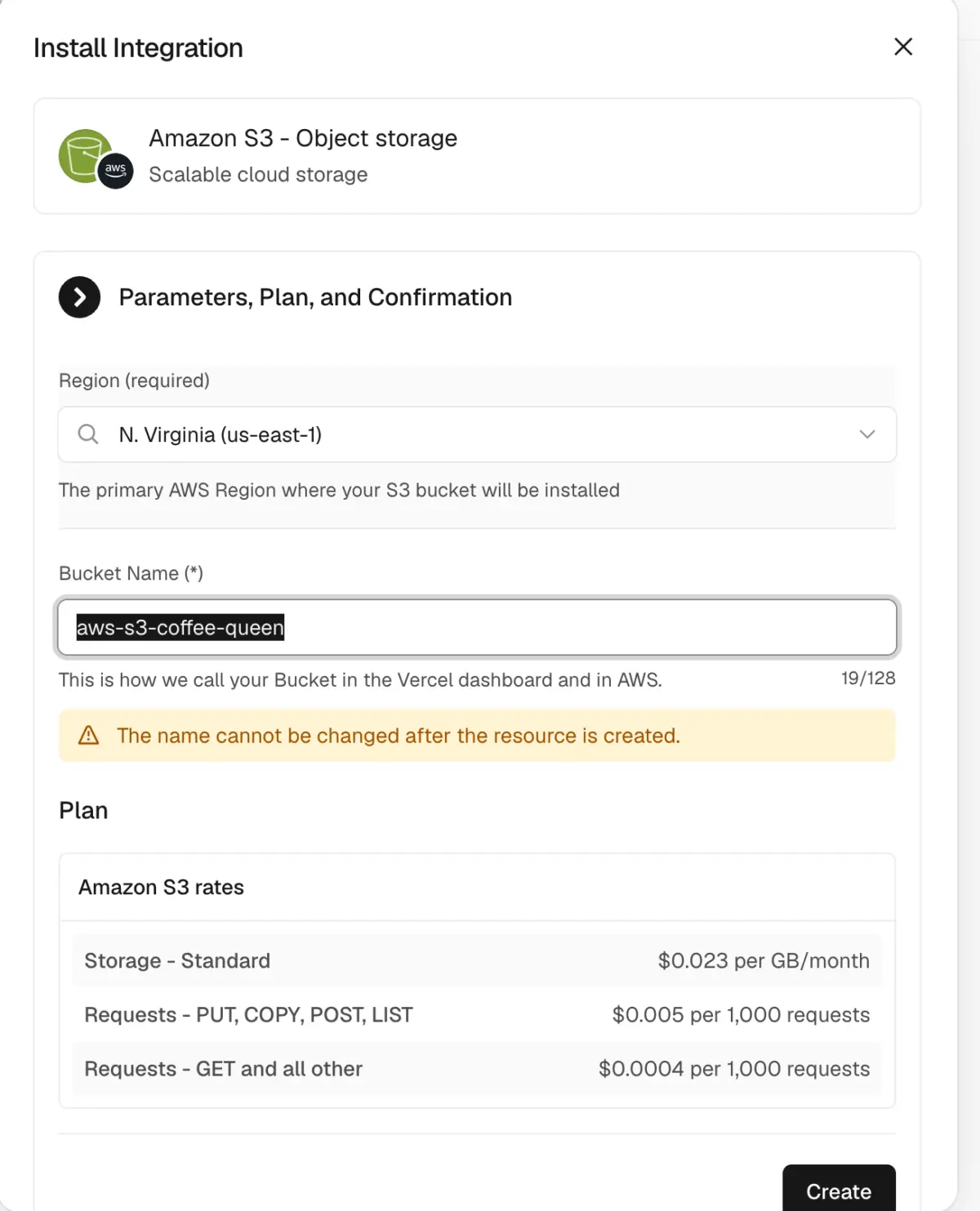
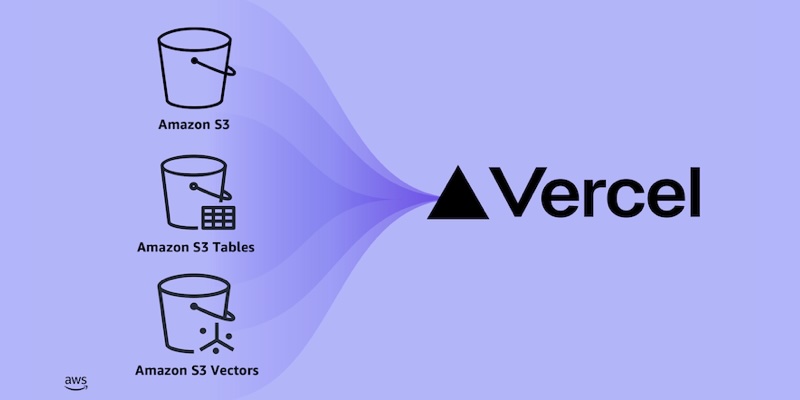
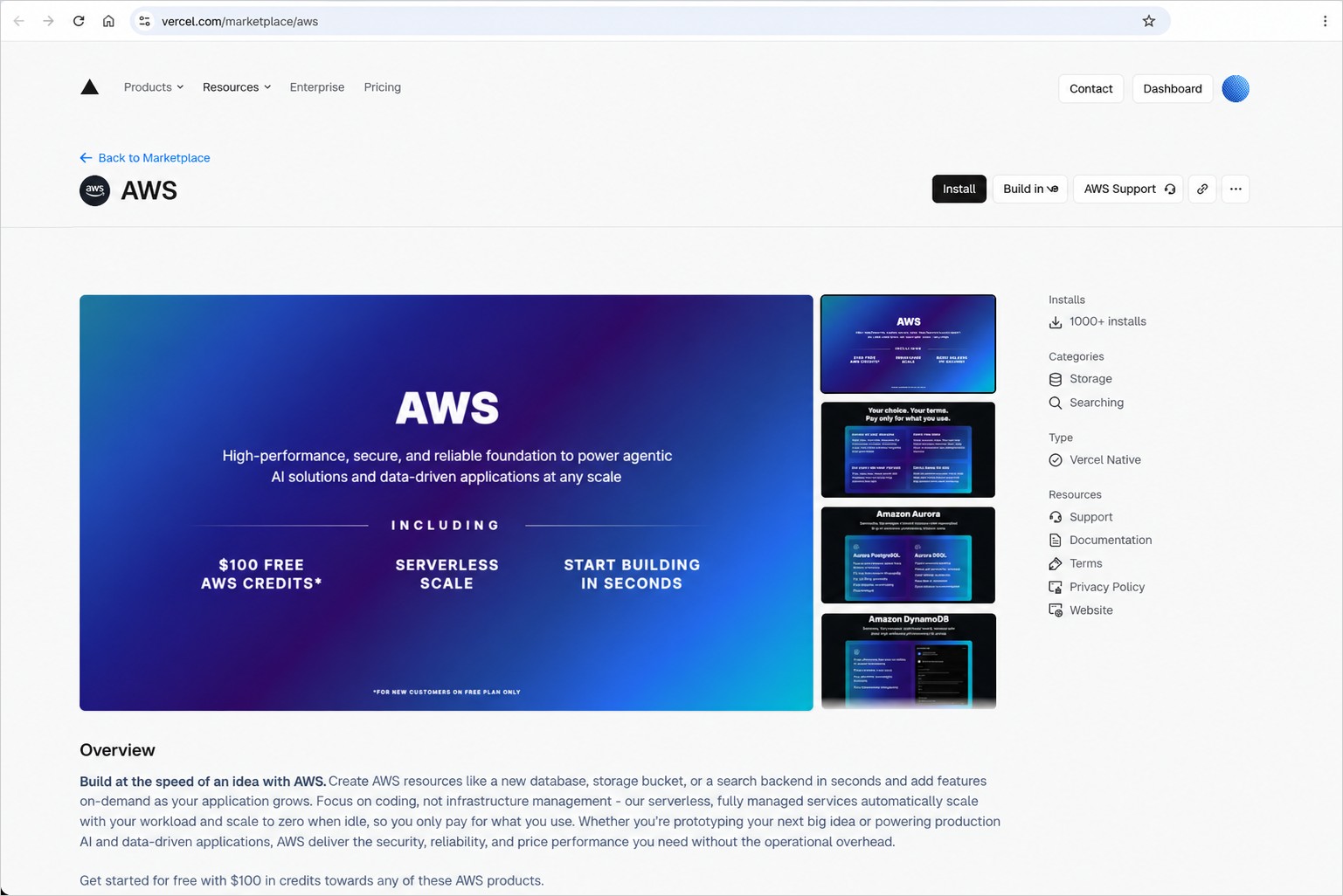
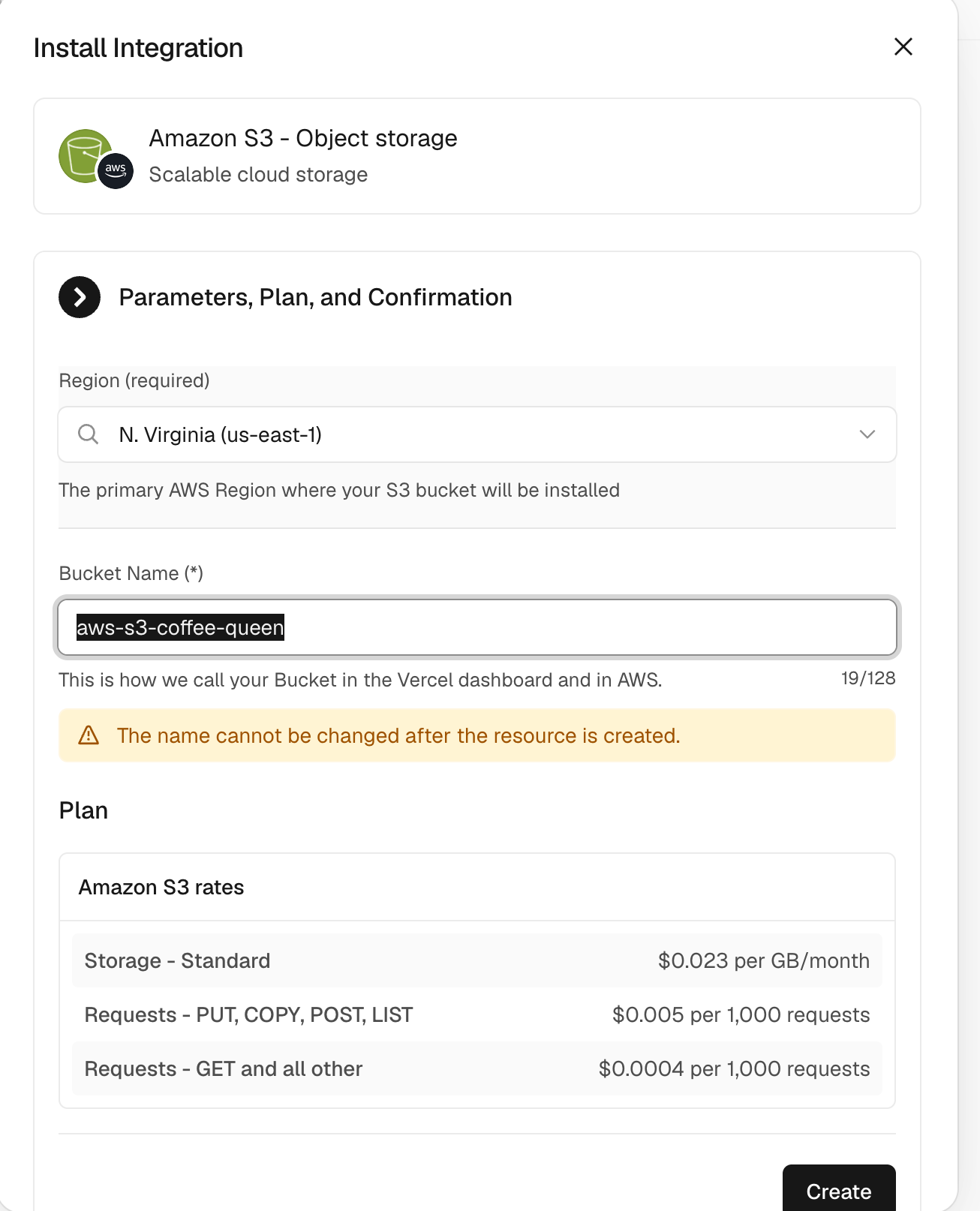
In a significant development for the modern web development and artificial intelligence (AI) engineering communities, Vercel and Amazon Web Services (AWS) have announced a powerful native integration. Developers building applications on Vercel can now provision and manage Amazon Simple Storage Service (Amazon S3)—including advanced features like S3 Tables and S3 Vectors—directly from the Vercel Marketplace and the generative UI platform, v0.
This architectural convergence bridges a historically disparate workflow. Previously, engineers building full-stack web applications or complex AI agents on Vercel had to context-switch away from their primary deployment environment. Configuring cloud storage meant navigating the AWS Management Console, meticulously setting up IAM policies, generating access keys, and manually managing credentials.
Today, that friction is eliminated. By embedding Amazon S3 into the Vercel dashboard and v0, the partnership bridges enterprise-grade cloud durability, scalability, and performance with Vercel’s streamlined serverless provisioning workflow. Covering three distinct use cases—everyday general-purpose storage, high-performance analytics, and semantic AI vector search—the integration delivers a complete application stack natively under one roof. Developers can now manage everything from relational databases (via Amazon Aurora) and NoSQL stores (via Amazon DynamoDB) to serverless search (via Amazon OpenSearch Serverless) and object-oriented storage, all within a unified AWS account structure and a single billing cycle.
Detailed Chronology: The Evolution of Serverless Workflow Integration
The release of native S3 support on Vercel represents the culmination of a multi-year effort by both Amazon and Vercel to harmonize the developer experience across cloud boundaries.
Phase 1: The Era of Manual Configuration
In the early days of serverless web development, hosting frontend and server-side logic on platforms like Vercel while leveraging AWS for backend persistence required substantial boilerplate. Developers writing Next.js applications who needed to upload user avatars, process large datasets, or feed documents to an LLM had to manually provision S3 buckets inside the AWS console. They were forced to handle complex Cross-Origin Resource Sharing (CORS) rules, establish security credentials, and inject environment variables by hand. Security risks were high, as static AWS Access Key IDs and Secret Access Keys frequently found their way into local .env files or, worse, public Git repositories.
Phase 2: Database Integrations and the Rise of Marketplace Offerings
Recognizing this friction, Vercel and AWS introduced integrations for core database engines such as Amazon Aurora Serverless and Amazon DynamoDB. These integrations allowed developers to spin up managed database instances with fewer manual touchpoints. However, object storage—the lifeblood of unstructured data, media assets, and machine learning pipelines—remained a separate administrative hurdle.
Phase 3: Native S3, S3 Tables, and S3 Vectors on Vercel and v0
The announcement marks the next evolution of this ecosystem. Amazon S3 is no longer just an external cloud service accessed via SDKs; it is a first-class citizen inside the Vercel Marketplace.
Simultaneously, the integration spans Amazon’s newest storage paradigms:
Amazon S3 General Purpose Buckets: Tailored for standard object storage workflows such as user uploads, image galleries, and static asset distribution.
Amazon S3 Tables: Purpose-built for data lake analytics, providing fully managed Apache Iceberg tables with automated table maintenance and compaction. This allows lightweight query engines like DuckDB to run natively inside Vercel Functions.
Amazon S3 Vectors: Built specifically for modern AI architectures, offering native storage and similarity querying for vector embeddings without requiring a separate vector database cluster.
Crucially, this capability has also been integrated into v0 by Vercel, enabling developers to provision enterprise-grade storage infrastructure using natural language prompts.
Supporting Context & Technical Architecture
Under the hood, the Vercel-AWS S3 integration relies on robust, modern cloud security protocols designed to eliminate long-lived credentials.
Secure OIDC Authentication
When a developer links an S3 bucket to a Vercel project, the integration automatically injects essential environment variables: AWS_REGION, AWS_ROLE_ARN, AWS_RESOURCE_ARN, and resource-specific identifiers such as S3_BUCKET_NAME.
At runtime, rather than relying on static access keys, the application leverages the awsCredentialsProvider utility from @vercel/functions/oidc. This function securely exchanges a short-lived OpenID Connect (OIDC) token with the AWS Security Token Service (AWS STS) to acquire temporary, highly scoped credentials. By eliminating static keys entirely, the architecture adheres to the principle of least privilege and significantly reduces the blast radius of potential security incidents.
Implementation Patterns Across Workloads
1. General-Purpose Object Storage
For standard file uploads, developers can pair standard Next.js API routes or Server Actions with the AWS SDK for JavaScript (@aws-sdk/client-s3).
S3 Tables bring the efficiency of Apache Iceberg data lakes directly to serverless applications. By attaching an S3 Table bucket ARN, developers can execute complex analytical queries using embedded query engines like DuckDB inside Vercel Functions.
By leveraging DuckDB’s native AWS and Iceberg extensions, applications can query massive, auto-optimized datasets directly from object storage without maintaining a dedicated analytics cluster. (Developers utilizing Next.js must ensure that @duckdb/node-api is designated within serverExternalPackages inside next.config.mjs to prevent bundling native binaries incorrectly).
3. Semantic AI Search with S3 Vectors
With the explosive growth of Retrieval-Augmented Generation (RAG) and AI agents, vector storage has become a mandatory architectural component. S3 Vectors allows engineering teams to store and query vector embeddings directly within S3.
The inclusion of S3 provisioning within v0 changes how prototypes are built. A developer can prompt v0 with natural language phrases such as:
"Build a photo gallery where users can upload images using AWS." (Triggers S3 general-purpose bucket provisioning).
"Create a support bot that answers questions from my uploaded PDFs." (Triggers S3 Vectors integration).
"Set up an analytics dashboard for my clickstream data." (Triggers S3 Tables setup).
v0 automatically designs the user interface, provisions the corresponding storage resource, configures environment bindings, and presents a fully functional application preview.
Official Statements and Industry Impact
Industry observers have noted that this integration represents a broader paradigm shift: the commoditization of infrastructure setup through generative design and tightly coupled marketplace ecosystems.
"Storage is the bedrock of performant, stateful applications," noted an engineering lead close to the project rollout. "By bringing Amazon S3, S3 Tables, and S3 Vectors directly into the Vercel dashboard and v0, we are removing the cognitive overhead of multi-cloud orchestration. Developers can focus entirely on shipping business value and exceptional user experiences, secure in the knowledge that their data layer is backed by the industry standard for cloud durability and performance."
The financial and administrative model has also been carefully structured to appeal to both startups and enterprise organizations. Developers can either link an existing AWS account—retaining their current enterprise pricing tiers and native AWS governance tools—or spin up a brand-new AWS account directly through the Vercel Marketplace. New accounts provisioned via this pathway receive a $100 AWS credit valid for six months, removing financial barriers for rapid prototyping and testing.
Furthermore, because all S3 resources reside physically within the user’s designated AWS account, organizations do not sacrifice data ownership, compliance posture, or access to AWS-native logging, monitoring, and security tooling.
Future Outlook and Ecosystem Implications
As web development converges with artificial intelligence, the boundaries between frontend deployment platforms and hyperscale cloud providers will continue to blur. The integration of Amazon S3 into Vercel and v0 signals a future where infrastructure is treated as an instantaneous, declarative primitive rather than a manual provisioning chore.
Looking ahead, we can expect deeper convergence across several fronts:
Automated RAG Pipelines: Enhanced zero-config bridges between document uploads, automated embedding generation models, and S3 Vectors storage.
Real-Time Data Streaming: Tighter coupling between edge compute functions on Vercel and S3 Tables data lakes, enabling instant telemetry and analytics without heavy database dependencies.
Agentic Infrastructure Control: Broader utilization of agentic workflows—supported by tools like the AWS Model Context Protocol (MCP) Server—allowing AI assistants to dynamically scale, inspect, and optimize cloud storage resources on behalf of developers.
For engineering teams currently navigating the complexities of modern web and AI architecture, the Vercel-AWS S3 integration offers a clear path forward: fewer configuration screens, stronger security primitives via OIDC, and a unified application stack built to scale from day one.