In April 2023, the media landscape shifted abruptly when Fox News announced the departure of its flagship primetime host, Tucker Carlson. While corporate boardrooms scrambled to assess the fallout of the sudden exit—which followed closely on the heels of a massive, costly defamation settlement with Dominion Voting Systems—a different kind of celebration was unfolding in digital spaces.
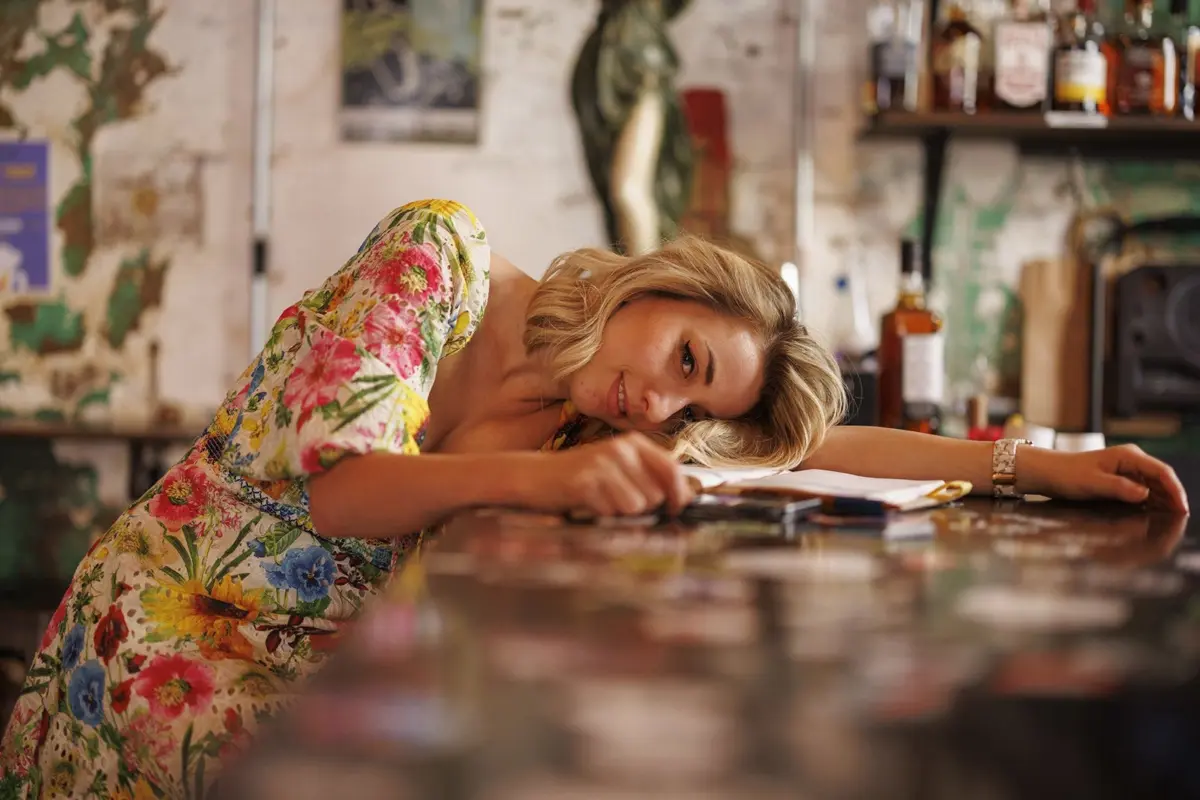
At the center of that virtual jubilation was Katherine "Kat" Abughazaleh, a 24-year-old senior video producer for the progressive media watchdog group Media Matters for America. Known to hundreds of thousands of followers simply as "Kat Abu," Abughazaleh had spent the prior two years living and breathing Carlson’s nightly broadcasts. Her job required meticulous monitoring of Fox News’s evening lineup to archive, analyze, and debunk right-wing narratives. But outside of her day job, Abughazaleh had transformed her professional exposure into an independent social media empire.
By dissecting the absurdities of cable news through sharp, satirical TikTok videos, YouTube deep-dives, and viral Twitter threads, Abughazaleh carved out a unique space at the intersection of media criticism and internet culture. Her meteoric rise highlights a fundamental generational disconnect: while legacy conservative media continues to demonize Gen Z, young digital natives are weaponizing humor, platform mechanics, and fierce digital literacy to dismantle right-wing talking points. Yet, this digital stardom has come at a severe cost. As Abughazaleh’s online footprint expanded, she became the target of relentless, highly gendered online harassment, ranging from explicit doxxing and pornographic deepfakes to daily threats of sexual violence.
This report examines Abughazaleh’s journey from a conservative Texas upbringing to progressive media watchdog, the mechanics of her viral anti-misinformation crusade, the systemic misogyny she faces online, and the broader implications of Tucker Carlson’s exit for the future of cable news.
Detailed Chronology
A Shocking Monday Afternoon
On a Monday afternoon in April 2023, roughly five hours after Fox News dropped the bombshell announcement that Tucker Carlson was leaving the network, Abughazaleh’s video-chat screen glowed with unconcealed delight.
"I’ve been very joyful today," she remarked during an interview, encapsulating the sentiment shared by many media critics and progressive activists. "I feel like everyone’s just having a fun day."
As news of Carlson’s firing spread—the precise corporate motivations remaining murky even days later—strangers began sending Abughazaleh unsolicited Venmo payments with notes telling her to "Go get a drink." Though she attempted to return the funds, the senders repeatedly rejected the refunds. The outpouring of financial and emotional support was a testament to how deeply her online persona had resonated with audiences exhausted by years of polarizing cable news.
The Anatomy of a Watchdog’s Routine
Two weeks prior to Carlson’s ouster, a visit to the expansive, sparsely populated Washington, D.C. offices of Media Matters for America—overlooking the Anacostia River in the Navy Yard—offered a glimpse into Abughazaleh’s daily grind. While most of the non-profit’s staff had worked remotely since the onset of the COVID-19 pandemic, Abughazaleh and a handful of colleagues frequently gathered to monitor the evening news block.
Unlike peers who utilized multi-monitor desktop setups, Abughazaleh operated almost exclusively from a single laptop. Moving with blistering speed, she flipped through browser tabs, extracted video clips, drafted internal memos, and fired off barbed replies to detractors on social media.
During one evening monitoring session, she captured a segment featuring Carlson launching into a racially charged diatribe against Tennessee state politician Justin Pearson. "Strong stuff—he’s having a normal one today," she quipped dryly while exporting the footage. For Abughazaleh, the act of archiving and broadcasting these clips was not about amplifying harmful rhetoric, but rather meeting audiences where they already were. "Fox is the most-watched cable news channel in the country," she noted. "They already had the platform. And just letting them get by scot-free does more damage than it helps."
The Rise of "Kat Abu"
Abughazaleh’s viral success was entirely homegrown. Writing, shooting, and editing her videos strictly on her own time, she drew upon technical skills she taught herself as a child making anime music videos.
Her first TikTok, posted in January 2023, targeted Carlson’s on-air attacks against then-aspiring House Speaker Kevin McCarthy. Subsequent hits included roundups like "10 Ridiculous Things That Made Tucker Carlson Throw a Tantrum" and a merciless skewering of Carlson’s April interview with Donald Trump—their first televised encounter since text messages emerged from the Dominion lawsuit showing Carlson calling Trump a "demonic force."
"It went on like this for an hour," Abughazaleh told her followers, breaking down the Trump-Carlson dynamic. "Trump rambling about something for five minutes and then pausing so Tucker can respond like a trained animal."
Beyond short-form clips, Abughazaleh expanded into long-form YouTube investigations. She enrolled in Mike Huckabee’s controversial "Christian Nationalist homeschooling program" after seeing endless Fox News advertisements for it, producing multi-part breakdowns exposing its curriculum. She also targeted Mammoth Nation, an online marketplace marketed as a "right-wing Amazon," labeling it a predatory financial grift.
Supporting Context & Metrics
Political Evolution and Background
Abughazaleh’s capacity to deconstruct conservative ideology stems, ironically, from her own upbringing. Born into a "well-off" family in Dallas, Texas, she attended private schools until her sophomore year of high school. Her household was traditionally conservative, regularly tuning into Fox News. Her maternal grandmother, a long-time fixture of the Texas Federation of Republican Women, worked on numerous GOP campaigns—a legacy commemorated by a mink coat Abughazaleh inherited, which her grandmother had worn to President Richard Nixon’s inauguration.
Abughazaleh identified as a Republican well into her teens. However, her political awakening arrived when her family relocated to Tucson, Arizona.
"At least half my high school was low-income or undocumented," she recalled. "The bootstrap myth just shattered before my eyes."
Moving to Washington, D.C. to attend George Washington University, she majored in international security and studied journalism during the turbulent presidency of Donald Trump. Graduating in the spring of 2020, she sought employment that aligned with her evolving worldview. Media Matters proved to be an ideal fit.
Digital Footprint and Growth Metrics
By late 2023, Abughazaleh’s metrics reflected a powerful cross-platform presence:
- TikTok: Gained nearly 130,000 followers within months of her first post, with multiple videos exceeding 1 million views.
- Twitter (X): Accumulated over 182,000 followers, serving as a rapid-response channel for media critique and documenting online harassment.
- YouTube: Surpassed 11,000 subscribers, serving as a hub for detailed, long-form investigations into right-wing commercial products and educational programs.
Despite working for a progressive watchdog, Abughazaleh maintained strict boundaries between her professional duties and her personal social media accounts. Her catchphrase—"I watch conservatives for work, but make fun of them for pleasure"—became a defining ethos for her brand.
Official Statements and Institutional Perspectives
The Watchdog’s Defense of Platforming
Media Matters for America defines itself as a "progressive research and information center" dedicated to identifying and correcting conservative misinformation in American media. Critics occasionally argue that circulating clips of extremist commentary merely grants malicious actors a broader audience.
Abughazaleh and her organization rejected this premise, arguing that ignoring mainstream right-wing media apparatuses allows disinformation to spread unchecked. By contextualizing and mocking these narratives, creators can neutralize their psychological impact.
Security Protocols and Corporate Caution
As Abughazaleh’s public profile swelled, the line between digital trolling and physical security risks blurred. Media Matters recognized these escalating threats. During initial interviews at the Navy Yard offices, organization publicist Laura Keiter actively intervened to ensure that seemingly innocuous details—such as neighborhood markers or transit routes—were omitted from publication to prevent stalkers or bad actors from deducing Abughazaleh’s residential location.
Future Outlook
The Cost of Digital Prominence
Abughazaleh’s ascent was accompanied by a relentless wave of targeted online abuse. Because she frequently deconstructs male-dominated right-wing media spaces, much of the harassment she endured was explicitly misogynistic and sexualized.
Trolls routinely subjected her to deepfake pornography, photoshopped images featuring her alongside Tucker Carlson, and graphic threats of sexual violence. Conservative commentators frequently amplified her personal profiles to invite coordinated pile-ons. In January 2023, musician and commentator Phil Labonte shared a screenshot of her Tinder profile, prompting an influx of explicit, abusive messages from older male users.
Furthermore, hostile social media users regularly engaged in "snitch-tagging," forwarding screenshots of her personal life—such as a public Instagram photo of her smoking a cigarette—to Media Matters’ official corporate account in failed attempts to get her fired.
Rather than cowering, Abughazaleh leaned into her femininity, applying bold makeup and styling her hair before recording videos as a conscious act of defiance. "It makes them even more mad," she observed. "They don’t like a woman telling them that everything they believe is bullshit."
Beyond the vitriol, however, she found profound validation in messages from viewers who credited her videos with helping them deprogram family members from Fox News addiction. "I see comments from people on TikTok saying, ‘I sent these to my mom, and now she’s decided to only watch Special Report With Bret Baier instead of Tucker Carlson Tonight.’ And that’s really great."
Life After Tucker
Looking ahead to the post-Carlson media landscape, Abughazaleh expressed skepticism that any single host could replicate the unique cultural dominance Carlson held in the 8:00 PM ET timeslot. Drawing parallels to the unceremonious exit of Bill O’Reilly in 2017, she argued that the structural power lay within Fox News’s corporate programming block rather than the individual anchor.
As Fox News experiments with a rotation of guest hosts and internal talent to fill the coveted hour, Abughazaleh remains committed to her dual mission: professional media monitoring by day, and digital satire by night.
"It feels like I’m doing something—it’s so easy to feel powerless," she reflected. "Being angry and passionate and wanting to push forward because you want to make things better for other people makes it worth it."