Executive Overview
The consumer laptop market is undergoing a quiet, yet aggressive, cost-cutting crisis. To the casual browser scanning retail shelves or online storefronts, modern laptops might look deceptively similar to the models that debuted half a decade ago. Familiar entry-level configurations—such as Dell’s XPS 13 or Apple’s streamlined mobile offerings—are once again appearing with 8GB of RAM at baseline price points.
However, a closer look at price tags and hardware specifications reveals a stark reality: something has gone fundamentally wrong with the economics of personal computing.
Driven by an unprecedented global shortage of memory components, component manufacturers are increasingly cannibalizing consumer hardware specifications to preserve their profit margins. Industry data indicates that core components—specifically CPUs, memory, and storage—now make up a staggering 68 percent of a mainstream laptop’s bill of materials.
As original equipment manufacturers (OEMs) scramble to hit psychological retail price points like $599 and $799, they are leaning heavily on 8GB RAM configurations to cushion the blow. But for consumers, buying an 8GB laptop today is a false economy. Far from being a harmless budget compromise, an 8GB machine in an era of resource-heavy operating systems and background processes is a performance bottleneck waiting to happen.
Detailed Chronology: The Evolution and Reversal of Laptop Memory Baselines
To understand how the market arrived at this juncture, it is necessary to trace the rapid shifts in hardware standards over the past several years.
The Push Toward 16GB (2024)
For years, 8GB of RAM was accepted as the unofficial baseline for mainstream laptops. While adequate for basic web browsing and word processing, it was frequently strained by multitasking.
The industry began to pivot in May 2024, when Microsoft launched its Copilot+ PC program. Microsoft mandated that any laptop bearing the Copilot+ label must feature a minimum of 16GB of RAM to handle localized generative AI tasks.
This shift gained immense momentum that October when Apple doubled the base memory of the MacBook Air from 8GB to 16GB while maintaining its $999 starting price. Overnight, the industry standard shifted, and consumers rightfully began to view 16GB as the mandatory floor for future-proofing a machine.
The Memory Shock of 2026
This progressive standard was abruptly short-circuited by a severe macroeconomic and supply-chain crunch. In early 2026, market analytics firm TrendForce released a gloomy forecast warning that the prices PC makers pay memory suppliers would spike by an extraordinary 90 to 95 percent during the first quarter alone.
Facing skyrocketing production costs, laptop manufacturers began rolling back their configurations. Apple launched the MacBook Neo in March as its sole remaining current Mac with less than 16GB of RAM. Simultaneously, Dell reintroduced its flagship XPS 13 lineup with an 8GB base model to claw back a lower entry-level price point.
The Real-World Impact on Modern Hardware
On paper, 8GB of RAM technically exceeds the bare 4GB minimum required to boot and run Windows 11. Yet, synthetic benchmarks and real-world testing paint a dismal picture of usability.
When testing the base-model Dell XPS 13, reviewers discovered that roughly 80 percent of the system’s total memory was immediately consumed by invisible background processes the moment Windows booted up. Launching a modern web browser and populating it with a standard allotment of tabs pushed memory utilization to a throttling 95 percent.
This leaves virtually no headroom for the operating system, resulting in micro-stutters when scrolling, noticeable delays when switching between active windows, and general sluggishness.
Compounding the issue, entry-level chips like Intel’s Core 5 320—part of the budget Wildcat Lake line—utilize a single memory channel architecture rather than the dual channels found on pricier silicon. This means the processor and integrated graphics must compete for bandwidth over a single, narrow data pipeline tied to that meager 8GB pool.
Consequently, users who opt for the midrange 16GB configuration of the XPS 13 experience profound performance dividends. The upgraded model scores roughly 30 percent higher in standard benchmark suites like PCMark 10 and yields significantly better battery endurance under identical workloads.
Supporting Context & Metrics: The Anatomy of a Component Crisis
The resurgence of the 8GB laptop is not a design choice born of efficiency; it is an emergency financial maneuver executed by a cornered tech industry.
The Shifting Bill of Materials
Historically, memory and storage have accounted for a modest 15 percent of a laptop’s total production cost. However, TrendForce metrics show that this figure crossed the 30 percent threshold at the start of 2026, culminating in the current reality where primary compute and storage components consume over two-thirds of the manufacturing budget.
An analyst at market intelligence firm OpenBrand explained this phenomenon to Consumer Reports, noting that manufacturers intentionally "slide in" lower-specification components simply to preserve golden-ratio retail price points like $599, $699, and $799. Rather than raising the upfront sticker price of a baseline machine, brands reduce the RAM capacity to keep the product superficially affordable.
The AI Data Center Boom and Supply Cannibalization
The root cause of this memory inflation extends far beyond the personal computer sector. The exponential expansion of artificial intelligence infrastructure has created an insatiable demand for high-end RAM and solid-state storage. Hyperscale AI data centers are aggressively hoarding memory components, altering the operational priorities of semiconductor giants.
A prime illustration of this market shift occurred in February, when memory titan Micron elected to wind down Crucial—its prominent consumer RAM and SSD brand—entirely. Micron redirected its manufacturing output toward "larger, strategic enterprise customers," abandoning the consumer retail sector to feed the lucrative AI hardware machine.
The financial windfall for suppliers has been historic. Samsung reported staggering quarterly operating profits, with market analysts attributing the vast majority of those earnings exclusively to memory chip sales, while other divisions operated at a net loss. When enterprise buyers are willing to pay astronomical premiums for server-grade memory, consumer PC manufacturers are forced to fight over the expensive, high-cost scraps that remain.
Official Statements and Industry Forecasts
Industry executives and market analysts hold little optimism for a near-term correction, warning that consumers should brace for prolonged high pricing.
Acer Chairman and CEO Jason Chen offered a sobering perspective in interviews with trade publications, predicting that overall personal computer prices could climb by an additional 5 to 20 percent before finding a ceiling in the first half of 2027. Chen went as far as to accuse memory manufacturers of exaggerating the structural longevity of the shortage to artificially protect their unprecedented operating margins.
Meanwhile, TrendForce analysts remain doubtful that PC brands can successfully juggle stable retail prices, high hardware specifications, and baseline corporate profitability simultaneously over the coming year.
For the consumer, this dynamic translates into a painful mathematical equation: even the most optimistic industry forecasts agree that laptops will grow substantially more expensive before they become affordable again. Furthermore, buying an underpowered 8GB laptop today as a temporary stopgap offers no upgrade path; an 8GB machine purchased now will remain permanently restricted to 8GB of memory long after the supply chain crisis eventually subsides.
Future Outlook: How to Navigate the RAM Crisis
For buyers currently shopping for a new laptop, the strategic path forward requires careful navigation of upgrade fees, legacy inventory, and modular hardware.
Evaluating the Cost of Upgrades
When purchasing a machine like the Dell XPS 13, opting for the 16GB RAM upgrade typically incurs a $200 surcharge over the base price. While shelling out an extra $200 for memory feels exorbitant, it is a crucial investment in longevity.
Replacing a laptop entirely because an 8GB model has become obsolete or agonizingly slow costs far more than paying the upfront configuration fee.
Apple’s ecosystem presents a different dilemma. The ultra-affordable MacBook Neo leaves users with no configuration choice, while upgrading to a baseline 16GB Mac now requires purchasing the higher-tier M5 MacBook Air. While this higher-tier machine offers twice the baseline storage of older models, the entry barrier has risen significantly.
Alternative Buying Strategies
Savvy consumers can mitigate these inflated costs by exploring alternative market segments:
- Target Remaining Inventory: Prior-generation 16GB models still lingering in retail channels or clearance stock offer superior hardware value before they are entirely depleted.
- Embrace Modular and DIY Upgrades: Brands like Framework continue to encourage modularity, allowing buyers to purchase base configurations and install aftermarket RAM, or wait out the shortage before expanding memory capacity independently.
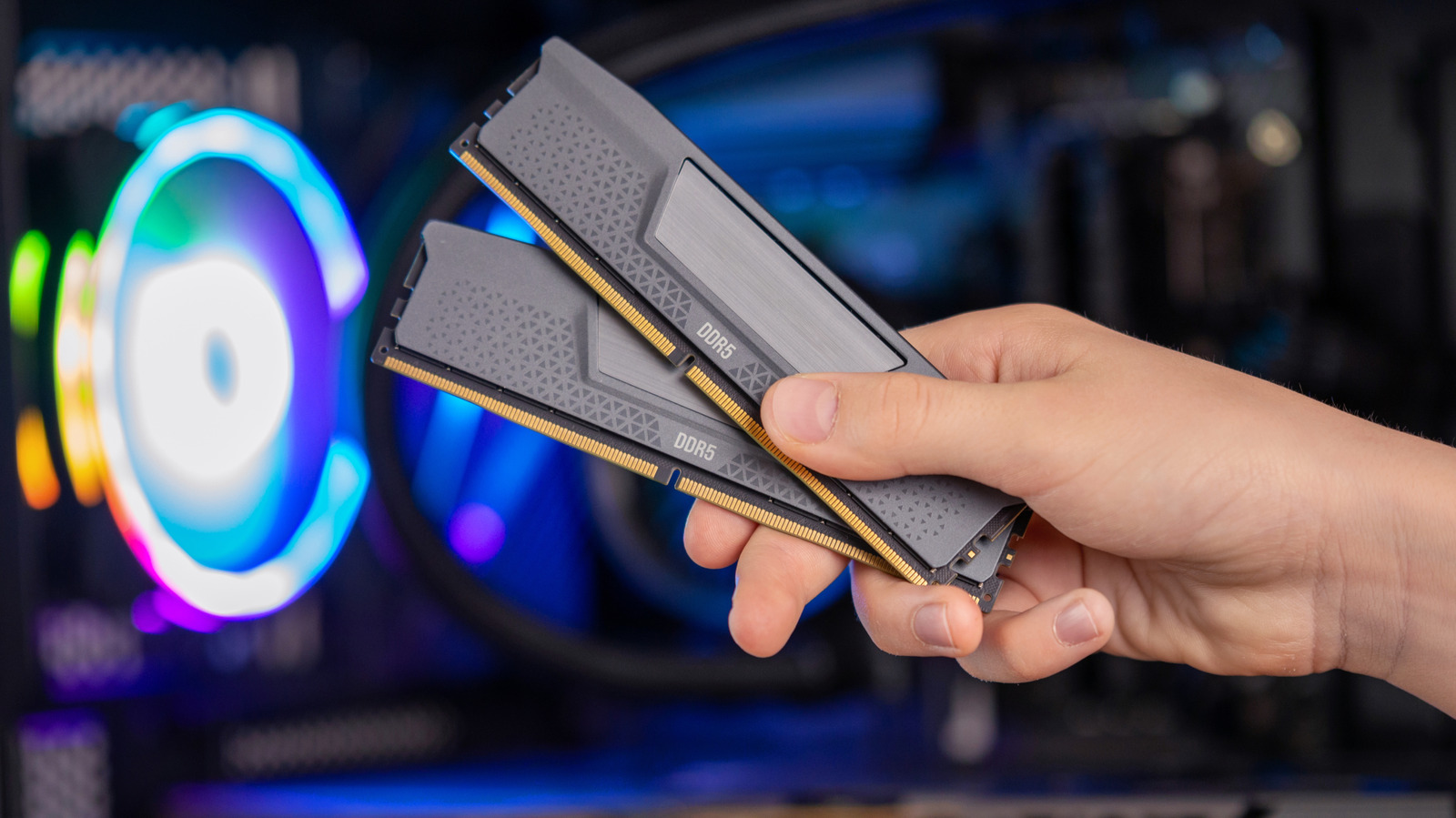
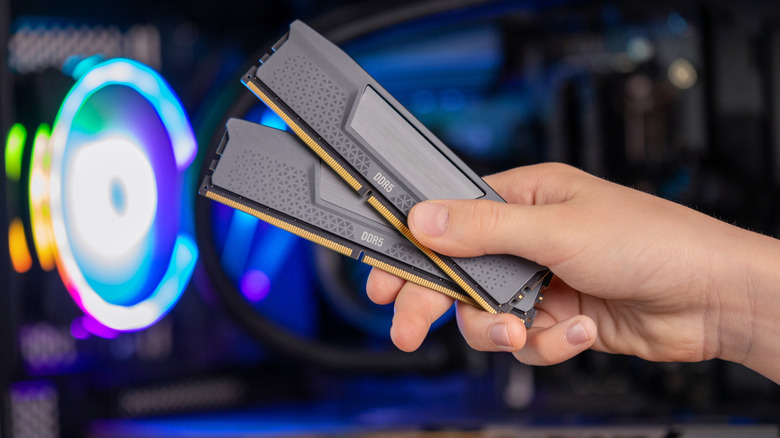
- Choose Upgrade-Friendly Laptops: Look for machines that still feature traditional, non-soldered SODIMM memory slots. This allows you to purchase a modest configuration today and drop in a larger memory kit once semiconductor prices normalize.
Ultimately, the short-term savings of buying an 8GB laptop are rapidly erased by performance degradation, system sluggishness, and premature obsolescence. In a computing landscape dominated by memory-hungry applications and AI-infused operating systems, bypassing the 8GB trap is no longer just a recommendation—it is a necessity.