Executive Overview
In the fast-moving landscape of consumer technology, few devices hold the monumental, paradigm-shifting status of the original Apple iPod. Launched a quarter of a century ago, the revolutionary pocket-sized MP3 player did not merely alter Apple’s corporate trajectory; it irrevocably transformed the global music industry, redefined the relationship between humans and their personal media libraries, and laid the precise economic and structural groundwork for the modern smartphone era.
To mark the milestone 25th anniversary of this historic hardware launch—which famously promised consumers "1,000 songs in your pocket"—Apple has deployed a brilliant, deeply nostalgic Easter egg hidden within the architecture of Apple Music. Rather than issuing a standard, easily forgotten press release or a corporate retrospective video, Cupertino’s engineering and design teams opted for a brilliant piece of interactive digital archaeology.
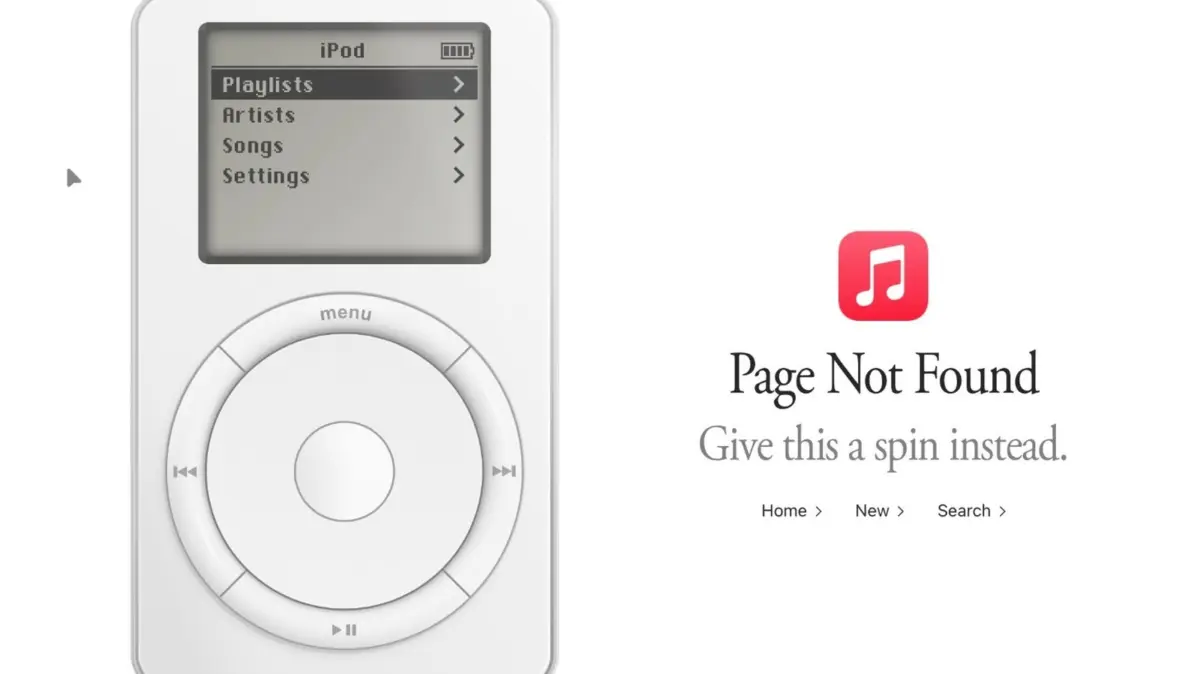
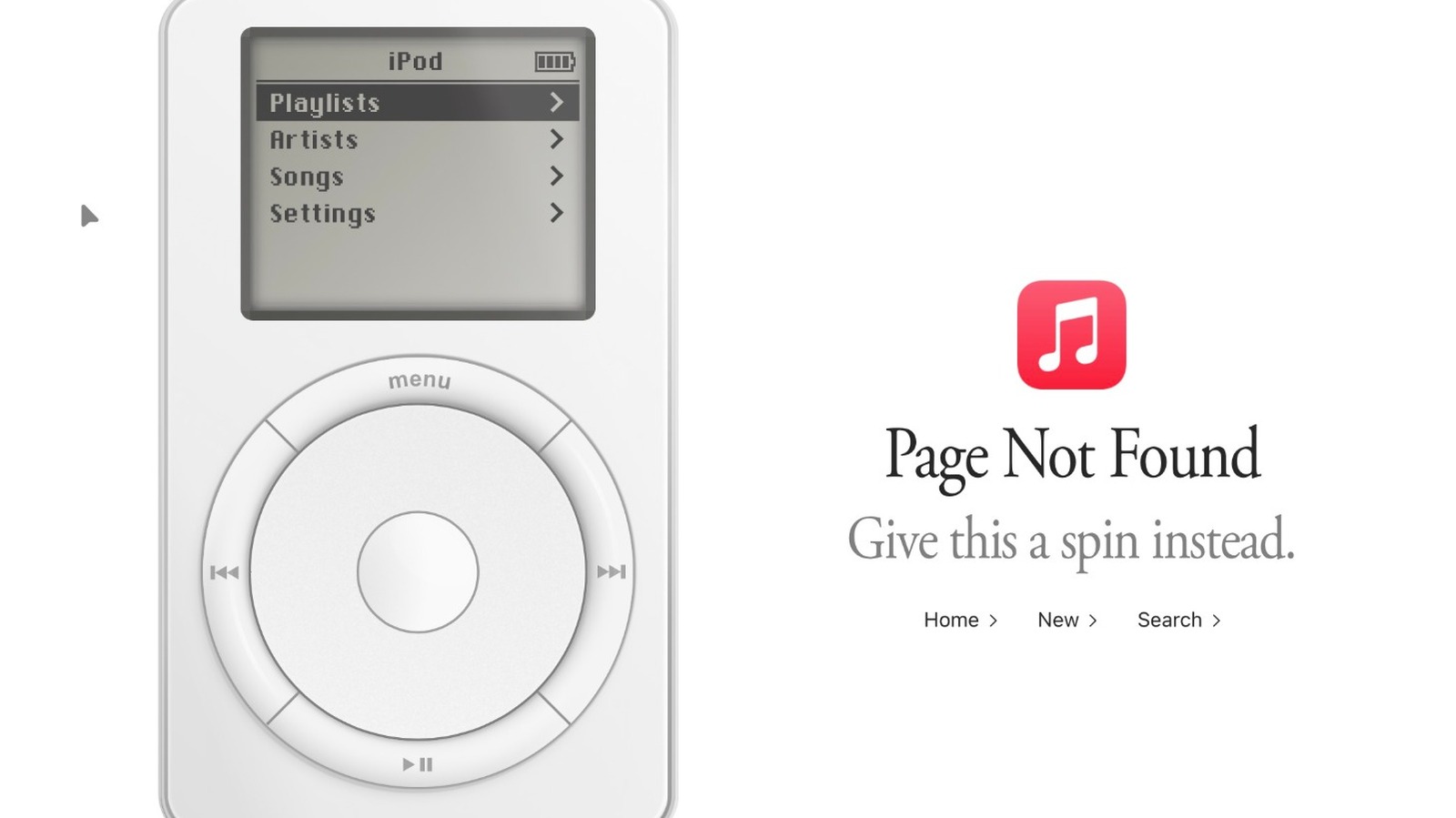
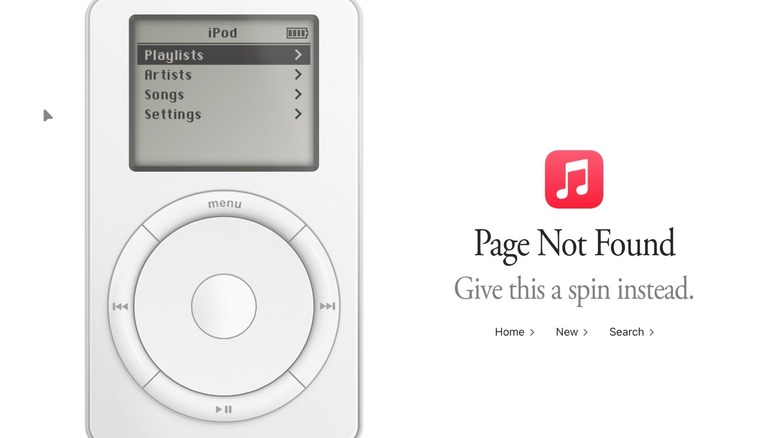
By navigating to a broken 404 error page on the Apple Music website, users are greeted not by a dead end, but by a fully interactive, virtual replica of the original, first-generation iPod. Complete with its iconic mechanical click wheel, monochrome LCD screen, and an authentic pre-loaded playlist of early-2000s anthems, this hidden web app even allows nostalgic fans to play Brick, the classic Breakout-style clone that served as a secret hidden game in the original hardware.
This unexpected tribute serves as a masterclass in digital preservation and brand lore. It highlights the enduring emotional resonance of physical product design in an era defined by flat glass touchscreens, inviting millions of users to briefly step back in time and dust off the virtual click wheel.
Detailed Chronology: From the "1,000 Songs in Your Pocket" to Digital Omnipresence
To fully comprehend the cultural weight of Apple Music’s anniversary Easter egg, one must contextualize the landscape of personal audio in the late autumn of 2001. At the time of the original iPod’s unveiling, the portable music market was fractured, awkward, and profoundly limited. Consumers relied on clunky, skipping portable CD players or early, low-capacity flash-memory MP3 players that typically held fewer than a dozen songs. File-sharing networks like Napster had fundamentally rewired consumer expectations regarding music ownership and accessibility, yet the hardware required to take those downloaded files on the go remained wholly inadequate.
When Steve Jobs took the stage on October 23, 2001, to pull a small, white plastic rectangle out of his jeans pocket, he introduced a device built on a revolutionary 5-gigabyte Toshiba 1.8-inch hard drive. The audacious marketing pitch—“1,000 songs in your pocket, anywhere you go”—was not mere hyperbole; it was an accurate prophecy that immediately destabilized the traditional music retail sector.
[October 2001] -> Original iPod Launch (5GB HD, Mechanical Click Wheel, "1,000 Songs")
       │
[2004 - 2007]  -> iPod mini, iPod nano, & iPod touch Eras (Mainstream Dominance)
       │
[2010s]        -> Cannibalization by the iPhone & Shift to Streaming (Apple Music)
       │
[2022]         -> Final Discontinuation of the iPod touch (End of an Era)
       │
[2025/2026]    -> 25th Anniversary Interactive Web Easter Egg (Digital Preservation)
The Technological Leap of the Click Wheel
The brilliance of the early iPod extended far beyond its storage capacity; it was fundamentally about human-computer interaction. While competitors utilized cumbersome menus, awkward button combinations, and sluggish interfaces, Apple introduced the physical scroll wheel—and later, the iconic touch-sensitive click wheel. Navigating through thousands of tracks by alphabetizing artists, albums, and genres suddenly felt fluid, intuitive, and remarkably fast.
Over the subsequent decade, the iPod brand expanded outward into a sprawling product family. The introduction of the colorful iPod mini in 2004 democratized the device, driving down price points and accelerating mainstream adoption. This was followed swiftly by the impossibly thin iPod nano and the video-capable iPod classic.
By the time the iPod touch arrived in late 2007—riding the coattails of the revolutionary iPhone architecture—the product line had cemented its status as a cultural monolith. White earbuds dangling from ears in subways, city streets, and college campuses became the defining visual aesthetic of a generation.
However, as the smartphone consolidated every discrete electronic gadget—cameras, GPS units, pocket calculators, and MP3 players—into a single glass-and-aluminum slab, the dedicated music player’s days were inevitably numbered. Apple officially sunsetted the final vestige of the hardware lineage, the iPod touch, in May 2022. Yet, its philosophical DNA lives on directly within the cloud-based infrastructure of Apple Music and iOS.
Supporting Context & Metrics: Unpacking the 404 Easter Egg Experience
Apple’s hidden anniversary tribute is far more than a simple static image; it is a meticulously engineered, fully functioning browser-based simulator that rewards deep exploration.
How to Access the Virtual iPod
- Open any modern web browser on a smartphone, tablet, or desktop computer.
- Navigate directly to a non-existent directory on the Apple Music web domain (such as
music.apple.com/sfswf). - Encounter the standard "404 Page Not Found" error banner.
- Locate the playful text prompt reading: "Give this a spin instead."
- Interact directly with the rendered first-generation iPod interface.
Anatomy of the Simulator
- The Interface & Navigation: Users can click or tap the mechanical-style click wheel to browse a mock menu featuring standard early-2000s sub-sections: Playlists, Artists, Songs, and Settings.
- The Curated Playlist: The virtual hardware is pre-loaded with a library of 1,029 playable tracks. True to form, the song selections lean heavily into the nostalgic sonic landscape of the early aughts, featuring seminal tracks from artists such as blink-182, Eminem, and the Baha Men. Due to licensing constraints and preview limitations, streaming playback is capped at 90-second snippets per track.
- The Hidden Game (Brick): True digital historians have uncovered that the simulator preserves the authentic Easter egg from the original hardware. By navigating to the About screen and holding down the center button for several seconds, users can launch Brick—a vintage Breakout-style arcade game that once kept commuters entertained on countless long-haul flights and subway rides.
Technical Performance and Cross-Platform Quirks
While the experience is broadly compatible across various operating systems, user reports indicate that the simulator shines brightest when accessed via mobile touchscreens. On mobile devices, the haptic visual feedback and finger navigation mimic the physical sensation of using an authentic 2001 hardware unit. On traditional desktop environments, minor cursor interaction bugs can occasionally occur, mirroring the charmingly quirky software quirks of early web-app experiments.
Official Statements and Industry Reception
Apple has traditionally maintained a deliberate corporate philosophy regarding nostalgia. Rather than constantly dwelling in the past, the company prefers to look relentlessly toward future hardware iterations—Vision Pro spatial computing, Apple Intelligence, and next-generation silicon. Consequently, the Cupertino marketing and engineering departments did not issue a loud, fanfare-laden press release to announce the iPod’s 25th-anniversary web page.
Instead, the Easter egg was allowed to propagate organically through the tech-enthusiast ecosystem. It was first spotlighted by eagle-eyed journalists at outlets like Notebook Check, before rapidly going viral across social media platforms like X (formerly Twitter), Reddit, and Mastodon.
Industry analysts have praised the understated execution. By burying the tribute on a broken 404 error page, Apple transformed a frustrating user experience—hitting a dead link—into a moment of pure, delightful digital discovery. It rewards curiosity and targets the exact demographic of millennials and elder Gen-Z consumers who grew up carrying white earbuds as a badge of honor.
Cultural critics have similarly noted that this hidden web app underscores a broader industry hunger for tactile skeuomorphism. In an era where digital interfaces have become stark, hyper-minimalist, and flat, touching a rendered mechanical wheel evokes a visceral, multisensory reaction that modern streaming apps rarely achieve on their own.
Future Outlook: Preserving Digital Heritage in the Cloud Era
As consumer technology continues its relentless march toward cloud-first integration, spatial computing, and artificial intelligence, hardware milestones like the iPod serve as essential anchor points for understanding the evolution of human-machine interaction.
Apple’s decision to quietly encode a functional simulator of its most important legacy device into a modern web error page raises fascinating questions regarding corporate digital preservation. Technology companies are notorious for deprecating legacy software, purging old web domains, and letting historical milestones slip quietly into obscurity. By baking a piece of interactive history directly into Apple Music’s backend code, the company has demonstrated a rare, self-aware reverence for its own foundational lore.
Looking ahead, as the gap between physical hardware ownership and cloud subscription services widens, creative digital interventions like the virtual click wheel may become our primary window into computing history. Whether future generations will tap through virtual AirPods cases or swipe across simulated augmented-reality spatial menus remains to be seen.
For now, however, millions of music fans around the globe can take a brief, nostalgic journey back to an era when owning your entire music library meant carrying a small white brick in your pocket—proving that while technology changes at breakneck speed, good design and cultural memory truly never go out of style.