Executive Overview
In an era dominated by relentless hustle culture and the glorification of extreme athletic output, a quiet revolution is taking place on the asphalt, gravel paths, and park trails of major metropolitan areas. Endurance sports are no longer the exclusive domain of the grim, obsessive early riser who measures their self-worth in negative splits and pre-dawn alarm clock settings. Instead, a new paradigm of athletic achievement is emerging—one that marries high-performance endurance goals with an uncompromising commitment to personal comfort, mental wellbeing, and a rich, multifaceted lifestyle.
At the vanguard of this movement is Hong, a Berlin-based designer, international flight attendant, and veteran endurance athlete currently preparing for her seventh full marathon. Hong’s journey challenges the orthodoxies of traditional endurance training. Once firmly self-identified as a "non-runner," she now logs high weekly mileage, cross-trains religiously, and tackles intense track workouts—all while prioritizing adequate sleep, social connection, cultural exploration, and the simple pleasure of a post-run pastry and coffee.
This in-depth feature explores Hong’s weekly training regimen, dissects the physiological and psychological philosophy of "comfortable consistency," and examines the broader cultural shift redefining what it means to be a modern distance runner. Through a granular look at her schedule, we investigate how balancing high-intensity output with holistic recovery can prevent burnout, foster deep community ties, and ultimately produce a faster, happier athlete.
Detailed Chronology: A Week in the Life of a Balanced Marathoner
To understand Hong’s approach to the marathon distance, one must examine the mechanics of her weekly routine. Juggling an international career in aviation, professional design projects, and a rigorous training schedule requires logistical precision. Yet, rather than treating her training as a military-style punishment, Hong frames her week as a carefully curated ecosystem of movement, rest, and community.
Monday: Combating Fatigue and Finding Rhythm
Mondays are notoriously challenging for the modern professional, and when compounded by jet lag and the physical toll of long-haul flights, the temptation to abandon a training plan is high. Hong is the first to admit her relationship with mornings is fraught: "Like others, I like to hit snooze quite often, and before my morning coffee, I am good for nothing."
To combat the initial inertia of the week, Hong relies on a psychological and sensory toolkit. Her primary weapon against listlessness is her custom running playlist—a dynamic mix of disco, house, and techno designed to elevate her heart rate and trigger a psychological shift from sluggishness to readiness.
However, flexibility remains a core tenet of her philosophy. On days when energy reserves are depleted and breathlessness sets in prematurely, Hong employs an unusual yet effective tactical adjustment: she slows her pace and begins to sing.
"If I run out of breath during a run, I drop down a gear and start singing. This forces me to slow down to get my breathing back under control. The run immediately becomes much more fun, and I notice people smiling as I jog past them singing."
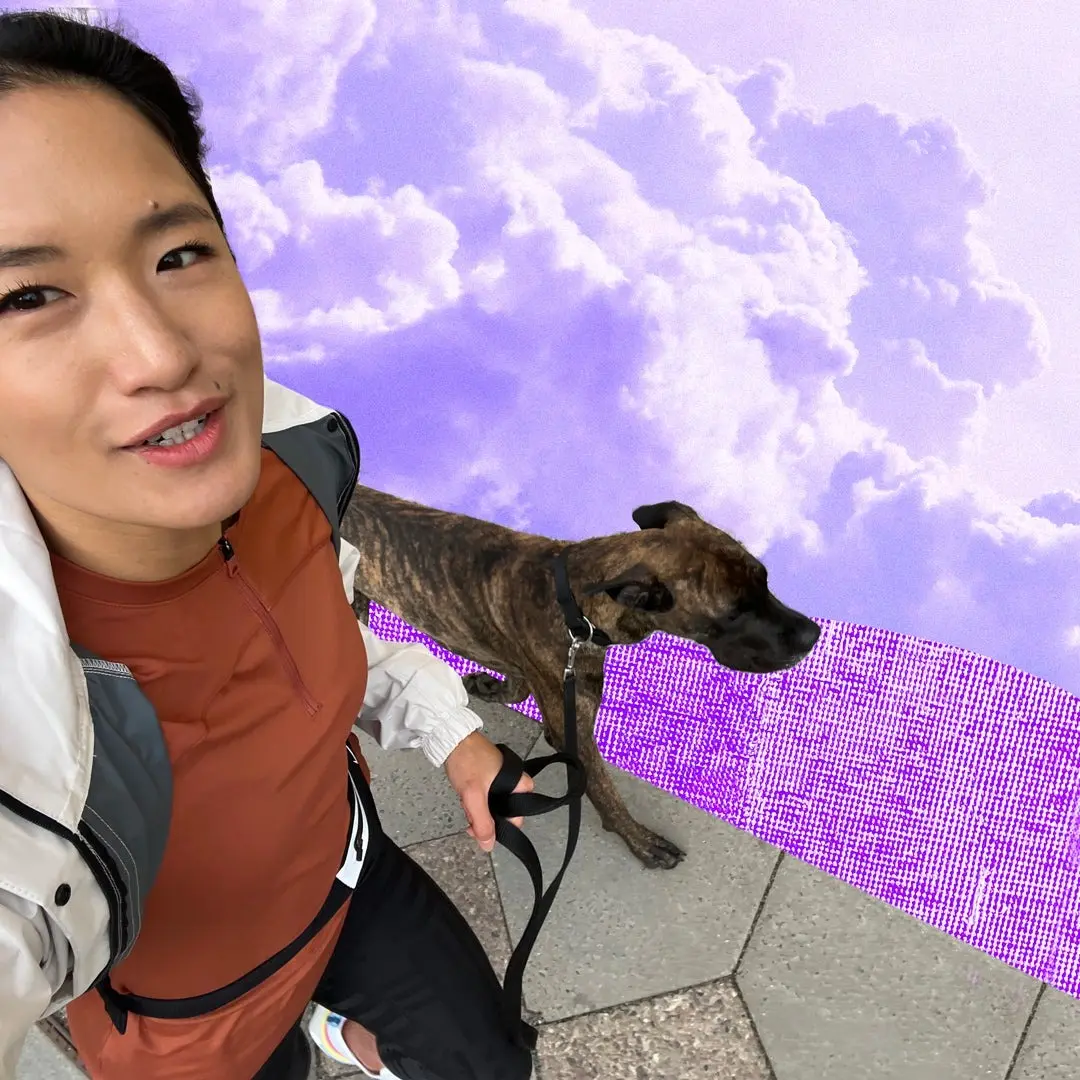
To inject an element of unpredictability and social connection into her Monday miles, Hong frequently borrows Mia, a friend’s high-energy dog. The dynamic of running with a canine companion shifts the psychological burden of the workout. Initially, the dog pulls the runner; eventually, the runner paces the dog. It is a symbiotic relationship that highlights Hong’s athletic strengths: while she may lack the explosive sprint speed of a younger dog, her cardiovascular endurance and pacing strategy win the long game.
Tuesday: Cross-Training and Injury Prevention
Running excellence is rarely built on running alone. Recognizing that repetitive impact forces can quickly derail a training block, Hong dedicates Tuesdays to structural resilience. She bypasses the running shoes entirely, opting instead for dedicated yoga sessions, targeted strength training, and preventative physiotherapy.
This holistic approach serves a dual purpose. First, it fortifies the musculoskeletal system against common running injuries such as shin splints, plantar fasciitis, and runner’s knee. Second, it builds the physical foundation necessary to push the boundaries of her comfort zone later in the week. By maintaining a robust cross-training regimen, Hong ensures that her body does not enter a state of systemic depletion. Following a day of strength and mobility work, she allows for adequate physiological rest—a non-negotiable pillar of her training philosophy that enables her to return to the tarmac with renewed vigor.
Wednesday: Professional Demands and Social Integration
As a flight attendant, Hong’s professional life is defined by transient geography. Time spent in Berlin is precious, making social integration a vital component of her weekly routine. Wednesdays are intentionally designated as active recovery and social days.
Rather than squeezing in a junk-mile run out of sheer guilt, Hong prioritizes her mental health and interpersonal relationships. She navigates Berlin’s vibrant art scene, attending gallery openings and local exhibitions with friends. This deliberate disconnect from training metrics prevents psychological burnout—a silent killer of athletic longevity. By nurturing her identity outside of running, she returns to her athletic pursuits with a refreshed and eager mindset.
Thursday: Pushing Limits and Track Dynamics
Thursday represents the crucible of Hong’s training week. Dispelling the myth that marathon runners effortlessly leap out of bed to churn out 20 kilometer tempos at dawn, Hong approaches high-intensity days with strategic preparation.
Today’s session is a track workout designed to test lactate thresholds, speed endurance, and mental fortitude. "I love competitions. It gives me incredible joy to challenge myself," she notes. During these high-stress sessions, gear selection becomes critical. Hong relies on performance footwear—specifically models featuring high-energy-return foam, such as the Nike Invincible 3—to provide impact protection and a propulsive, "bouncy" sensation across varying track surfaces.
By testing her limits on the track, Hong teaches her central nervous system to tolerate discomfort. Yet, this discomfort is always bounded by her overarching philosophy: high-intensity work must be supported by adequate cushioning, proper nutrition, and psychological safety.
Friday: Active Recovery and Cultural Immersion
The physiological debt incurred during Thursday’s track session demands a measured response. Friday is structured as a physiological reset. Aside from a gentle, restorative yoga flow, running is strictly off the agenda.
True to her lifestyle-first ethos, Hong spends Friday afternoon immersing herself further in Berlin’s cultural fabric. Meeting friends for museum visits and gallery tours allows her to remain physically rested while mentally stimulated. For an athlete who spends significant hours aloft in commercial aircraft cabins, grounding oneself in the local community is an essential form of active recovery.
Saturday: The Long Urban Trot and Sensory Grounding
Saturday morning marks the execution of Hong’s signature long-run routine along the Landwehrkanal in Berlin. This route offers a diverse sensory landscape: a shifting tapestry of asphalt, packed dirt, grass, and occasional mud patches that test ankle stability and proprioception.
Rather than obsessing over split times, Hong uses this time for mental decompression. Sometimes, her headphones stream an immersive long-form podcast; other times, she discards audio entirely, choosing to absorb the ambient auditory landscape of the waking city. She enjoys the sociological theater of urban running—observing fellow citizens navigate their weekends.
The conclusion of the Saturday run is ritualistic: a deliberate transition from exertion to reward. Hong finishes her route at a local market stall in Kreuzberg, where she treats herself to specialty coffee and a carefully chosen post-run snack. This integration of culinary pleasure into the athletic routine reinforces positive neurological associations with physical exertion.
Sunday: Community, Endurance, and Culinary Anticipation
The culmination of the weekly training cycle occurs on Sunday, anchored by Hong’s involvement with her local running collective, the Joy Run Collective. Group runs serve a vital function in marathon preparation, providing accountability, safety in numbers, and shared psychological endurance.
Today’s objective is a long, steady-state run through the expansive historic landscapes of the Tiergarten. Given the extended duration of the effort and the bracing chill of the European climate, preparation is meticulous. Layering technical apparel correctly ensures thermal regulation throughout the multi-hour effort.
The ultimate reward for Sunday’s endurance test is not a medal or a Strava kudos notification, but a communal ritual: post-run brunch. This week, the gathering features handmade dumplings crafted by a hosting member of the collective—a culinary destination Hong admits she has anticipated with mounting excitement throughout the entire week.
Supporting Context & Metrics: The Science of "Comfortable Consistency"
To contextualize Hong’s routine, it is essential to analyze the physiological and psychological shifts occurring within modern endurance sports. Sports science increasingly validates the approach of balancing high-volume training with psychological wellbeing.
The Psychology of Sustainable Performance
Traditional coaching paradigms often relied on a puritanical model of suffering: the belief that athletic transformation requires physical and mental anguish. However, contemporary sports psychology points to the concept of sustainable intrinsic motivation.
When athletes associate training exclusively with discomfort, self-flagellation, and social isolation, the amygdala registers the activity as a threat, triggering stress responses that can elevate cortisol levels and impair immune function. Conversely, integrating positive reinforcing stimuli—such as a favorite playlist, canine companionship, scenic urban routes, and social culinary traditions—creates a neurochemical feedback loop centered on dopamine and endorphins. This makes long-term consistency far easier to maintain.
Training Load and Injury Epidemiology
Data from running injury research consistently demonstrates that the primary driver of overuse injuries is not the absolute volume of training, but rather acute-to-chronic workload ratios (ACWR) coupled with insufficient recovery.
Hong’s weekly structure exemplifies an optimal ACWR management strategy:
- Polarized Intensity: High-stress workouts (Thursday track sessions, Sunday long runs) are bracketed by low-stress recovery modalities (yoga, cross-training, complete rest).
- Cross-Disciplinary Strength Work: Tuesday’s integration of core and mobility work addresses muscular imbalances inherent in the repetitive sagittal-plane motion of running.
- Psychological Decompression: By treating rest days as non-negotiable cultural and social opportunities rather than days of "idleness," Hong mitigates central nervous system fatigue.
Official Statements & Expert Perspectives
The philosophy championed by athletes like Hong is finding increasing support among elite coaches, sports physiologists, and footwear designers who recognize that the demographic of the endurance runner has fundamentally transformed.
Dr. Aris Thorne, a leading sports physiologist based in Munich, comments on the evolution of modern training methodologies:
"For decades, we viewed endurance athletes through an industrial lens—input more miles, extract more performance. What we now understand through modern psychophysiology is that the human nervous system cannot distinguish between psychological life stress and physical training stress. An athlete who treats their training as an enjoyable lifestyle integration, supported by community and proper nutrition, will consistently outperform an athlete operating in a state of chronic systemic inflammation induced by training-related anxiety."
Elena Rostova, biomechanics lead at an international athletic footwear brand, highlights the shift in gear development:
"The modern runner demands equipment that works dynamically across multiple environments without sacrificing joint protection. Athletes are no longer willing to tolerate brutal, inflexible racing flats just to achieve a personal record. Innovations in foam technology, such as those found in high-cushion daily trainers and marathon racers, are designed precisely to bridge the gap between high performance and supreme comfort. Comfort is no longer viewed as the enemy of speed; it is the vehicle that enables greater training volume."
Future Outlook: The Next Generation of Endurance Sports
As Hong prepares for her seventh marathon, her trajectory offers a compelling blueprint for the future of endurance athletics. The archaic archetype of the tortured runner sacrificing all aspects of life for marginal gains is steadily giving way to a more holistic, sustainable, and inclusive model of fitness.
Key Takeaways for Modern Athletes
For runners looking to scale their own athletic output—whether tackling their first 5K or their seventh marathon—Hong’s methodology distills into three core pillars:
- Prioritize Ergonomic and Psychological Comfort: Never underestimate the impact of footwear that inspires confidence, or sensory tools like music and podcasts that transform a grueling slog into an enjoyable mental escape.
- Embrace Community as a Performance Enhancer: Training alongside a collective like the Joy Run Collective transforms solitary suffering into shared celebration, significantly increasing adherence and psychological resilience.
- Reframe Consistency Over Perfection: As Hong reflects upon reaching her thirties—noting that she is healthier and fitter than she was in her twenties—she emphasizes that sustainable progress requires listening to the body: "I’ve learned that consistency and comfort don’t have to be mutually exclusive. I can set new limits for myself and feel good doing it."
As urban centers continue to expand their running cultures and specialized training collectives multiply, the future belongs to athletes who refuse to choose between living a rich, vibrant life and achieving elite-level endurance goals. For Hong, the next stop is her seventh marathon—and you can be certain there will be a great playlist playing, comfortable shoes on her feet, and a delicious meal waiting at the finish line.