Executive Overview
The video game industry was rocked earlier this week by the abrupt closure of BioWare, the legendary role-playing game developer, at the hands of its parent company, Electronic Arts (EA). For decades, the studio stood as a titan of narrative-driven interactive entertainment, responsible for shaping the modern Western RPG through foundational franchises like Baldur’s Gate, Star Wars: Knights of the Old Republic, Dragon Age, and Mass Effect.
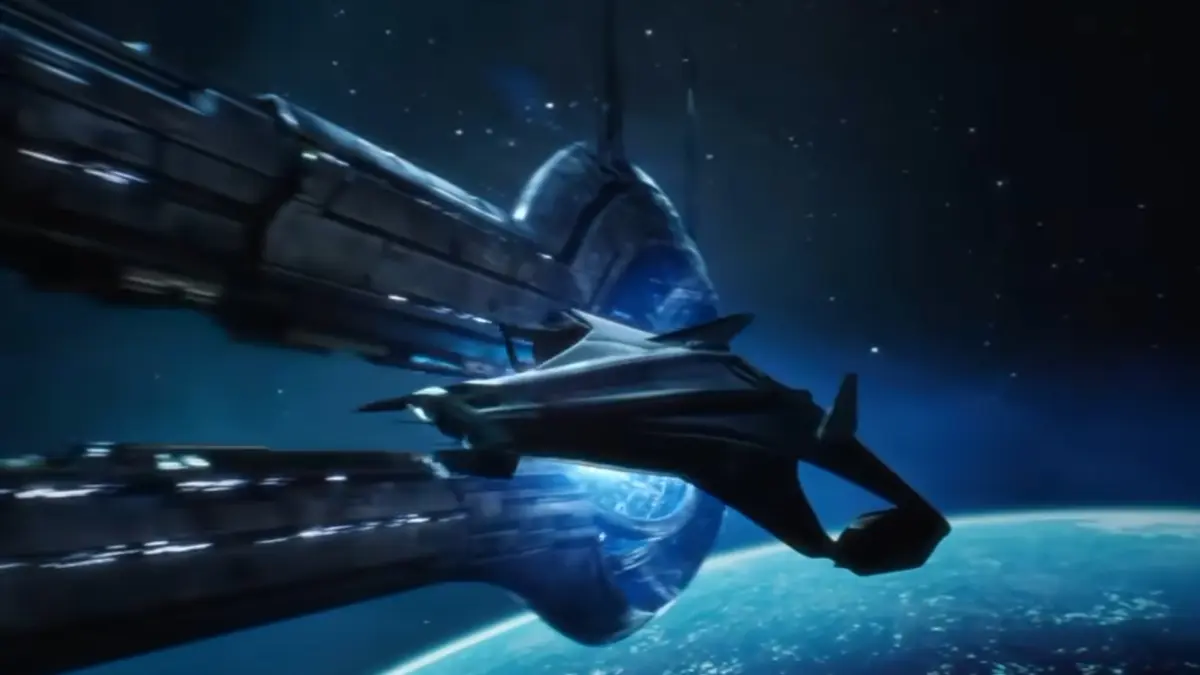
The studio’s closure cast an immediate shadow over the future of one of gaming’s most cherished science-fiction universes. Shortly after EA pulled the plug on the developer, a concept trailer for the heavily anticipated Mass Effect 5 leaked online. Far from offering closure, the brief, early-development footage only intensified the grief of the community: despite its rough, pre-alpha state, the project looked remarkably promising.
Adding unprecedented depth to this post-mortem phase, prominent YouTuber and former Mass Effect community council member "Dantics" stepped forward to lift the curtain on what BioWare was actually building. Having directly collaborated with the studio to provide feedback during pre-production, Dantics outlined a staggering array of creative choices, narrative structures, and mechanical shifts intended for the next entry. From a galactic Cold War to a protagonist styled as an interstellar fusion of John Wick and James Bond, the revelations paint a picture of a studio trying to learn from its past while boldly steering the franchise into a mature, politically complex future.
Tragically, with EA shuttering the studio and showing no current inclination to sell or spin off the intellectual property, these design documents and early-stage concepts represent the closest fans will ever get to Mass Effect 5. This report provides an exhaustive look into the closure of BioWare, the massive leak surrounding Mass Effect 5, the inside details of its development, and what this means for the broader landscape of AAA game development.
Detailed Chronology: The Fall of BioWare and the Leak of Mass Effect 5
The End of an Era at EA
The shuttering of BioWare marks the end of a tumultuous chapter in the history of electronic entertainment. Founded in 1995 by medical doctors Ray Muzyka and Greg Zeschuk in Edmonton, Alberta, the studio quickly transitioned from medical software to creating some of the most critically acclaimed computer role-playing games in history. Following its acquisition by Electronic Arts in 2007, BioWare experienced massive commercial successes—most notably the original Mass Effect trilogy and Dragon Age: Origins—followed by periods of increasing creative friction, executive departures, and troubled development cycles on titles like Mass Effect: Andromeda and Anthem.
While the studio managed to ship Dragon Age: The Veilguard late last year to a mixed yet passionate reception, internal restructuring, shifting corporate priorities at EA, and soaring development costs ultimately proved fatal. Earlier this week, corporate leadership made the devastating call to completely close the developer, laying off remaining staff and effectively terminating all ongoing projects. The move sparked widespread industry condemnation and renewed debates about corporate consolidation, job security, and the precarious nature of AAA studios operating under massive publishers.
The Leak that Salted the Wound
Almost immediately following the announcement of the studio’s closure, the internet was flooded with mourning tributes from former developers, industry peers, and millions of fans. Amidst the digital wake, a concept trailer for Mass Effect 5—unofficially dubbed Mass Effect Universe—made its way onto public forums.
The leak offered a tantalizing glimpse into a project that had long been shrouded in secrecy. Though it was strictly an early-development concept piece rendered in modest resolution, the footage immediately captured the community’s imagination. It showcased high-fidelity environmental design, sleek new spacecraft recalling the iconic lines of the Normandy with aggressive aesthetic overhauls, and a distinct atmosphere of noir-infused space exploration.

Rather than serving as a nostalgic celebration, however, the leak acted as emotional salt in the wound. Fans realized that the breathtaking vision displayed on screen was not a preview of an upcoming triumph, but rather a bittersweet reminder of a masterpiece cut down before its prime.
Inside the Development Room: The Secrets of Mass Effect 5 Revealed
Following the leak, YouTuber Dantics came forward on social media to reveal that he had served as a member of the Mass Effect community council. According to Dantics, his role involved reviewing early builds, evaluating design choices, and providing critical feedback directly to the development team.
While Dantics’ specific position on the council has not been formally verified by corporate channels, his involvement has been vouched for by various community figures, and his social media connections with high-ranking BioWare personnel—including project lead and veteran developer Michael Gamble—lend substantial credibility to his claims. Furthermore, community councils are a documented methodology employed by BioWare, having been officially cited in past development updates and credited in both Mass Effect: Legendary Edition and Dragon Age: The Veilguard.
According to Dantics, the vision for Mass Effect 5 was shaped by a profound desire to course-correct after the divisive reception of Mass Effect: Andromeda, steering the series back toward its core strengths while taking calculated risks.
A Galaxy Divided: The Cold War Paradigm
The narrative framework of Mass Effect 5 was set to break away from the galaxy-ending existential threats that defined Commander Shepard’s journey. Instead of fighting an all-powerful, synthetic-organic apocalypse like the Reapers, the new game was slated to take place more than 600 years after the Reaper War, plunging players into the tense, morally gray atmosphere of a galactic Cold War.
The socio-political landscape of the Milky Way had fractured and realigned into three distinct superpowers:
- The Primary Alliance: A coalition comprised of Humans, Krogans, Batarians, and various other species who found common ground in the post-war reconstruction era.
- The Council Bloc: The traditional "Council Races"—the Asari, Salarians, and Turians—who formed their own defensive and economic bloc to protect their historical hegemony.
- The Geth Imperium: Defying expectations from previous titles where the synthetic race were often viewed purely as antagonists, the Geth emerged as an independent, technologically advanced third superpower, complete with massive, Geth-built megastructures scattered across the cosmos.
This tripartite power dynamic promised a sophisticated narrative space, trading black-and-white morality for espionage, political intrigue, and high-stakes diplomatic maneuvering.
Gameplay Evolution: John Wick Meets James Bond
Mechanically, BioWare was moving away from the traditional "walking gun rack" archetype of previous games. Players would step into the boots of a fully customizable N7 agent, but the combat and character fantasy were deliberately reimagined.

Dantics described the protagonist’s combat and narrative persona as a cross between John Wick and James Bond. Rather than relying purely on heavy military arsenals, the gameplay incorporated a heavier emphasis on espionage, tactical environmental manipulation, and stealth elements.
Key gameplay pillars included:
- Advanced Cybernetics and Experimental Tech: Players would feature experimental technology implanted directly into their bodies, serving as a unique narrative and mechanical differentiator. This allowed for heightened sensory capabilities, such as seeing through walls, scanning complex digital and physical systems, and remotely triggering environmental hazards.
- Hitman-Style Mission Design: While maintaining the handcrafted, structured mission progression beloved in the original trilogy (Mass Effect 1–3), levels were designed to offer Hitman-esque freedom in completion methodology, allowing for quiet infiltration, political sabotage, or kinetic shootouts.
- Brutal Close-Range Executions: Combat pacing was accelerated with visceral, close-quarters combat animations designed to give players a more immediate, tactile sense of power.
Preserving Shepard’s Legacy and Honoring All Endings
One of the most contentious creative hurdles for a post-trilogy Mass Effect game has always been how to handle the diverging, definitive choices made by players at the conclusion of Mass Effect 3.
According to the leaked details, BioWare solved this elegantly: the game was designed to accommodate all three original endings without forcing a single one as definitive canon.
- By setting the story 600+ years into the future, the Reapers had effectively become "outdated tech," neutralized or integrated by the passage of time.
- Advances in cybernetics and synthetic-organic integration—which heavily mirrored the thematic footprint of the Synthesis ending—were now commonplace across society.
- If a player’s Commander Shepard survived the destruction ending, they would naturally have succumbed to mortality over six centuries; however, Shepard’s monumental legacy remained fully intact and culturally acknowledged, regardless of the specific choices made at the end of the Reaper War.
Furthermore, the game established narrative bridges connecting the Milky Way galaxy back to the distant Andromeda galaxy, honoring the events of the 2017 spin-off while anchoring the core experience firmly in the beloved lore of the original trilogy.
Companions, Romance, and the Return of Liara
BioWare’s trademark character writing and interpersonal dynamics were also heavily emphasized in the development builds.
- Complex Squadmates: Squad members were designed with ideological friction built into their interactions, meaning companions could actively clash with one another aboard the ship, creating a dynamic, living crew environment.
- Unsanitized Romances: Inspired by the industry-wide shifts and narrative freedoms seen in contemporary role-playing heavyweights like Baldur’s Gate 3 and Cyberpunk 2077, romances were reportedly being written with maturity and depth, avoiding corporate sanitization.
- Liara T’Sonis Return: Fan-favorite Asari scientist Liara T’Soni was set to return, having aged gracefully over the centuries into an immensely powerful Asari Matriarch, acting as a linchpin connecting the historic eras of the franchise to this new geopolitical age.
Supporting Context & Metrics: The Cost of Closure
The closure of BioWare highlights a broader systemic crisis within the interactive entertainment industry. Over the past three years, macroeconomic pressures, inflated AAA development budgets, shifting consumer habits, and aggressive corporate consolidation have devastated traditional single-player development studios.
To understand the scale of the loss, consider the historical trajectory of BioWare’s major intellectual properties:

| Franchise | Peak Critical Reception | Estimated Lifetime Sales / Impact | Status Post-EA Closure |
|---|---|---|---|
| Mass Effect Trilogy | Universally Acclaimed (Metacritic ~90-96) | 20+ Million Units | Franchise indefinitely shelved; future uncertain. |
| Dragon Age Series | Critically Acclaimed (Origins ~86–92) | 12+ Million Units | Studio disbanded; IP dormant under EA. |
| Star Wars: KOTOR | Masterpiece (Metacritic 94) | Multi-million classic | Critical foundation for Western RPGs; unactive at EA. |
The financial realities of modern game development dictate that projects like Mass Effect 5 require immense upfront investments—often hundreds of millions of dollars—and development cycles spanning five to eight years. When parent companies like EA lose patience or pivot toward live-service models and short-term quarterly gains, foundational studios with decades of institutional knowledge are discarded overnight.
Official Statements and Community Outcry
Following the closure announcement and subsequent leaks, the response from both the industry and the global fan community has been swift and vocal.
Former developers took to social media to express their heartbreak over the destruction of the studio culture. Many noted that the team working on the next Mass Effect was comprised of passionate veterans and talented newcomers who genuinely understood what fans wanted from the series—a sentiment echoed by Dantics, who remarked that BioWare was "making Mass Effect for us, the fans, not for people who don’t exist."
Political and community figures have also weighed in. In Canada, where BioWare’s Edmonton headquarters was a cornerstone of the local tech and creative economy, political figures have faced public pressure to explore intervention methods. Calls have even been raised urging the Canadian government to assist former employees in purchasing studio assets or spinning off independent entities to salvage lost projects—though industry experts view such maneuvers as legally and financially improbable given EA’s strict intellectual property holding policies.
Electronic Arts has thus far declined to provide detailed commentary on the specifics of the leaked Mass Effect 5 concept design, maintaining a standard corporate silence regarding unannounced and canceled projects.
Future Outlook
The cancellation of Mass Effect 5 leaves a gaping void in the science-fiction role-playing genre. For years, the promise of returning to a post-war Milky Way under the guidance of returning franchise veterans provided comfort to a fanbase that felt alienated by the industry’s pivot toward live-service games, battle royales, and microtransaction-driven models.
Without a miraculous intervention—such as EA deciding to license or sell the Mass Effect intellectual property to an independent studio willing to respect its legacy—the universe built by BioWare will remain frozen in time. The leaked concepts, the intricate Cold War politics, the espionage-driven N7 agent fantasy, and the return of Liara T’Soni as an Asari Matriarch will forever exist as tantalizing ghosts in the machine.
Ultimately, the tragedy of BioWare’s closure and the untimely death of Mass Effect 5 serves as a sobering reminder of the fragility of art in the corporate era. It demonstrates that even the most enduring, culturally significant creative legacies can be erased by a spreadsheet balance sheet—leaving millions of fans to wonder not just what could have been, but why the industry so frequently destroys the very things that made it great.