Executive Overview
Puerto Rico is currently weathering a historic drought, punctuated by the driest month on record this past July. For hundreds of thousands of residents, this environmental shock has translated into severe water rationing, dry taps, and a scramble for basic resources. Yet, this emergency highlights a bitter irony: the island is routinely soaked by copious tropical rainfall, receiving anywhere from 30 to 169 inches of precipitation annually.
Despite this abundance of free water, the territorial government has largely failed to mandate, incentivize, or integrate decentralized infrastructure like residential rainwater catchment systems. While other Caribbean jurisdictions—such as the US Virgin Islands and Barbados—have successfully codified rainwater harvesting into law, Puerto Rico remains tethered to a centralized, crumbling grid.
Compounding the natural drought is an alarming level of infrastructure decay. The Puerto Rico Aqueduct and Sewer Authority (PRASA) loses an estimated 60 percent of the island’s drinking water to leaks, ruptured pipes, and systemic neglect before it ever reaches a customer’s home. As climate change increases the likelihood of more intense, unpredictable droughts, experts warn that Puerto Rico can no longer afford to ignore the low-tech, highly resilient solution hanging directly over its head: the roofs of its houses.
Detailed Chronology: Anatomy of a Slow-Motion Disaster
The roots of Puerto Rico’s current water crisis stretch back well before the record-breaking dry spell of July. To understand the gravity of the situation, it is necessary to examine how chronic infrastructural neglect and worsening climatic pressures have converged into a public health and logistical emergency.
The Breakdown of the Main Artery
The immediate catalyst for the most recent wave of emergency rationing was a series of catastrophic ruptures in the Superaqueduct, a massive 72-inch water pipe that serves as the primary artery for major cities along Puerto Rico’s northern coast. When this critical piece of infrastructure fails, the shockwaves are felt across hundreds of thousands of households.
Implementation of Emergency Rationing
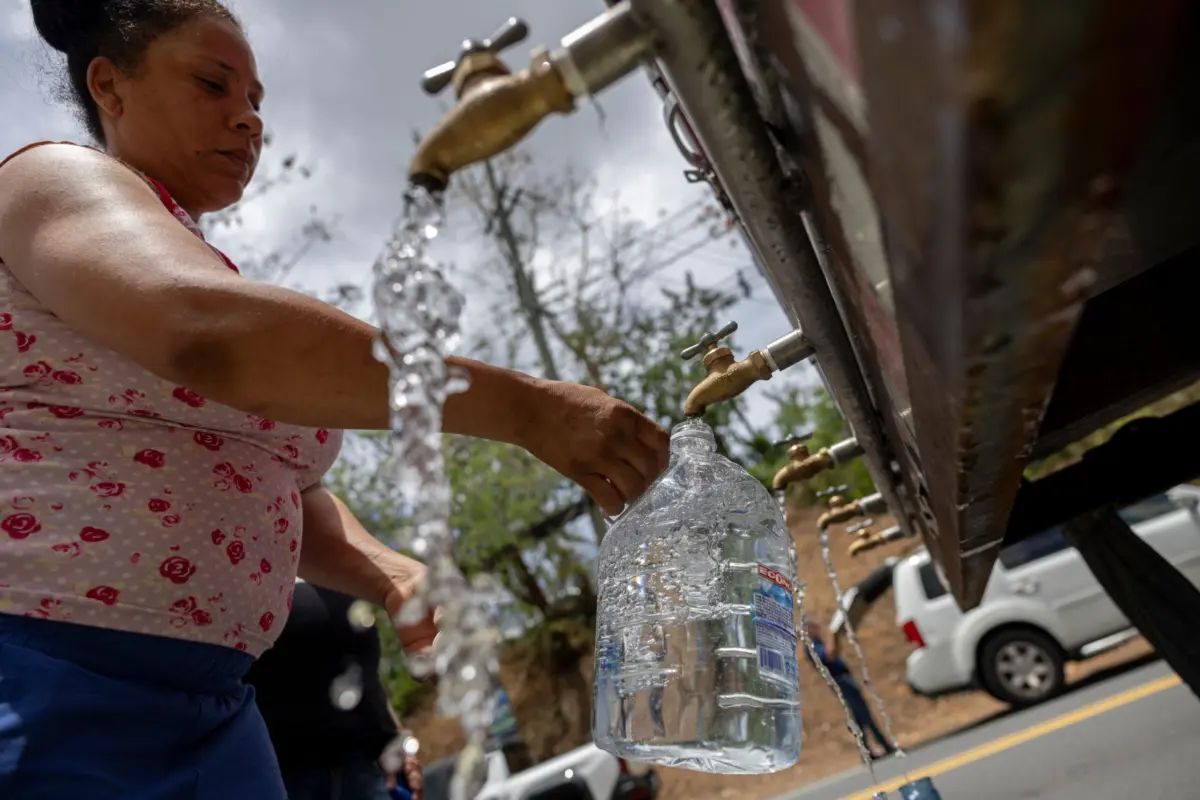
In response to the plummeting reservoir levels and pipe failures, Governor Jenniffer González ordered municipal governments in the island’s northeast to implement aggressive rationing schedules. Under these directives, water supplies are systematically shut off for two days at a time, leaving approximately 180,000 households with severely restricted access. For many communities, however, this acute rationing is merely an intensification of ongoing suffering; numerous families report having gone without consistent, reliable tap water for more than 100 days.
Grassroots Interventions and Legislative Stalls
As government response lags, civil society has attempted to bridge the gap. Environmental nonprofits like Plenitud Puerto Rico have spent over a decade quietly installing decentralized rainwater catchment systems in vulnerable mountain communities like Las Marías.
Simultaneously, political maneuvering has yielded few results. In June, José Pérez Cordero, an at-large legislator in the Puerto Rico House of Representatives, introduced a resolution to mandate a feasibility study on rainwater harvesting, drawing on models from neighboring Caribbean islands. Despite the mounting crisis, the proposal has stalled. Furthermore, a 2024 law that formally required all public agencies to install rainwater collection systems on government buildings has been completely ignored, highlighting a severe deficit of political will and enforcement.
Supporting Context & Metrics: The Scale of Waste and Abundance
To fully grasp the absurdity of Puerto Rico’s water shortage, one must examine the staggering metrics governing water availability, consumption, and systemic loss on the island.
The 60 Percent Loss Paradox
The primary crisis facing Puerto Rico is not a lack of moisture falling from the sky, but rather catastrophic water mismanagement. According to environmental data, PRASA loses roughly 60 percent of the island’s treated drinking water to dilapidated, leaking pipes before it ever reaches a residential tap.
Residential Consumption vs. Collection Potential
The average Puerto Rican resident consumes approximately 62 gallons of water per day, culminating in just over 72 billion gallons of residential water use annually.
To put the potential of decentralized collection into perspective, Fernando Abruña, a partner at the local architecture firm Abruña & Musgrave and a fellow with the American Institute of Architects, provides a compelling calculation: if just 1 million households on the island were equipped with basic rainwater harvesting technology, Puerto Rico could collectively gather 30 billion gallons of water a year.
Caribbean Precedents
Puerto Rico’s failure to institutionalize rainwater harvesting stands in stark contrast to its neighbors in the region:
- The US Virgin Islands: Roughly 90 percent of homes utilize cisterns to capture rainwater, supported by strict building codes that mandate this infrastructure in new developments.
- Barbados: Implements similar regulatory codes to ensure structural water resilience.
- Hawaii: Local governments, such as Honolulu County, actively assist residents by offering limited numbers of free rain barrel installations.
By contrast, the Puerto Rican government offers zero financial incentives, tax breaks, or installation subsidies, placing the entire economic burden of climate adaptation onto individual households and underfunded nonprofits.
Official Statements and Expert Perspectives
As the dry season wears on, scientists, legal experts, architects, and lawmakers are speaking out against what they characterize as institutional inertia in the face of an existential threat.
-
The Fallacy of Scarcity:
Environmental lawyer Ruth Santiago, affiliated with the Comité Diálogo Ambiental (Environmental Dialogue Committee), insists that the narrative of a simple resource shortage is false."Even with the climate crisis and these droughts, we still have abundant water," Santiago notes, speaking over the sound of a tropical downpour erupting mid-conversation. "We could be harvesting rainwater right now." While she stresses that repairing the island’s leaking distribution grid remains paramount, she views rainwater harvesting as an indispensable, cost-effective stopgap that can be deployed immediately.
-
Rethinking National Infrastructure:
Farah Nibbs, an assistant professor in the Department of Emergency and Disaster Health Systems at the University of Maryland Baltimore County, emphasizes that island governments must fundamentally shift their perspective."There is nothing that can help the Caribbean region as quickly and as reliably as rainwater harvesting," Nibbs asserts, arguing that governments must officially classify captured rainwater "as part of the national water supply." She adds that public funding must absorb the costs to prevent placing crushing financial burdens on vulnerable citizens.
-
The Reality on the Ground:
Owen Ingley, executive codirector of Plenitud Puerto Rico, details the real-world expenses involved in independent mitigation. Small, simple units installed by their nonprofit range from $500 to $2,000, while larger, pump-integrated systems can climb to $5,000. Maintaining these units through severe tropical storms requires ongoing financial and technical investments. Ingley recalls a recent installation for an elderly resident living alone in Las Marías: "He’s a really sweet and talkative guy with gray hair and a big smile." While the captured water is not potable, it successfully handles non-potable domestic tasks, from flushing toilets to filling pet bowls. -
A Call for Proactive Governance:
Legislator José Pérez Cordero admits that the local government’s historical posture has been reactive rather than proactive."We are, right now, in the perfect moment to do it, because we are in the middle of a crisis," Pérez Cordero says of his stalled legislative initiatives. "Sadly, we always wait for the reaction."
Future Outlook: Building Resilience in an Era of Climate Extremes
Looking ahead, Puerto Rico faces a sobering climatic reality. Climate change, driven by the ongoing combustion of fossil fuels and the warming of the planet, is systematically destabilizing traditional weather patterns across the Caribbean.
Experts warn that the future will likely bring two distinct extremes: longer, more punishing dry seasons punctuated by increasingly violent, erratic rainy seasons. In this environment, relying solely on centralized freshwater grids fed by aging, porous reservoirs is a recipe for perpetual crisis.
While rainwater harvesting is not a silver bullet—particularly in densely populated urban centers featuring high-rise apartment complexes where roof-to-resident ratios make individual catchment impractical—it remains a vital pillar of a decentralized defense strategy.
For a territory frequently battered by hurricanes and parched by historic droughts, diversifying the water supply is no longer merely an environmental talking point; it is an urgent prerequisite for human survival and dignity. Until the government moves beyond empty legislation and begins treating the skies above Puerto Rico as the reservoir they truly are, residents will continue to watch the rain fall from dry taps, waiting for a political will that cannot arrive soon enough.