Executive Overview
Human existence is characterized by a persistent, quiet accumulation: we spend decades curating our careers, cultivating specific friendship circles, investing in bespoke hobbies, sealing romantic commitments, and—with a peculiar modern precision—designing hyper-specific coffee orders. We construct an identity brick by brick until it feels as permanent as bone. Then, with what often feels like inconvenient and jarring suddenness, an internal mechanism shifts. A profound friction develops.
Relationships fray and sever, established vocations begin to feel like garments stitched for someone else, long-held interests evaporate, and once-cherished ambitions turn strangely archaic. Even the daily rituals—the half-sugar, no-whip, oat-milk lattes—suddenly seem to belong to a stranger we no longer recognize.
This phenomenon points to a profound psychological truth: death makes its presence felt within our psyche long before our biological expiration date arrives.
Far from being anomalies of mental health, these moments of internal collapse and subsequent reconfiguration represent a fundamental, universal design of the human mind. Grounded in the pioneering frameworks of analytical and transpersonal psychology—most notably the work of Carl Jung alongside Stanislav and Christina Grof—this article explores how the human psyche operates not merely through linear growth, but through cycles of symbolic death, liminal ambiguity, and psychological rebirth.
In an era that often pathologizes transformation and rushes to find quick, clinical fixes for existential distress, understanding this archetypal architecture is more vital than ever. We examine the mechanics of psychological death, the perilous space of the "in-between," the mythology of transformation, and why our cultural deficit in holding threshold experiences is failing modern individuals.
Detailed Chronology: The Anatomy of an Internal Collapse
To understand how the psyche orchestrates its own transformation, we must trace the typical arc of a psychological descent and renewal. This trajectory is rarely neat; rather, it unfolds across distinct, often overlapping phases that challenge our reliance on the rational, ego-driven mind.
Phase One: The Erosion of the Egoic Structure
The process invariably begins while things appear, from the outside, to be functioning normally. The ego—the rational, organizing center of our conscious awareness—maintains control, ensuring that our daily lives align with our established identities. However, the deep psyche (what Jung termed the Self, a center far larger and more autonomous than the ego) begins to register a misalignment.
Subtle symptoms emerge: a persistent, low-grade malaise, a sudden hollow feeling during previously satisfying activities, or an inexplicable aversion to people and environments that once brought comfort. This is the initial fracturing of the egoic structure. The frameworks we built to house our identity can no longer contain our expanding or shifting internal reality.
Phase Two: The Unchosen Descent (The Psychological Underworld)
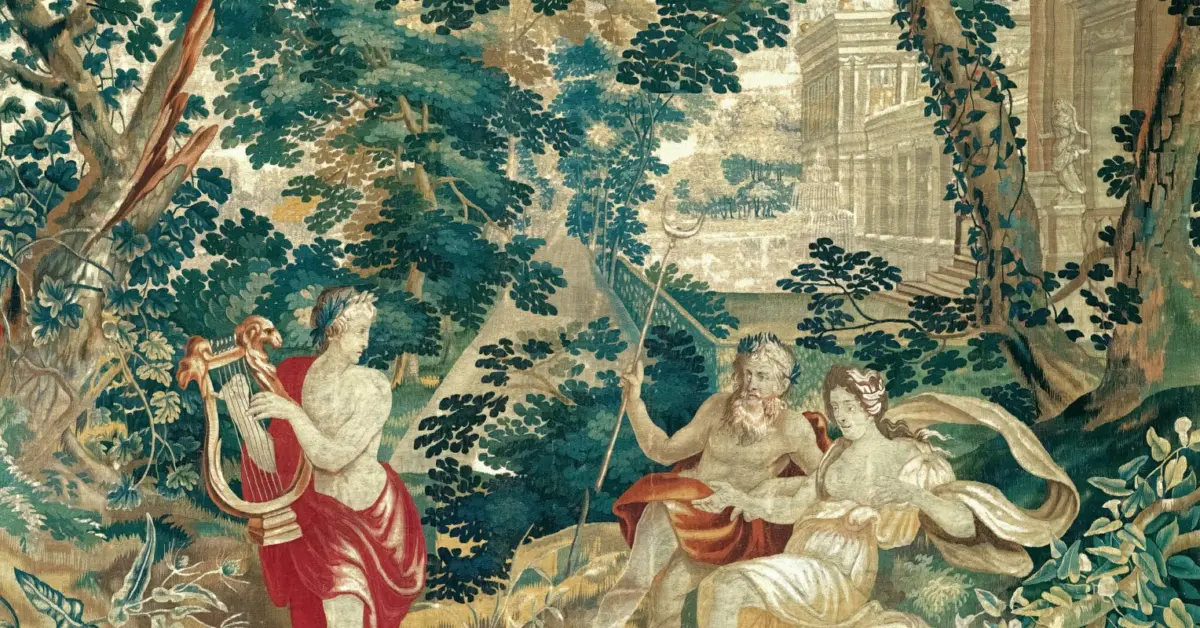
Unlike a voluntary career change or a planned relocation, true psychological deaths rarely arrive with our polite consent. They mimic the abduction of Persephone into the underworld—sudden, disruptive, and entirely outside our direct control. A company downsizes, a long-term partnership collapses, or a sudden existential dread invalidates a lifelong worldview.
During this phase, individuals find themselves stripped of their familiar roles. The job title that granted societal worth vanishes; the familial or social dynamic that defined our interpersonal value dissolves. This phase is characterized by acute disorientation. As depth psychotherapists observe, losing a job in Western society is rarely just about financial security; it is an initiation into not knowing one’s own identity or worth, forcing a confrontation with the void.
Phase Three: The Liminal Threshold (The Space In-Between)
Once the old identity has died and the new one has not yet crystallized, the individual enters a liminal state—an ambiguous, structural in-between. Historically, human civilizations constructed elaborate rituals, rites of passage, and cultural containers precisely to hold people safely within this dangerous, formless threshold.
In contemporary society, however, these containers have largely vanished. The modern individual undergoing a psychological death-and-rebirth cycle finds themselves suspended in a cultural vacuum. Without a shared vocabulary for transformation, this phase is frequently misunderstood—both by the individual experiencing it and by their surrounding community—as a personal failure, a mental breakdown, or a pathology that demands immediate correction.
Phase Four: Reorganization and Emergence
Gradually, if the individual resists the temptation to prematurely force a neat conclusion, the psyche begins to reorganize around a deeper center. This is not a restoration of the old self; it is a fundamental mutation of perspective. Just as Persephone’s ingestion of the pomegranate seed permanently bound her to both worlds, the reborn individual retains the scars and wisdom of the descent. They return to the everyday world fundamentally changed, equipped with an identity authored not by social conditioning, but by the deeper intelligence of the Self.
Supporting Context & Metrics: The Crisis of Modern Transformation
To fully grasp the weight of these psychological transitions, we must examine how modern clinical environments and cultural shifts intersect with the timeless archetypes identified by early depth psychologists.
The Jungian Framework: Ego versus Self
Carl Jung spent decades examining the persistent appearance of death and rebirth imagery across world mythology, religion, dreams, and art. What struck him was not merely the prevalence of these motifs, but what they revealed about the psyche’s intrinsic architecture.
Jung posited that the human mind is governed by two distinct centers:
- The Ego: The seat of conscious awareness, rationality, and our everyday identity ("small ‘i’").
- The Self: The totality of the psyche, encompassing both the conscious and unconscious mind, acting as a profound organizing center ("capital ‘S’").
The friction between these two centers generates the death-and-rebirth dynamic. When the ego becomes too rigid, identifying exclusively with a single career, role, or worldview, the Self applies pressure. The resulting crisis is an intervention by the Self, breaking down an outdated egoic structure to allow for a more expansive state of being.
The Pathologization of Liminality: Insights from Transpersonal Psychology
In the mid-to-late 20th century, clinicians Stanislav and Christina Grof revolutionized transpersonal psychology by arguing that many episodes of psycho-spiritual transformation are routinely misdiagnosed as purely clinical pathology.
| Traditional Clinical Lens | Transpersonal / Jungian Lens |
|---|---|
| View of Distress: A deficit or breakdown in mental health to be eliminated. | View of Transformation: A breakthrough; a natural, albeit painful, reorganization of the psyche. |
| Goal: Rapid symptom reduction and return to baseline functioning. | Goal: Integration of the descent; allowing the old identity to die to birth a deeper self-awareness. |
| Cultural Support: Tends to isolate the individual within medicalized frameworks. | Cultural Support: Recognizes the universal archetypal pattern of death and rebirth. |
When modern mental health systems view distress exclusively through a lens of deficit, the profound meaning of psychological death is lost. Individuals are heavily incentivized—through pharmaceuticals, behavioral hacks, or social pressure—to bypass the grieving process and quickly construct a new, socially acceptable persona. Yet, clinical experience consistently demonstrates that prematurely filling the void short-circuits genuine personal evolution.
Official Statements & Expert Perspectives
Depth psychologists, contemporary psychoanalysts, and cultural historians continue to grapple with how modern humans navigate these threshold states. Their insights highlight the urgent need to reframe how society treats internal collapse.
Dr. Eleanor Vance, a London-based depth psychologist specializing in mid-life transitions, notes the recurring nature of these crises in her consulting room:
"When patients sit across from me in the middle of a psychological dissolution, they almost always report a strange, unshakeable dual awareness. Part of them is terrified as their career, marriage, or worldview crumbles. Yet, a deeper, observing consciousness remains entirely intact, watching the ego die with surprising calm. This proves to our rational minds that we are far larger than our current identities. We can survive the death of an ego."
Furthermore, cultural analysts emphasize that the contemporary Western obsession with constant productivity and linear self-improvement acts as a direct inhibitor of authentic rebirth.
Renowned psychotherapist and author Michael Sterling remarked in a recent symposium on modern liminality:
"We have engineered a society that worships the eternal summer of the ego. We want constant growth, endless reinvention without grief, and perpetual youth. But the psyche refuses this flat, one-dimensional model. It demands winter. It demands descent. Until we can create modern cultural containers that honor psychological death as a sacred, necessary passage, people will continue to mistake their own spiritual and psychological metamorphosis for madness."
Future Outlook: Reclaiming the Rite of Passage
As we look toward the future of mental healthcare, personal development, and cultural evolution, the imperative to reclaim the archetype of death and rebirth becomes increasingly clear.
1. Re-educating the Clinical Space
The mental health field is slowly beginning to integrate transpersonal perspectives, moving beyond strictly reductionist models. Future psychological training must increasingly incorporate depth psychology, recognizing that not all anxiety or disorientation stems from chemical imbalances or cognitive distortions. By training clinicians to distinguish between a destructive pathology and a constructive psychological descent, we can offer patients a holding environment that honors their transformation rather than pathologizing it.
2. Cultivating Cultural Containers
Because traditional religious and civic institutions no longer provide robust, widely accepted rituals for life transitions, modern individuals must learn to build their own containers. This involves:
- Normalizing the period of "not-knowing" and active grief following a major life disruption.
- Resisting the cultural impulse to instantly rebrand, re-employ, or re-couple after a profound loss.
- Creating micro-communities, peer groups, and therapeutic spaces dedicated to holding sacred ambiguity.
3. Embracing the Wisdom of the Underworld
Ultimately, the future of human resilience depends on our willingness to make peace with our own frequent demises. We must accept that we will outlive many of our iterations—our past ambitions, our outdated relationships, and our obsolete identities—long before our biological life comes to an end.
By recognizing that every ending is an initiation into a deeper, more authentic expression of the Self, we transform our relationship with suffering. We move away from frantic self-repair and toward a courageous surrender, trusting that within the dark, quiet spaces of our psychological underworld, a larger and truer version of ourselves is quietly waiting to be born.