Executive Overview
In the fast-paced, high-stakes ecosystem of modern gaming, few titles achieve the stratospheric, multi-generational cultural impact of League of Legends. Since its commercial launch in October 2009 by Riot Games, the Multiplayer Online Battle Arena (MOBA) has defined an entire genre, birthed a multi-million-dollar global esports landscape, and evolved into a sprawling multimedia franchise spanning animated television, high-end cinematic universes, and spin-off titles. However, the path to the iconic Summoner’s Rift was neither linear nor immediately apparent.
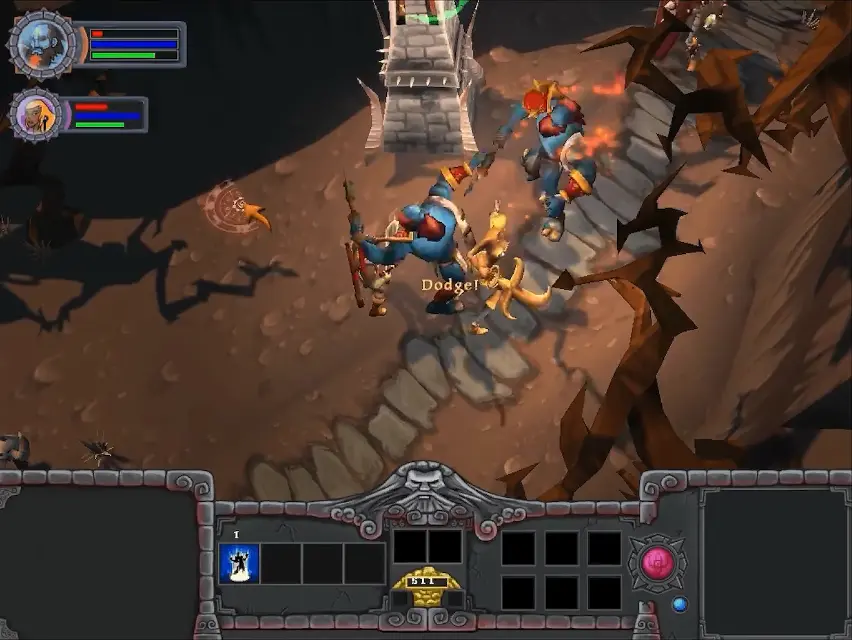
Long before the refined tactical depth, polished character silhouettes, and deep lore of Runeterra captivated hundreds of millions of players worldwide, Riot Games was a fledgling independent startup experimenting with radical, wildly different conceptual designs. Chief among these lost relics is Onslaught: War of the Immortals—an investor pitch and primordial design document from the mid-2000s that envisioned a game almost completely unrecognizable to today’s audience.
Recently brought to light through a collaborative deep-dive by prominent League of Legends content creator Necrit and Riot Games’ Principal Product Manager Paul "Pabro" Bellezza, this long-forgotten pitch document provides a fascinating, unfiltered look at the studio’s early creative trajectory. Far from the clean, balanced lanes of contemporary esports, Onslaught was a product of its time: a gritty, chaotic blend of early-2000s edgy fantasy aesthetics, heavily stylized cartoony cityscapes, factional alignments reminiscent of classic MMORPGs, and mechanics that favored grandiose, over-the-top character tropes.
This retrospective investigation examines the contents of the newly revealed Onslaught pitch, tracking the evolution of Riot’s foundational ideas, analyzing the radical departures in early champion designs, and contextualizing how a blood-drenched, faction-split urban tactical game ultimately transformed into the undisputed titan of the PC gaming industry.
Detailed Chronology: From Onslaught to Runeterra
To understand how League of Legends came to be, one must rewind the clock to the mid-2000s, an era defined culturally by the tail end of the Dot-com boom fallout, the rise of web-based digital distribution, and the explosive popularity of custom Warcraft III real-time strategy maps. The genesis of Riot Games is heavily intertwined with Defense of the Ancients (DotA), the legendary custom map created by Eul, Guinsoo, and later IceFrog. Recognizing the untapped commercial and competitive potential of this emergent hero-brawl genre, co-founders Brandon Beck ("Ryze") and Marc Merrill ("Tryndamere") set out to build a standalone, dedicated product.
However, before the conceptual foundation crystallized into the familiar high-fantasy continent of Valoran and the magical academies of the Institute of War, the studio experimented with Onslaught: War of the Immortals.
The Investor Pitch Era
During the foundational fundraising phase, startups must pitch high-level concepts to angel investors and early venture capitalists who may or may not understand the nuances of interactive entertainment. To secure initial backing, Riot’s early architects crafted an investor pitch that relied on dramatic tension, striking visual assets, and high-concept game design.
As revealed in Necrit’s archival feature, the Onslaught pitch package was an eclectic multimedia artifact consisting of:
- Early conceptual video footage demonstrating primitive movement and combat interactions.
- Initial design documents outlining foundational champion kits and passive abilities.
- A surprisingly grimdark, apocalyptic lore framework detailing the collapse of reality.
- Promotional branding elements, including a famously bloody rendition of the early Riot Games corporate logo.
The Pivot to League of Legends
As development progressed, the team realized that the rigid factional constraints, customizable "immortal" player avatars, and chaotic urban maps of Onslaught posed significant balance and accessibility hurdles. The core competitive loop demanded clarity, readability, and a neutral, symmetrical map design—philosophies that eventually gave birth to Summoner’s Rift and the removal of the original "summoner-as-god" framing narrative in favor of direct champion agency.
Despite these massive iterations, the DNA of Onslaught survived. Fundamental mechanical archetypes, base character concepts, and internal codenames transitioned directly from the drawing boards of the mid-2000s into the launch roster of League of Legends in 2009.
Supporting Context & Metrics: The Architectural Shift
A side-by-side technical and creative comparison between Onslaught: War of the Immortals and the final commercial release of League of Legends reveals a profound metamorphosis. Almost every foundational pillar of the game shifted drastically during the pre-alpha incubation period.
The Setting: Urban Chaos vs. Neutral Wilderness
While modern League of Legends takes place in the fantasy-rich realms of Runeterra—featuring distinct geographic regions such as Demacia, Noxus, Ionia, and Zaun—Onslaught was anchored within a singular, cartoony urban cityscape. The map was conceptually bifurcated into two diametrically opposed territorial domains:
- The Realm of Order: Represented by structured architectural aesthetics, righteous iconography, and lawful societal frameworks.
- The Realm of Chaos: Characterized by industrial decay, aggressive stylistic flourishes, and entropy-driven design elements.
Upon starting the game, players were required to declare permanent allegiance to either Order or Chaos. This factional lock dictated not only visual cosmetic profiles but also restricted access to specific, faction-exclusive heroes—a design philosophy borrowed heavily from classic MMORPG faction systems (such as World of Warcraft’s Alliance versus Horde divide) rather than the open roster model standard in modern MOBAs.
Core Gameplay Mechanics: Customizable Immortals
Perhaps the most startling revelation from the Onslaught documentation is the inclusion of customizable player avatars known as "Immortals." Rather than solely controlling a single, pre-determined champion for the duration of a match, players assumed the role of an overarching immortal entity capable of intervening directly in combat during climactic moments.
This mechanic blended real-time strategy god-powers with tactical hero combat, creating a layer of strategic complexity that ultimately proved antithetical to the tight, responsive, team-fight-centric balance Riot aimed to achieve. The removal of the customizable immortal framework streamlined the gameplay loop, shifting complete focus onto the tactical execution of individual champions.
Character Evolution: From Onslaught to Runeterra
The roster of Onslaught reads like a bizarre, alternate-universe fan fiction of the current League of Legends champion pool. Early concept art and design documents showcase bizarre iterations of iconic champions whose identities were subsequently warped, refined, or completely overhauled:
- Xizun (The Blind Monk): Before he became Lee Sin—the iconic martial artist defined by his blindness, high skill ceiling, and insec playmaking potential—the character was known as Xizun. Early documentation humorously described his passive ability in colloquial, internet-era slang as being "built like a brick wall on roids," emphasizing raw defensive durability over high-mobility martial arts finesse.
- Sion: The dreaded undead juggernaut of Noxus underwent perhaps the most visually jarring transformation. In the Onslaught pitch documents, Sion possessed a distinctly un-undead, highly stylized facial feature: a prominent, highlighter-orange beard. Paired with a more cartoony proportional art style, this early version bore little resemblance to the towering, axe-wielding behemoth players fear today.
- Annie & Tibbers: Annie’s core identity as a pyromancer accompanied by a demonic teddy bear survived the transition intact, though her early visual model reflected the chunky, lower-polygon aesthetic of mid-2000s indie PC titles.
- Singed (Zij): Surprisingly, the mad chemist of Zaun remained largely structurally consistent from his earliest conceptualization, though his original moniker was simply "Zij." His toxic trail and fluid-dispensing mechanics were apparently locked in remarkably early in the studio’s developmental timeline.
Official Statements & Archival Insights
The unearthing of these historical assets offers unprecedented validation of Riot Games’ humble, iterative beginnings. Speaking on the collaborative deep-dive, community archivist Necrit emphasized the importance of preserving these creative missteps and radical pivots, noting that understanding how a game fails or changes during pre-production provides invaluable insight into why its final iteration succeeds.
Riot’s Paul "Pabro" Bellezza, reflecting on the historical materials, highlighted the stark contrast between the gritty, somewhat chaotic corporate identity of early Riot and the polished, global entertainment powerhouse the company has become.
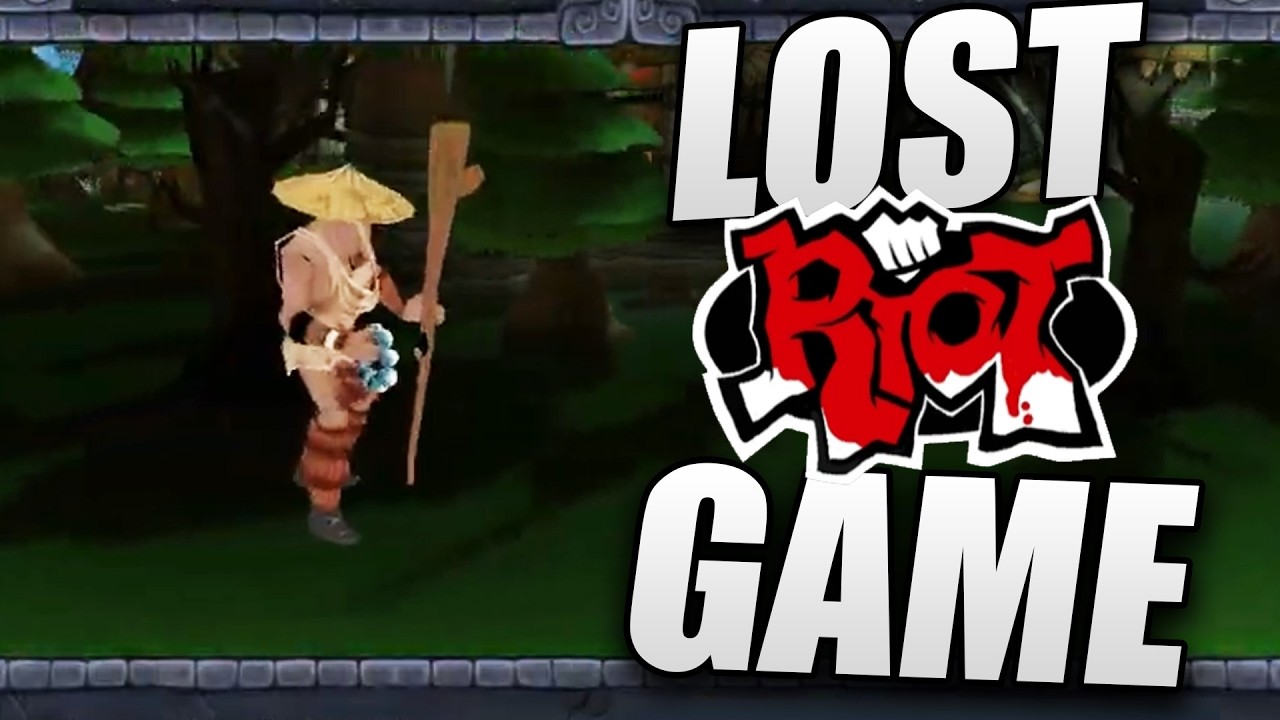
In the archived investor pitch video, the corporate branding of Riot Games is notably visceral—featuring a stylized logo drenched in blood, perfectly encapsulating the edgy, counter-culture aesthetic prevalent in late-2000s PC gaming culture. The lore framework presented in the pitch was similarly melodramatic, establishing a universe where two neutral factions coexisted until the birth of an "antichrist of sorts" tore a permanent dimensional rift in reality, plunging the world into an existential war between order and chaos.
While this apocalyptic framing was ultimately abandoned for the nuanced, multi-faction geopolitical conflicts of Runeterra, it laid the thematic groundwork for the dramatic stakes that continue to drive Riot’s narrative expansions, such as Arcane and the broader universe’s lore updates.
Future Outlook: Preservation and Historical Reflection
As League of Legends continues to expand into its second decade of live-service operation—marked by ongoing seasonal updates, sweeping esports tournaments, and the steady integration of new champions and gameplay modes—the discovery of Onslaught: War of the Immortals serves as a poignant reminder of the unpredictable nature of game development.
The gaming community’s fascination with early prototypes—exemplified by the positive reception of retro-focused content like League of Legends Classic experiments and archival deep-dives—demonstrates a growing appetite for industry transparency and historical preservation. While players today would undoubtedly balk at a version of Sion sporting a highlighter-orange beard or a match structure locked behind mandatory urban faction wars, these early missteps were vital stepping stones.
Ultimately, Onslaught stands as a monument to creative iteration. It proves that behind every multi-billion-dollar global phenomenon lies a messy, experimental sketchbook filled with half-baked ideas, wildly different artistic visions, and the relentless trial-and-error necessary to forge gaming history.