Executive Overview
As the Marvel Cinematic Universe (MCU) marches inexorably toward its next colossal crossover event, fans have found themselves locked in a frenzy of digital detective work. Following the blockbuster unveiling of the new Avengers: Doomsday trailer at D23, internet sleuths and comic book loyalists have generated a massive wave of speculation across social media platforms. At the center of this firestorm is a daring hypothesis: that Marvel Studios is deliberately concealing a multi-faceted narrative twist involving not one, but two distinct iterations of Victor von Doom.
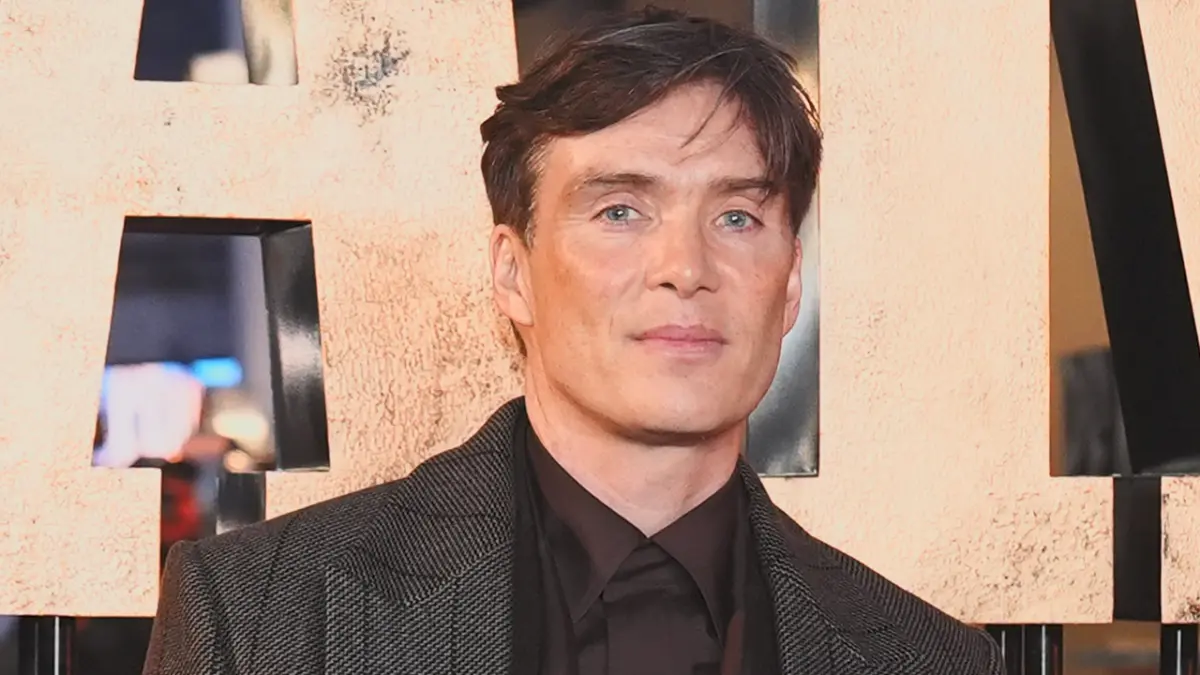
Since Marvel announced that former Iron Man actor Robert Downey Jr. would be returning to the franchise to portray the iconic antagonist, the casting choice has remained a lightning rod for controversy, excitement, and endless debate. However, eagle-eyed viewers analyzing the latest footage believe they have spotted subtle physical discrepancies—ranging from differing eye colors to mysterious facial moles—alongside sudden, mid-scene wardrobe changes. These clues have catalyzed wild fan theories, with many suggesting that Downey Jr.’s Doom may merely be a decoy, a heroic variant, or a Tony Stark variant, while a more sinister, "real" Doctor Doom waits in the shadows. Speculation has even run rampant regarding potential surprise cameos, with Oppenheimer star Cillian Murphy frequently cited by fans as the ideal candidate to wear the true villain’s mantle.
While skeptics argue that these visual anomalies are easily explained away by standard movie magic, colored contact lenses, and alternate timeline justifications, the debate underscores the unique nature of the modern cinematic landscape. Steeped in seven years of multiversal world-building, MCU audiences have been conditioned to expect narrative misdirections, hidden variants, and high-stakes shell games. As the December 18, 2026, theatrical release date approaches, the question of whether Avengers: Doomsday is hiding a second Doctor Doom remains one of the most compelling puzzles in modern pop culture.
Detailed Chronology: From SDCC Shockwaves to the D23 Trailer Frenzy
To understand the current wave of conspiracy theories, one must trace the timeline of Marvel’s strategic reveals and the community’s evolving reactions. The foundation for this theatrical showdown was laid during Marvel Studios’ earth-shattering presentation at San Diego Comic-Con (SDCC). It was there that Kevin Feige and the creative team dropped a bombshell casting announcement: Robert Downey Jr., the foundational anchor of the Infinity Saga, would be crossing the aisle to play Victor von Doom in the upcoming Avengers double-feature.
The announcement immediately fractured the fanbase. While some lauded the poetic irony and star-wattage of Downey’s return, others questioned the narrative wisdom of casting the face of Tony Stark as one of Marvel’s most celebrated and distinct villains. For months, Marvel kept promotional material tightly under wraps, offering only brief, tantalizing glimpses of Downey suited up in the iconic metallic armor.
The discourse shifted dramatically, however, with the debut of the new Avengers: Doomsday trailer during the D23 convention. Unlike previous teasers that focused broadly on the sprawling ensemble cast—which boasts heavy-hitters from the X-Men, the Fantastic Four, and beyond—this particular preview shone an uncompromising spotlight on Latveria’s ruthless leader. Garnering tens of millions of views within days of its release, the trailer established a grim, high-stakes tone.
The preview opens with Vanessa Kirby’s Sue Storm reflecting on a man who "used to be kind" and "caring," setting up a tragic dichotomy before pivoting to raw devastation. Audiences are treated to shots of a screaming Reed Richards (Pedro Pascal), Doom effortlessly tossing Thor aside like an insect, and the chilling construction of an army of Sentinels. Amidst these spectacles, the villain delivers a haunting ultimatum: "All of you have lived stolen lives… But now you must give them back."
Yet, it was not the display of power that hijacked the internet’s attention; it was the micro-details. Close-up shots focusing on the villain’s eyes—peeking out from behind the signature metal mask—revealed a striking inconsistency. While Downey Jr.’s natural eye color is brown, the eyes belonging to the character in these specific close-ups appeared a distinct bluish-green. Furthermore, keen-eyed viewers pointed out a small mole positioned next to one of the eyes, a facial feature absent on Downey Jr.
These split-second frames were all it took to ignite the digital rumor mill. Within hours, hashtags and comparison threads flooded X (formerly Twitter), TikTok, and Reddit, with fans dissecting every pixel of footage to argue that Marvel was playing a very long, very deceptive game.
Supporting Context & Metrics: The Anatomy of a Fan Theory
The speed and scale with which the "Two Dooms" theory spread highlight the unique psychological relationship between modern blockbuster franchises and their audiences. In the age of digital streaming and pause-button analysis, trailers are no longer just advertisements; they are crime scenes waiting to be solved.
Visual Discrepancies and Wardrobe Anomalies
Beyond the physiological debates surrounding eye color and facial blemishes, the D23 trailer introduced another layer of fuel to the fire: costume inconsistencies. Eagle-eyed fans noted moments where Doctor Doom appeared to shift between two distinct aesthetic designs within the same narrative sequence.
In one sequence, the villain is thrown from a tower-like structure, seemingly altering his outfit mid-air to land in a sleek, less-armored suit. Later, during his brutal confrontation with Thor, he is depicted in a heavily armored, traditional ensemble. While costume changes for action figures and narrative progression are standard Hollywood practice, the juxtaposition of these suits in close proximity led theorists to deduce that these might represent different characters entirely.
Could one suit belong to a benevolent variant or a political figurehead, while the other belongs to an armored warlord? Or, as some suggest, could it be visual evidence of two separate individuals operating under the guise of Doctor Doom?
The Cillian Murphy Fancast and Multiversal Precedents
If a second Doctor Doom does indeed exist within the narrative framework of Avengers: Doomsday, who might be portraying him? The internet quickly coalesced around a popular pre-existing fancast: Cillian Murphy.
Fresh off his Academy Award-winning performance in Oppenheimer and his work in 28 Years Later, Murphy has long been a favorite among comic book enthusiasts for brooding, intellectual, and intense antagonist roles. Crucially, Murphy possesses the piercing blue eyes observed in the trailer’s close-ups, fitting the visual profile that sparked the conspiracy in the first place. Furthermore, recent audio leaks and trailer snippets featuring the character speaking complex linguistic phrases have prompted linguistic breakdowns online, with fans speculating whether Murphy’s rumored involvement has been kept under lock and key.
Other theories circulating within the community suggest alternative identities for a potential second Doom:
- A Tony Stark Variant: Expanding on the multiverse, Downey Jr. could be playing a heroic or misguided variant of Tony Stark who took the path of Doom, while a separate actor portrays the mainline Victor von Doom.
- The Facade of the Mandarin: Skeptics of the conspiracy point out that Marvel has pulled clever casting misdirections before—most notably hiring Ben Kingsley to play the decoy "Mandarin" (Trevor Slattery) in Iron Man 3. Could Downey Jr. simply be a high-profile red herring?
- Alternative Legacy Cameos: Fringe theories have even floated the possibility of alternate-universe iterations involving legacy actors or unexpected variants of Reed Richards and Steve Rogers (Chris Evans) taking on corrupted mantles.
Official Industry Perspective & The Skeptics’ Counter-Argument
Despite the fervor gripping social media, industry veterans and pragmatic fans urge caution, arguing that the community is drastically overcomplicating standard filmmaking techniques.
Rational voices within the fandom have pushed back against the theory-crafting with straightforward explanations:
- Special Effects and Contact Lenses: The simplest explanation for eye color discrepancies in Hollywood is often the correct one. Directors frequently use colored contact lenses to alter an actor’s appearance to match character descriptions or to create an otherworldly, intimidating aura for villains.
- Lighting and Post-Production Grading: Color grading during post-production can drastically alter the appearance of skin tones, eyes, and metallic costumes depending on the mood of the scene.
- Financial Reality: As one prominent social media user pointed out with a touch of humor: "Lmao they are not paying RDJ multi millions to play a fake Doom." Securing an actor of Downey Jr.’s stature represents a monumental financial and promotional investment for Marvel Studios. Utilizing him strictly as a decoy or a "fake" villain would subvert marketing expectations to a degree that could alienate general audiences.
Marvel Studios has remained characteristically tight-lipped regarding these specific narrative beats, preferring to let the marketing campaign generate organic engagement. However, the studio’s history of utilizing misdirection in trailers—such as digitally altering scenes in Avengers: Infinity War and Avengers: Endgame to hide character appearances—keeps the door wide open for speculation.
Future Outlook: The Road to Secret Wars
Whether the "Two Dooms" theory proves to be a stroke of genius or merely a masterclass in internet over-analysis, it highlights the immense cultural appetite for the MCU’s upcoming chapters. The stakes could not be higher for Kevin Feige and his team. Following a period of box office recalibration and narrative restructuring, the studio is banking heavily on the nostalgia, scale, and interconnected storytelling of the Multiverse Saga to recapture global enthusiasm.
Avengers: Doomsday is slated to premiere in theaters on December 18, 2026. Rather than acting as a standalone conclusion, the film is engineered to serve as the critical prelude to Avengers: Secret Wars, which will follow a year later on December 17, 2027.
Between now and December 2026, fans will undoubtedly continue to comb through every frame of promotional material, dissecting audio clips, lighting cues, and background extras for any further hint of a multiversal twist. Until the green curtain is finally pulled back in theaters, the mystery of Victor von Doom remains secure behind his impenetrable mask—leaving audiences to ponder whether Robert Downey Jr. stands alone as Earth’s ultimate threat, or if an even darker secret is waiting in the wings.