Executive Overview
The debate surrounding video game audio design has long divided the gaming community, pitting grand, thematic orchestration against subtle, atmospheric soundscapes. This stylistic dichotomy sits at the heart of modern game development, influencing how players perceive virtual environments, form emotional attachments to digital characters, and navigate complex interactive narratives.
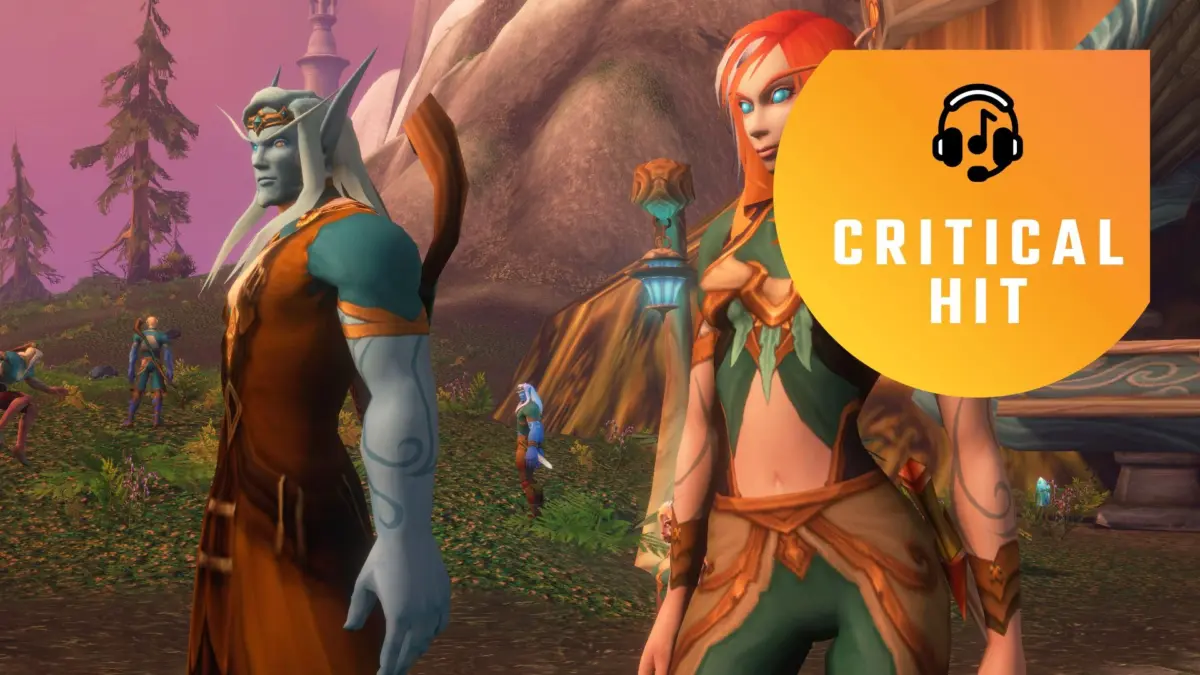
Recent discussions ignited by the beta release of World of Warcraft: Forever have brought this conversation back to the forefront. While some players initially critique the title’s reliance on understated ambient audio over bombastic theatrical cues, extended exploration reveals a profound appreciation for how background soundscapes anchor a virtual world. This phenomenon raises critical questions about the psychological and design-driven functions of video game music.
This report investigates the evolving philosophy of video game soundtracks, examining the contrast between narrative-driven melodic compositions—typified by Japanese Role-Playing Games (JRPGs) such as Final Fantasy XIV—and atmospheric, environment-first audio design found in titles like Minecraft, Mirror’s Edge, and World of Warcraft. By analyzing compositional strategies, player psychology, and historical shifts in game audio, we explore how sound dictates the virtual experience.
Detailed Chronology: The Evolution of Video Game Audio Design
To understand the modern friction between ambient and melodic soundtracks, it is necessary to trace the technical and artistic evolution of video game audio from its rudimentary origins to contemporary orchestral triumphs.
The Chiptune Era: Limitations Breed Melody (1970s–1980s)
In the infancy of video gaming, hardware limitations dictated musical output. Sound chips possessed minimal polyphony—often restricted to three or four simultaneous channels of square and triangle waves. Composers such as Koji Kondo (Super Mario Bros., The Legend of Zelda) had to rely heavily on catchy, concise, and endlessly repeating melodic motifs. Because ambient texture was technologically impossible to render convincingly, melody became the primary vehicle for establishing mood, identity, and pacing.
The Rise of CD-Audio and MIDI (1990s)
The introduction of CD-ROM technology in the 1990s revolutionized game audio. Developers were no longer constrained by synthetic chip limitations and could incorporate pre-recorded orchestral scores, synthesized MIDI tracks, and licensed popular music.
- Role-Playing Epics: Composers like Nobuo Uematsu (Final Fantasy VII) utilized the expanded sonic palette to assign distinct character themes, battle anthems, and emotional motifs to different regions of a game world.
- PC Ambient Frontiers: Concurrently, PC titles operating on MIDI and early digital audio files began experimenting with environmental soundscapes, recognizing that sprawling computer RPGs and strategy games benefited from subdued background audio that wouldn’t fatigue the player over dozens of hours of gameplay.
The Adaptive Audio Revolution (2000s–2010s)
As processing power and audio middleware (such as Wwise and FMOD) matured, the industry shifted toward adaptive and dynamic audio systems. Music was no longer static; it could morph in real-time based on player input, combat states, exploration parameters, and spatial positioning.
- Action games leaned into aggressive, percussion-heavy arrangements that spiked during combat encounters.
- Exploration-heavy and survival games began utilizing procedural audio engines to blend ambient pads, wind chimes, and sparse instrumentation, ensuring the soundtrack reacted organically to the weather, time of day, and geographical biome.
The Contemporary Era: The Coexistence of Spectacle and Subtlety (Present)
Today, the industry embraces a wide spectrum of sonic philosophies. Massively Multiplayer Online (MMO) games and narrative blockbusters often employ hybrid approaches—utilizing sweeping leitmotifs for major cinematic moments while leaning heavily on contextual ambient audio for open-world exploration. The ongoing discourse surrounding World of Warcraft: Forever highlights that players appreciate both ends of the spectrum, depending on the psychological needs of the virtual space they inhabit.
Supporting Context & Metrics: Melodic vs. Ambient Composition
The structural differences between melodic (thematic) and ambient soundtracks go far beyond mere aesthetics; they alter cognitive load, emotional retention, and pacing.
The JRPG Paradigm: The Power of the Leitmotif
Games within the Japanese Role-Playing genre, most notably the Final Fantasy franchise, serve as gold standards for melodic consistency. Under the direction of visionary composers like Masayoshi Soken and the late Nobuo Uematsu, these soundtracks rely heavily on the leitmotif—a short, recurring musical phrase associated with a specific character, location, or concept.
- Emotional Anchoring: When a player enters a city like Final Fantasy XIV‘s Ishgard, the bitter, chilling organ arrangements instantly communicate the somber history and harsh climate of the region before a single line of dialogue is read.
- Memorability: Melodic tracks activate explicit memory. Players hum battle themes years after finishing a campaign because the strong harmonic structures forge durable neural pathways.
- Risk of Fatigue: However, critics note that heavily melodic soundtracks can occasionally lead to auditory fatigue during prolonged gameplay sessions, particularly in grinding loops where the same regional theme repeats indefinitely.
The Ambient Masterclass: Atmosphere Over Narration
Conversely, ambient soundscapes prioritize texture, space, and emotion over structural resolution.
- The Minecraft Phenomenon: C418’s (Daniel Rosenfeld) soundtrack for Minecraft is frequently cited as a masterclass in ambient design. Characterized by sparse, piano-driven melodies punctuated by long stretches of silence and atmospheric pads, the music encourages introspection, creativity, and relaxation. It does not dictate how the player should feel; rather, it provides a canvas for the player’s own emotional state.
- Functional Tension in Mirror’s Edge: Dice’s Mirror’s Edge utilized a minimalist, ambient electronic score by Solar Fields that dissolved into the background during peaceful rooftop traversal. The music only intensified into driving, rhythmic pulses when protagonist Faith faced imminent danger, successfully heightening adrenaline without overwhelming the player’s spatial awareness.
- World of Warcraft and the Power of Soundscapes: In sprawling MMO environments like Azeroth, ambient music acts as an invisible glue. By blending subtle choir pads, gentle acoustic string flourishes, and environmental noise (wind, wildlife, distant thunder), the audio allows the player to immerse themselves in the world’s scale without feeling constantly bombarded by narrative cues.
Comparative Analytical Breakdown
| Metric / Dimension | Melodic / Thematic Soundtracks (e.g., JRPGs) | Ambient / Atmospheric Soundscapes (e.g., MMOs, Survival) |
|---|---|---|
| Primary Objective | Drive narrative, reinforce character arcs, evoke nostalgia. | Establish geographic identity, reduce fatigue, foster immersion. |
| Structural Complexity | High use of leitmotifs, chord progressions, and varied instrumentation. | Low harmonic progression; high focus on texture, timbre, and space. |
| Cognitive Load | High; actively engages the player’s conscious attention. | Low-to-Moderate; operates in the psychological background. |
| Ideal Play Context | Narrative-driven campaigns, cinematic sequences, boss battles. | Open-world exploration, long crafting sessions, sandbox building. |
Industry Perspectives and Expert Analysis
Audio directors, composers, and veteran critics frequently debate the psychological mechanics of game sound. Industry consensus increasingly points toward a hybrid philosophy where context dictates composition.
Game audio theorists emphasize that silence is just as vital as sound. In ambient-heavy environments, strategic pauses allow environmental sound effects—footsteps on gravel, the rustle of leaves, distant monster roars—to take center stage. This heightened acoustic realism fosters a deeper sense of presence.
Conversely, melodic purists argue that video games are an inherently dramatic medium requiring emotional punctuation. Without a strong musical backbone, pivotal narrative beats risk falling flat. The challenge for modern sound designers is ensuring that dynamic audio engines can seamlessly bridge the gap between bombastic orchestration and tranquil ambience, allowing the game to breathe when the player explores, yet roar when danger strikes.
Future Outlook: The Next Horizon of Virtual Sound Design
As video game technology continues to advance, several emerging trends promise to reshape how soundtracks are crafted and experienced.
1. Generative and Procedural Audio Composition
Artificial intelligence and advanced procedural generation tools are beginning to influence game audio pipelines. Rather than looping static music files or pre-rendered stems, future virtual worlds may utilize generative composition systems that compose entirely unique ambient textures and harmonic variations in real-time based on player behavior, biomes, and weather patterns.
2. Advanced Spatial Audio and Binaural Integration
With the mainstream adoption of sophisticated hardware-accelerated spatial audio (such as Dolby Atmos, Tempest 3D AudioTech, and proprietary binaural rendering engines), the distinction between music and sound design is blurring. Ambient music is increasingly treated as a physical entity within the 3D space, bouncing off virtual walls, echoing in caverns, and shifting realistically as the player moves through the world.
3. Personalized Soundscapes
Future titles may feature adaptive audio profiles that learn player preferences over time. If a player favors relaxed exploration, the game’s dynamic mixer could automatically lean into ambient mixes, subduing aggressive combat themes in favor of atmospheric soundscapes. Conversely, thrill-seekers could dial up the theatricality for a more cinematic, high-octane experience.
Conclusion
The debate between the roaring, memorable leitmotifs of JRPGs and the tranquil, introspective ambiance of open-world soundscapes is not a matter of which style is objectively superior, but rather how effectively each serves its respective virtual ecosystem. As titles like World of Warcraft: Forever demonstrate, players can deeply appreciate the subtle art of atmospheric audio after spending time immersed in its sonic environment. Ultimately, whether a game chooses to scream with a full orchestra or whisper through an ambient synth pad, its soundtrack remains one of the most powerful tools in the developer’s arsenal for defining the soul of a virtual world.