Executive Overview
For years, developer S-Game has managed to keep the structural layout of Phantom Blade Zero largely shrouded in mystery. While striking visual slices, blisteringly fast martial arts combat, and a distinct "kungfupunk" aesthetic have consistently dominated gaming showcases over the last eighteen months, the true nature of the game’s campaign architecture remained elusive. During a recent PlayStation State of Play presentation, S-Game finally lifted the veil, showcasing a meticulously designed world comprised of eight individual, intricately detailed maps that seamlessly interconnect into a cohesive whole.
Rejecting the industry-standard binary choice between entirely linear storytelling and bloated open-world sandbox design, Phantom Blade Zero charts a middle course. According to S-Game founder Soulframe Liang, the game spans a series of surreal, highly atmospheric landscapes. Players will journey through treacherous bandit-infested valleys, steam-powered industrial iron towers housing ominous experiments, and abandoned warehouses echoing with the dark rituals of puppet masters.
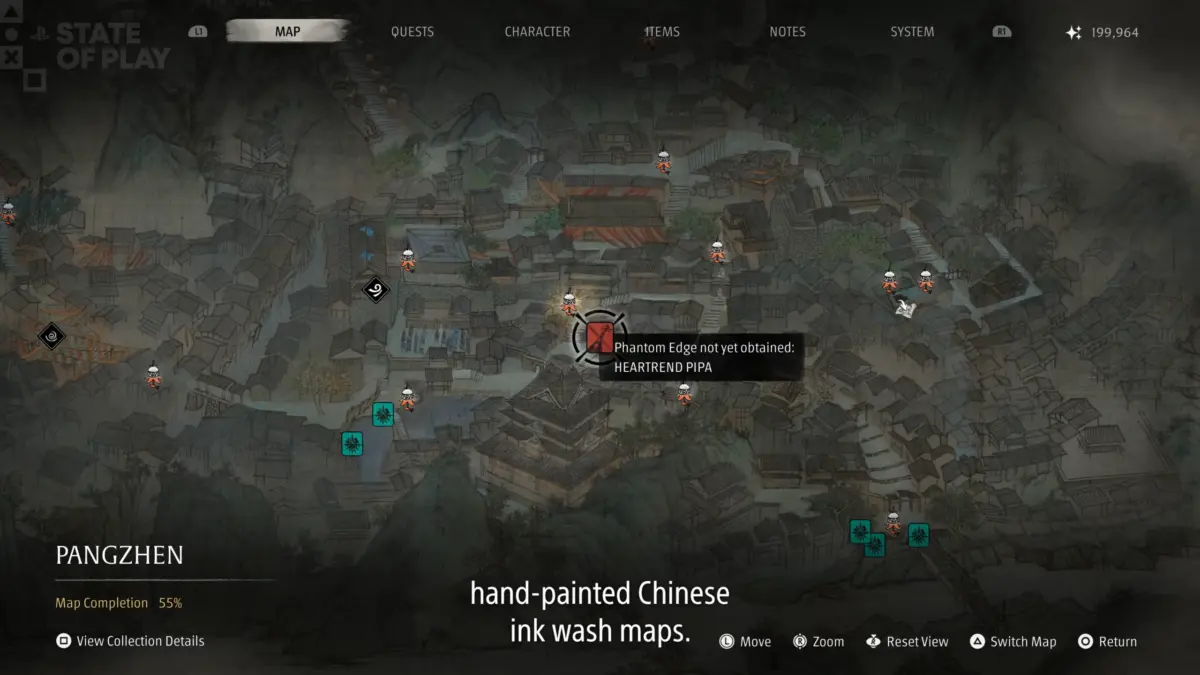
Navigating these diverse territories requires a unique approach to exploration. Eschewing the hyper-detailed, hand-holding minimaps common in modern open-world titles—as well as the complete lack of navigational aid found in traditional Soulslikes—Phantom Blade Zero employs eight authentic, hand-painted Chinese ink wash maps. These artistic cartographic tools provide only a rough sense of direction in complex regions, encouraging organic exploration, close observation, and the uncovering of hidden secrets. Fast travel across this unified geography is facilitated via ancient bells discovered throughout the journey. Combined with light Metroidvania-style environmental progression—such as heavy weaponry used to shatter obstacles and open new pathways—Phantom Blade Zero is shaping up to be one of the most uniquely structured action-RPGs of the current hardware generation.
Detailed Chronology: The Evolution and Revelation of Phantom Blade Zero
The journey toward Phantom Blade Zero’s recent world-building reveal has been a masterclass in calculated marketing and rigorous development. Understanding how S-Game arrived at this juncture requires examining the project’s trajectory from initial concept to its prominent spot on the global stage.
Early Concepts and the Pivot to High-End Production
S-Game’s roots trace back to indie development and mobile-adjacent titles within the Phantom Blade universe (originally born out of the indie scene with Rainblood). However, the studio’s ambitions scaled dramatically with the conceptualization of Phantom Blade Zero. Moving away from 2D action and indie constraints, the team envisioned a high-budget, third-person console and PC title that could compete directly with industry heavyweights.
The Gameplay Demos and Optional Diversions
Over the past year and a half, various media outlets and industry figures were granted hands-on access to closed-door demos of Phantom Blade Zero. Interestingly, S-Game repeatedly emphasized during these previews that the specific biomes, enemy encounters, and punishing boss fights experienced by players were entirely optional diversions branching off from the main narrative spine. This revelation highlighted the sheer scope of the game; S-Game was confident enough in its level design to hide massive, high-production-value content off the beaten path. However, because these slices were self-contained, observers were left wondering how the overarching world linked together.
The PlayStation State of Play Revelation
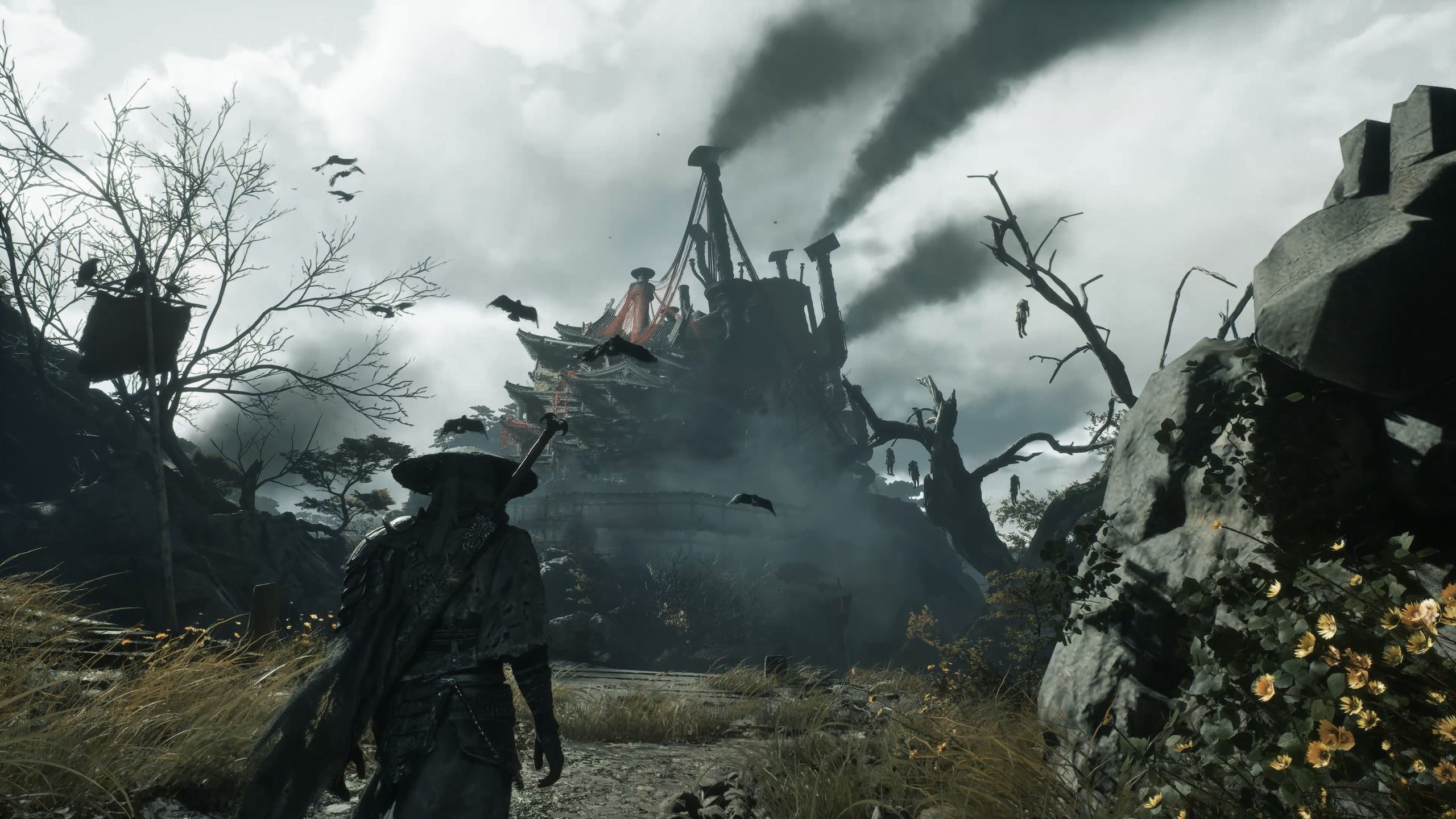
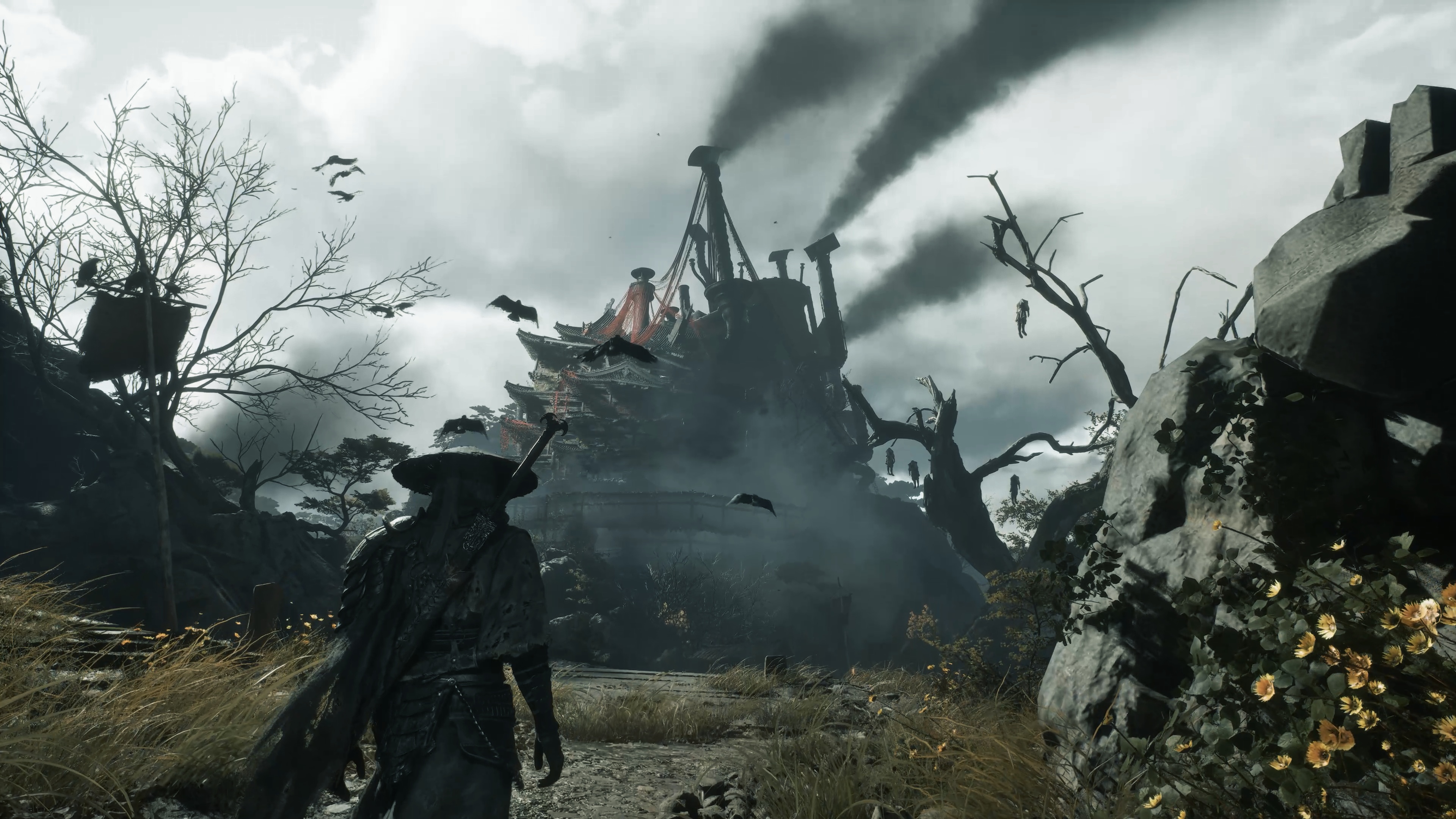
The ambiguity surrounding the game’s structural layout came to an end during the recent PlayStation State of Play broadcast. S-Game utilized the global platform to debut a deep-dive gameplay trailer that explicitly addressed world geography, major characters, core locations, and traversal mechanics. By showcasing how the eight distinct maps lock together into a single, contiguous geography, S-Game quelled speculation that the title would be another linear corridor hack-and-slash or a generic, checklist-driven open world. The event also highlighted the atmospheric diversity of the game, providing brief but arresting glimpses of steam-powered facilities, high-speed aquatic vessels navigating expansive lakes, and ritualistic industrial zones.
Supporting Context & Metrics: World Design, Traversal, and Combat Engineering
To truly appreciate what S-Game is attempting with Phantom Blade Zero, one must examine the specific design philosophies driving its world, navigation, and combat systems.
The Interconnected "Hub-and-Spoke" vs. Open-World Paradigm
In modern game development, studios often fall into two distinct camps: linear, cinematic experiences that funnel players through tightly scripted sequences, or vast open worlds designed around hundreds of repetitive map markers. Soulframe Liang explicitly rejected both extremes for Phantom Blade Zero, stating:
"It is not an open world game, nor is it a linear adventure from beginning to end."
Instead, the title utilizes a structured collection of eight distinct, large-scale regions that seamlessly connect into a unified world. This design philosophy shares spiritual DNA with Dark Souls and classic Metroidvania titles, where verticality, interconnected shortcuts, and environmental obstacles dictate progression.
| Design Pillar | Traditional Open World | Linear Action Game | Phantom Blade Zero Approach |
|---|---|---|---|
| World Layout | Massive, continuous sandbox | Sequential levels/chapters | Eight distinct maps fused into a unified world |
| Navigation Aids | Cluttered HUD, thousands of icons | Minimal or none (level select) | Hand-painted Chinese ink wash maps (rough direction only) |
| Exploration Incentive | Collectibles, crafting nodes | Scripted cinematic rewards | Hidden secrets, optional bosses, path-gating tools |
| Fast Travel | Universal map-click fast travel | Checkpoint menus | In-world mechanic via historical bells |
Cartography Rooted in Art: The Ink Wash Maps
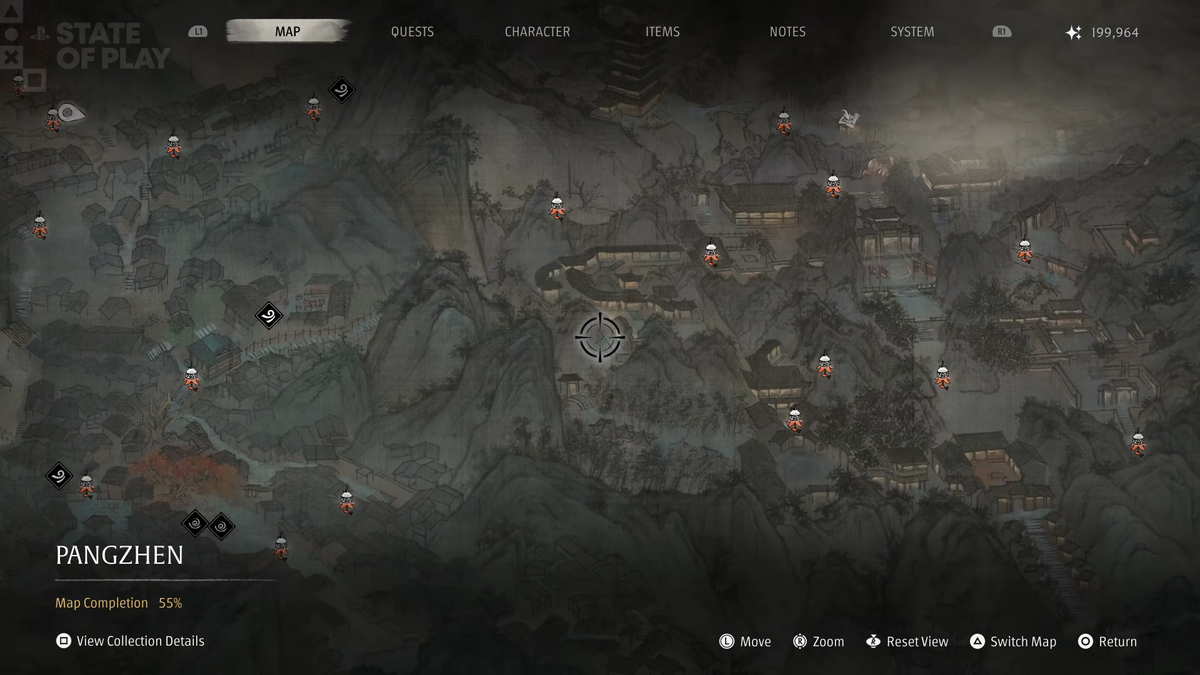
One of the most praised design choices highlighted in the recent media breakdown is the map system. Rather than providing a GPS-style mini-map that tracks the player’s exact coordinates in real-time with pinpoint accuracy, Phantom Blade Zero relies on eight authentic, hand-painted Chinese ink wash maps.
These maps do not spell out every turn or secret. In complex and labyrinthine regions, they offer only a generalized sense of direction. This forces players to pay close attention to environmental storytelling, architectural landmarks, and spatial awareness. Once a region is thoroughly explored, players can utilize strategically placed bells within the game world to fast-travel between discovered locations, maintaining immersion while mitigating tedious backtracking.
Metroidvania Progression and Environmental Puzzles
Further enriching the exploration loop are light Metroidvania elements. Recent gameplay showcases revealed instances where heavy weapons and specialized tools are utilized to smash through environmental obstacles, shatter barriers, and unseal previously inaccessible areas. This mechanical gating encourages players to return to earlier maps once new abilities or gear are acquired, transforming the eight maps into dynamic environments that evolve alongside the protagonist, Soul.
Official Statements and Industry Collaborations
S-Game has consistently emphasized transparency regarding its artistic vision, leveraging both internal leadership and external legendary talent to realize its unique blend of martial arts and dark technology.
Soulframe Liang on World Structure
Expounding on the design philosophy of the game world during the presentation, founder Soulframe Liang detailed the surrealist artistic direction:
"Your journey takes you to intricate but surreal landscapes—villages, valleys, lakes, and shadowed territories, including a valley overrun by ruthless bandits, an abandoned warehouse filled with hanging puppets where a dark ritual seems to be taking place, a steam-powered iron tower built for some kind of dark experiment, and a vast lake, which Soul must navigate aboard a peculiar high-speed vessel."
This quote underscores the tonal duality of Phantom Blade Zero. It marries traditional historical wuxia tropes—bandits, remote villages, and ink-wash cartography—with dark, industrial, and clockwork machinery (the core tenets of the "kungfupunk" subgenre).
The Donnie Yen Factor: Elevating Stunt Coordination
While the world design establishes the stage, the combat mechanics form the beating heart of Phantom Blade Zero. S-Game’s commitment to authentic, high-impact martial arts choreography received a massive endorsement with the revelation that legendary Hong Kong action star and filmmaker Donnie Yen has been quietly guiding the game’s kungfupunk stunts and choreography since 2023.
Yen, renowned for his work on cinematic masterpieces such as the Ip Man franchise, Rogue One: A Star Wars Story, and John Wick: Chapter 4, brings decades of practical martial arts expertise to the digital realm. By collaborating with Yen’s stunt team, S-Game ensures that the frantic bladeplay, hand-to-hand counters, and acrobatic fluidity of protagonist Soul avoid looking like generic motion-captured routines, instead capturing the visceral weight and rhythm of classic cinematic kung fu.
Future Outlook: Can Phantom Blade Zero Deliver on Its Promising Architecture?
As Phantom Blade Zero continues its development cycle toward its eventual release on PlayStation 5 and PC, the gaming community’s expectations are exceptionally high.
The decision to avoid both the open-world fatigue plaguing the AAA industry and the narrow confines of purely linear games is a bold gamble. If S-Game can successfully execute the intricate, interconnected map design reminiscent of early FromSoftware titles—while maintaining the lightning-fast, Donnie Yen-vetted martial arts combat—Phantom Blade Zero could emerge as a genre-defining triumph.
The integration of hand-painted ink wash maps, environmental gating, and atmospheric storytelling points toward a world that respects player intelligence and encourages genuine curiosity. As further details emerge regarding release windows and deeper mechanics, all eyes remain fixed on S-Game and their ambitious journey into the dark, mechanical underworld of the Phantom Blade universe.