Executive Overview
The intersection of artificial intelligence, corporate public relations, and mainstream media reporting has once again drawn sharp criticism from the scientific community. Following a high-profile segment on CBS’s flagship news program 60 Minutes featuring Google CEO Sundar Pichai, leading artificial intelligence researchers and ethicists have accused both the tech giant and the broadcaster of heavily overhyping the capabilities of modern language models.
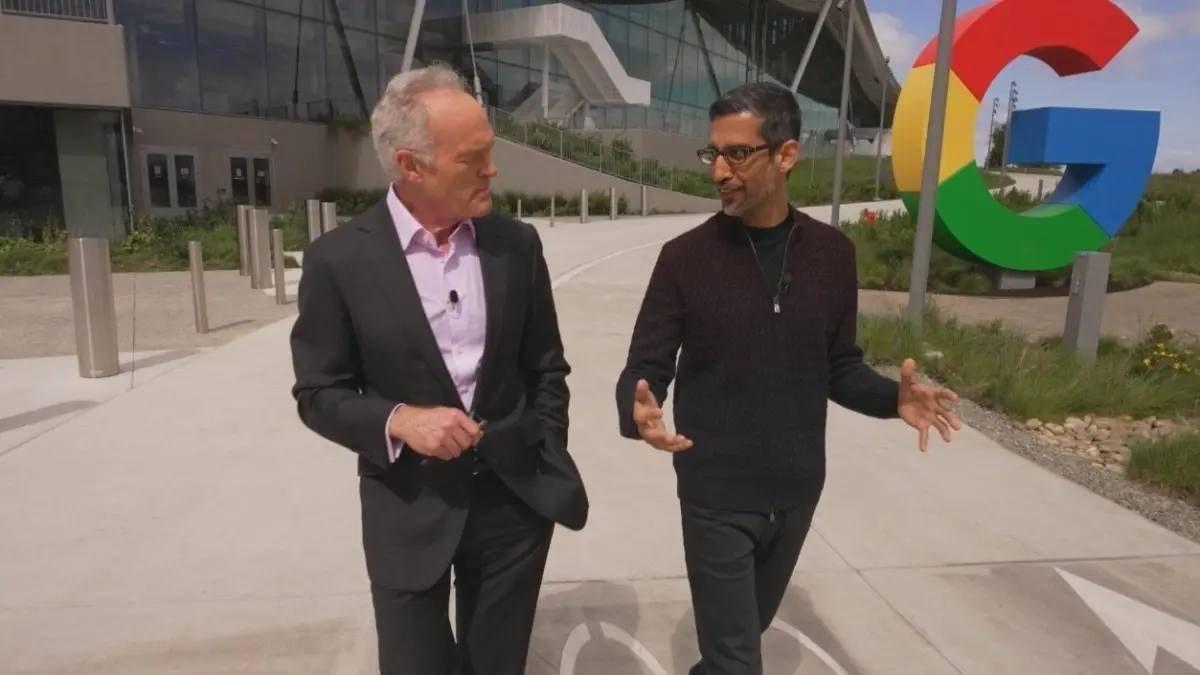
During the broadcast, correspondent Scott Pelley presented a narrative that captivated millions of viewers: an advanced Google AI program had allegedly taught itself a completely unknown language—Bengali—entirely on its own, displaying a mysterious phenomenon known in computer science as "emergent properties." Pichai and other Google executives leaned into this framing, describing the technology as an inscrutable "black box" that even its creators fail to fully comprehend.
However, independent AI researchers quickly dismantled these claims on social media and in interviews, pointing out a glaring omission in the broadcast. The AI model in question, Google’s PaLM (Pathways Language Model)—the underlying architecture powering Google’s Bard chatbot—was not operating in an informational vacuum. As documented in Google’s own technical research papers, the model’s massive training dataset explicitly included Bengali text.
Critics argue that presenting standard data processing and pattern matching as spontaneous, almost magical self-taught wizardry misleads the public, inflates fears or false hopes regarding Artificial General Intelligence (AGI), and ultimately serves corporate public relations goals at the expense of scientific accuracy. This controversy highlights a growing tension between the tech industry’s marketing machinery and the empirical rigor demanded by the researchers building and studying these systems.
Detailed Chronology: From Developer Stage to Primetime Television
To understand how a routine technical demonstration blossomed into a national media controversy, it is necessary to trace the timeline of how Google has showcased its PaLM architecture over the past year.
The 2022 Google I/O Preview
The narrative surrounding PaLM’s supposed spontaneous translation capabilities began long before the 60 Minutes broadcast. When Google first unveiled PaLM at its annual developer conference, CEO Sundar Pichai took to the stage to demonstrate the model’s linguistic dexterity. During the presentation, Pichai highlighted the model’s ability to process and respond to prompts in Bengali, a language spoken by hundreds of millions of people in Bangladesh and India.
At the conference, Pichai explicitly stated: "What is so impressive is that PaLM has never seen parallel sentences between Bengali and English. It was never explicitly taught to answer questions or translate at all. The model brought all of its capabilities together to answer questions correctly in Bengali, and we can extend the technique to more languages and other complex tasks."
While technically accurate regarding the absence of parallel training data (direct translations mapped side-by-side), the framing laid the groundwork for a broader misunderstanding: that the model possessed an uncanny ability to comprehend and translate a language it had no business knowing.
The 60 Minutes Broadcast
The hype reached a broad mainstream audience when 60 Minutes aired its sprawling segment on artificial intelligence. Correspondent Scott Pelley framed the discussion around the mysterious, unpredictable nature of modern machine learning models.
"Of the AI issues we talked about, the most mysterious is called ‘emergent properties,’" Pelley told viewers. "Some AI systems are teaching themselves skills that they aren’t expected to have. How this happens is not well understood."
The segment then transitioned to a live demonstration of an unlabelled Google AI program—subsequently identified as PaLM. A user prompted the system in Bengali, and the model seamlessly responded in both Bengali and English. Pelley informed the audience that the program had "adapted on its own" after being introduced to Bengali, leaving viewers with the impression that the software had conjured fluency out of thin air.
Adding fuel to the fire, James Manyika, a Google vice president also interviewed for the segment, claimed: "We discovered that with very few amounts of prompting in Bengali, it can now translate all of.” Manyika went on to boast that this breakthrough had sparked a new research effort aimed at expanding the technology to cover a thousand languages.
The Immediate Backlash
Within hours of the broadcast, the AI research community mobilized online, taking primarily to Twitter to fact-check the network and the tech executives. Margaret Mitchell, an AI researcher and ethicist at startup Hugging Face and the former co-lead of Google’s AI ethics team, was among the first to sound the alarm.
Citing Google’s own published research papers on PaLM, Mitchell pointed out that Bengali constituted a baseline percentage of the model’s training corpus. Far from discovering a completely unknown language, the model was simply doing what large language models are designed to do: recognizing patterns from data it had already ingested when tickled with a prompt in that same language.
Supporting Context & Metrics: Unpacking the Data
The core of the scientific dispute rests on a fundamental misunderstanding—or deliberate misrepresentation—of how Large Language Models (LLMs) ingest data and generate text. To evaluate the claims made on 60 Minutes, one must examine the actual composition of the PaLM training architecture.
What the Data Actually Shows
According to the official technical research paper published by Google’s own engineers detailing the architecture of PaLM, the model was trained on a massive, highly diverse multilingual corpus. This dataset included web pages, books, Wikipedia articles, news stories, and source code.
Within this sprawling ocean of text, low-resource languages—including Bengali—were intentionally included. Specifically, the paper reveals that Bengali made up approximately 0.026% of PaLM’s total training data. While 0.026% might sound like a minuscule fraction, in the context of a dataset comprising hundreds of billions of words, it translates to a massive volume of text.
How Prompting Works
When an LLM is prompted in a language that exists within its training data, it does not need to be explicitly programmed to "translate" or "answer questions" in a Q&A format to produce coherent outputs. Through the process of next-token prediction, the model has already mapped the statistical relationships between words, syntax, and concepts across all languages it has encountered.
As Margaret Mitchell explained in her breakdown of the segment: "By prompting a model trained on Bengali with Bengali, it will quite easily slide into what it knows of Bengali: This is how prompting works." She emphasized that it is fundamentally impossible for an artificial intelligence model to "speak" or parse a well-formed human language that it has never had access to in its training data or interaction history.
The Illusion of "Emergence"
The term "emergent properties" is frequently invoked by tech companies to describe capabilities that appear in large models without being explicitly engineered or anticipated by the programmers. While it is true that scaling up neural networks can lead to complex behaviors—such as improved arithmetic reasoning or multi-step logic—critics argue that labeling basic linguistic recall as a miraculous, self-taught phenomenon crosses the line from technical observation into deceptive marketing.
University of Washington professor and linguistic researcher Emily M. Bender addressed this directly, noting that phrases like "all of Bengali" are completely unsubstantiated marketing buzzwords.
"What does ‘all of Bengali’ actually mean?" Bender asked in a widely shared social media thread. "How was this tested?"
Bender further argued that tossing around terms like "emergent properties" in this context functions as a palatable corporate substitute for Artificial General Intelligence (AGI)—the holy grail of AI research representing a machine that can autonomously learn and reason better than humans. In her blunt assessment of the narrative being pushed: "It’s still bullshit."
Official Statements and Corporate Defense
Faced with a rising tide of criticism from prominent scientists and ethicists, representatives from both Google and CBS faced mounting pressure to clarify their statements.
Google’s Clarification
Jason Post, a corporate spokesperson for Google, defended the company’s messaging in a statement provided to the press. Post argued that while Google never concealed the fact that Bengali was part of the training data, the application of that data represented a genuine milestone.
"While the model was trained on basic sentence completion in a wide variety of languages (including English and Bengali), it was not trained to know how to 1) translate between languages, 2) answer questions in Q&A format, or 3) translate information across languages while answering questions," Post stated. "It learned these emergent capabilities on its own, and that is an impressive achievement."
This distinction forms the crux of Google’s defense: the model was not taught how to translate or converse, yet it successfully performed translation and conversation tasks by synthesizing disparate patterns found in its training data. However, critics counter that this is precisely how statistical language models are expected to behave once they reach a certain scale, making the framing of a "spontaneous linguistic awakening" deeply misleading to lay viewers.
CBS’s Silence
Meanwhile, mainstream media outlet CBS—and correspondent Scott Pelley—faced intense scrutiny for failing to vet the claims or provide adequate technical context to viewers. Despite multiple requests for comment from investigative journalists, a CBS spokesperson declined to respond on the record. The network’s silence has only heightened criticisms that high-profile journalism is increasingly susceptible to corporate-sponsored tech evangelism.
Future Outlook: The Cost of Overhype
The friction between AI researchers and public relations apparatuses is more than just an academic quarrel over semantics; it carries profound implications for society, policy, and the future of artificial intelligence development.
The Erosion of Public Trust
When mainstream media platforms amplify narratives of machines spontaneously acquiring human-like cognition or mastering skills without human intervention, it skews public perception. Instead of viewing AI as a complex, probabilistic software tool built on human-generated data, the public is encouraged to view it as an autonomous, almost supernatural entity. This misrepresentation complicates ongoing legislative efforts to regulate AI, as lawmakers may base policy decisions on science-fiction myths rather than engineering realities.
The Danger of Distraction
Ethicists like Margaret Mitchell have repeatedly warned that leaning into the "magic" narrative of AI serves a very specific corporate purpose. By framing AI models as mysterious black boxes that magically unlock new dimensions of intelligence on their own, companies can more easily deflect accountability for real-world harms, such as algorithmic bias, copyright infringement, data privacy violations, and labor displacement. If the technology is perceived as an uncontrollable, mystical force of nature, its creators cannot be held fully responsible for its flaws or downstream consequences.
Toward Responsible Communication
As the artificial intelligence race accelerates—with tech giants locked in a high-stakes battle for market dominance—the need for rigorous, skeptical, and scientifically literate journalism has never been greater. The 60 Minutes controversy serves as a cautionary tale for media organizations everywhere: reporting on cutting-edge technology requires looking past the polished PR talking points and consulting independent experts who can separate genuine engineering feats from engineered illusions.
Until the tech industry and the media outlets that cover them commit to transparent, grounded reporting, the gap between what AI can actually do and what the public is told it can do will only continue to widen.