Executive Overview
As the United States accelerates its push toward ubiquitous wireless connectivity and advanced telecommunications, a grim crisis is unfolding thousands of feet above the ground.
Communication tower workers—often referred to as tower climbers or "linemen"—are facing an unprecedented surge in fatal accidents. This spike in workplace fatalities is directly tied to a massive nationwide infrastructure overhaul mandated by the Federal Communications Commission (FCC): the television "spectrum repack."
Nearly 1,000 television stations across the country have been ordered to transition to new channels by a hard deadline of July 2020. This sweeping administrative maneuver is designed to free up airwaves for mobile broadband expansion, satisfying the demands of a hyper-connected consumer base and telecommunications lobbies that spent nearly $29 million on federal lobbying in 2017 alone. However, the physical reality of executing this mandate has outpaced industry capacity.
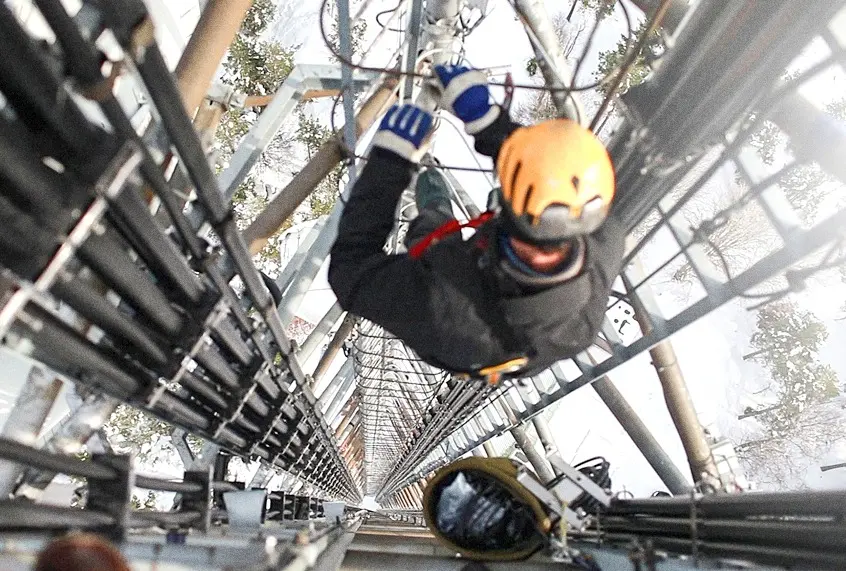
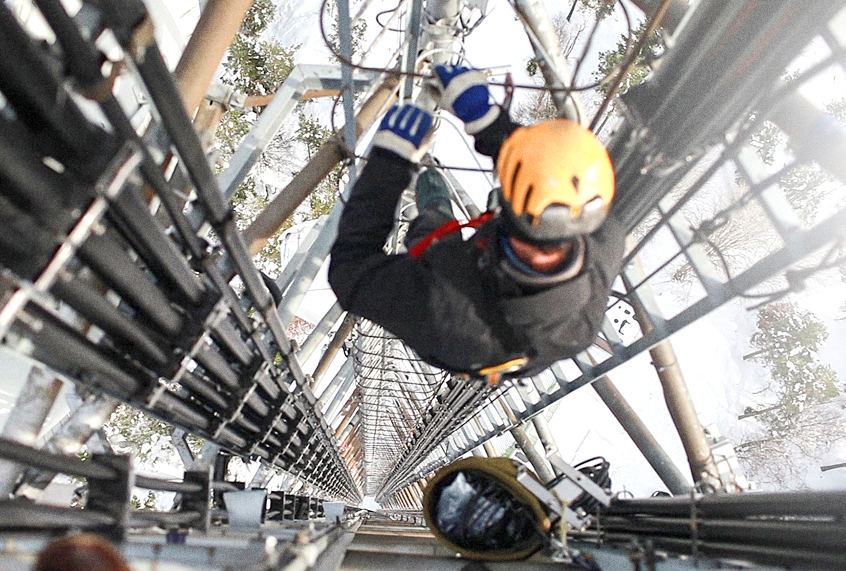
Tower climbers are scaling infrastructure reaching up to 2,000 feet—dwarfing landmarks like the 1,776-foot One World Trade Center—to install heavy new antennas and reinforce aging structural supports. Operating in an environment marked by extreme heights, electrical hazards, structural instability, and unpredictable weather, these workers face a fatal injury risk estimated to be 25 to 30 times higher than that of the average American worker.
Despite urgent warnings from industry veterans, safety experts, and trade associations pointing to a severe shortage of qualified labor, a bipartisan coalition of 56 members of Congress has insisted on maintaining the aggressive 2020 schedule. The result is a high-stakes gamble where political timelines and economic imperatives clash directly with human lives.
Detailed Chronology of Tragedy
The human toll of the accelerated spectrum repack is mapped across a series of devastating structural failures and fatal operational accidents that have galvanized safety advocates and union organizers alike.
The Miami Gardens Disaster
In September 2017, the dangers of high-altitude tower work were thrust into the national spotlight during an antenna replacement project for WSVN-Channel 7 in Miami Gardens, Florida. A crew scaling the station’s broadcast tower suffered a catastrophic failure, resulting in the deaths of three young workers:
- Brachton Barber, 23, of Longwood, Florida
- Benito Rodriguez, 35, of Tampa, Florida
- Marcus Goffena, 31, of Sidney, Ohio
The incident underscored the complex, hazardous nature of working on multi-tenant broadcast towers, where coordination, equipment integrity, and precise engineering are matters of life and death. The simultaneous loss of three experienced technicians stunned the tight-knit tower-climbing community and served as a tragic preview of the systemic pressures facing the industry.
The Fordland Tower Collapse
Months later, in April 2018, structural catastrophe struck a rural community in Missouri. A massive 1,980-foot broadcast tower in Fordland, Missouri, utilized by Ozarks Public Television, experienced a catastrophic structural collapse.
The incident claimed the life of Stephen Lemay, 56, of Blaine, Washington—a seasoned technician remembered by his family as a dedicated father. The collapse not only cut off public broadcasting signals to thousands of rural viewers but also triggered extensive federal and state investigations into the structural integrity of aging towers subjected to rapid, concurrent modifications.
These incidents are not isolated anomalies; they represent the sharp edge of an industry under siege by compressed deadlines and inadequate oversight.
Supporting Context & Metrics: A Crisis of Scale and Regulation
To understand the mechanics of this ongoing crisis, one must examine the intersection of federal regulatory pressure, industry demographics, and regulatory loopholes.
The FCC Repack and the Race for Broadband
The root cause of the current surge in tower work is the FCC’s incentive auction and subsequent spectrum repack. As consumer demand for mobile data skyrockets, the federal government has sought to reallocate broadcast television frequencies to wireless carriers. This requires hundreds of TV stations to alter their broadcasting frequencies, necessitating physical modifications to their transmission towers—including the replacement, tuning, or installation of new antennas and transmission lines.
While commercial television and radio interests poured nearly $29 million into federal lobbying in 2017 to influence telecommunications policy, the physical labor required to execute these legislative and regulatory visions falls on a fragmented, highly subcontracted workforce.
The Regulatory Void: OSHA and Oversight
Compounding the physical risks is a profound lack of federal regulatory protection. The Occupational Safety and Health Administration (OSHA) has historically lacked rules specifically tailored to the unique hazards of communications tower construction and maintenance.
During the Obama administration, OSHA began drafting specialized safety standards after a horrific spike in 2013, when 13 communication tower workers were killed—surpassing the total fatalities of the previous two years combined. Reflecting on those statistics, then-Assistant Labor Secretary David Michaels bluntly assessed the situation:
"Tower workers have a risk of fatal injury perhaps 25 to 30 times higher than the risk for the average American worker. This is clearly unacceptable."
Despite these stark assessments, oversight remains weak. Thomas Fuller, an academic expert from Illinois State University specializing in environmental and occupational health, has repeatedly testified that tower climbing operates in a largely unregulated space characterized by minimal oversight and lax enforcement.
According to Fuller, as communication towers age and operators stack multiple generations of heavy antennas onto aging steel frameworks, the structures become exponentially more hazardous. Compounding the issue, workers and small subcontracting firms are often trapped in a dynamic of fear: speaking up about structural deficiencies or refusing unsafe work frequently results in contract termination, blacklisting, and lost livelihoods. Crucially, there is no dedicated federal agency where workers can report unsafe structural anomalies and expect an immediate, authoritative response.
Official Statements and Political Polarization
The debate over the tower repack timeline has exposed a sharp divide between industry safety advocates on the ground and political leaders in Washington, D.C.
Warnings from the Industry
Jim Tracy, chairman of the National Association of Tower Erectors (NATE), issued stark warnings to lawmakers as early as the fall of 2017. Tracy urged Congress and the FCC to exercise caution, noting that the sheer volume of engineering work required by the repack vastly outstripped the nation’s human capital.
“There is one inescapable fact,” Tracy stated. “There are not, at present, enough qualified workers to perform all the tower work we will be required to complete.”

Engineering professionals managing public broadcast networks have echoed these warnings, emphasizing that rushing complex structural modifications forces an unacceptable compromise between broadcast reliability and human safety. Bill Hayes, director of engineering for Iowa Public Television, summarized the dilemma facing technical directors nationwide:
“You can be gambling at best with the reliability of your station’s service, and at worst you’re gambling with people’s lives.”
The Push from Capitol Hill
Conversely, a powerful coalition of 56 members of Congress—including prominent figures such as Rep. Steve Scalise (R-La.) and Rep. Darrell Issa (R-Calif.)—pushed back hard against any delays. In a formal letter to FCC Chairman Ajit Pai, these lawmakers demanded that the July 3, 2020, deadline remain absolute, framing the aggressive schedule as an economic imperative for rural broadband expansion and global competitiveness.
“Ultimately, it’s a matter of economic necessity in today’s globally-connected world,” the lawmakers wrote in a joint policy statement.
This legislative stance effectively prioritized the financial interests of telecommunications expansion over the appeals of labor safety advocates, leaving regulatory agencies caught in the middle of a high-stakes tug-of-war between corporate velocity and worker protection.
Future Outlook: Navigating the Aftermath of the Repack
As the telecommunications landscape continues its relentless evolution, the structural legacy of the 2018–2020 spectrum repack offers profound lessons for policymakers, industry executives, and labor advocates.
The convergence of aging national infrastructure, compressed federal deadlines, and a fragmented subcontracting network has exposed systemic vulnerabilities in how America builds and maintains its digital backbone. While the completed repack successfully expanded mobile broadband capacity and transitioned television broadcasting into a new digital era, it did so at an unacceptably high human cost.
Moving forward, structural safety experts argue that several fundamental reforms must be implemented to protect the workforce scaling America’s high-altitude infrastructure:
- Specialized OSHA Standards: Finalizing and rigorously enforcing comprehensive, tower-specific safety regulations that mandate continuous structural inspections, certified rigging plans, and mandatory fall-protection protocols.
- Whistleblower Protections: Establishing robust legal protections and anonymous reporting channels for tower climbers who identify compromised structural conditions, shielding them from retaliatory contract cancellations by employers.
- Workforce Training and Certification: Investing heavily in accredited apprenticeship and training programs to expand the pool of certified tower technicians, ensuring that speed is never again prioritized over technical competence.
- Independent Structural Audits: Requiring third-party, certified engineering sign-offs on all multi-tenant broadcast towers before any major equipment modifications or antenna additions are initiated.
Until these systemic changes are fully integrated into federal telecommunications policy, the men and women who scale America’s tallest towers will continue to work in the shadow of preventable tragedy—bearing the physical weight of a digital society rushing ever upward.