Executive Overview
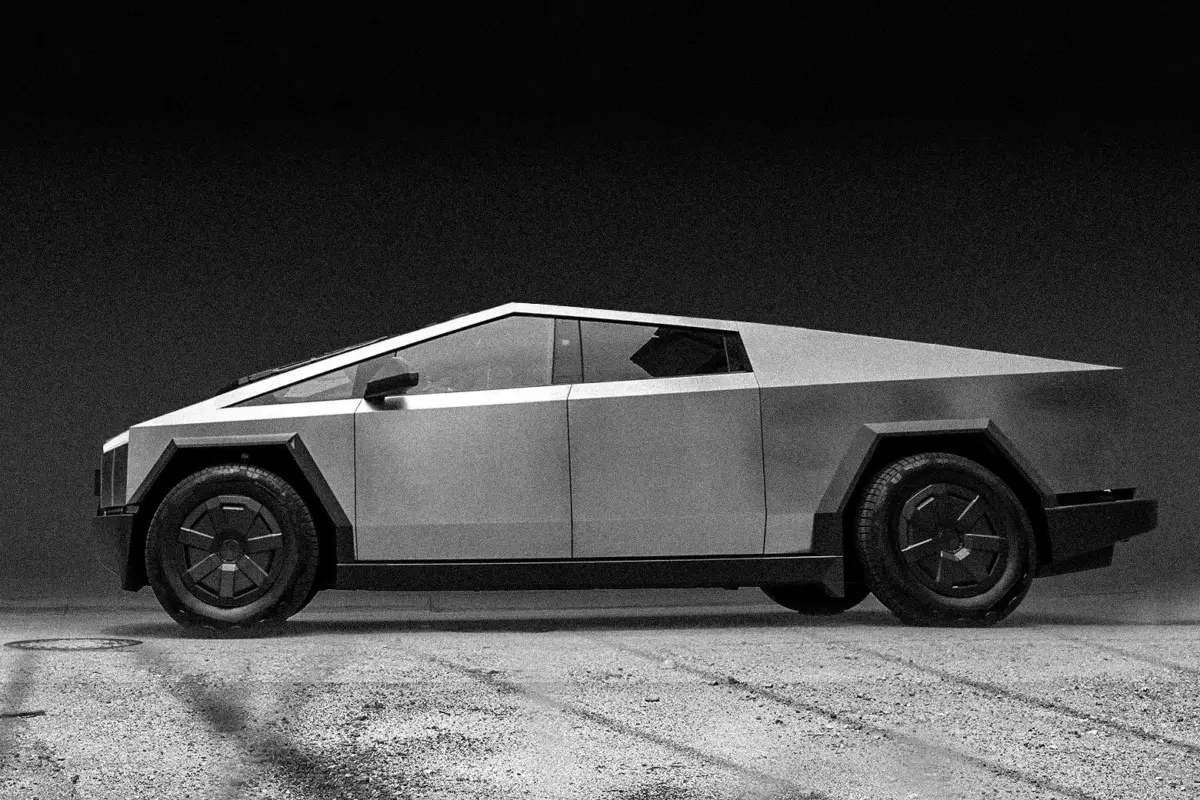
Few modern consumer products have sparked as much intense polarization, public mockery, and speculative fascination as Elon Musk’s radical reimagining of the all-American pickup truck. Now, that angular, stainless-steel monolith appears to be facing a definitive end.
In a social media announcement posted to X, Elon Musk revealed that Tesla will officially wind down production of the Cybertruck by mid-2027. The primary driver behind the cancellation is a strategic corporate pivot: Tesla intends to repurpose critical manufacturing capacity at its sprawling gigafactory in Austin, Texas, to scale production of the "Cybercab"—a gold-toned, autonomous vehicle devoid of traditional steering wheels and foot pedals.
For many critics, competitors, and disillusioned former fans, the retirement of the Cybertruck will be met with a collective sigh of relief. With an imposing, dystopian road presence that swings wildly between futuristic audacity and obnoxious posturing, the vehicle evolved into a rolling symbol of Musk’s broader cultural transformation. Once celebrated as a climate-conscious visionary championed by progressives, Musk’s pivot toward right-wing political commentary and aggressive brand disruption left the Cybertruck stranded in a cultural no-man’s-land.
Yet, as the dust settles on this ambitious yet flawed automotive experiment, the Cybertruck leaves behind a complex legacy. It was an unmistakable physical manifestation of audacious industrial design, corporate cross-pollination, and unbridled hubris—a swing for the fences that ultimately fell victim to market realities, pricing failures, and a rapidly shifting corporate strategy.
Detailed Chronology: From Sci-Fi Sketch to Production Reality
The 2019 Unveiling and the Shattered Glass
When the Cybertruck made its global debut in November 2019 at Tesla’s design studio near Los Angeles, it immediately upended conventional automotive expectations. Unveiled with typical theatrical flair, the vehicle looked less like a commercial utility truck and more like a prop lifted straight from a low-budget science fiction film.
Legend—or well-circulated industry folklore—has it that the brutally sharp, unpainted stainless-steel design sprang directly from Musk’s own imagination. Frustrated with traditional automotive forms, Musk allegedly sketched the vehicle with a simple ruler on a sheet of paper, handing the rough geometric concept to Tesla’s chief designer, Franz von Holzhausen, with strict instructions to make it a reality.
The reveal event itself achieved instant infamy. During a live-streamed demonstration meant to highlight the truck’s ruggedness, the vehicle’s heavily marketed "armor glass" windows were struck with metal balls, shattering on impact. While Musk stood on stage visibly stunned, muttering "Oh, my god," the blunder set the tone for a development cycle plagued by engineering hurdles, repeated delays, and soaring expectations.
The Long, Bumpy Road to Deliveries
Originally slated to hit public roads by late 2021, the Cybertruck’s production timeline slipped repeatedly. Supply chain bottlenecks, the unprecedented engineering challenges of stamping and welding ultra-hard 301 stainless-steel panels, and pandemic-era disruptions pushed the official customer handover event out to late 2023, with volume deliveries trickling into 2024.
By the time the first trucks rolled off the Austin assembly line, the automotive landscape had fundamentally transformed. Competitors like Rivian had already established a firm foothold in the electric adventure vehicle market, and legacy automakers were rolling out electrified versions of their tried-and-true commercial platforms.
Supporting Context & Metrics: The Anatomy of a Commercial Miss
To understand why the Cybertruck is being quietly ushered off the stage, one must examine the cold mathematics of the North American pickup truck market—and how dramatically Tesla missed its original economic targets.
The Pricing Disconnect
When pre-orders opened in 2019, Tesla promised a starting price of roughly $40,000 for the base model, with higher-tier configurations scaling up to $70,000. That promised affordability evaporated long before the vehicle reached assembly lines.
When ordering eventually stabilized—before Tesla abruptly paused new orders—the baseline financial reality was entirely different:
- Rear-Wheel Drive Base Model: Initially priced starting at $82,490.
- All-Wheel Drive Mid-Tier: Retailing around $92,490.
- The "Cyberbeast" (Top Trim): Commanding a staggering $102,490.
This steep price inflation alienated the very demographic that historically drives high-volume pickup sales: blue-collar workers, contractors, and suburban families accustomed to traditional utility pricing.
Sales Figures vs. Manufacturing Ambitions
The financial strain was compounded by an acute lack of consumer demand relative to production capacity. The Austin gigafactory was structurally engineered and heavily publicized to produce upward of 250,000 Cybertrucks annually. In reality, total cumulative sales have struggled to cross the 75,000-unit threshold globally.
To offset this massive inventory surplus and artificial drag on cash flow, reports emerged indicating that Musk’s aerospace venture, SpaceX, stepped in to purchase tens of millions of dollars worth of Cybertrucks. This corporate maneuvering highlighted Musk’s unique ecosystem strategy, utilizing his interconnected portfolio of companies to absorb unsold units and prop up demand figures.
Identity Crisis: Who Was It For?
The Cybertruck suffered from a profound identity crisis regarding its target audience:
- The Commercial User: Farmers, contractors, and fleet operators require heavy payload capacities, long towing ranges under load, and simple reparability. The Cybertruck offered none of these practical virtues, prioritizing a 0-to-60 mph time under five seconds over functional utility.
- The Traditional Truck Enthusiast: Loyal buyers of America’s perennial top seller—the Ford F-Series—had no incentive to abandon decades of brand loyalty for a fragile, unpainted steel wedge. Those seeking luxury could opt for refined alternatives like the Ford F-150 King Ranch, featuring plush leather and real wood accents.
- The EV Early Adopter: Environmentally conscious consumers drawn to Tesla’s early mission found themselves alienated not only by the vehicle’s aggressive aesthetics and polarizing political context surrounding its CEO, but also by viable, highly functional alternatives like the Rivian R1T.
Ultimately, the Cybertruck became an "exotic" vehicle—a hyper-futuristic novelty appealing primarily to tech speculators, crypto enthusiasts, and digital gamers who measured status in aesthetic disruption rather than utility.
Official Statements and Strategic Pivots
The decision to shutter Cybertruck production is not an isolated event; it represents a comprehensive structural pivot within Tesla. The company is actively shedding its identity as a pure-play electric vehicle manufacturer to morph into an artificial intelligence, robotics, and autonomous transport enterprise.
Earlier this year, Tesla quietly discontinued both its aging Model S sedan and Model X SUV, signaling a clean break from its early luxury vehicle portfolio. While the high-volume Model 3 sedan and Model Y crossover remain in production, they have received minimal substantive updates in recent years—a source of increasing irony as progressive coastal owners take to applying bumper stickers reading, "I Bought This Before Elon Went Crazy."
Meanwhile, capital and floor space are being aggressively reallocated toward futuristic bets:
- The Cybercab: An autonomous, steering-wheel-free taxi designed to spearhead Tesla’s ride-hailing network.
- Optimus Humanoid Robots: An ambitious initiative to integrate general-purpose robotics into manufacturing and domestic labor.
- The Tesla Semi: The company’s heavy-duty commercial truck, which continues to hold a niche role in logistics fleets.
- The Next-Generation Roadster: A hypercar boasting improbable performance claims, including short-burst elevation capabilities.
By reorienting factories away from human-piloted consumer vehicles and toward autonomous fleets and robotics, Tesla has determined there is simply no physical or financial room left on the assembly line for the stainless-steel pickup.
Future Outlook: A Misunderstood Artifact or a Collector’s Item?
As the 2027 expiration date approaches, automotive historians and market analysts are left weighing the ultimate cultural footprint of the Cybertruck.
Despite its commercial struggles, the vehicle undeniably succeeded in achieving what few modern industrial designs manage: it forced an otherwise conservative, risk-averse automotive industry to pay attention. It brought unpainted stainless steel back into the public consciousness for the first time since the DeLorean era, and it provided a much-needed jolt of adrenaline during a difficult financial period for Tesla in 2019.
Moreover, the Cybertruck’s story is far from over on public roads. Because of its limited production numbers, high initial price point, and unique manufacturing quirks—which sparked multiple recalls ranging from loose trim pieces to accelerator pedal issues—the truck is well-positioned to evolve into a sought-after automotive collectible.
Decades from now, automotive enthusiasts may view the Cybertruck not as a failed utility vehicle, but as a fascinating artifact of a specific corporate era: Tesla’s swaggering, pre-pandemic rebellion against the traditional automotive paradigm. It was bold, deeply polarizing, and ultimately unsustainable. As the final stainless-steel panels roll off the Austin assembly line in 2027, the industry will look back on the Cybertruck as a monumental swing for the fences—one that proved the world wasn’t quite ready to change its definition of a truck.