Executive Overview
It is a common scenario repeated in basements, attics, and garages across the globe: a dusty cardboard box, sealed with yellowed packing tape and shoved behind a row of winter tires or old stereo equipment, holds the key to a surprisingly lucrative secondary market. Inside sits an unplayed or lightly used video game console from decades past, complete with tangled controller cords, proprietary power bricks, and a frayed AV cable. To the uninitiated, it is electronic clutter—obsolete technology destined for an e-waste recycling center. To the modern collector, however, that same box could represent a tidy financial windfall worth hundreds, or even thousands, of dollars.
The retro video game market has experienced a seismic shift over the past decade. What was once viewed as a niche hobby for nostalgic millennials and dedicated hobbyists has evolved into a mainstream, multi-billion-dollar alternative asset class. High-grade consoles, rare special editions, and pristine hardware revisions regularly command auction prices that rival traditional investments like fine art, rare coins, and vintage automobiles.
However, the journey from a forgotten garage relic to a high-value collectible is fraught with nuance. Age alone is a notoriously poor predictor of value. The secondary market is governed by a complex matrix of variables, including cosmetic condition, functional status, completeness of original packaging, regional scarcity, and specific hardware iterations. Understanding how these factors intersect is crucial for anyone looking to appraise, buy, or sell vintage gaming hardware. This comprehensive guide explores the mechanics of retro console valuation, examines the market drivers behind iconic hardware, and offers a sobering reality check for everyday owners hoping to cash in on childhood memories.
Detailed Chronology: The Evolution of the Retro Market
To understand why a 1980s console can fetch the price of a used economy car, one must examine how the market for vintage electronics matured over the last forty years. The trajectory of retro gaming transitions from widespread consumer adoption to obsolescence, cultural rediscovery, and finally, institutionalized archiving.
Phase 1: The Golden Age and Mass Discard (1980s–1990s)
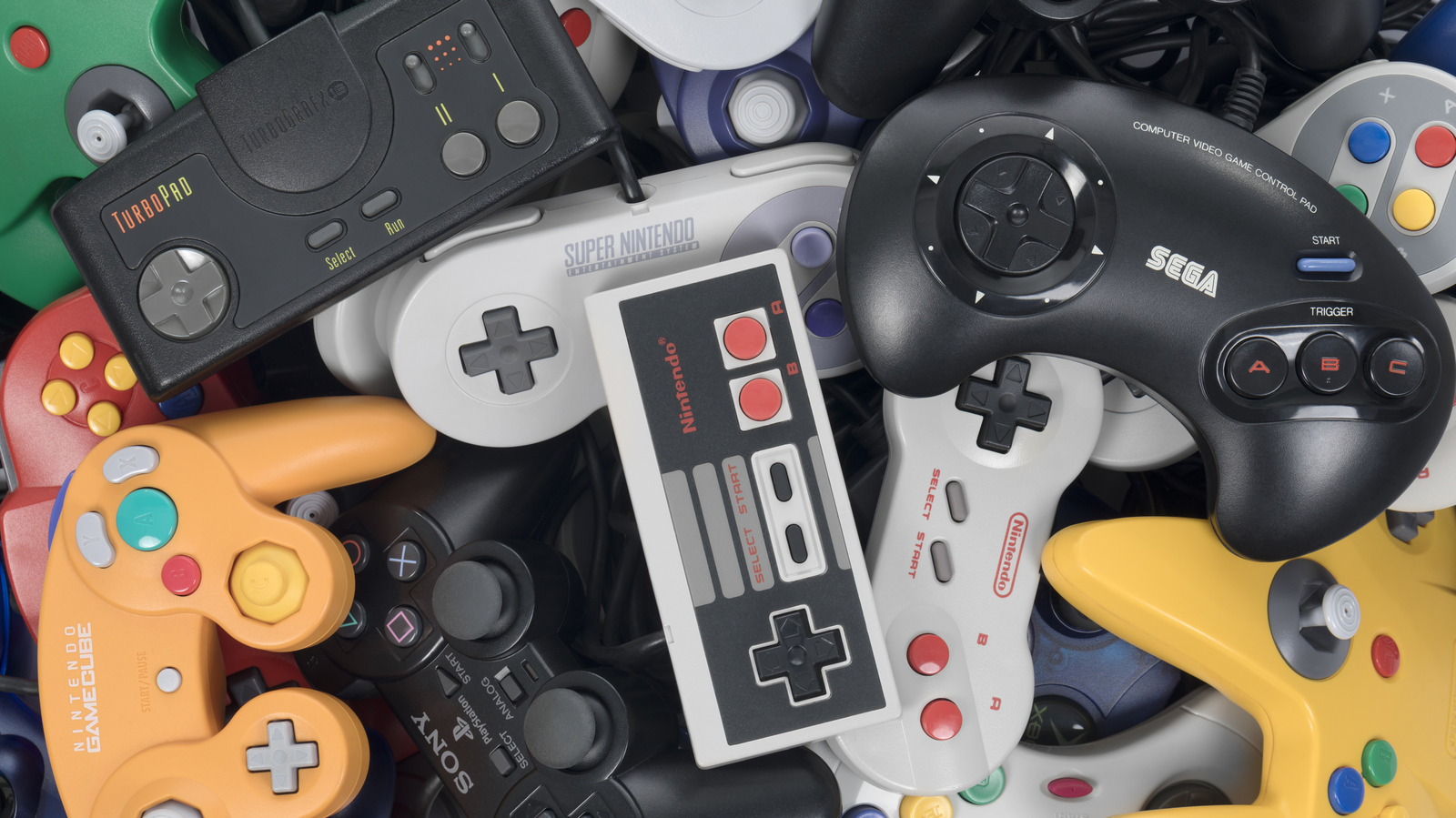
When systems like the Nintendo Entertainment System (NES), Sega Master System, and later the Super Nintendo (SNES) and Sega Genesis dominated living rooms, they were viewed strictly as consumer electronics or children’s toys. Millions of units were mass-produced to satisfy insatiable holiday demand. As generations shifted and newer, more powerful hardware—such as the Sony PlayStation and Nintendo 64—entered the market, older systems were routinely relegated to closets, sold at garage sales for pocket change, or discarded entirely. During this era, depreciation was absolute; yesterday’s cutting-edge entertainment was today’s technological trash.
Phase 2: The Nostalgia Wave and Internet Forums (Late 1990s–2000s)
As the generation that grew up with the NES and Sega Genesis entered adulthood with disposable income, a subtle cultural countermovement began. Early internet message boards, Usenet groups, and nascent auction platforms like eBay provided a digital meeting ground for enthusiasts seeking to reclaim the games of their youth. Prices during this period remained relatively modest, driven largely by personal nostalgia rather than speculative investment. Consoles could still be acquired cheaply at local thrift stores and flea markets, where sellers had little awareness of burgeoning online demand.
Phase 3: Mainstream Commercialization and Price Tracking (2010s)
By the 2010s, retro gaming had shed its underground status. Specialized price-tracking platforms, most notably PriceCharting, emerged to aggregate historical sales data, replacing subjective guesswork with hard metrics. This transparency democratized the market but also catalyzed a rapid escalation in prices. Media coverage of multimillion-dollar auctions for rare games and sealed systems began to attract outside investors and speculators, transforming a hobbyist community into a high-stakes commercial arena.
Phase 4: Institutionalization and Museum Acquisition (2020s–Present)
Today, the retro gaming ecosystem occupies a unique cultural space. Rare hardware is no longer traded exclusively in shadowy online forums; it is handled by major auction houses like Heritage Auctions and Christie’s. Furthermore, institutional bodies such as the National Videogame Museum now actively acquire, preserve, and display historically significant prototypes and unique hardware iterations. The market has bifurcated into a high-end luxury tier for elite collectors and a robust enthusiast tier for everyday gamers and nostalgic consumers.
Supporting Context & Metrics: Decoding the Numbers
For the casual owner peering into a box of old cables, market estimates can be wildly misleading. Internet listings often display exorbitant "Buy It Now" asking prices set by optimistic sellers hoping to catch an uneducated buyer. To establish a realistic baseline, analysts rely on completed, verified sales data.
The Nintendo Entertainment System (NES) Paradigm
The classic NES serves as a masterclass in how condition and packaging dictate price. According to aggregated market data from platforms like PriceCharting, the fundamental tiers of an original NES break down roughly as follows:
- Loose Console (System and cables only): Valued at approximately $82. This represents a functional machine with standard wear and tear, missing its original box and paperwork.
- Complete in Box (CIB): Valued at approximately $295. This includes the console, original controllers, power supply, RF or AV cables, original instruction manuals, and the matching serial-numbered retail box in acceptable condition.
- New / Factory Sealed: Valued at upwards of $1,200+. These are unicorn items—units that sat forgotten on a shelf for decades without ever being opened.
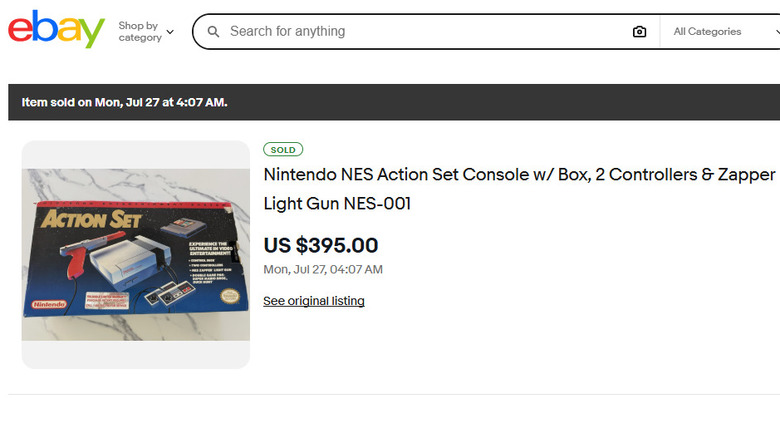
To put these numbers into perspective, an authentic Nintendo NES Action Set—which famously bundled the console with two standard controllers and the iconic Zapper light gun—recently commanded a verified sale price of $395 on eBay. This starkly demonstrates that preserving the original boxes, packing inserts, and peripheral accessories can easily triple or quadruple the baseline value of a console.
Functionality vs. Cosmetic Appeal
While original packaging acts as a powerful value multiplier, functionality remains the ultimate litmus test. A spotless console that powers on instantly and reads software reliably commands a swift, predictable price. Conversely, an untested machine described vaguely by a seller as "working the last time it was in the attic fifteen years ago" immediately forces prospective buyers to discount their offers to account for potential capacitor failure, dust buildup, or power supply degradation.
Rarity, Revisions, and Regional Variations
Beyond basic condition, hardware collectibility is heavily influenced by manufacturing quirks, regional distribution volumes, and special editions. Scarcity drives value only when paired with active collector demand, creating fascinating disparities across different brands and models.
The Sega Saturn vs. Original PlayStation Example
A comparative look at two fifth-generation competitors illustrates the power of production volume. The North American release of the Sega Saturn currently commands an estimated market value of roughly $185 loose and $270 complete. In stark contrast, the ubiquitous original Sony PlayStation—which achieved vastly superior commercial success—hovers around $56 loose and $99 complete.
Because Sega manufactured far fewer Saturn units due to its staggered launch and intense market competition, surviving systems are scarcer, making them disproportionately desirable to modern collectors despite the PlayStation having a far larger library of culturally iconic games.
The Power of Model Numbers and Special Editions
Not all consoles bearing the same name are created equal. Minor hardware revisions, regional colorways, and specialized internal configurations can drastically alter a machine’s worth:
- Color and Licensing Variants: Standard Dreamcast consoles are relatively affordable, but a Japanese "Hello Kitty" themed Dreamcast variant commands roughly $232 loose and a staggering $644 complete due to its striking aesthetic and limited production run.
- Internal Hardware Revisions: Early-generation PlayStation 3 hardware provides a premier example of functional superiority driving market value. The launch-era 60GB CECHA-01 model is currently valued at approximately $374 loose and $650 complete. Why? Because these early units feature native, hardware-based backwards compatibility allowing them to play original PlayStation 2 games—a feature ruthlessly excised from later, cost-reduced hardware revisions.
Before listing any vintage machine online, experts advise meticulously inspecting the product stickers on the rear chassis to verify the exact model and serial numbers.
Prototypes, Pre-Production Units, and the Ultra-Luxury Market
At the absolute apex of retro game collecting sits a tier of hardware that defies normal economic logic: items that were never intended for retail sale. Development systems, engineering samples, pre-production prototypes, and internal company test kits occupy a rarefied space where surviving examples often number in the single digits—and in some extreme instances, represent the sole known surviving unit on Earth.
These machines are not merely consumer electronics; they are artifacts of industrial design and corporate history. The most famous modern illustration of this phenomenon is the legendary "Nintendo PlayStation." Born from a failed, clandestine hardware collaboration between Nintendo and Sony to develop a CD-ROM-powered add-on for the Super NES, the partnership famously dissolved in public boardroom humiliation, leaving behind a handful of prototype combination units.
When one of these mythical prototypes surfaced and hit the auction block, it shattered expectations. In 2020, a surviving Nintendo PlayStation prototype commanded a monumental winning bid of $300,000 at auction. When factoring in the auction house buyer’s premium, the final cost to the winning bidder reached a staggering $360,000. While such holy-grail artifacts are exceedingly unlikely to be discovered beneath a pile of spare HDMI cables in a suburban garage, their existence underscores the staggering ceiling of the retro hardware market.
Official Statements and Industry Insights
As the secondary market for retro hardware matures, industry analysts, auctioneers, and museum curators have increasingly weighed in on the cultural and financial implications of this phenomenon.
"What we are witnessing is the formal transition of video game hardware from disposable pop-culture commodity to recognized cultural heritage," notes Dr. Elizabeth Vance, a media historian specializing in interactive entertainment preservation. "For decades, society viewed electronic toys as ephemeral. Today, society recognizes that the physical hardware through which millions of people experienced digital storytelling for the first time deserves archival preservation."
Market researchers emphasize that while the multi-hundred-dollar price tags attached to pristine consoles capture headlines, prospective sellers must temper their expectations. Auction houses and valuation experts routinely caution that the average garage find has likely suffered from environmental degradation, missing components, or cosmetic wear that places it squarely at the lower end of the pricing spectrum.
"The market is highly discerning," explains commercial memorabilia auctioneer Marcus Thorne. "A collector isn’t just buying an old circuit board inside a plastic shell; they are buying provenance, pristine condition, and completeness. If the original box has water damage, or if the controller shell is discolored from decades of sunlight exposure, the value drops precipitously. Condition is king."
Future Outlook: Where Is the Retro Market Headed?
As we look toward the future, the landscape of retro video game collecting faces a fascinating crossroads. Several key trends are poised to shape the coming decades:
- Generational Wealth Transfer: As the generations that grew up during the 16-bit and 32-bit eras (the Super Nintendo, Sega Genesis, and PlayStation era) reach their peak earning and retirement years, disposable income directed toward childhood nostalgia is expected to remain robust.
- Hardware Degradation and Repair Culture: Electronics age. Capacitors leak, plastic shells become brittle, and laser diodes fail. Consequently, the future value of retro consoles will increasingly depend on the work of specialized restoration technicians who can expertly service vintage motherboards without destroying their original factory integrity.
- Institutional Safeguarding: As high-end collectibles continue to appreciate, more museums, universities, and cultural foundations are stepping in to acquire rare prototypes and complete-in-box libraries, permanently removing vital pieces of gaming history from private circulation.
For the everyday person sorting through a cluttered storage unit, the takeaway is clear: before tossing out that yellowed plastic box or dropping old cables into the recycling bin, take a moment to inspect the hardware. Check the model number, search for completed sales rather than wishful asking prices, and handle original packaging with care. That forgotten relic of the 1980s or 90s might just be your ticket to funding your next big adventure.