Editor’s note, November 17, 2026: This investigative feature is being republished for the holiday season to explore the enduring cultural footprint of a modern tradition. It was originally reported and published in 2018.
Executive Overview
For millions of Americans across the country, the week leading up to Thanksgiving has evolved into a distinct cultural phenomenon: "Friendsgiving." Positioned as a joyful, low-stakes reprieve from the logistical nightmares and socio-political landmines of traditional family holidays, Friendsgiving has rapidly transformed from an organic grassroots gathering into a multi-million-dollar seasonal marketing opportunity and a recognized fixture of the modern calendar.
Far from being a mere seasonal party, the rise of Friendsgiving reflects profound structural shifts in American society. Sociologists, cultural historians, and economists point to changing marriage rates, the hyper-urbanization of the millennial and Gen Z workforce, and evolving definitions of kinship as the primary drivers behind this trend. Yet, beneath the veneer of potluck casseroles, bottomless wine, and internet-meme cakes, the phenomenon remains a complex site of cultural critique—balancing genuine human connection against the stark realities of modern economic precarity and persistent domestic inequality.
Detailed Chronology: From Usenet Boards to Mainstream Lexicon
While the concept of sharing a harvest meal with chosen companions is as old as community itself, the specific portmanteau "Friendsgiving" is a thoroughly digital-age creation.
The 2000s: Digital Roots and Obscure Beginnings
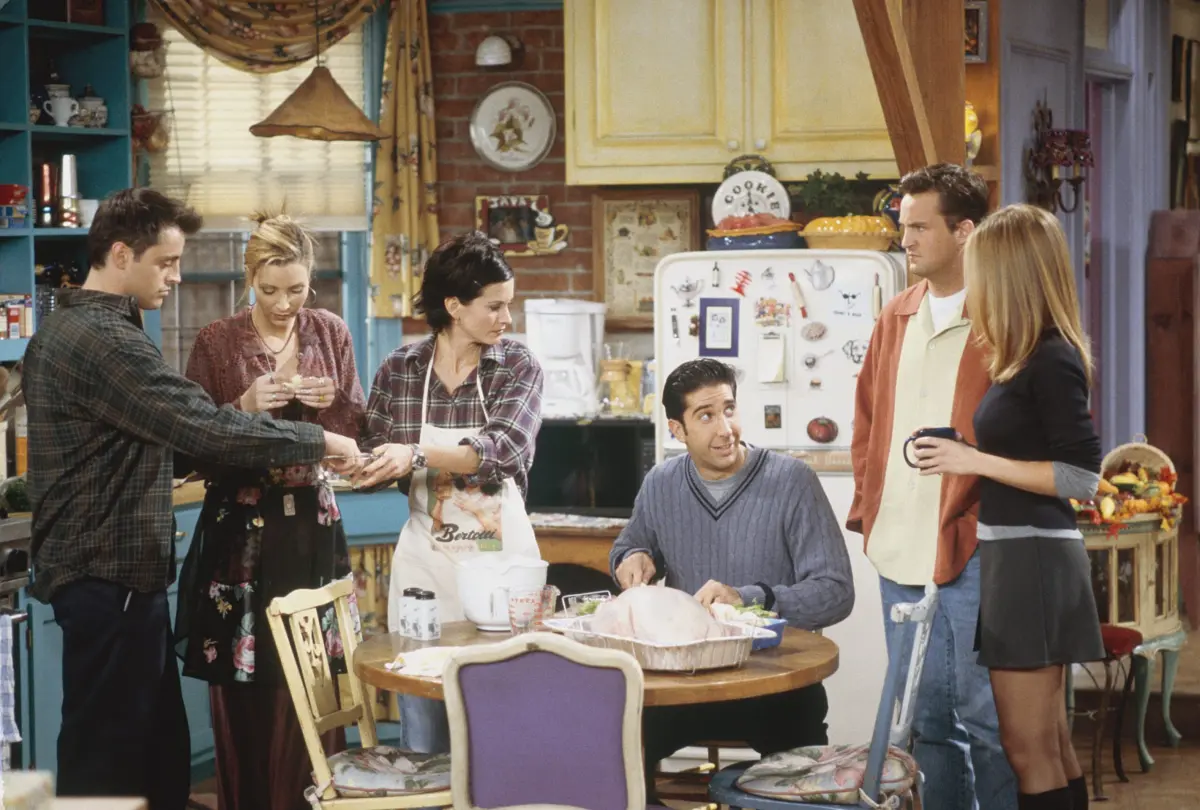
Contrary to popular belief, the tradition was not born in a writers’ room on the set of NBC’s Friends, despite the iconic Thanksgiving episodes that anchored that sitcom’s decade-long run. Instead, historical investigations by lexicographers at Merriam-Webster trace the earliest documented usages of the term back to 2007. In late November of that year, early adopters utilized the term on platforms like Usenet and Twitter. It began as a niche, colloquial shorthand used by dispersed internet users describing unorthodox, peer-to-peer holiday celebrations.
The 2010s: Commercialization and Cultural Penetration
The transition from underground internet slang to household word occurred with surprising speed during the early 2010s. Two major pop-culture milestones catalyzed this shift in 2011:
- Corporate Sponsorship: A high-profile advertising campaign by Bailey’s Irish Cream leveraged the term, bringing it into mainstream television advertising.
- Reality Television: Bravo’s The Real Housewives of New Jersey featured a memorable episode in which cast member Teresa Giudice hosted a "Friendsgiving"—a rich irony for a franchise whose central ethos is famously rooted in the strict axiom that "blood is thicker than water."
By 2013, digital media titan BuzzFeed codified the movement by publishing its seminal "17 Rules of Friendsgiving," cementing the event’s ritualistic parameters. A year later, in 2014, The Washington Post dedicated its prestigious Style section to the trend, framing it as a vital refuge for the urban "island of misfit toys"—young professionals whose career relocations or financial constraints prevented them from making costly cross-country journeys back to their hometowns.
Supporting Context & Metrics: Sociological and Economic Drivers
The rapid proliferation of Friendsgiving cannot be understood without examining the broader socioeconomic forces reshaping contemporary adulthood.
The Demographic Shift: Marriage and Modern Kinship
According to Stephanie Coontz, director of public education at the Council on Contemporary Families, the rising age of first-time marriages has fundamentally altered how adults construct their support networks.
"Back in the 1950s and ’60s, many marital advice books emphasized how important it was for a wife to make her husband her first priority at all times and not to let girlish friendships interfere with her duties and devotion," Coontz explains.
In stark contrast, modern adults are delaying marriage—if they marry at all—giving peer relationships decades to solidify as primary emotional and logistical support structures. Furthermore, Coontz notes that the rising divorce rate has made contemporary adults acutely aware of the dangers of isolating oneself within a traditional nuclear family structure. Consequently, people are actively investing in broader, more resilient networks of friends.
"For the most part, I just think that people have decided to expand their definition of family-like relations," Coontz says, highlighting a key emotional benefit of the practice: "No one feels compelled to invite an unsupportive or obnoxious friend the way they often feel pressured to include an unsupportive or obnoxious family member."

The Economic Critique: A Symptom of Financial Precarity?
Not all analysts view Friendsgiving through an uncritical, romantic lens. Writing for The Atlantic, journalist Ashley Fetters highlighted a much darker, systemic interpretation of the trend advanced by economist and author Malcolm Harris.
In his book Kids These Days: Human Capital and the Making of Millennials, Harris argues that the casual, potluck-style nature of Friendsgiving—which often features scraped-together dishes, grocery-store shortcuts, and cramped urban apartments—is indicative of a generation priced out of traditional middle-class abundance. Harris provocatively characterizes the phenomenon as a "propaganda weapon used by the ruling class to further their plans for wage stagnation," suggesting that society has co-opted the cutesy branding of Friendsgiving to normalize lower living standards and persistent financial anxiety among younger generations.
Official Statements and Micro-Level Realities
To understand what Friendsgiving looks like on the ground, one must look past the macroeconomic debates and examine individual celebrations.
Last year, Sara Reinis, a 26-year-old creative strategist at Vox Media, hosted her inaugural Friendsgiving inside her apartment in Brooklyn, New York. Drawing a crowd of 30 to 40 attendees, the event operated entirely on a communal potluck model. Multiple guests bypassed home cooking altogether, contributing items straight from the local Whole Foods hot bar. The culinary centerpiece of the evening? A sheet cake featuring icing stamped with the blunt, affectionate declaration: "Gobble gobble, bitch."
"On the spectrum of a ‘typical house party’ to a ‘formal Thanksgiving,’ it was right in the middle," Reinis reflects. "The mood was: What if instead of Tostitos, people brought mashed potatoes and pies?"
For urban centers like New York City or Washington, D.C., where high concentrations of residents are transplants from other states, the appeal is twofold: culinary and emotional.
- The Culinary Factor: "It can be very rare in New York to get together and eat home-cooked food," Reinis notes. "So it felt very intimate and cozy the whole evening—even though it was pretty crowded and rowdy at times."
- The Logistical Freedom Factor: As one Washington, D.C., attendee noted to The Washington Post, "I like that I can drink. If I was back with the family, they frown on it. And then you have to drive home."
The Domestic Labor Debate
As Friendsgiving has matured into an institutionalized ritual, it has inherited many of the structural frictions plaguing traditional holidays—most notably, gendered labor dynamics.
A widely discussed letter to Slate’s "Dear Prudence" advice column raised a familiar modern grievance: at a multi-couple Friendsgiving potluck, female guests automatically assumed the burden of clearing tables and washing dishes, while male guests remained seated, drinking beer and watching football. The advice columnist’s prescription was clear and unapologetic: be "cheerfully" direct, and "don’t be afraid to name a conspicuous dynamic."
Indeed, the realities of hosting large-scale potlucks in small urban spaces extend far beyond social etiquette. As Reinis discovered the morning after her Brooklyn gathering, the true legacy of a successful Friendsgiving isn’t just the collection of abandoned dishware left behind by guests—it is the painstaking process of scraping mashed potatoes off the living room walls.
Future Outlook
As Friendsgiving approaches its second decade as a recognized cultural institution, its trajectory points toward permanent integration into the American holiday canon. Far from being a fleeting millennial fad, the tradition has successfully bridged generational divides, appealing to Gen Z college students and young professionals alike.
Moving forward, the evolution of Friendsgiving will likely mirror broader changes in American labor and lifestyle. With remote and hybrid work models granting populations greater geographic mobility, the rigid boundaries separating "home for the holidays" and "staying in the city with friends" continue to dissolve.
Whether viewed as a triumphant expansion of chosen family networks, a coping mechanism for economic austerity, or simply an excuse to eat cake with profanity written in frosting, Friendsgiving has secured its place. It is a testament to human adaptability—proving that wherever people find themselves isolated from traditional support systems, they will invent new ways to break bread, pour wine, and gather together.