Executive Overview
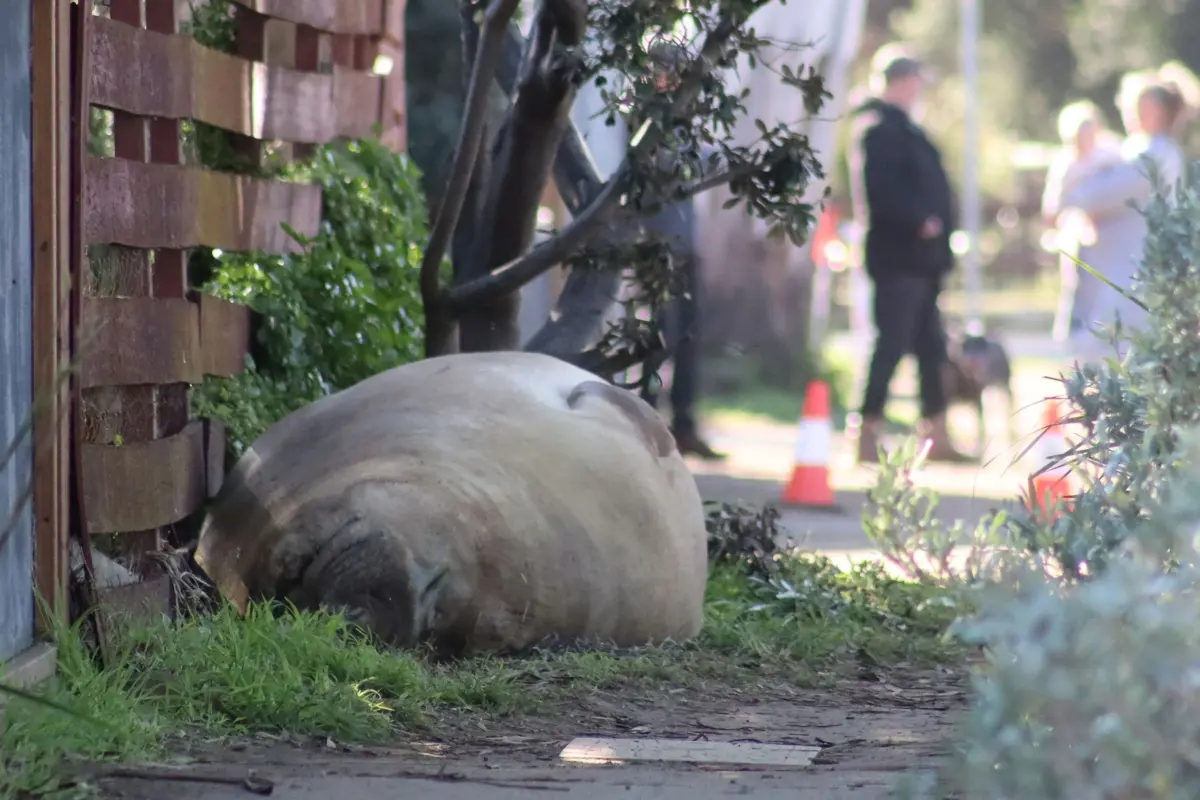
For the residents of southeastern Tasmania, winter brings a familiar set of seasonal rituals: crisp morning frosts, shorter days, and the annual arrival of an absolute unit named Neil. Weighing in at over 2,000 pounds, Neil is a six-year-old southern elephant seal (Mirounga leonina) whose seasonal preferences include lounging on suburban lawns, flattening roadside bollards, bowling through fragile timber fences, and occasionally body-slamming parked motor vehicles.
Over the past few years, Neil has transformed from a mere marine visitor into an international viral sensation and a fiercely guarded local mascot. Armed with expressive eyes, a bulbous snout, and an unmistakable penchant for light property damage, he commands thousands of dedicated followers across social media platforms. Fans track his coordinate updates with the fervor of amateur meteorologists tracking a Category 5 hurricane.
However, Neil’s terrestrial hijinks have sparked genuine headaches for local authorities. His seasonal appearances coincide with his annual "catastrophic molt"—a biological imperative during which elephant seals haul out onto land to shed and replace their entire top layer of fur and epidermis. For Neil, this vulnerable, itchy biological reset manifests as a rolling wave of infrastructure-destroying chaos.
Government agencies have spent tens of thousands of Australian dollars deploying specialized task forces, erecting security perimeters, and managing frantic crowds of selfie-seeking tourists. To combat the escalating costs and public safety risks, the Tasmanian Department of Natural Resources and Environment (NRE) has officially drawn a line in the sand. This week, the department released a comprehensive, 27-page dossier titled the Neil the Seal Management Plan.
This unprecedented document outlines a multi-tiered tactical framework designed to balance wildlife conservation with public safety, ensuring that Tasmania can successfully coexist with its most unruly, beloved heavyweight.
Detailed Chronology: The Rise of a Marine Menace
To understand why the Tasmanian government felt compelled to draft a 27-page legislative document for a single marine mammal, one must trace Neil’s trajectory from an anonymous pup to a geopolitical headache.
The Early Years and First Haul-Outs
Southern elephant seals are native to the sub-Antarctic islands, but young males occasionally wander north during their developmental years to rest and molt on Australian shores. Neil first caught the attention of coastal Tasmanians as a smaller subadult. At the time, his arrivals were greeted with standard wildlife protocols: park rangers would cordoning off a stretch of beach, put up a few informational signs, and allow the animal to complete its natural molting cycle in peace.
However, as Neil matured and gained staggering mass—surpassing the one-ton mark—his spatial requirements expanded dramatically. A 2,000-pound seal cannot simply tuck itself into the corner of a quiet cove without attracting attention. Neil developed a distinct preference for high-traffic human infrastructure. Beaches adjacent to busy coastal roads, boat ramps, and residential driveways became his favored staging grounds.
The Viral Explosion
As social media algorithms latched onto the juxtaposition of an enormous, blubbery marine mammal lounging next to family sedans and suburban letterboxes, Neil’s fame skyrocketed. Short-form video platforms and global news outlets began broadcasting his daily routines.
This digital acclaim created a compounding crisis for local wildlife officers. Instead of keeping a respectful distance, crowds of eager onlookers began flocking to the seal’s location. Videos emerged of individuals stepping within arm’s reach of the animal to capture the ultimate smartphone selfie, completely underestimating the explosive speed and crushing power of a bull elephant seal. The sheer volume of human traffic necessitated round-the-clock monitoring, transforming park rangers into VIP bodyguards for an animal that regularly tested the limits of their patience.
Supporting Context & Metrics: The Cost of Coexistence
Managing a massive marine mammal in a heavily populated coastal zone is an expensive endeavor. Behind the charming viral videos lies a complex web of logistical challenges, financial expenditures, and physiological realities.
The Physics of the Catastrophic Molt
To appreciate why Neil acts the way he does on land, one must look at his biology. Unlike land mammals that shed hair gradually year-round, elephant seals undergo a catastrophic molt. Over the course of several weeks, the seal ceases feeding entirely and hauls out onto land. During this period, blood rushes to the skin’s surface to nourish the growth of a new epidermis and fur coat.
This biological process generates intense internal heat and profound physical discomfort. The skin becomes hypersensitive, itchy, and irritated. When an elephant seal rubs its body against asphalt, timber fences, cars, or metal bollards, it is attempting to scratch an itch that spans thousands of square inches of surface area. Unfortunately, human-made infrastructure is rarely built to withstand the scratching force of a one-ton marine mammal. Wooden walkways splinter, bollards snap like toothpicks, and cars sustain thousands of dollars in cosmetic and structural damage.
The Financial and Logistical Toll
According to reports compiled by cultural and scientific institutions in the region, the bill for managing Neil’s beachside visits has climbed well into the tens of thousands of Australian dollars. These funds are allocated toward:
- Deploying specialized marine mammal response teams.
- Renting and erecting heavy-duty security barricades and signage.
- Paying overtime for security personnel and wildlife officers tasked with crowd control.
- Repairing municipal property damaged during Neil’s nocturnal or early-morning wanderings.
Furthermore, the opportunity cost—diverting environmental officers away from broader conservation duties to babysit a single viral seal—has become unsustainable for the state government.
Official Statements and Frameworks: Inside the Management Plan
The newly published Neil the Seal Management Plan is a remarkably candid document that acknowledges both the legal protections afforded to marine wildlife and the practical hazards of urban seal management.
Purpose and Scope
"The purpose of this Plan is to set out a framework for managing the resident elephant seal known as Neil in Tasmania, recognising the complex challenges associated with his recurring haul out period," the dossier explicitly states. Rather than taking the drastic—and politically toxic—step of permanent relocation or culling, the government has opted for a sophisticated behavioral management strategy divided into two primary operational tiers.
Tier 1: The "Non-Intervention" Approach
If Neil decides to haul out in a remote, secluded coastal location where he poses minimal risk to public infrastructure or human safety, the task force will adopt a hands-off posture.
- Distant Observation: Rangers will monitor his health and movements from afar utilizing telemetry and binoculars.
- Passive Signage: Temporary warning signs will be erected around the perimeter to alert unsuspecting beachgoers of the seal’s presence.
- Standby Security: If curious onlookers attempt to breach the perimeter, security personnel will be dispatched to enforce safe viewing distances.
Tier 2: On-Site Seal Management and "Hazing"
The second contingency plan activates when Neil inevitably chooses a high-risk location—such as a public boat ramp, residential street, or commercial wharf—where his presence threatens vital infrastructure and human safety. For these scenarios, the dossier introduces more aggressive, dynamic interventions.
Among the most talked-about strategies is a technique known as "hazing." While the term might evoke images of collegiate fraternity initiations, the government’s definition is rooted in professional wildlife management. The dossier describes hazing as a "non-violent method of using deterrents and negative associations to disturb an animal, compelling them to move."
This can include controlled visual, tactile, and vocal stimuli carefully calibrated to annoy the seal just enough to encourage him to slide back into the ocean, without causing physical harm or lasting psychological trauma.
Adaptability and Decoy Solutions
Crucially, the NRE notes that Neil is a remarkably intelligent creature who quickly adapts to standard wildlife management practices. Tactics that worked during his winter visit last year may fail this season as he learns to outsmart his human handlers.
To counteract this, the task force is introducing "seal enrichment" strategies. This innovative approach involves providing heavy-duty decoy items designed to withstand repeated interaction. By placing these indestructible objects in strategic locations, officials hope to redirect Neil’s natural exploratory and scratching behaviors away from fragile human infrastructure and toward approved diversion toys.
Future Outlook: Living in Neil’s World
As Tasmania enters another winter season, the release of the Neil the Seal Management Plan marks a mature, proactive turning point in human-wildlife relations. It signals that while the state government is willing to accommodate its most famous resident, it will no longer do so in a reactive, ad-hoc fashion.
However, challenges remain on the horizon. Elephant seals can live up to twenty years in the wild, and males continue to gain mass well into their maturity. If Neil continues on his current growth trajectory, next winter’s 2,500-pound version of Neil will require even sturdier barriers, more creative enrichment tools, and heightened vigilance from the public.
Tasmanian officials have emphasized that despite their best efforts to ensure seamless daily routines during Neil’s visits, "significant events"—such as sudden road closures, public safety incidents, or unexpected relocations—are still entirely possible.
For the everyday citizen, the message from the Department of Natural Resources and Environment is clear: enjoy the spectacle, share the viral videos, but give the heavy champion his space. Anyone encountering unexpected seal-related disruptions is strongly advised to steer clear and immediately contact the Marine Mammal Hotline at 0427 WHALES.
Neil may be the king of Tasmanian coastal property damage, but with this new plan in play, the state is finally ready to rule the roost right back.