Executive Overview
For decades, the multi-button MMO mouse market has been occupied by specialized peripherals designed to lift the burden off standard keyboard hotkeys. Among these, Razer’s Naga series has remained a towering icon. Evolving from its quirky early iterations into a refined powerhouse, the Naga line has long been the gold standard for players sinking hundreds of hours into titles like Final Fantasy XIV and The Elder Scrolls Online.
Enter the Razer Naga V3 Pro, a peripheral that arrives with the heavy burden of its predecessor’s legacy—and an equally heavy $180 price tag. Featuring a familiar chassis inherited from the Naga V2 Pro, the V3 Pro implements a series of iterative, internal upgrades: a blistering 50,000 DPI Razer Focus Pro Gen 4 optical sensor, updated Gen-4 optical mouse switches, a lower starting weight of 112 grams, and power-saving FrameSync technology that pushes battery life up to an incredible 155 hours.
Yet, as impressive as the specification sheet reads, the peripheral gaming market in 2026 is fiercely competitive. With a price point matching the previous generation—and hovering well above rival offerings from Corsair and others—the Naga V3 Pro forces a difficult question: Is a minor internal overhaul worth a top-tier financial investment, or is this an elite tool reserved only for the most dedicated, well-heeled MMO veterans?
Detailed Chronology & Evolution: From V2 to V3
To understand the positioning of the Naga V3 Pro, one must trace the incremental steps Razer has taken with its flagship multi-genre mouse. The journey from the Naga V2 Pro to the V3 Pro is not a reinvention of the wheel, but rather a targeted tuning of internal components.
The Physical Blueprint and Swappable Faceplates
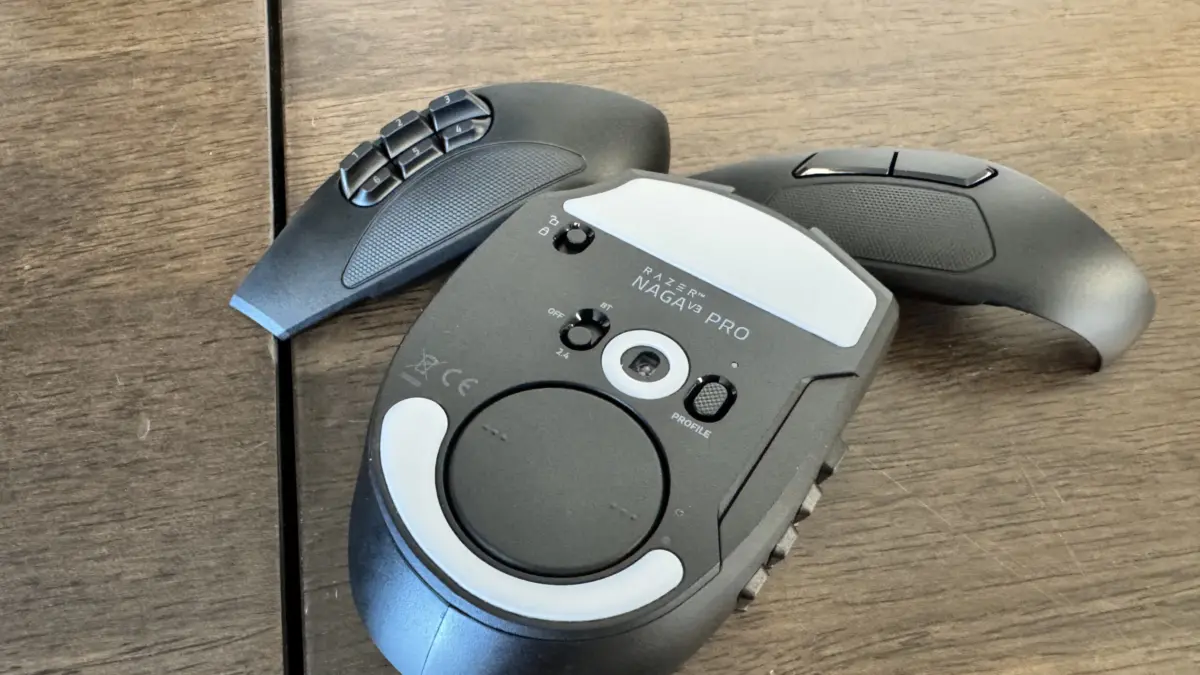
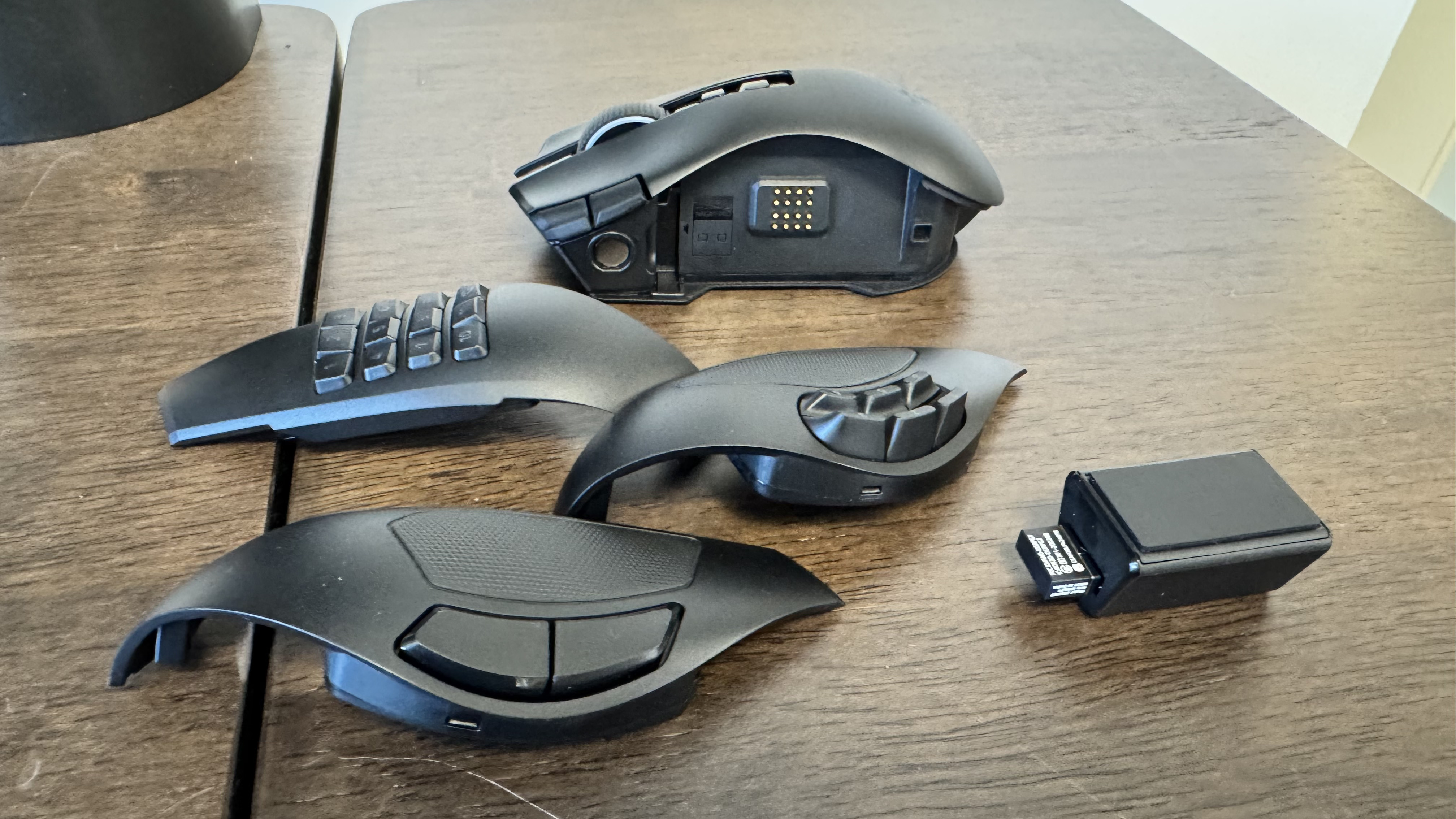
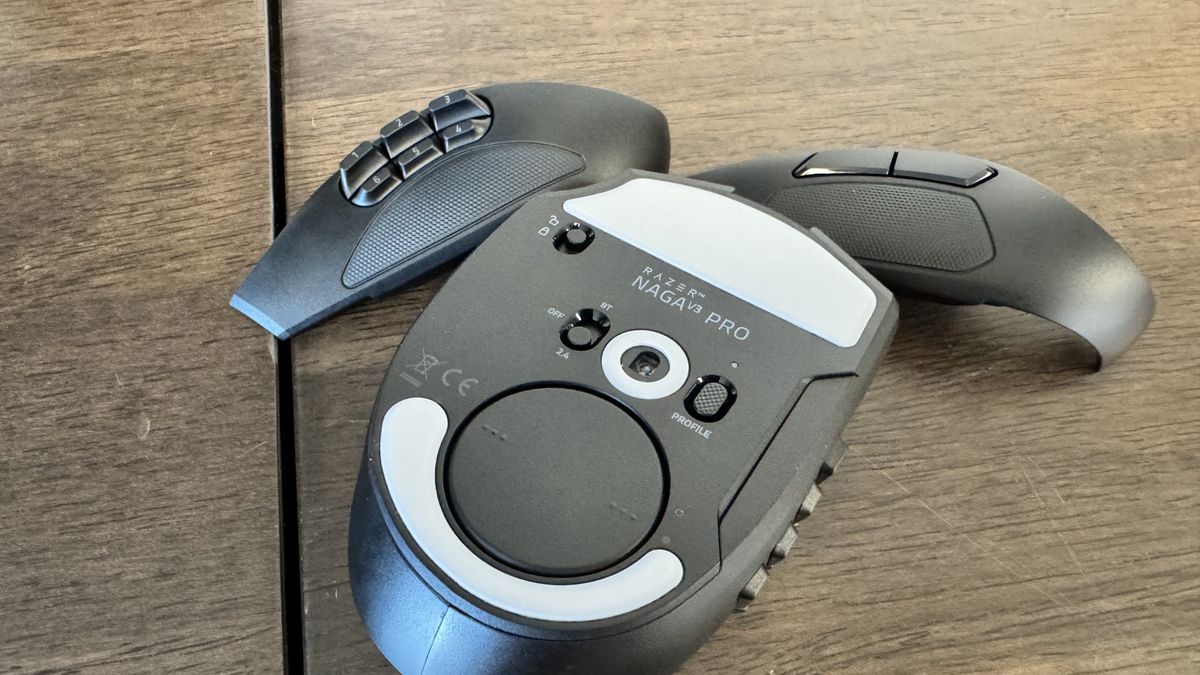
Retaining the exact dimensions of the V2 Pro, the V3 Pro feels instantly familiar to anyone who has previously held Razer’s high-end MMO ecosystem. It relies on the signature modular approach: three magnetic faceplates featuring 12, 6, and 2-button layouts respectively.
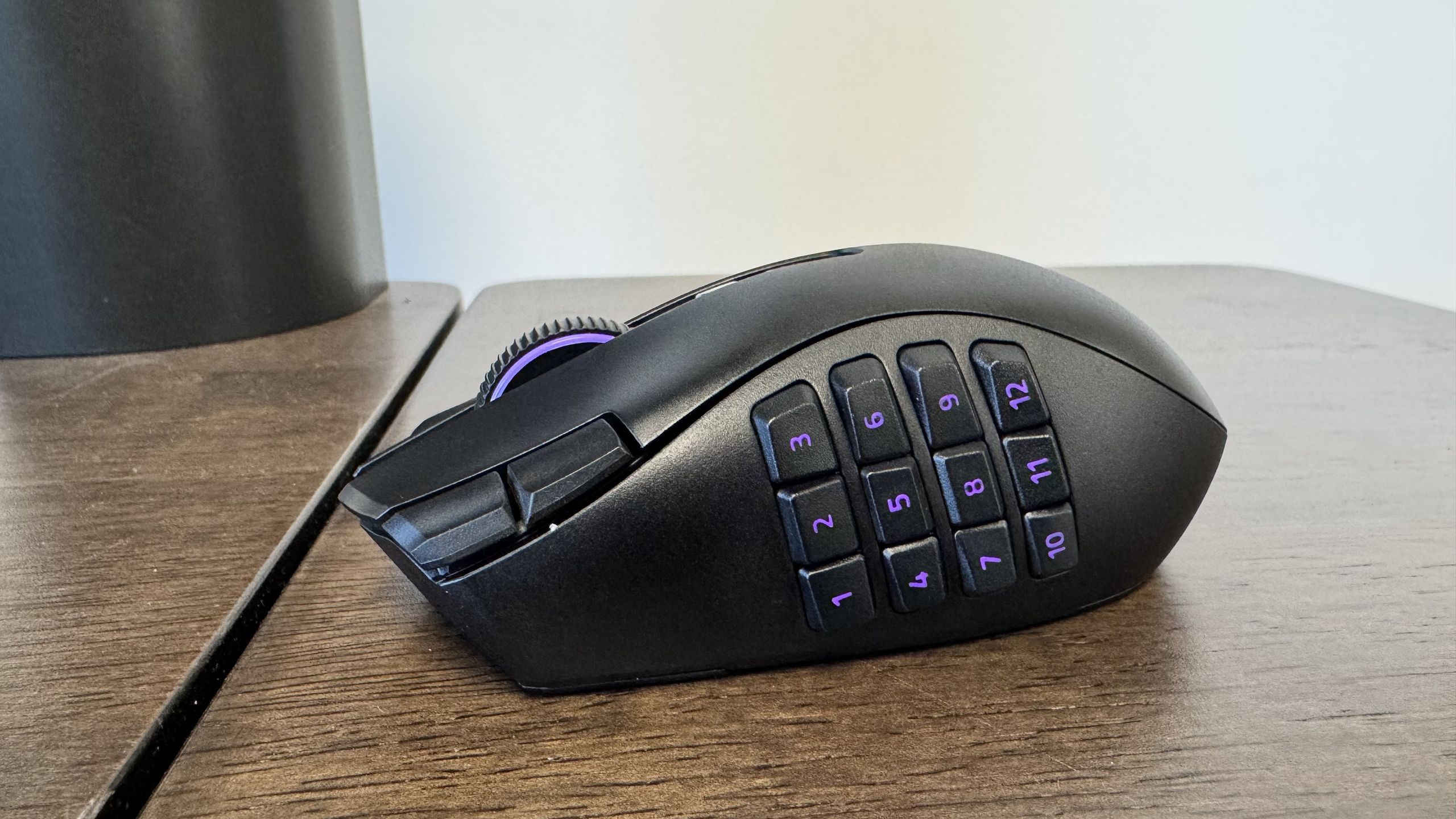
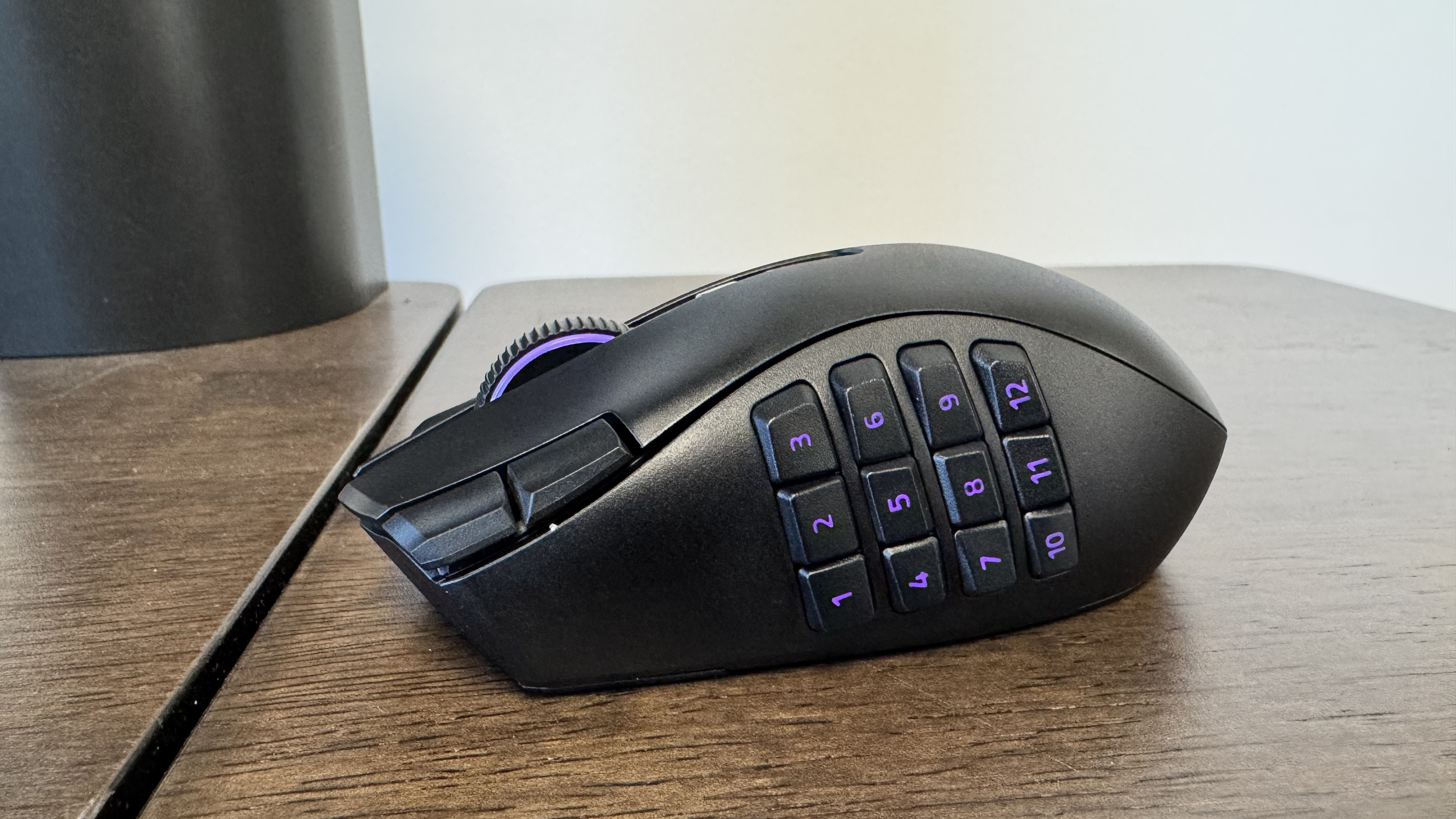
- The 12-Button Grid: Configured in neat rows of three, this layout is tailor-made for heavy hotkey usage in Final Fantasy XIV, allowing users to effortlessly command full hotbars without painful keyboard stretches.
- The 6-Button Layout: Tailored for games with leaner rotational requirements like The Elder Scrolls Online, it provides a comfortable, centralized thumb cluster.
- The 2-Button Setup: Stripping away the multi-button utility, this transforms the mouse into a sleek, daily-driver peripheral suitable for standard desktop workflows and conventional shooters.
Despite keeping the dimensions identical, Razer managed to shed a noticeable amount of heft. The Naga V3 Pro weighs 112 grams at its lightest, dropping down from the heavier 134-gram footprint of the V2 Pro. This weight reduction drastically improves long-term comfort, reducing wrist fatigue during marathon gaming sessions while maintaining enough heft to ensure stable, slip-free pointer control.
Under-the-Hood Upgrades: Sensors and Switches
The core of the V3 Pro’s upgrade cycle lies deep within its circuitry. Razer has swapped out the older 30K sensor for the bleeding-edge Razer Focus Pro 50K Optical Sensor (Gen 4)—the exact same high-performance tracking tech found in elite lightweight esports mice like the Razer Viper V4 Pro.
Alongside the sensor, Razer integrated its Gen-4 Optical Mouse Switches. These switches offer instantaneous actuation, zero debounce delay, and exceptional tactile feedback. However, they also introduce a controversial design quirk: a high-pitched, plastic-sounding acoustic ping on actuation. While the performance is faultless, the shrill acoustic profile under rapid, repetitive clicking can prove polarizing for users working in quiet environments.
Supporting Context & Metrics: Specifications, Ergonomics, and Performance
| Feature / Metric | Razer Naga V3 Pro | Razer Naga V2 Pro |
|---|---|---|
| Sensor | Razer Focus Pro 50K Optical (Gen 4) | Razer Focus Pro 30K Optical |
| Connectivity | Wired, Bluetooth, 2.4 GHz Wireless | Wired, Bluetooth, 2.4 GHz Wireless |
| Switches | Optical Mouse Switches Gen-4 | Optical Mouse Switches Gen-3 |
| Polling Rate | 1,000 Hz (Upgradable to 8,000 Hz via Dock/Dongle) | 1,000 Hz |
| Max DPI | Up to 50,000 | Up to 30,000 |
| Max Acceleration | 90 G | 70 G |
| Max Speed | 930 IPS | 750 IPS |
| Weight | 112 g – 117 g | 134 g |
| Battery Life | Up to 155 Hours (HyperSpeed Wireless) | Up to 150 Hours (HyperSpeed Wireless) |
| Price | $180 / £180 / €200 | $180 / £180 / €200 |
Ergonomic Mastery and Grip Preferences
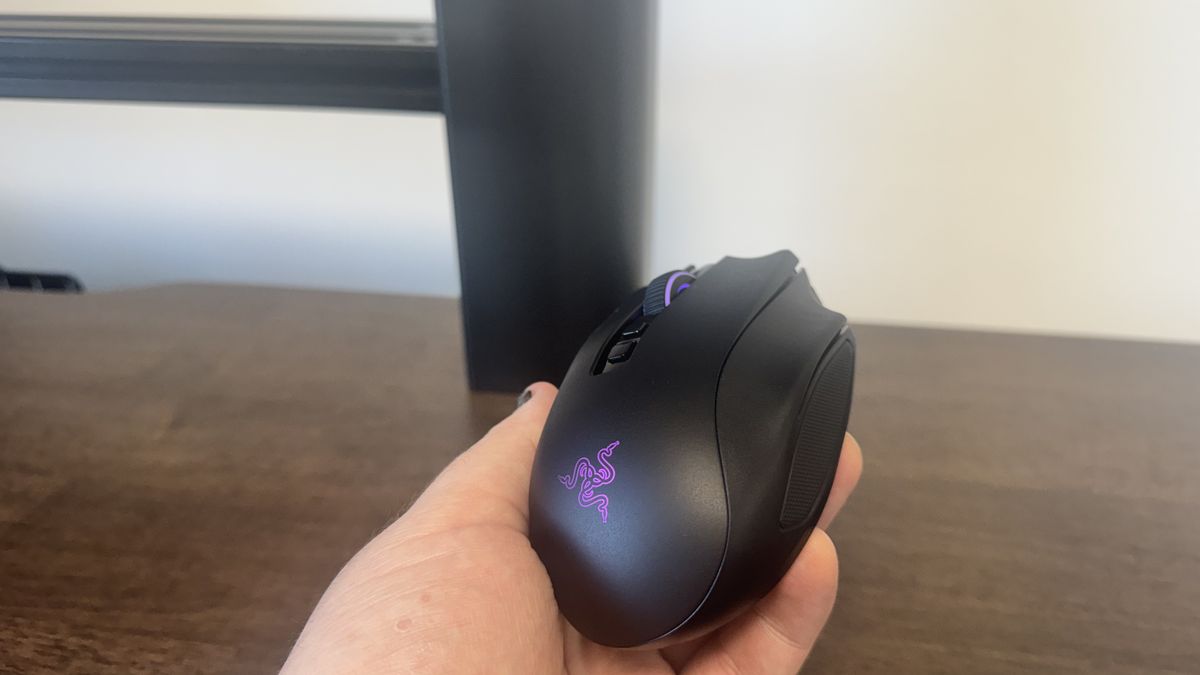
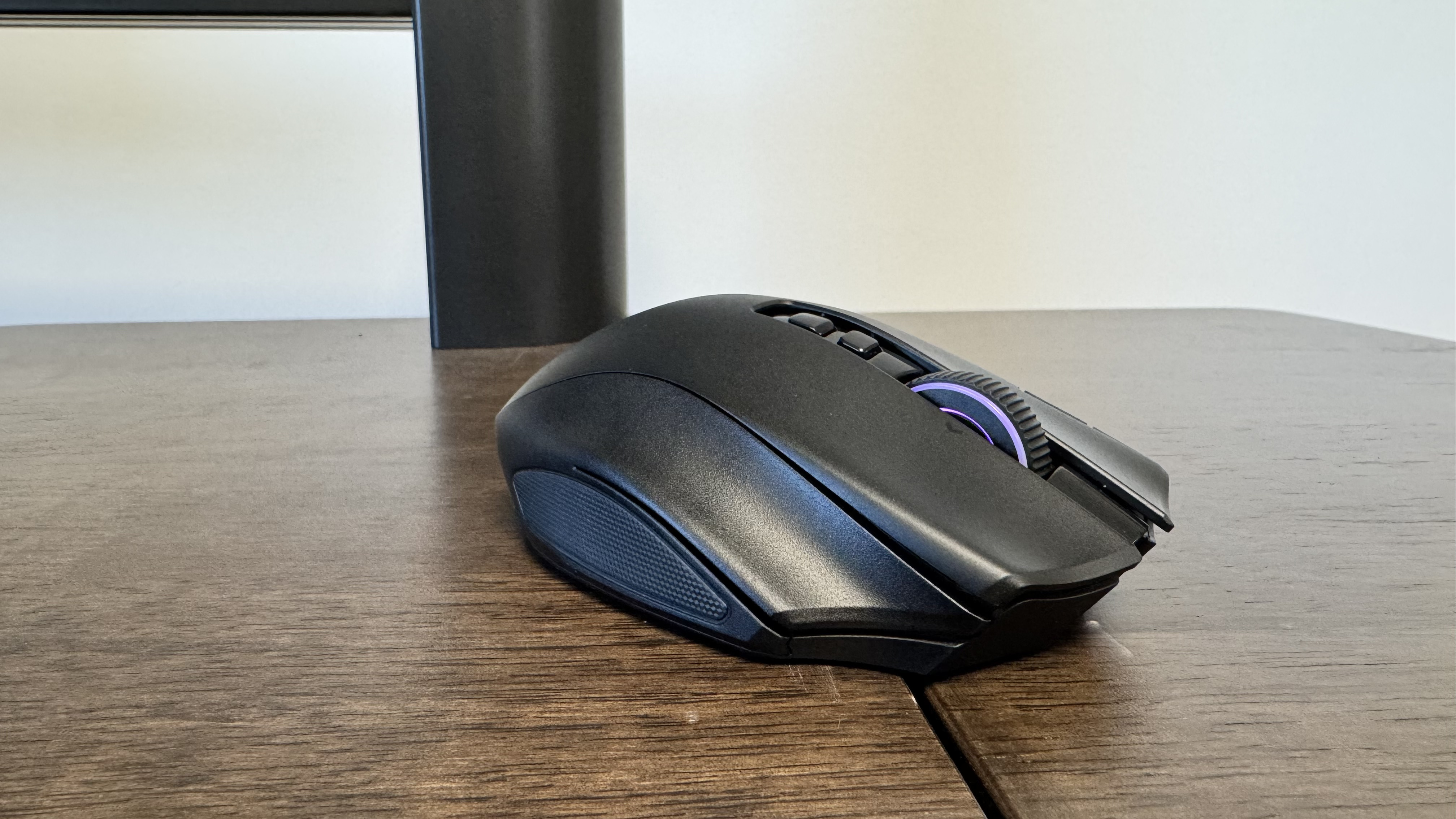
The Naga V3 Pro is unapologetically engineered for larger hands. It features a subtle ergonomic curve on the left-side faceplates, providing a natural resting groove that helps the thumb locate individual buttons intuitively through muscle memory alone. A dedicated ring-finger rest on the right-hand side anchors the hand securely.
While fingertip and claw grips feel slightly awkward given the mouse’s structural width, a palm grip fits like a glove. The weight is expertly balanced across the chassis, preventing accidental misclicks when applying pressure to the side grid during tense encounters.
Scroll Wheel and Power Efficiency
The inclusion of the Hyperscroll Tilt Wheel Gen 2 is a masterstroke. Users can seamlessly toggle between tactile, notched scrolling for precise weapon selections and a frictionless free-spin mode for rapidly navigating long documents or scrubbing timelines in video editing suites like DaVinci Resolve. The wheel also supports left and right clicks, bringing the total tally to an astonishing 13 distinct inputs even when using the basic two-button faceplate.
Battery longevity is another triumph, pushing up to 155 hours of continuous use on the 2.4 GHz wireless connection. This impressive endurance is driven in part by Razer’s FrameSync technology, a system conceptually similar to variable refresh rates (like G-Sync). By synchronizing mouse polling intervals dynamically with system rendering demands, it slashes unnecessary power drain without introducing perceptible input latency.
Official Statements and Industry Reception
Reviewers and hardware analysts have praised the Naga V3 Pro’s technical refinement while raising valid concerns regarding its pricing strategy.
- "With updates to its switches and sensor, the Razer Naga V3 Pro is a pretty straightforward upgrade on the Naga V2 Pro, and just as pricey," notes initial hardware breakdowns.
- Industry experts have highlighted the awkward reality of its polling rate architecture: out of the box, the mouse caps out at 1,000 Hz. To unlock the industry-standard 8,000 Hz polling rate, users must shell out additional funds for Razer’s separate Mouse Dock Pro or HyperPolling dongle—a frustrating limitation for a product commanding an $180 baseline MSRP.
Furthermore, software integration via Razer Synapse remains a mixed bag. While profile switching, DPI customization, and RGB lighting configuration are ultimately intuitive, early adopters have reported occasional profile-saving hiccups that require system resets to iron out.
Future Outlook: Value Proposition and Market Positioning
As the gaming hardware market moves deeper through 2026, the Razer Naga V3 Pro occupies a fascinating and somewhat isolated tier of the ecosystem.
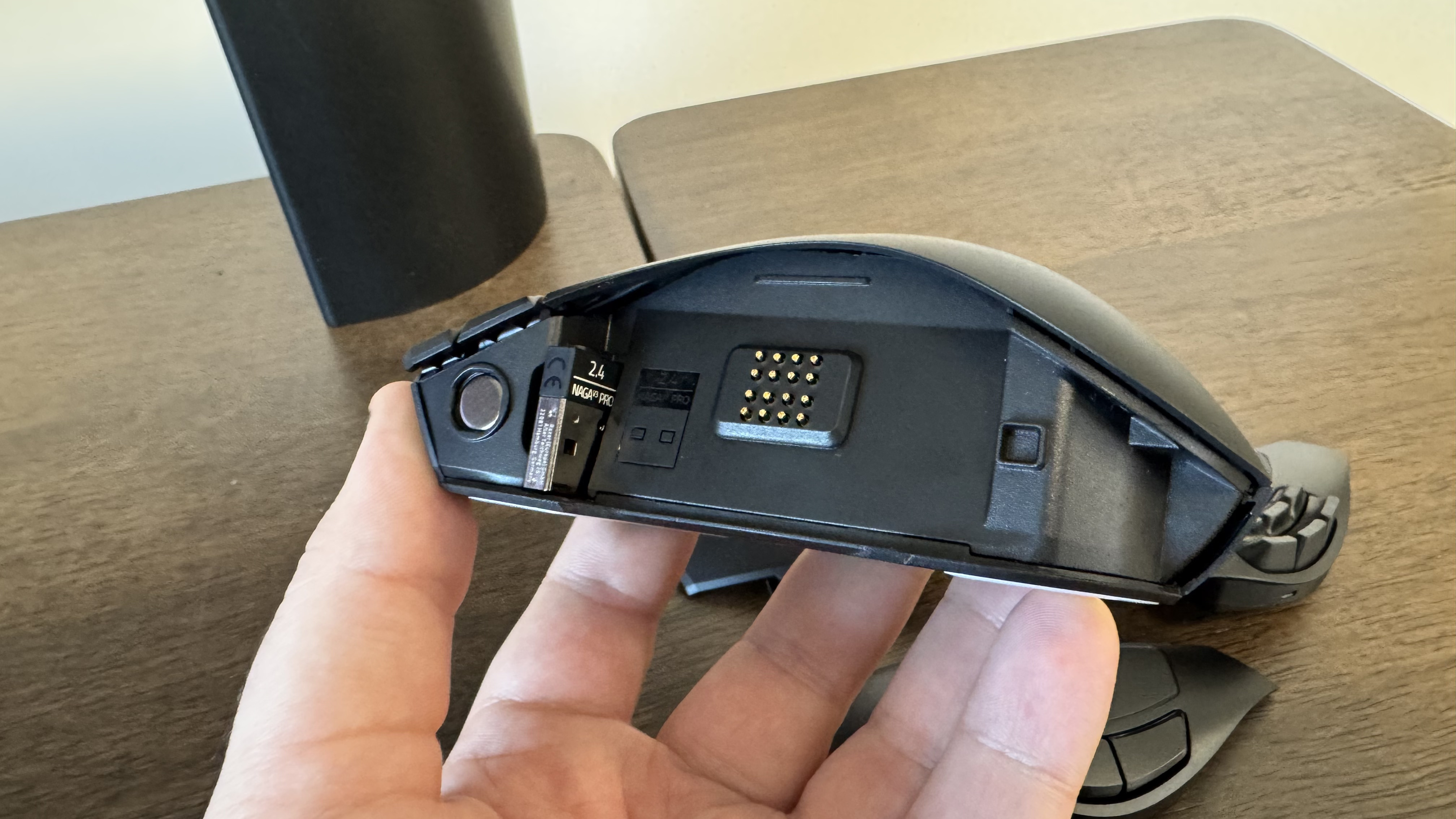
On one hand, it delivers unmatched versatility. It bridges the gap between high-end MMO functionality and general productivity better than almost any competitor on the market. Paired with a sturdy travel build—complete with an integrated magnetic storage slot for the 2.4 GHz wireless dongle—it doubles as a competent on-the-go productivity mouse.
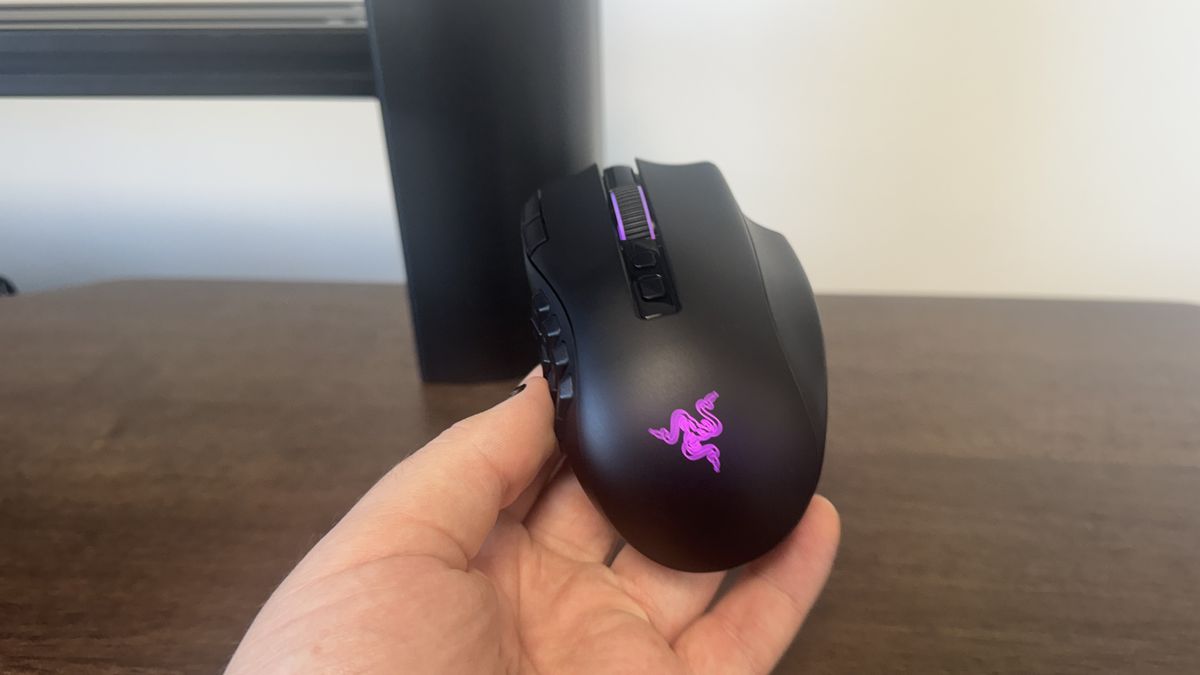
On the other hand, the financial barrier is steep. At $180, the Naga V3 Pro competes directly against exceptional lightweight esports contenders (such as Razer’s own Viper V4 Pro, which offers superior baseline polling for $20 less) and formidable MMO rivals like the Corsair Scimitar Elite Wireless SE, which frequently retails at a much lower price point while holding our top recommendation for dedicated MMO gamers.
The Verdict: Who Should Buy It?
- Buy if: You are an uncompromising, hardcore MMO player (specifically in titles like Final Fantasy XIV) who values swappable modular plates, exceptional battery life, and top-tier sensor precision, and you do not currently own a Naga V2 Pro.
- Skip if: You already own the Naga V2 Pro (the internal upgrades do not justify the re-purchase cost), or if you only dabble in MMOs casually, as the steep $180 investment will far outweigh your practical utility.
The Razer Naga V3 Pro is undeniably a marvel of hardware engineering. But for most gamers, it represents a luxury tier of comfort—one where you pay top dollar not just for performance, but for the privilege of absolute customization.