Executive Overview
In the modern smart home, the television occupies a curious paradox. For a few hours each evening, it serves as the luminous focal point of the living room, broadcasting cinematic spectacles, gripping dramas, or live sports. For the remaining twenty-odd hours of the day, however, it typically sits as a massive, inert slab of glossy black glass—a dominating aesthetic void on the living room wall.
For years, consumer electronics manufacturers have attempted to solve this design dilemma. Most notably, Samsung introduced the "The Frame" TV, a dedicated hardware line designed to blend seamlessly into home decor by displaying classic masterpieces and personal photographs when not in active use. While popular, this luxury came with significant friction: proprietary operating systems plagued by sluggish performance, intrusive advertisements, and, most controversially, recurring software subscriptions just to access the art mode.
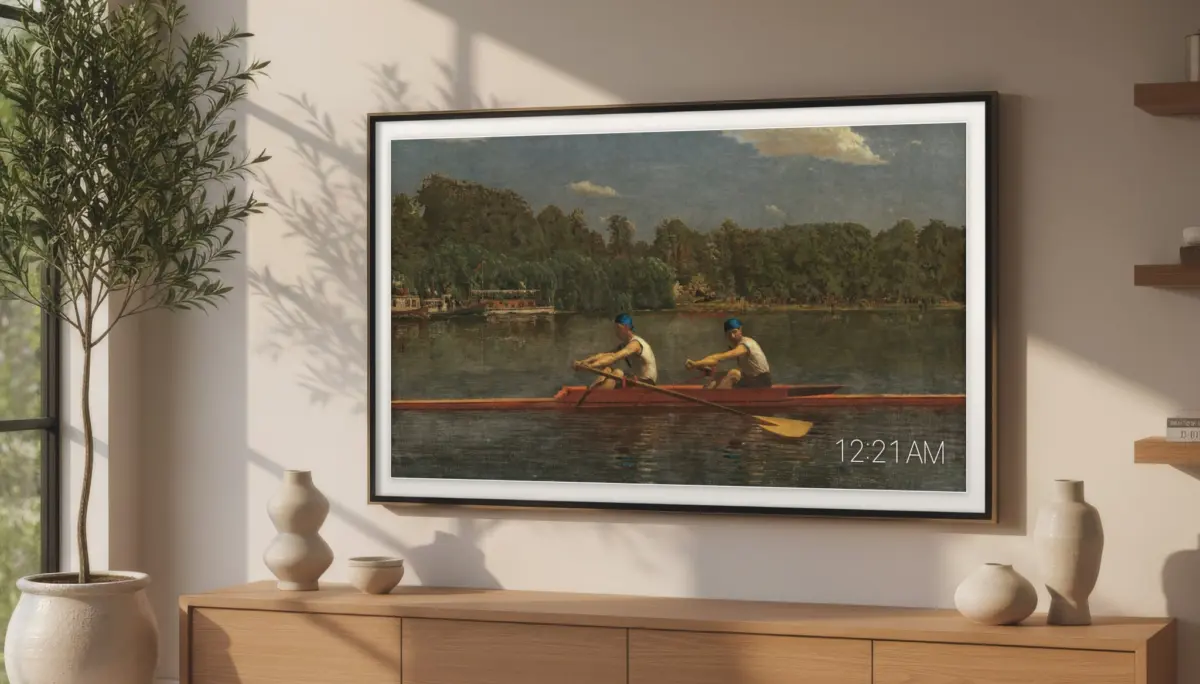
Enter the indie development space. Recognizing an untapped opportunity within Apple’s tvOS ecosystem—a platform historically saturated with generic fireplace loops and pixelated virtual aquariums—independent developer Rene set out to bridge the gap. The result is Salon, a new tvOS application that democratizes the aesthetic concept of the Frame TV. By leveraging hardware that millions of households already own, Salon transforms any standard display hooked up to an Apple TV into a sophisticated digital art gallery. Featuring over a thousand hand-picked, open-access masterworks from world-renowned museums, alongside seamless iCloud photo integration and customizable framing options, Salon represents a masterclass in indie software design: solving a personal frustration with elegance, utility, and respect for the user’s wallet.
Detailed Chronology: The Genesis of Salon
To understand why Salon resonates so deeply within the Apple enthusiast community, one must trace the chronology of the frustration that birthed it. The journey of the app’s creation is emblematic of the classic indie developer ethos: identify a market failure, reject predatory monetization models, and build a native solution tailored to power users.
The Catalyst: Frustration with the Hardware Status Quo
Several years ago, developer Rene purchased a Samsung Frame TV, drawn in by the promise of high-end interior aesthetics. The physical hardware delivered on its aesthetic premise, but the software experience quickly soured the user relationship. Samsung’s Tizen operating system proved to be clunky, unintuitive, and overly commercialized. Worse still, the manufacturer locked the core functionality—the art display mode—behind a recurring subscription paywall.

For a device already commanding a premium price tag, charging a monthly fee to simply display art felt predatory to a software engineer. Furthermore, Rene observed a glaring vacuum in the tvOS ecosystem. While Apple TV hardware is remarkably powerful, capable of driving stunning 4K and Dolby Vision graphics, the App Store for tvOS has long suffered from a lack of high-quality indie attention. Aside from Apple’s own built-in aerial screensavers and major media streaming juggernauts, the platform was largely neglected, populated mostly by novelty ambient loops of burning logs and tropical fish tanks.
Conception and Prototyping
Annoyed enough by the limitations of commercial smart TVs to take matters into his own hands, Rene began coding a proof-of-concept application exclusively for his own living room. The primary objective was simple: utilize an existing Apple TV and a standard television to replicate—and potentially surpass—the Frame TV experience without any ongoing subscription fees.
During the early prototyping phases, the focus remained narrow. Rene curated a foundational library of high-resolution, public-domain masterpieces sourced from open-access museum archives. He paired these with clean, native tvOS navigation mechanics that prioritized minimal visual clutter, ensuring the television would genuinely pass for a framed canvas hanging on the wall rather than a computer monitor displaying an image.
Refining the Feature Set
As development progressed from a personal script to a polished product ready for the public App Store, Rene expanded Salon’s capabilities to address common user pain points associated with digital photo frames. Recognizing that users do not subsist on Renaissance oil paintings alone, he integrated robust support for personal media libraries via iCloud.
Crucially, Salon was engineered to give users precise control over presentation. Rather than forcing a rigid, edge-to-edge crop that often ruins the composition of classic portraits or custom snapshots, the app allows users to toggle digital matting and frames around the edges of images. Subtle utility features, such as an optional, unobtrusive clock and date display in the corner, transformed the app from a pure novelty into a functional, ambient household dashboard.

Launch and Community Reception
Released for Apple TVs running tvOS 17 and later, Salon quietly entered the indie app ecosystem as a refreshing counter-narrative to software monetization fatigue. Priced as a straightforward, one-time purchase of $9.99, it completely bypassed the subscription model that originally drove Rene away from commercial alternatives. Within niche developer and tech-enthusiast communities like 9to5Mac, the app quickly gained traction, celebrated not only for its utility but as a prime example of what independent developers can achieve when they target underserved corners of Apple’s operating systems.
Supporting Context & Metrics: The Economics of Ambient Displays
The commercial success and community enthusiasm surrounding Salon highlight broader shifts in consumer psychology regarding home technology, software monetization, and platform neglect.
The Subscription Fatigue Phenomenon
In the contemporary software landscape, consumers are increasingly fatigued by subscription models. From software suites and cloud storage to smart home heating and television interfaces, the "Software-as-a-Service" (SaaS) model has infiltrated nearly every aspect of consumer tech. Charging a recurring monthly fee to display static art on a screen you already own represents a tipping point for many consumers.
Salon’s flat-fee pricing model ($9.99 outright) acts as an antidote to this trend. By treating the app like a traditional software purchase—pay once, own forever—Rene has tapped into a burgeoning consumer demand for transparent, predictable pricing. This model proves that utility apps do not need to lock features behind continuous paywalls to remain economically viable for solo developers.
The Untapped Potential of tvOS
Apple TV hardware has consistently punched above its weight class. Powered by variants of Apple’s custom A-series and Bionic silicon, tvOS devices possess immense graphical rendering capabilities and energy-efficient operation. Yet, the tvOS App Store remains a digital ghost town compared to iOS, iPadOS, or macOS.

Major developers often overlook tvOS because monetization pathways on the platform are narrow, primarily dominated by video streaming subscriptions or gaming services via Apple Arcade. Consequently, indie developers who venture into tvOS development—such as the creators of specialized utility, ambient, and productivity apps—often find a wide-open playing field with virtually zero direct competition. Salon’s ability to dominate the digital frame conversation on Apple TV underscores the massive appetite consumers have for well-designed, single-purpose utilities on their living room displays.
| Feature Metric | Samsung The Frame TV (Art Mode) | Salon App on Apple TV |
|---|---|---|
| Hardware Requirement | Proprietary Samsung TV hardware | Any standard TV + Apple TV (tvOS 17+) |
| Pricing Model | Monthly or Annual Subscription (~$5/month) | One-time purchase ($9.99) |
| Art Collection | Curated partner museums + locked proprietary catalog | 1,000+ open-access masterworks from global museums |
| Personal Photos | Via SmartThings mobile app / cloud upload | Seamless iCloud Photo Library integration |
| Customization | Basic matting and timer controls | Digital borders, matting, customizable clocks/dates |
Official Statements & Developer Insights
To truly grasp the philosophy behind Salon, one must examine the developer’s own reflections on the state of the industry and the creative process. In a candid statement detailing the motivation behind the app, Rene articulated the core grievances that many modern tech consumers share:
"I bought a Samsung Frame a few years back and was pretty appalled by Tizen and the fact that they charge a subscription for the art mode," Rene explains. "It annoyed me enough to build my own, at first just for my own TV. I also noticed that tvOS gets very little love from indie developers. Outside Apple’s own apps and the big streaming apps, it’s mostly aquariums and fireplaces. Although now with the whole vibe coding craze, there are a few more interesting additions as well."
This statement sheds light on two critical pillars of the modern indie app ecosystem:
- Pragmatic Creation: The best software often stems from scratching one’s own itch. When commercial products fail to deliver a seamless user experience—whether due to sluggish operating systems or aggressive monetization—developers possess the unique capability to rewrite the rules.
- The Renaissance of tvOS: As tools for app development become more accessible and developers look beyond the crowded iOS App Store for differentiation, platforms like tvOS offer fertile ground for creative experimentation. Rene’s critique of the platform’s historical stagnation highlights how apps like Salon are vital for breathing new life into forgotten hardware corners.
Future Outlook: Where Ambient Computing is Headed
As we look toward the future of smart home integration and ambient computing, applications like Salon point toward a broader philosophical shift in how we interact with domestic technology.

The Convergence of Art and Utility
The boundary between functional display technology and interior design is rapidly dissolving. Consumers no longer want glowing black rectangles dominating their living spaces when not in use. As OLED and high-end LED display panels become thinner, brighter, and more energy-efficient, software solutions that convert these screens into dynamic canvases will only grow in demand.
We can expect future iterations of ambient display software to move beyond simple image cycling. Integration with generative AI to create personalized, context-aware art pieces, dynamic weather-responsive visual themes, and community-curated exhibition feeds are all natural evolutionary steps for apps operating in this space.
The Resurgence of Indie Utilities on Living Room Screens
Salon serves as a clarion call for independent developers looking for fresh avenues of creativity. The success of the app proves that users are willing to support solo creators who solve tangible, everyday annoyances with native, high-performance software. As Apple continues to refine its tvOS platform—introducing deeper HomeKit integrations, enhanced widget capabilities, and more robust photo management frameworks—the toolkit available to indie developers on the big screen will only expand.
Ultimately, Salon proves that you do not need to drop thousands of dollars on specialized proprietary hardware to elevate your living room’s aesthetic. With an existing Apple TV, a one-time investment of $9.99, and a discerning eye for open-access art history, your television can finally become what it was always meant to be: a window into human creativity, bridging the gap between cutting-edge silicon and timeless masterpieces.