Executive Overview
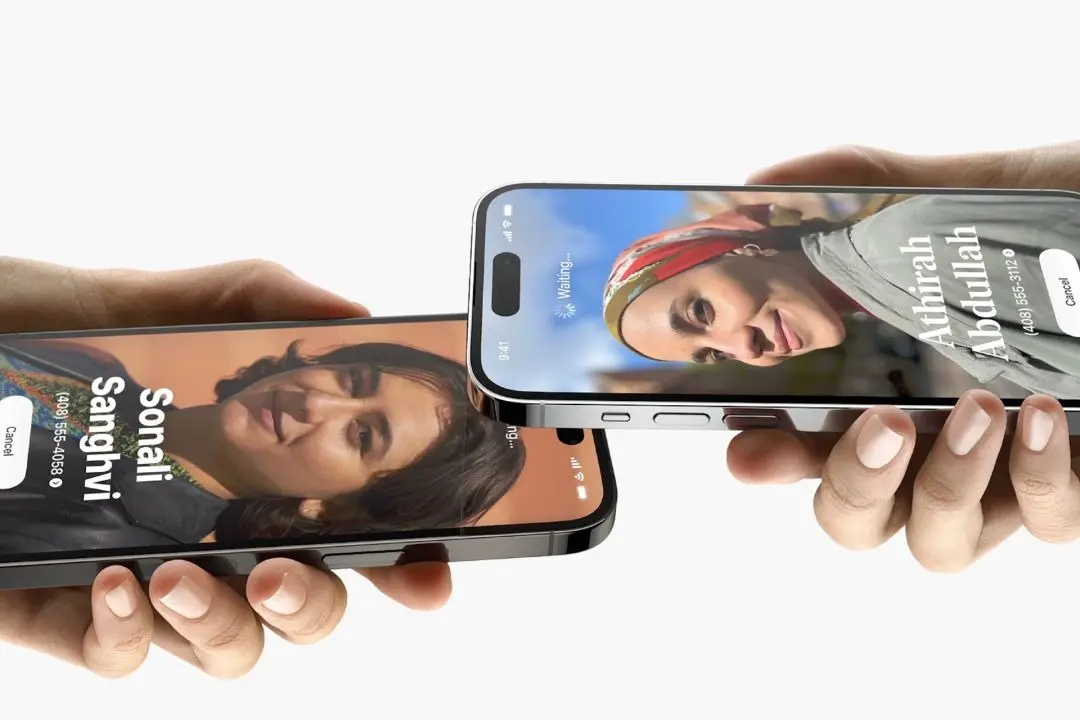
In a legal challenge that highlights the growing complexity of international intellectual property rights, consumer tech titan Apple Inc. faces a major patent infringement lawsuit in India. Santa Monica-based startup GG Technologies has filed a lawsuit in the Bombay High Court, alleging that Apple’s "NameDrop" feature—introduced in iOS 17—infringes upon technology developed and patented by the startup for seamless, proximity-based contact sharing.
The lawsuit seeks ₹15 billion (approximately $161.86 million) in damages alongside a sweeping injunction aimed at halting the import and sale of all compatible iPhones and Apple Watches carrying the NameDrop feature across India.
The Indian court battle follows a multi-front legal campaign launched by GG Technologies, which includes a parallel patent suit in U.S. federal court and an ongoing Section 337 investigation by the U.S. International Trade Commission (ITC).
This case emerges at a critical juncture for Apple. India has evolved from a secondary market into a central pillar of Apple’s strategic expansion, serving as both a primary driver of high-end retail growth and a cornerstone of its manufacturing diversification away from mainland China. A court-ordered sales restriction or import ban in India could disrupt Apple’s momentum in one of the world’s fastest-growing smartphone ecosystems.
Detailed Chronology: The Journey from Innovation to Litigation
The legal battle over proximity-based data transfer spans several years, bridging the startup ecosystem of Southern California with major regulatory and judicial bodies across Washington D.C. and Mumbai.
+-----------------------------------------------------------------------------------+
| CHRONOLOGY OF EVENTS                                                              |
+-------------------+---------------------------------------------------------------+
| 2018              | GG Technologies founded by Gaurav Goel (ex-Goldman Sachs, IIT)|
| 2019              | StayTouch app launched; U.S. patent application filed.         |
| March 2021        | Indian patent application filed for proximity contact sharing. |
| June 2023         | Apple unveils "NameDrop" at WWDC for iOS 17.                  |
| October 2023      | NameDrop rolls out to Apple Watch via watchOS 10.1.           |
| April 2024        | GG Technologies sues Apple in U.S.; starts mediation in India. |
| July 2024         | Indian Patent Office formally grants patent to GG Technologies.|
| August 2024       | U.S. ITC opens investigation into Apple's alleged infringement.|
| September 2024    | Mandatory pre-institution mediation in India fails.            |
| October 2024      | 781-page lawsuit filed in the Bombay High Court.              |
+-------------------+---------------------------------------------------------------+
The Origins of StayTouch (2018–2021)
GG Technologies was founded in 2018 by Gaurav Goel, an alumnus of the Indian Institute of Technology (IIT) Delhi and a former investment banker at Goldman Sachs. Goel sought to replace physical business cards with a digital alternative.
The resulting application, StayTouch, was launched in 2019 on both iOS and Android platforms. The core mechanism allowed users to exchange contact credentials, social profiles, and media by bringing their mobile devices into close proximity, bypassing manual device pairing or optical QR code scanning.
Recognizing the value of the underlying exchange architecture, GG Technologies sought intellectual property protection:
- 2019: Filed initial patent applications in the United States covering proximity-based data exchange mechanisms without traditional manual setup.
- March 2021: Filed a corresponding international patent application in India covering methods for establishing immediate data transfers between hardware units based on spatial proximity.
Apple’s NameDrop Integration (2023)
During its Worldwide Developers Conference (WWDC) in June 2023, Apple unveiled NameDrop, integrated directly into iOS 17. The native feature allows users to hold their iPhone near another iPhone or Apple Watch to share contact details, select specific email addresses or phone numbers, and receive incoming contact cards with animation effects driven by localized field triggers.
- September 2023: NameDrop launched to the public with the official release of iOS 17 on new and existing iPhone models.
- October 2023: Apple expanded the utility to wearable hardware, introducing NameDrop compatibility for the Apple Watch with watchOS 10.1.
Legal Escalation (2024)
As Apple rolled out NameDrop globally, GG Technologies sought legal enforcement of its patent rights:
- April 2024: GG Technologies initiated patent infringement proceedings against Apple in U.S. District Court. Concurrently, adhering to Indian civil litigation mandates under the Commercial Courts Act of 2015, the startup initiated mandatory pre-institution mediation proceedings with Apple in India.
- July 2024: The Indian Patent Office granted GG Technologies its patent covering automated proximity-based contact exchange systems.
- August 2024: Following a formal complaint by GG Technologies, the U.S. International Trade Commission (ITC) announced an investigation into Apple to determine if NameDrop imports violate Section 337 of the Tariff Act of 1930.
- September 2024: Pre-institution mediation in India closed without a settlement, as Apple and GG Technologies failed to reach an agreement.
- October 2024: GG Technologies filed a 781-page commercial suit in the Bombay High Court, initiating formal litigation in India.
Supporting Context & Metrics: India’s Strategic Importance & Patent Mechanics
Apple’s Stake in the Indian Ecosystem
The lawsuit comes at a critical time for Apple’s operations in India. Over the past five years, Apple has overhauled its global manufacturing and retail strategy, positioning India as both a consumption market and a hardware production hub.
       APPLE'S GROWING FOOTPRINT IN INDIA

  [ Market Share ]                [ Manufacturing ]
+-------------------+           +-------------------+
|  Sub-10% Share    |           |  1 in 4 iPhones   |
|  Huge potential   |           |  made in India    |
|  runway for growth|           |  Targeting 25%+   |
+-------------------+           +-------------------+
1. Manufacturing Diversification
Amid geopolitical shifts and supply chain vulnerabilities, Apple has expanded manufacturing operations in India through partners like Foxconn, Pegatron, and the Tata Group (which acquired Wistron’s domestic operations). Reports indicate that one in four iPhones worldwide is now assembled in India, marking a major transition away from single-region reliance.
2. Retail Expansion
Apple has deepened its direct consumer presence in India, opening flagship retail stores—Apple BKC in Mumbai and Apple Saket in New Delhi—alongside launching its native Apple Store online app.
3. Market Growth Potential
While Apple commands dominant profit margins globally, iPhones account for less than 10% of total smartphone market share in India, which is predominantly led by Android devices. However, premiumization trends in India have made the country one of Apple’s fastest-growing revenue territories. An adverse injunction affecting hardware sales could disrupt this growth trajectory.
Patent Mechanics: The Core Technical Dispute
At the center of the lawsuit is the technical execution of zero-configuration, short-range proximity data sharing.
+-------------------------------------------------------------------------+
|                      PROXIMITY DATA SHARING PROTOCOL                    |
+-------------------------------------------------------------------------+
| GG Technologies Patent Scope         | Apple NameDrop Execution        |
+--------------------------------------+----------------------------------+
| Enables connection between devices   | Utilizes UWB/NFC triggers to    |
| brought into physical proximity.     | detect relative proximity.       |
| Eliminates manual pairing or codes.  | Initiates secure AirDrop channel.|
| Exchanges contact payloads directly. | Transfers custom Contact Cards.  |
+--------------------------------------+----------------------------------+
GG Technologies’ patent covers the algorithm and protocol sequence that allows two independent mobile devices to recognize their physical proximity to one another, establish a secure short-range connection channel, and exchange payload data (such as contact information) without requiring prior Bluetooth pairing, manual discovery selection, or network configuration.
GG Technologies contends that Apple’s implementation of NameDrop—which relies on Near Field Communication (NFC) protocols coupled with Ultra-Wideband (UWB) directional tracking—directly infringes upon the claim boundaries established in their patents.
Official Statements & Legal Arguments
The Plaintiff: GG Technologies
In court documents submitted to the Bombay High Court, GG Technologies outlines its claims, arguing that Apple introduced a native feature that overlaps with intellectual property GG Technologies spent years developing and securing.
In statements provided to media representatives, GG Technologies confirmed the intent of their civil suit:
"We are seeking an injunction to restrict the usage of the NameDrop feature which is native to iOS. Our goal is to protect the proprietary technology developed by our company and ensure fair competition in the mobile ecosystem."
The startup’s court filings ask the Bombay High Court to issue interim and permanent orders to:
- Restrict Apple from manufacturing, importing, selling, or offering for sale in India any hardware preloaded with the NameDrop feature (specifically affected iPhone and Apple Watch models).
- Direct Apple to pay ₹15 billion (~$161.86 million) in damages for alleged intellectual property infringement.
- Order Apple to issue software updates that disable or remove the NameDrop feature on existing devices operating within Indian jurisdiction.
The Defendant: Apple Inc.
Apple has not publicly commented on the pending litigation in India or the ongoing ITC proceedings in the United States.
Historically, when faced with similar patent disputes regarding native operating system features, Apple has pursued several defense strategies:
- Invalidity Contentions: Filing petitions for inter partes review (IPR) or challenging the validity of the plaintiff’s patents before patent offices, claiming the technology was obvious or anticipated by prior art.
- Non-Infringement Arguments: Asserting that the underlying source code, system architecture, and hardware triggers used in features like AirDrop and NameDrop operate distinctly from the patent claims asserted by the plaintiff.
- Design-Around Options: Modifying software features via over-the-air iOS updates to bypass patent claims while legal disputes remain ongoing.
Future Outlook & Potential Scenarios
As the Bombay High Court prepares to list the case for its initial hearings, legal observers and tech analysts are watching several potential paths forward.
                              POTENTIAL CASE OUTCOMES
                                         |
         +-------------------------------+-------------------------------+
         |                               |                               |
  [ Scenario A ]                  [ Scenario B ]                  [ Scenario C ]
  Out-of-Court Settlement         Interim Injunction Issued       Patent Invalidated
  Licensing or lump-sum payment   Sales blocked / feature disabled Apple proves prior art
Scenario A: Out-of-Court Settlement or Cross-Licensing Agreement
Given Apple’s growing financial and manufacturing reliance on India, prolonged public litigation risks disruption to local distribution. Apple may elect to negotiate a settlement or licensing agreement with GG Technologies, resolving claims across both the U.S. and Indian jurisdictions simultaneously.
Scenario B: Software Modification via iOS Update
If the court grants interim relief short of a full import ban, Apple could issue an over-the-air iOS update in India that temporarily disables NameDrop on regional devices while maintaining hardware sales, minimizing retail disruption while continuing to litigate the patent claims.
Scenario C: Extended Litigation and Patent Challenges
Apple could challenge the validity of GG Technologies’ patent before the Indian Patent Office and U.S. Patent Trial and Appeal Board (PTAB). If Apple can demonstrate that proximity sharing protocols were present in prior public disclosures, it could invalidate the patent claims, rendering the lawsuits moot.
Conclusion
The battle between GG Technologies and Apple illustrates the changing dynamics of global tech litigation. Emerging markets like India are no longer just manufacturing hubs or sales territories—they are becoming key venues for enforcing international intellectual property rights.
As the Bombay High Court considers the case, the outcome could carry implications for how multinational hardware makers design software features for global deployment without infringing on smaller innovation firms.