Executive Overview
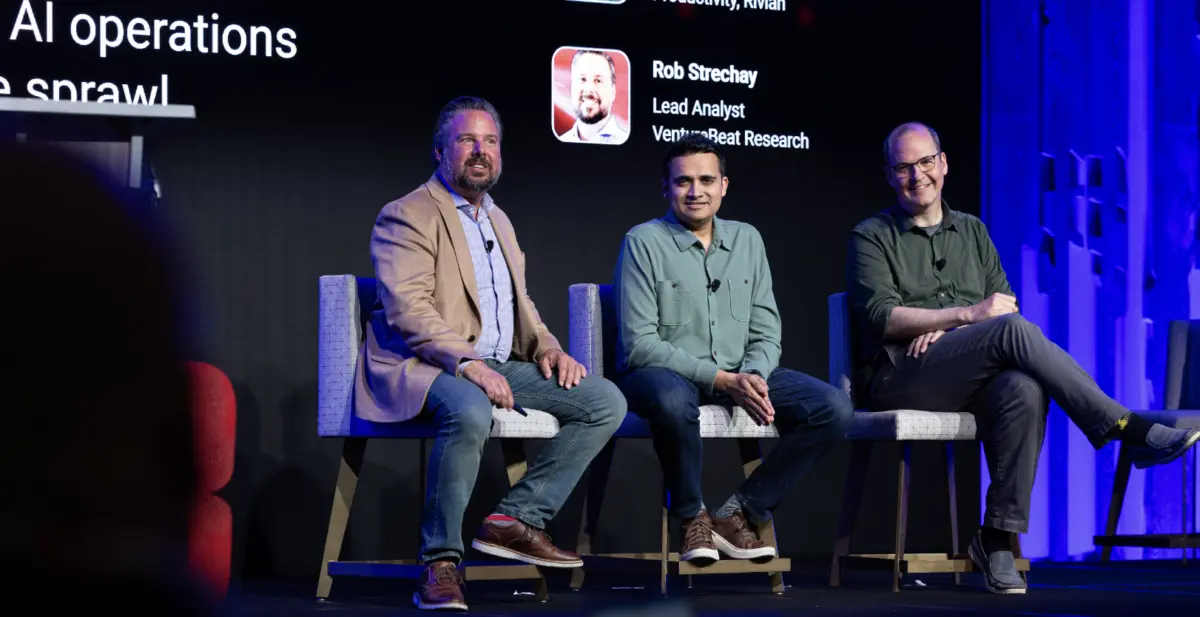
The enterprise technology landscape is undergoing an unprecedented architectural shift. As global organizations transition from localized Generative AI experimentation to large-scale production deployments, enterprise decision-makers—ranging from Chief Information Officers (CIOs) and Chief Technology Officers (CTOs) to Vice Presidents of Infrastructure and Directors of Platform Engineering—are confronting a stark reality: the foundational software stack is being rewritten in real time. In response to an escalating demand for objective, empirically backed technical intelligence, VentureBeat has announced the appointment of industry veteran Rob Strechay as its first Lead Analyst and founding analyst of VentureBeat Research.
Strechay, who most recently served as Managing Director and Principal Analyst at theCUBE Research and SiliconANGLE, brings nearly three decades of hands-on operational, executive, and analytical expertise to the platform. His hiring marks a deliberate strategic pivot for VentureBeat, elevating its institutional offering from traditional technology journalism to an enterprise-grade research practice tailored to technical decision-makers who evaluate, procure, and operationalize complex AI systems.
The creation of VentureBeat Research addresses a critical market vacuum. While initial enterprise investments in Artificial Intelligence were dominated by surface-level proofs of concept (PoCs) and basic wrapper implementations, the current phase demands rigorous infrastructure discipline. Enterprise leaders are grapling with systemic operational hurdles, including severe GPU compute underutilization, volatile multi-vendor orchestration requirements, complex security gaps across agentic pipelines, and cost inflation across cloud infrastructure. Strechay’s practice will deliver data-driven blueprints, operational benchmarks, and deep-dive technical evaluations designed to help enterprise executives navigate this high-stakes technological transformation.
Detailed Chronology
The Evolution of a Multi-Decade Practitioner
Rob Strechay’s career trajectory spans nearly thirty years, characterized by rare hands-on exposure to every side of the enterprise technology matrix: as a operational practitioner, a startup executive, a cloud hyperscaler product builder, and an industry analyst.
- Early Operational & Executive Roles: Prior to entering industry research, Strechay held senior leadership roles across early-stage and high-growth enterprise infrastructure providers. Notably, he served as a key product executive at business continuity and data management firm Zerto, steering product strategy through periods of hyper-growth and rapid enterprise adoption.
- Hyperscaler Innovation at AWS: Strechay subsequently joined Amazon Web Services (AWS), where he directly contributed to building and scaling a new cloud analytics service. This experience granted him deep internal visibility into cloud-native control planes, large-scale distributed systems, and hyperscaler cost dynamics—experience that directly informs his current architectural analyses.
- Transition to Industry Research (ESG & theCUBE): Moving into market research, Strechay served as a Senior Analyst at Enterprise Strategy Group (ESG), where he led coverage in data storage, multicloud orchestration, and hybrid infrastructure. Most recently, as Managing Director and Principal Analyst at theCUBE Research and SiliconANGLE, he spearheaded research into cloud, data, and AI infrastructure evolution while hosting hundreds of technical executive interviews across global technology summits.
+-----------------------------------------------------------------------------------+
|                           ROB STRECHAY'S CAREER PATH                              |
+-----------------------------------------------------------------------------------+
|  Early Leadership / Startups  -->  AWS Product Team  -->  ESG / theCUBE Research  |
|  (e.g., Executive at Zerto)       (Analytics Service)    (Principal Analyst/MD)   |
+-----------------------------------------------------------------------------------+
                                          |
                                          v
+-----------------------------------------------------------------------------------+
|                            VENTUREBEAT RESEARCH                                   |
|                  Lead Analyst & Founding Analyst (Present)                        |
+-----------------------------------------------------------------------------------+
The Inception and Expansion of VentureBeat Research
VentureBeat’s decision to formalize its research practice follows months of calculated development aimed at establishing proprietary enterprise metrics.
- May 2024: Strechay initiated his research collaboration with VentureBeat by authoring a foundational analysis examining enterprise GPU utilization. The study exposed systemic inefficiencies in hardware provisioning, detailing how enterprise AI infrastructure budgets were being drained by idle compute capacity.
- June 2024: Strechay contributed to the design and review of VentureBeat’s inaugural AI Infrastructure & Compute survey. Concurrently, VentureBeat published its flagship VB Pulse report on agentic orchestration, surveying 145 enterprise tech leaders. The findings provided early empirical proof that enterprises were actively pursuing multi-vendor model strategies to insulate themselves from single-point-of-failure vulnerabilities.
- Formal Appointment: Recognizing the market mandate for continuous, technical-grade research, VentureBeat formally appointed Strechay as Lead Analyst to anchor VentureBeat Research and host the expanded VB In Conversation deep-dive technical video series.
Supporting Context & Metrics
The Infrastructure Dilemma: The $401 Billion Compute Waste Crisis
A central driver behind the formation of VentureBeat Research is the stark discrepancy between capital allocation and operational efficiency in enterprise AI deployments. In his initial infrastructure analysis, Strechay spotlighted what has become a defining headache for modern CIOs: low GPU utilization across enterprise data centers and reserved cloud instances.
                    ENTERPRISE AI INFRASTRUCTURE WASTAGE
  +-----------------------------------------------------------------------+
  |  [ Allocated / Provisioned GPU Compute Capacities ]                   |
  +-----------------------------------------------------------------------+
  |  ████████████████████████                  |  ░░░░░░░░░░░░░░░░░░░░░░  |
  |  Active Model Training / Inference Workloads |  Idle / Unscheduled Capacity|
  |  (~30-40% Real Utilization)                |  ($401B Aggregate Waste) |
  +-----------------------------------------------------------------------+
Across the industry, organizations rushed to secure high-performance computing clusters (such as NVIDIA H100 and A100 nodes) out of fear of supply shortages. However, due to immature platform engineering, inadequate data pipeline integration, and fragmentation in orchestration frameworks, enterprise GPU utilization rates frequently hover at suboptimal levels. This underutilization represents an aggregated global capital inefficiency estimated at hundreds of billions of dollars—a problem that Strechay categorizes as the single largest unaddressed infrastructure challenge in modern IT enterprise management.
VB Pulse Benchmark Data: Multi-Vendor Hedging and Agentic Risks
VentureBeat’s proprietary monthly VB Pulse surveys track five fundamental vectors of enterprise AI adoption:
- Agentic Orchestration: Frameworks for coordinating multi-agent workflows.
- Agent Reliability & Evals: Empirical scoring of autonomous model outputs and hallucination mitigation.
- Agentic Security & Identity: Identity access management (IAM) and zero-trust policies for dynamic AI agents.
- AI Infrastructure & Compute: Hardware utilization, latency optimization, and distributed training economics.
- Context Layers & RAG: Vector database architecture, retrieval-augmented generation pipelines, and semantic cache management.
Key Survey Finding: Model Strategy Risk Mitigation
Data from VentureBeat’s June 2024 survey of 145 enterprise technology buyers highlighted a major strategic shift:
+-----------------------------------------------------------------------+
|              ENTERPRISE AI MODEL STRATEGY DISTRIBUTION                |
+-----------------------------------------------------------------------+
|  Hedging Across Multiple Model Providers (Multi-Vendor)  : 66.7%      |
|  Committed Exclusively to a Single Model Vendor         : 33.3%      |
+-----------------------------------------------------------------------+- Two-Thirds (66.7%) of enterprise organizations have implemented a multi-vendor hedging strategy rather than standardizing on a single Large Language Model (LLM) provider.
- Strategic Validation: The necessity of this approach was vividly demonstrated during the major June outage of Anthropic’s Claude models. Enterprise organizations relying on single-provider architectures suffered complete operational halts, whereas organizations with multi-model orchestration pipelines automatically rerouted traffic to alternative models with minimal latency disruption.
The survey findings underscored a pervasive governance reality: enterprise AI organizations suffer from an ownership and control gap rather than a pure technology gap. Currently, a majority of enterprises continue to manage model governance and agentic access controls through manual, non-scalable processes—a practice that exposes critical security vectors as autonomous agents gain programmatic read/write access to internal enterprise data stores.
Official Statements
Addressing the core mandate of his new role, Rob Strechay emphasized the necessity of replacing market hyperbole with rigorous, empirical technical guidance:
"VentureBeat has built an audience of enterprise builders and technology buyers that any analyst would want to serve. My goal is to use deep empirical metrics and VentureBeat’s proprietary tracking data to help enterprise buyers and the people building for them make sound platform and infrastructure decisions during the most disruptive transition enterprise technology has seen."
VentureBeat leadership reinforced that the creation of the research division is directly tuned to the urgent requirements of technology leaders navigating production environments:
"The enterprise AI stack is being rewritten in real time, and the decision-makers I talk with are starved for objective, defendable data. Rob Strechay has the mix of technical rigor and operating experience needed to dissect the architecture behind the next phase of enterprise AI deployment.
The questions enterprise technology leaders are asking have changed. As organizations move past experimentation with generative AI toward production deployment, they want to know how to orchestrate multi-vendor environments, where the security gaps in their agentic pipelines sit, and how to fix the utilization problems draining their infrastructure budgets. Answering those questions requires more depth than news coverage alone provides."
Future Outlook
Redefining Enterprise Technology Research
The formal roll-out of VentureBeat Research comes at a moment of disruption within the traditional analyst landscape. Legacy IT advisory firms have historically relied on long publication cycles and high-level strategy frameworks. However, the velocity of open-source model updates, agentic framework iterations, and infrastructure evolution has rendered traditional annual research cycles obsolete.
+-----------------------------------------------------------------------+
|                   TRADITIONAL vs. NEXT-GEN RESEARCH                   |
+-----------------------------------------------------------------------+
|  Legacy Advisory Models           |  VentureBeat Research             |
|  - Annual publication cycles      |  - Monthly empirical survey data  |
|  - Broad strategic taxonomies     |  - Infrastructure-level depth     |
|  - Vendor marketing focused       |  - Practitioner & builder focused |
+-----------------------------------------------------------------------+
By fusing real-time journalistic access with monthly survey metrics (VB Pulse) and deep technical architecture reviews, VentureBeat Research aims to deliver real-time, actionable intelligence directly into the hands of technology buyers.
Core Focus Areas for Core Research Coverage
Strechay’s analytical roadmap will prioritize four foundational areas:
- Cloud & Advanced Data Infrastructure: Evaluating cloud-native data lakes, vector databases, real-time data streaming architectures, and storage backends designed for ultra-low latency AI inference.
- Platform Engineering & DevOps Orchestration: Analyzing Kubernetes deployment patterns for AI, MLOps pipeline automation, model serving frameworks, and telemetry platforms tailored for non-deterministic software models.
- Agentic Pipeline Security & Zero-Trust Identity: Unpacking security protocols required when deploying autonomous AI agents that act programmatically within enterprise enterprise resource planning (ERP) and customer relationship management (CRM) environments.
- Compute Economics & FinOps for AI: Providing granular benchmarks to optimize GPU and NPU hardware cluster allocation, dynamic batching, and continuous prompt engineering token economics.
‘VB In Conversation’ Technical Video Series
As part of the expanded research practice, Strechay will take over host duties for VentureBeat’s video interview series, VB In Conversation. Re-engineered from high-level panel discussions into deep architectural breakdowns, the series will feature unfiltered technical interviews with principal systems architects, VP engineering leads, and core open-source maintainers.
The interviews will examine real-world deployment challenges, featuring unvarnished evaluations of system behavior under production-grade strain, concrete cloud-cost breakdown methodologies, and step-by-step agentic integration blueprints. The series will be broadcast across VentureBeat’s digital platforms and official YouTube channel, operating in parallel with Strechay’s ongoing written research, empirical market reports, and direct analyst briefing engagements.