Executive Overview
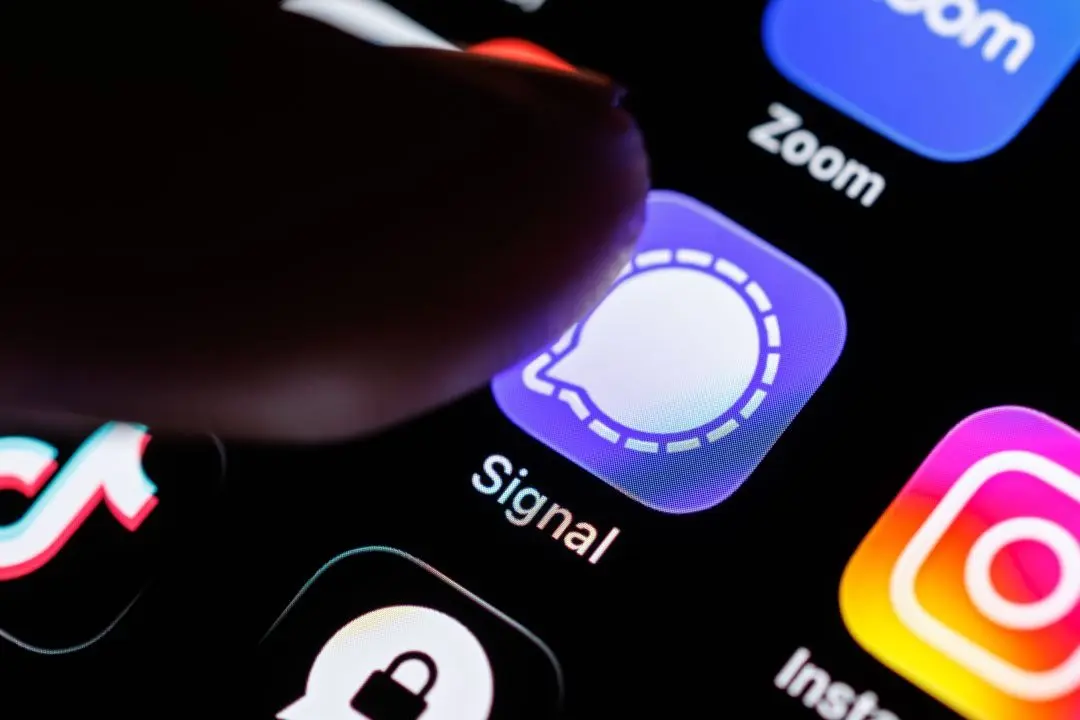
In a watershed moment for digital civil liberties, Signal announced a platform-wide security policy restricting users’ ability to capture screenshots across its desktop and mobile applications. The change, outlined in an official disclosure by Signal President Meredith Whittaker, represents an aggressive defense against what the organization terms an "existential threat" to user confidentiality: the rapid integration of system-level, agentic Artificial Intelligence across mainstream desktop and mobile operating systems.
For over a decade, end-to-end encryption (E2EE) served as the gold standard for secure communication, establishing a cryptographically verifier-proof tunnel between sender and recipient. However, the commercial rollout of agentic AI frameworks—such as Microsoft Windows Recall, Apple Intelligence, and Google’s ambient Android AI services—has fundamentally altered the threat model. By operating directly at the operating system (OS) layer with screen-scanning capabilities, these AI features capture, parse, and index pixel data after it has been decrypted and rendered on the display screen.
       +--------------------------------------------------------+
       |                  THE ZERO-MILE THREAT                  |
       +--------------------------------------------------------+
       |                                                        |
       |  Sender Device  ======[ E2EE Tunnel ]======> Recipient |
       |                                              Device    |
       |                                                |       |
       |                                           [Decrypted   |
       |                                            On-Screen   |
       |                                             Render]    |
       |                                                |       |
       |                                                v       |
       |                                          +-----------+ |
       |                                          | Agentic AI| |
       |                                          | Screen    | |
       |                                          | Scanner   | |
       |                                          +-----------+ |
       |                                                |       |
       |                                                v       |
       |                                          Local/Remote  |
       |                                          Vector DB     |
       +--------------------------------------------------------+
By expanding screenshot restrictions—already enforced by default on Windows—to Android and iOS environments, Signal is attempting to erect software-level barriers to prevent system AI routines from indexing sensitive conversation history. Yet, as Whittaker candidly acknowledged, software-level screenshot suppression is an incomplete defense against OS vendors that control the underlying silicon, window management system, and machine learning runtime APIs.
This move highlights an unprecedented rift in tech architecture: a conflict between privacy-first application developers aiming to keep user data localized and secure, and OS providers engineering background vision models designed to continuously record and process every pixel presented to the human eye.
Detailed Chronology: The Escalation of OS-Level Screen Capture
The technical and philosophical tension between secure messaging protocols and host operating systems has reached a critical flashpoint over the past three years. The timeline below illustrates how the rapid adoption of background AI vision engines prompted Signal’s defensive platform updates.
+-----------------------------------------------------------------------------+
| CHRONOLOGY OF EVENTS: THE EVOLUTION OF SCREEN PRIVACY CONFLICTS            |
+-----------------------------------------------------------------------------+
| Date           | Event / Development                                        |
+----------------+------------------------------------------------------------+
| May 2024       | OS vendors introduce background optical capture systems    |
|                | capable of indexing system framebuffers for local AI query. |
+----------------+------------------------------------------------------------+
| Late 2024      | Cybersecurity analysts demonstrate zero-day and local-user |
|                | exfiltration risks targeting OS-level AI databases.         |
+----------------+------------------------------------------------------------+
| Early 2025     | Signal enables mandatory screen capture suppression on     |
|                | Windows Desktop app to mitigate background OCR scrapers.   |
+----------------+------------------------------------------------------------+
| Mid-2026       | Mobile operating systems integrate system-wide vision     |
|                | agents with ambient screen context capabilities.            |
+----------------+------------------------------------------------------------+
| Nov 21, 2026   | Signal officially expands default anti-screenshot protections|
|                | to iOS and Android, warning of risks from agentic AI.       |
+----------------+------------------------------------------------------------+
The Transition from Static Storage to Ambient Screen Processing
Historically, endpoint privacy threats centered around file system extraction, unencrypted local backups, or malicious keyloggers. When Signal introduced hardware-backed local encryption and disappearing messages, it mitigated most conventional endpoint vectors.
However, between 2024 and 2026, the paradigm of personal computing fundamentally shifted toward ambient context awareness. Operating system vendors began integrating visual processing pipelines directly into core desktop and mobile software stacks:
- Continuous Framebuffer Scraping: System services were granted permissions to periodically snapshot the active screen framebuffer, feeding frame rates into local Optical Character Recognition (OCR) and multimodal vision-language models (VLMs).
- Local Vector Storage: Extracted screen text and image metadata were automatically structured into local vector embeddings or SQLite relational stores to allow natural-language querying of user history.
- Agentic Action Engines: AI models were tasked not merely with passive observation, but with actively reading screen states to execute cross-application automation (e.g., extracting dates from a chat to book a calendar entry).
Recognizing that these OS-level visual scrapers operated outside the sandbox of end-to-end encrypted protocols, Signal initially targeted desktop environments. In early 2025, Signal deployed window capture blocking on Windows desktop clients, using low-level API flags to shield render targets from window enumeration routines.
The November 2026 Universal Mandate
On November 21, 2026, Signal finalized its rollout, extending default screenshot and display capture restrictions to mobile platforms (Android and iOS). The decision reflects a recognition that mobile operating systems have adopted ambient screen processing features similar to desktop OS environments.
Under the new default profile, when a user attempts to capture a screenshot or when a background process requests a display buffer feed while Signal is foregrounded:
- On Android: The application asserts system security flags, rendering the captured buffer completely opaque (black frame).
- On iOS: The app utilizes secure display layers and notification handlers to restrict screen recording pipelines, blur interface surfaces during system layer transitions, and prohibit local screenshot actions.
While Signal provides an option for users to manually disable these protections, the application warns that doing so explicitly compromises the integrity of the conversation’s end-to-end security architecture.
Supporting Context & Technical Analysis
To understand why Signal enacted platform-wide screenshot protections, it is necessary to examine the technical mechanics of end-to-end encryption versus render-layer vulnerability, alongside the threat model posed by agentic AI screen parsing.
Cryptographic Security vs. The Render-Layer Vulnerability
End-to-End Encryption operates under strict mathematical boundaries. When Alice sends a message to Bob via the Signal Protocol:
$$textCiphertext = E(K_textsession, textPlaintext)$$
The message travels over the internet as unreadable ciphertext. Only Bob’s device, possessing the corresponding ephemeral session key $K_textsession$, can decrypt it:
$$textPlaintext = D(K_textsession, textCiphertext)$$
Once decrypted, the application passes the plaintext string to the operating system’s graphics rendering pipeline (e.g., Skia, Quartz, or DirectWrite). The framework renders the text onto a target display buffer as bitmap pixels.
[ Ciphertext ] ---> [ Session Key Decryption ] ---> [ Plaintext in RAM ]
                                                           |
                                                           v
[ OS Vector DB ] <--- [ OS AI Vision Agent ] <--- [ Rendered Framebuffer ]
This destination—the rendered framebuffer—is what security architects refer to as the Zero-Mile Interface. Cryptographic guarantees end the moment pixels are emitted to the screen buffer. If an operating system component continuously captures the framebuffer to support an internal AI agent, the cryptographic protection of E2EE is rendered irrelevant for any data visible on screen.
Threat Architecture: How Agentic AI Extracts Data
Agentic AI systems operating at the host OS layer do not break the underlying mathematics of AES-256 or Curve25519; instead, they bypass cryptography entirely by acting as an omnipresent observer at the OS UI level.
| Attack / Extraction Vector | Traditional Malware | OS-Integrated Agentic AI |
|---|---|---|
| Execution Layer | User-space unprivileged binary or payload | Privileged, signed system-level daemon |
| Data Source | Process memory inspection, disk sniffing | Display framebuffer, Accessibility APIs, IPC |
| Parsing Engine | Heuristic scrapers, hardcoded regex | Multimodal Vision Transformers (VLM), OCR |
| Storage Destination | Remote Command & Control (C2) server | System-wide vector database / Cloud sync |
| Persistence | Evades detection via rootkits | Native system startup, trusted host binary |
When an AI agent scans a Signal window, the process typically unfolds as follows:
- Screen Capture Hooks: The OS frame manager grabs the active display frame buffer (at intervals ranging from milliseconds to seconds).
- Vision & Text Parsing: System OCR services extract text, while vision models classify UI elements (identifying contact names, avatars, timestamps, and message bubbles).
- Embedding Generation: The extracted text is converted into vector embeddings and written to an OS-controlled local database (often unencrypted at rest relative to system admin privileges).
- Contextual Aggregation: If cloud-assisted agentic features are enabled, summarized contextual nodes may be pushed to remote vendor servers to facilitate cross-device functionality.
Under this architecture, a secret message set to disappear in 5 seconds on Signal could be permanently recorded inside the OS vendor’s system-level AI memory bank before the destruction timer elapses.

Technical Limitations of Application-Layer Defenses
Signal’s decision to mandate screenshot suppression relies on native OS application programming interfaces:
- Android
FLAG_SECURE: Instructs the SurfaceFlinger compositing engine to treat the window surface as secure content. It prevents the window from appearing in screenshots, screen recordings, non-secure displays, and system recent-apps previews. - iOS Window Protection & Canvas Isolation: Uses hidden system text fields or secure canvas rendering patterns (
UITextFieldsecure entry canvas hacks andUIScreen.capturedDidChangeNotificationlisteners) to hide content when screen recording or frame capture pipelines are active. - Windows
SetWindowDisplayAffinity: InvokesWDA_EXCLUDEFROMCAPTUREorWDA_MONITORto remove the application window from Desktop Duplication API capture frames and system screenshot utilities.
       +--------------------------------------------------------+
       |             THE APPLICATION DEFENSE GAP                |
       +--------------------------------------------------------+
       |                                                        |
       |  Signal App  -- [FLAG_SECURE] --> OS Display Compositor|
       |                                           |            |
       |                                           v            |
       |                             Does the OS respect its    |
       |                             own security flags when    |
       |                             running system-level AI?   |
       |                                           |            |
       |                     +---------------------+            |
       |                     |                                  |
       |                     v                                  v
       |               [ YES: Protected ]              [ NO: Bypassed ]
       +--------------------------------------------------------+
Why Software-Level Screenshot Restrictions Are Incomplete
As Meredith Whittaker openly acknowledged, relying on host application flags presents inherent limits:
- OS Self-Privilege: The operating system vendor owns the display compositor. A vendor could bypass its own public API restrictions (
FLAG_SECUREorSetWindowDisplayAffinity) to ensure its proprietary AI model receives complete display context. - Accessibility API Exploitation: Agentic AI frameworks frequently leverage low-level accessibility frameworks (e.g., Android AccessibilityService, Windows UI Automation) to read screen element trees directly, bypassing pixel-level screenshot flags altogether.
- Analog & Out-of-Band Vectors: No software modification can prevent a physical camera from taking a photo of a physical display device (the classic "analog hole").
- Hardware and Hypervisor-Level Capture: Virtual Machine Monitors (VMMs), direct memory access (DMA) hardware, or compromised kernel drivers operate below the application’s execution context and can siphon framebuffers regardless of application settings.
Official Statements and Industry Reaction
The deployment of universal screen capture restrictions by Signal has drawn sharp commentary from privacy advocates, cybersecurity experts, and major platform developers.
Signal Leadership: The Existential Risk of OS-Level Scanning
In the official announcement published by Signal, President Meredith Whittaker framed the decision as a necessary stand against systemic platform erosion:
"In service of AI agentic capabilities, your sensitive data is being captured, stored, and made accessible to whatever local database or remote server an OS-level AI agent is using at that moment. All of this is outside of Signal’s control once the data has been captured, and imperils the privacy of all the participants in a conversation."
Whittaker went on to target the implicit contract between operating systems and end users, emphasizing that operating system vendors are turning host devices into surveillance endpoints:
"By giving AI agents the ability to ‘scan’ the information on users’ screens, Windows, Android, and macOS/iOS are undermining Signal’s ability to independently guarantee privacy… While disabling [screenshot blocking] is an option, doing so will break our privacy guarantees. It remains an incomplete solution, as it doesn’t address other more sneaky ways AI agents could potentially access application data."
+--------------------------------------------------------------------------------+
| PERSPECTIVES ON SYSTEM-LEVEL SCREEN SCANNING                                   |
+--------------------------------------------------------------------------------+
| Stakeholder          | Core Argument / Position                                |
+----------------------+---------------------------------------------------------+
| Meredith Whittaker   | OS-level AI screen scanning acts as an existential     |
| (Signal President)   | threat to E2EE, rendering transit security ineffective  |
|                      | if display memory is continuously indexed.             |
+----------------------+---------------------------------------------------------+
| Cybersecurity        | App-level anti-screenshot controls are defensive speed  |
| Community            | bumps; true privacy on compromised host OS platforms    |
|                      | is architecturally impossible.                          |
+----------------------+---------------------------------------------------------+
| Big Tech Platform    | Ambient context indexers operate locally for productivity|
| Developers           | gains; system accessibility and API models require      |
|                      | full-screen context to deliver automated workflows.     |
+----------------------+---------------------------------------------------------+
Response from the Security and Privacy Community
The cybersecurity community has largely echoed Signal’s technical diagnosis, while debating the efficacy of relying on host OS APIs to defend against host OS features.
- Electronic Frontier Foundation (EFF): Privacy researchers noted that while
FLAG_SECUREand related APIs are imperfect, enforcing them by default signals a necessary standard. It forces OS vendors to make an explicit technical choice: either respect developer flags, or overtly bypass them and risk violating public trust and regulatory compliance. - Platform Security Analysts: Independent reverse-engineers have pointed out that early implementations of desktop AI screen indexers stored OCR data in unencrypted local SQLite databases. If malware or an unauthorized local process gains user-level execution permissions, these indexed databases can act as a single point of failure, exposing historical communications across all applications.
Platform Vendors’ Stance
Operating system providers (Microsoft, Apple, Google) maintain that agentic AI capabilities are crucial for the next generation of user experience, productivity, and accessibility. Representatives for OS-integrated AI frameworks emphasize that:
- Processing is increasingly conducted on-device using local Neural Processing Units (NPUs).
- Privacy controls within system settings allow users to exclude specific applications from global AI snapshot indexing.
- System-level security models enforce sandboxing so third-party applications cannot read another app’s memory without explicit permissions.
However, Signal’s policy update highlights an asymmetry: platform vendors ask users to trust the OS layer, whereas Signal’s threat model explicitly treats the host OS as a potentially hostile environment.
Strategic Metrics & Threat Assessment
To systematically evaluate the impact of OS-level screen capture and Signal’s technical mitigations, the following threat assessment metrics highlight data exposures across messaging lifecycle states.
Data Vulnerability Matrix: E2EE Messaging App Lifecycle
        DATA LIFECYCLE VULNERABILITY CONTOUR

  Transit   [------------------------]  LOW RISK (Protected by E2EE)

  On-Disk   [------------------------]  LOW RISK (Hardware-Backed DB Encryption)

On-Screen [========================] CRITICAL RISK (Agentic AI Frame Scraping)-
Data in Transit:
- Protection: Curve25519, Double Ratchet algorithm, AES-256-CBC.
- Vulnerability Level: Negligible.
- Threat Vector: Network eavesdropping, MITM attacks, ISP surveillance (All mitigated).
-
Data at Rest (On-Device Storage):
- Protection: SQLCipher, OS Keychain/Keystore hardware-backed keys, disappearing messages.
- Vulnerability Level: Low / Controlled.
- Threat Vector: Physical phone extraction, raw disk dumps (Mitigated if device is locked and encrypted).
-
Data on Display (Zero-Mile Render):
- Protection (Prior to Patch): Standard window compositing (unprotected against frame snapshotting).
- Protection (Post-Patch): System screenshot flags (
FLAG_SECURE,WDA_EXCLUDEFROMCAPTURE). - Vulnerability Level: High / Critical.
- Threat Vector: OS Vision Models, background screen scrapers, UI Automation hooks, remote screen sharing, physical camera capture.
Future Outlook & Industry Implications
Signal’s decisive action against screenshot vulnerabilities signals a broader structural shift in digital security: the battleground for data privacy has officially moved from network transport layers to the endpoint execution environment.
+-----------------------------------------------------------------------------+
| IMPLICATIONS FOR THE PRIVACY ECOSYSTEM                                      |
+-----------------------------------------------------------------------------+
| Dimension            | Long-Term Trajectory                                 |
+----------------------+------------------------------------------------------+
| Technical            | Escalating "cat-and-mouse" game between app-level    |
| Architecture         | anti-capture code and OS-level vision pipelines.     |
+----------------------+------------------------------------------------------+
| Regulatory & Legal   | Heightened scrutiny under EU GDPR, AI Act, and FTC   |
|                      | rules regarding consent for ambient data scraping.   |
+----------------------+------------------------------------------------------+
| User Experience      | Increased friction (loss of manual user screenshots) |
| Trade-offs           | accepted as necessary cost for privacy preservation.|
+----------------------+------------------------------------------------------+
| Platform Ecosystem   | Rise of hardened hardware/OS stacks designed to      |
|                      | guarantee cryptographic isolation from system AI.    |
+----------------------+------------------------------------------------------+
The Escalating Friction Between Privacy Apps and Platform Vendors
As agentic AI capabilities become deeply integrated into mobile and desktop platforms, application developers will face a stark choice:
- Conformity: Allow OS-level agents to index application UI, trading user privacy for platform integration and automated features.
- Isolation: Enforce restrictive application boundaries that block host OS indexing routines, even at the expense of user convenience.
Signal’s stance confirms its commitment to isolation. However, this strategy risks escalating a technological "cat-and-mouse" game. If OS vendors modify screen compositing layers to feed AI vision models upstream of application security flags, privacy-focused developers may be forced to build custom render engines, isolate applications within hardware-enclosed sandboxes, or refuse execution on operating systems that lack verifiable anti-scraping guarantees.
Regulatory and Compliance Ramifications
The intersection of agentic AI screen scrapers and private communications is likely to draw regulatory scrutiny:
- GDPR and Data Protection Mandates: Under the European Union’s General Data Protection Regulation (GDPR), capturing screen content containing third-party personal data without explicit, affirmative consent introduces compliance challenges. If an OS AI agent indexes a Signal conversation involving a European citizen, the OS vendor could be categorized as an unauthorized data controller or processor.
- The EU AI Act and High-Risk Systems: Regulatory bodies supervising AI models may scrutinize ambient screen recording under provisions governing biometric, emotion, or invasive monitoring technologies.
- Right-to-Executability & User Sovereignty: Consumer rights groups may demand that operating system providers implement hard, verifiable system toggles allowing users to permanently disable AI screen indexing APIs at the kernel level.
The Hostile Platform Dilemma
Ultimately, Signal’s update underscores a sobering reality in modern software security: an application cannot reliably guarantee privacy on a platform whose underlying operating system is actively working to observe it.
By blocking screenshots on Windows, Android, and iOS, Signal is deploying every software measure available to preserve the zero-mile boundary. Yet, as agentic AI agents evolve from isolated software tools into the core fabric of consumer operating systems, the boundary between user-authorized software and system-level surveillance will remain the defining digital privacy battle of the coming decade.