Executive Overview
When SpaceX officially launched the public beta for its satellite internet constellation in October 2020, it entered a telecommunications landscape dominated by traditional terrestrial internet service providers (ISPs) that had long ignored rural and hard-to-reach populations. Branded transparently—and somewhat cheekily—as the "Better Than Nothing Beta," the service offered users a radical alternative: high-speed, low-latency broadband delivered directly from low-Earth orbit (LEO).
However, this technological marvel came with a steep barrier to entry. Early adopters had to shell out nearly $600 upfront for hardware, coupled with a flat $99 monthly subscription fee. Fast-forward to 2026, and the financial ecosystem surrounding Starlink has undergone a dramatic transformation. While entry-level monthly subscription costs have dropped significantly—plunging by as much as $44 a month depending on the tier—the mechanisms of hardware acquisition, tiered performance metrics, and localized demand-based pricing have complicated the calculus for consumers.
Today, Starlink presents a multi-tiered residential structure with speeds ranging from 100 Mbps to over 400 Mbps, alongside flexible hardware rental options that mirror traditional cable monopolies. Yet, beneath these consumer-friendly entry points lies a dynamic pricing strategy defined by regional fluctuations, capacity-based surcharges, and aggressive promotional discounts. This comprehensive review examines how Starlink’s pricing, hardware models, and service tiers have evolved over six years, mapping the trajectory of satellite broadband from an experimental niche to a mainstream utility.
Detailed Chronology: From Experimental Beta to Mature LEO Network
2020–2021: The "Better Than Nothing Beta" and Early Adoption
In the waning months of 2020, SpaceX rolled out its public beta test across select regions of North America. The early nomenclature set clear expectations: users were warned to anticipate intermittent dropouts, fluctuating latencies, and variable download speeds ranging between 50 Mbps and 150 Mbps.
Despite these caveats, demand skyrocketed among rural consumers desperate for an upgrade over sluggish DSL or capped cellular connections. The financial commitment required to join this technological vanguard was substantial:

- Hardware Kit: $499 (comprising the iconic original circular satellite dish, a mounting tripod, and a Wi-Fi router).
- Monthly Subscription: $99.
- Initial Outlay: $598, excluding local taxes and shipping fees.
For an early adopter staying on the platform for a full year, the total investment neared $1,787. Crucially, these early participants fully owned their hardware, anchoring their investment in physical equipment despite the network’s inherent instability.
2022–2023: Inflationary Pressures and Capacity-Based Pricing
As the network scaled and demand outpaced available satellite capacity in densely populated or underserved cells, SpaceX adjusted its financial model. In March 2022, the company instituted a sweeping price hike, raising the monthly subscription fee to $110 for existing and new users alike. Simultaneously, the hardware kit price jumped to $599 for new sign-ups (and $549 for those who had previously placed deposits), with SpaceX citing rising inflation and supply chain pressures as the primary drivers.
By 2023, Starlink moved away from a uniform national pricing model, introducing a localized, capacity-driven pricing structure:
- Excess Capacity Areas: Monthly subscriptions dropped to $90 in regions with abundant network bandwidth.
- Limited Capacity Areas: Monthly subscriptions rose to $120 in congested cells where demand strained orbital resources.
This pivot marked Starlink’s departure from a standard tech utility pricing model toward a dynamic, supply-and-demand-driven algorithm akin to ride-sharing services or airline ticketing.
2024–2025: Maturation of the Constellation and Tiered Speeds
As thousands of operational satellites populated the LEO constellation, latency dropped consistently below 30ms, and average throughput soared. To capture a broader demographic—ranging from budget-conscious households to heavy data users—Starlink transitioned away from its single-tier residential offering. The company deployed segmented residential speed tiers, setting the stage for the complex pricing matrices seen in 2026.

2026: The Modern Starlink Economy
By 2026, Starlink’s pricing framework had matured into a sophisticated matrix of speed tiers, regional adjustments, and hardware rental initiatives. In May 2026, SpaceX implemented another round of base price adjustments across its primary residential lines, followed by aggressive promotional campaigns in late 2026—including temporary discounts of up to 50 percent in select markets—to aggressively capture remaining terrestrial broadband holdouts.
Supporting Context & Metrics: Cost, Hardware, and Performance Analysis
To fully understand the shift in Starlink’s economics between 2020 and 2026, it is helpful to contrast the structural components of the service across both eras.
2020 vs. 2026: Side-by-Side Comparison
| Metric / Feature | 2020 (Public Beta) | 2026 (Mature Service) |
|---|---|---|
| Cheapest Monthly Plan | $99.00 (Single Tier) | $55.00 (Residential 100 Mbps) |
| Hardware Acquisition | $499.00 (Mandatory Purchase) | $0.00 upfront rental option / Retail purchase available |
| Initial Upfront Cost | $598.00 | $55.00 (assuming $0 rental promotion) or hardware purchase |
| Average Download Speeds | 50 – 150 Mbps | 100 – 400+ Mbps depending on tier |
| Network Reliability | Frequent dropouts / "Beta" status | High reliability, global constellation coverage |
| Pricing Model | Flat national rate | Tiered speeds, regional adjustments, and promotional discounts |
The Modern Residential Tiers (2026)
Starlink’s 2026 residential offerings cater to distinct consumer profiles through three primary speed and pricing brackets:
- Residential 100 Mbps: Priced starting at a base of $55 per month, this tier targets light-to-moderate internet users. It features unlimited data capped at a throttled speed threshold or structured download limits depending on local network management rules.
- Residential 200 Mbps: Positioned as the mid-tier option at $85 per month (following May 2026 adjustments), this plan accommodates multi-user households streaming 4K content and engaging in remote work.
- Residential Max: Aimed at power users and small businesses, this tier commands $130 to $156 per month depending on regional congestion. It grants higher network priority and guarantees speeds exceeding 400 Mbps under optimal environmental conditions.
The Hardware Rental Shift
Perhaps the most notable consumer-facing change in 2026 is Starlink’s adoption of equipment rental models. Breaking away from the rigid hardware-ownership requirement of the early beta days, the company introduced a $10 monthly hardware rental fee in June 2026 (though subsequently waived for targeted promotional sign-ups).
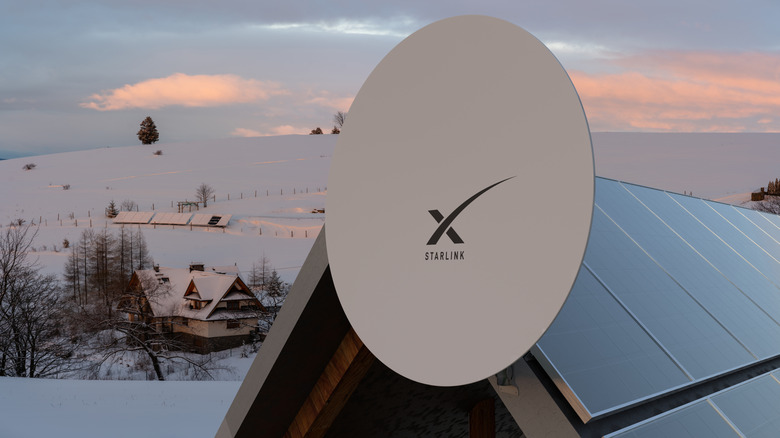
While this lowers the barrier to entry by eliminating the intimidating multi-hundred-dollar upfront equipment purchase, it introduces long-term rental commitments. Subscribers must return the complete kit—including the rectangular phased-array dish, power supply, and router—within 30 days of canceling their service, or face full retail replacement charges.
Official Statements and Industry Reception
SpaceX has consistently framed its pricing adjustments and operational pivots as necessary steps to balance network congestion with global digital inclusion. Company executives have repeatedly emphasized that as satellite manufacturing efficiencies improve and launch cadences stabilize, the savings should be passed down to consumers—particularly in the form of lower entry-level subscription rates.
However, telecommunications analysts and consumer watchdog publications have pointed out the complexities introduced by the 2026 pricing structures. PCMag and Ars Technica have highlighted how dynamic, location-based pricing and temporary promotional discounts—such as the 50 percent off promotions expiring late November 2026—create an unpredictable billing environment. Two neighbors living blocks apart can experience vastly different monthly bills based strictly on localized cell capacity and active promotional windows.
Furthermore, industry critics have noted that while Starlink’s $55 entry-level plan undercuts its historical pricing, it remains more expensive on a dollar-per-megabit basis than traditional fiber-optic connections or established 500 Mbps cable services. Starlink’s enduring value proposition remains fundamentally rooted in geographic availability rather than price parity; for consumers entirely devoid of fixed-line broadband infrastructure, satellite remains the ultimate bridge across the digital divide.
Future Outlook: Where is Starlink Headed?
As Starlink looks beyond 2026, several key trends will dictate the evolution of its service plans and pricing architecture:
- Constellation Density and Direct-to-Cell Integration: With the ongoing deployment of second-generation Starlink satellites and the integration of direct-to-cell capabilities for mobile devices, SpaceX is shifting from a purely fixed-wireless home internet provider to a ubiquitous global communications utility. This convergence may lead to bundled pricing models combining residential broadband and cellular data services.
- Regulatory Pressures and Subsidies: As governments worldwide ramp up funding for rural broadband expansion (such as the BEAD program in the United States), Starlink will face increased competition from localized fiber deployments. To maintain its subscriber growth in semi-rural fringe markets, SpaceX will likely rely heavily on targeted regional discounts and subsidized hardware rentals.
- Maturation of Dynamic Pricing: The experimentation with capacity-based pricing seen between 2023 and 2026 suggests that static monthly bills may become a relic of the past. Future Starlink users can expect increasingly algorithmic pricing models that fluctuate in real-time based on local network traffic, orbital positioning, and regional infrastructure strain.
Ultimately, Starlink has successfully transitioned from an expensive, highly experimental beta project into a robust commercial competitor. While consumers no longer face a uniform $598 barrier to entry, navigating the modern Starlink landscape requires a careful assessment of speed tiers, rental agreements, and volatile regional pricing.