Executive Overview
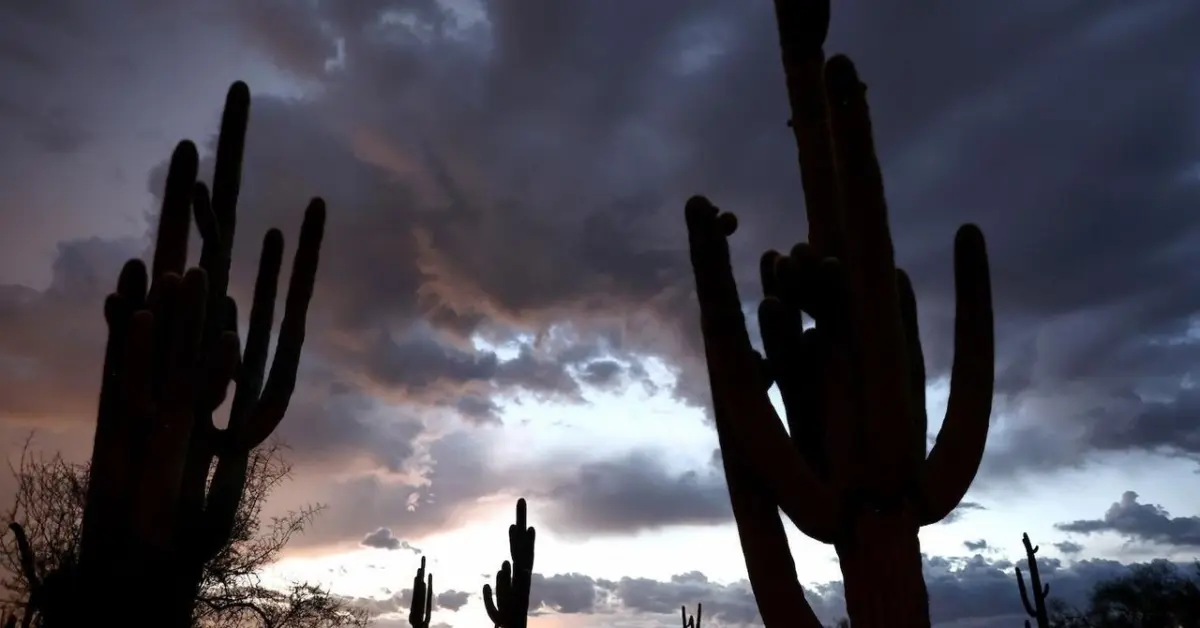
For generations, the cactus has stood as the ultimate biological symbol of resilience and unyielding survival. Imprisoned by geography in arid landscapes characterized by punishing heat and paltry rainfall, these succulent titans do not merely survive—they actively construct complex desert webs of life. They provide critical subterranean nesting architecture and shelter for western screech owls, offer high-energy floral nectar for migratory bats, and feed a diverse matrix of desert pollinators. Yet, a paradigm-shifting study published in the journal Nature reveals an alarming ecological blind spot: humanity’s favorite icons of toughness are far more vulnerable than previously understood.
Synthesizing global geographic modeling with unprecedented troves of citizen-science data, researchers have discovered that the majority of nearly 1,000 evaluated cactus species are on a collision course with severe habitat loss. Driven by a compounding crisis of relentlessly escalating global temperatures and intensifying, prolonged dry spells, more than a quarter of these species face the catastrophic prospect of losing at least 80 percent of their historic range by the year 2100.
Far from being invincible, cacti are suffering from the silent, compounding pressures of sublethal stress, reproductive failure, and physiological collapse. As climate change reshapes global weather systems, the myth of the indestructible desert plant is unraveling, exposing a fragile botanical kingdom that urgently requires coordinated, global conservation intervention before its most iconic landscapes are transformed into silent, sterile wastes.
Detailed Chronology: Unraveling the Science of Cactus Decline
To understand how conservation science reached this sobering milestone, one must trace the evolution of ecological modeling over the past decade and examine how modern researchers unlocked the true scope of the crisis.
2015–2020: The Early Warnings of Habitat Fragmentation
For years, the conservation status of cacti was largely evaluated through the lens of localized habitat destruction and commercial poaching. Landmark assessments published in academic literature around the mid-2010s demonstrated that cacti were among the most threatened taxonomic groups on Earth, largely due to human-driven land-use changes, urban sprawl, and the illegal uprooting of rare specimens for private horticultural collections. However, these early models operated in silos, failing to fully capture how broader atmospheric and hydrological shifts would interact with these localized threats. While biologists knew that rising temperatures posed a baseline risk, the synergistic and devastating impacts of concurrent drought remained a theoretical projection rather than a quantified certainty.
The Turning Point: Harnessing Citizen Science (2023–2025)
To break through these analytical limitations, a team of researchers led by conservation ecologist Michiel Pillet at the University of South Florida took a radically innovative approach. Rather than relying solely on sparse, traditional botanical surveys—which often miss remote or inaccessible populations—the research team turned to the digital crowdsourcing platform iNaturalist.
By mining this massive repository, the researchers integrated approximately 650,000 verified human observations of cacti in the wild. This colossal dataset provided an unprecedented, fine-grained map of where cactus species actually live, enabling the research team to cross-reference real-world occurrences with advanced climate models projecting future temperature and precipitation patterns.
The 2026 Nature Revelation
The culmination of this extensive analytical work arrived with the publication in Nature, which modeled the future viability of nearly 1,000 distinct cactus species. The findings shocked even seasoned desert ecologists. The research demonstrated that tracking only rising temperatures dramatically understates the risk. When factoring in the specific mechanics of regional dry spells and intensifying multi-year droughts, the geographical range of the vast majority of cactus species is projected to shrink dramatically over the coming decades, setting a definitive timeline for a sweeping ecological crisis.
Supporting Context & Metrics: Anatomy of a Botanical Emergency
To fully grasp why plants adapted to arid environments are struggling so profoundly, one must examine the physiological mechanics of cacti and the fragile nature of the ecosystems they anchor.
The Misunderstood Physiology of Arid Adaptation
Popular culture frames cacti as botanical super-organisms capable of handling any environmental abuse. Michiel Pillet notes the disconnect between public perception and biological reality:
"The public perception of cacti tends to be of these organisms that are extremely drought-adapted and are just resilient, can handle anything that you throw at them… In reality, cacti are absolutely amazing, but they’re not that different from other plants."
Like all vascular flora, cacti require water to fuel their metabolic processes. In regions like the southwestern United States, desert flora relies heavily on predictable seasonal phenomena, such as the North American monsoon, which historically transforms July and August into the wettest months of the year. Cacti have evolved specialized adaptations—such as thick, waxy cuticles (hypodermis layers) and expansive, shallow root systems—to capture and hoard this liquid bounty. However, these adaptations are fine-tuned to historical climatic baselines. When multi-year mega-droughts disrupt these cycles, the safety margins of these plants are breached.
[Historical Climate Baseline]
       │
       ├──> Predictable Monsoon Rains ──> Optimal Water Storage ──> Flourishing Ecosystem
       │
[Modern Climate Shift]
       │
       ├──> Chronic Heatwaves + Intense Dry Spells ──> Physiological Breakdown ──> Collapse
The "Sick Patient" Metaphor and Sublethal Stress
To understand the current plight of cacti, plant physiologists invoke a medical analogy: consider a patient admitted to a hospital emergency room suffering from severe heatstroke. Their body is struggling desperately to cool itself, but they are also profoundly dehydrated. Cacti are experiencing this dual emergency on a macro-scale.
As global temperatures climb, so do nighttime lows. This metric is critical because cacti utilize a specialized photosynthetic pathway known as Crassulacean Acid Metabolism (CAM). Unlike most plants, cacti keep their stomata (pore-like structures) closed during the searing daytime hours to prevent moisture evaporation, opening them only at night to intake carbon dioxide.
However, if nighttime temperatures remain abnormally high, the metabolic cost of nighttime respiration skyrockets, preventing the plant from efficiently fixing carbon or retaining water. Rod Haenni, president of the nonprofit Cactus and Succulent Society of America, highlights this dynamic:
"If the nighttime temperatures are very high, they can’t do it. Then if you water on top of that, the plants just rot."
Crucially, the threat is not always immediate mortality. Much of the damage manifests as sublethal stress. A mature cactus may survive an intense drought year, but the lack of hydration prevents it from summoning the energy required to flower. In the Sonoran Desert, iconic towering saguaro cacti (Carnegiea gigantea) are already displaying reduced flowering frequencies during prolonged dry periods. Without successful flowering and subsequent pollination, recruitment rates plummet, leaving aging populations with zero generational replacement.
The Compounding Matrix of Threats
Drought does not operate in a vacuum; it acts as a devastating force multiplier when combined with preexisting anthropogenic pressures:
- Habitat Loss & Urban Expansion: Human infrastructure continues to carve up historic desert migration corridors, boxing stationary plant populations into shrinking ecological islands.
- Poaching: The illicit global market for rare, slow-growing succulents strips native populations of genetically diverse mature specimens to supply private collections.
- Sea-Level Rise & Coastal Inundation: On the opposite ecological extreme, rising sea levels driven by climate change are inundating coastal freshwater lenses. This has resulted in catastrophic events like the local extinction of the Key Largo tree cactus in Florida, which was effectively drowned and poisoned by saltwater intrusion.
- Ecosystem Fragility: Deserts are deceptive; while they appear rugged and timeless, their underlying ecological networks are remarkably fragile. Marcos Robles, lead scientist for The Nature Conservancy in Arizona, notes: "They don’t recover quickly once they are disturbed, or once they are degraded, just because there’s so little water and such higher temperatures. It takes multiple decades to recover, and in some cases, they don’t recover."
Official Statements and Expert Perspectives
The release of the Nature study has galvanized a cross-section of conservation scientists, ecologists, and nonprofit leaders, prompting urgent calls for policy reform and strategic intervention.
-
Michiel Pillet (Lead Study Author, University of South Florida):
"When we consider drought conditions, then it turns out that they’re much, much sicker than we previously thought. These results really do change the outlook of cacti, and most likely plants more broadly under climate change… Now we can move towards questions of: What life stages are most affected? Is it the adults or is it the seedlings? But also, which processes? Is it reduced growth or is it increased mortality? Or are plants failing to flower?"
-
Marcos Robles (Lead Scientist, The Nature Conservancy in Arizona):
Emphasizing the deep vulnerability of desert soils and root structures, Robles warns that once a desert ecosystem is pushed past its breaking point, the timeline for natural recovery spans generations—if recovery is possible at all given the trajectory of modern thermal anomalies.
-
Rod Haenni (President, Cactus and Succulent Society of America):
Pointing to the systemic policy failures threatening native habitats, Haenni stresses the urgent need for governmental accountability: "Hopefully, it’ll wake people up. But the problem is that a lot of the governments involved are indifferent to this. There are a lot of people in the countries who are not indifferent, but they’re not running the governments."
Future Outlook: Conservation Strategies and the Road Ahead
As the thermal envelope of the Earth continues to expand, the future of the world’s cacti hangs in the balance. Understanding how these organisms may persist—and how conservationists plan to assist them—demands both ecological pragmatism and bold institutional action.
Natural Migration vs. Managed Relocation
Just as certain flora in the Arctic are "marching" northward in search of cooler temperatures and stable moisture regimes, some cactus populations may attempt to shift their ranges over centuries. As individual seeds are dispersed by wind, birds, and mammals, future generations may establish themselves in microclimates that mimic the historical temperatures of their ancestral homes.
However, natural migration requires unfragmented landscapes. Because modern human development—highways, border walls, agricultural fields, and urban sprawl—frequently blocks natural biological corridors, cacti cannot easily "walk away" from a drying habitat.
Botanical Arks and Ex-Situ Conservation
Because conservation professionals cannot artificially irrigate thousands of square miles of hyper-arid wilderness, conservation strategies must shift toward triage and ex-situ (off-site) preservation.
- Botanical Evacuations: Conservationists are increasingly prioritizing the rescue of threatened cactus populations from high-risk zones, establishing secure, genetically diverse colonies within botanical gardens and specialized arboretums.
- Controlled Reintroductions: Where feasible, cultivated specimens can be reintroduced back into protected wild habitats, provided that regional thermal and drought stress can be locally mitigated or has temporarily abated.
- Legislative Habitat Protection: As Rod Haenni emphasizes, saving cacti requires more than scientific fieldwork; it demands rigorous political will. Governments must legally designate and fiercely defend wildlands against industrial degradation, illegal mining, and unregulated urban sprawl.
Conclusion: A Wake-Up Call from the Desert
The plight of the cactus serves as a glaring canary in the coal mine for global biodiversity. If organisms engineered specifically to endure aridity and thermal stress are collapsing under the weight of contemporary climate change, no terrestrial ecosystem remains immune.
The new data from the Nature study strips away the comforting illusion of cactus invincibility, replacing it with an urgent mandate. Protecting these iconic architects of the desert requires bridging the gap between advanced predictive science, grassroots conservation, and governmental policy. Only then can we ensure that the silhouette of the cactus remains a proud testament to life’s endurance, rather than a fading monument to a neglected natural world.