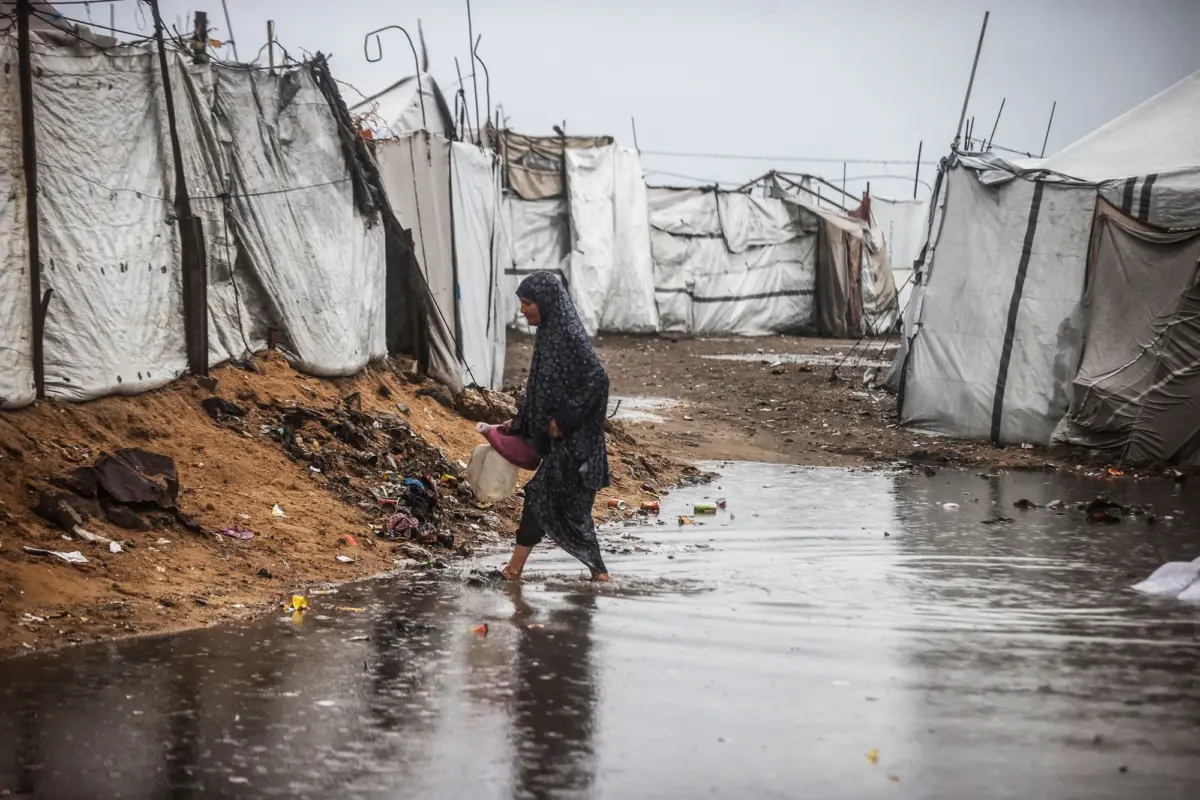
The arrival of the rainy season in the Gaza Strip has compounded an already catastrophic humanitarian crisis, transforming displacement camps into waterlogged hazards and forcing local municipalities into agonizing triage. Over the weekend of November 7 and 8, severe rainstorms swept across the enclave, overwhelming fragile, makeshift shelters and devastated infrastructure. According to the Gaza Government Media Office, at least 70,000 tents housing displaced Palestinians flooded within a staggering 12-hour window.
For municipal engineers in areas like the Al Maghazi refugee camp, the disaster has precipitated a cruel operational dilemma: every gallon of diesel diverted to power pumps clearing floodwaters out of camps is a gallon stolen from the wells that supply residents with scarce drinkable water. With critical supplies tightly restricted, ruined sewage networks, and a collapsing healthcare infrastructure, hundreds of thousands of displaced civilians find themselves utterly exposed to the elements, threatening a cascading public health emergency as winter sets in.
Detailed Chronology: The November Storms and Immediate Fallout
The Onset of the Rains (November 7–8)
The meteorological disruption began over the weekend of November 7 and 8, when intense rainstorms battered the Gaza Strip. The heavy downpour struck an environment profoundly altered by months of intensive conflict, leaving millions of internally displaced persons (IDPs) living in makeshift structures entirely vulnerable.
In Al Maghazi, situated in the central Gaza Strip, rainwater rapidly accumulated in low-lying displacement sites across the camp’s western and northern borders. Municipal engineer Imad Abdel Jawad reported that floodwaters rose well over a foot deep inside some tents, turning earthen floors into deep mud and
swamping living spaces.
Nightfall in the Shelters: A Family’s Ordeal
Among those directly in the path of the deluge was 46-year-old Hanan Saied. Residing in a rudimentary shelter constructed of mud walls, structural cracks, and flimsy plastic sheeting overhead, Saied shares the cramped space with her seven children.
When the storm broke, the shelter’s defenses failed immediately. "The house flooded, and stones and mud fell on us," Saied recounted. "The bedding was soaked, and the children’s clothes were soaked."
With water pouring into their living area, Saied’s children resorted to using buckets to bail water out, while her eldest son attempted desperate, improvised repairs on the compromised structure. The psychological and physical toll of the night was immense; Saied spent the dark hours holding her young daughter, Sara, who suffers from chronic asthma, desperately trying to shield her from the damp, freezing air without the aid of heat or electricity.
Municipal Triage and Infrastructure Failures
As floodwaters threatened to submerge entire residential sectors, local municipal teams attempted to deploy mobile pumps. However, the mechanical efforts quickly hit an administrative and logistical wall.

"The diesel we use for these pumps comes from the allocation for the wells that are supposed to pump water," explained engineer Imad Abdel Jawad, highlighting that fuel allocations were already critically inadequate before the storm.
Compounding the flooding on the surface was a catastrophic failure of subterranean infrastructure. Israeli bombardment throughout the conflict has shattered numerous sewage manhole covers across Al Maghazi. Other covers have been stolen or have simply deteriorated over time due to a complete lack of maintenance resources. These gaping openings permitted massive volumes of rainwater to pour directly into sewer systems completely unequipped to handle the surplus, causing raw wastewater to back up and overflow into the streets and displacement sites.
Faced with severe shortages of replacement materials and local manufacturing capacity, municipal leadership was forced to make grim prioritization decisions. Repairing sewage infrastructure or purchasing specialized manhole covers fell far down the priority list. "I consider spending money on maintaining wells or maintaining generators to operate water wells a higher priority than allocating some of that money to maintaining sewage manhole covers," Jawad stated.
Supporting Context & Metrics: A Population Adrift
The devastation wrought by the November rainstorms is symptomatic of a larger, systemic collapse of housing and civic infrastructure across the Gaza Strip.
Displacement and Housing Deficit
The numbers compiled by international bodies underscore a reality of unprecedented displacement:
- Housing Destruction: An April joint assessment by the European Union, United Nations, and World Bank estimated that more than 371,888 housing units had been damaged or entirely destroyed across the enclave.
- Internal Displacement: The same assessments revealed that approximately 1.9 million people have been internally displaced—frequently forced to move multiple times in search of safety.
- Tent Populations: By November 8, the United Nations Office for the Coordination of Humanitarian Affairs (OCHA) estimated that 1.4 million people—representing roughly 65 percent of Gaza’s total population—were living in tents or makeshift shelters.
- Immediate Appeals: Humanitarian partners reported receiving urgent appeals from more than 26,000 households whose temporary shelters or personal belongings were completely ruined by the weekend storms.
Logistical and Supply Restrictions
The operational paralysis preventing meaningful infrastructural repairs extends far beyond municipal budgets. According to OCHA’s periodic situation reports, Israeli authorities have continued to enforce exceptionally stringent restrictions on the entry of crucial maintenance and repair supplies. Essential items, including engine oil, lubricants, spare parts, and new generators, remain heavily constrained or blocked altogether.
Restoring sustainable power and drainage solutions largely depends on obtaining external permissions to import solar panels, reconnect damaged electrical grids, and restart Gaza’s primary power plant. Without heavy earth-moving machinery, trucks, and raw building materials, municipal workers remain incapable of leveling muddy ground or engineering functional drainage canals around vulnerable tent cities.
Official Statements and Responses
Local Municipal and Humanitarian Appeals
Local engineers and international agencies have repeatedly sounded the alarm regarding the compounding risks of untreated sewage mixing with floodwaters. UNRWA medical personnel have noted that the intersection of raw sewage, stagnant water, and substandard shelter conditions has created a breeding ground for pathogens.
Dr. Asma Saleh, a general practitioner at the UNRWA Al Maghazi clinic, described the overwhelming operational pressures facing local medical facilities as the rainy season sets in. The clinic routinely sees around 120 children every day. Among them, approximately 22 children present daily with influenza-like illnesses diagnosed via clinical symptoms, while another 13 suffer from acute gastroenteritis.

"The inhumane living conditions, collapse of infrastructure, the flowing streets contaminated with sewage, and the shortage of medical supplies are all factors that profoundly impact the health care system in Gaza," Dr. Saleh warned.
International and Diplomatic Friction
The crisis has also played out across international diplomatic and digital channels. Following the viral documentation of widespread flooding in displacement camps, the official account on X (formerly Twitter) run by Israel’s Ministry of Foreign Affairs posted on November 8: "Contrary to popular belief, Israel does not control the weather." The statement made no explicit mention of the unfolding humanitarian emergency or the infrastructure collapses in Gaza.
When contacted for comment by WIRED Middle East regarding the ongoing restrictions affecting the import of heavy equipment, pumps, and repair materials necessary for flood mitigation, the Israel Defense Forces (IDF) did not provide a response.
Future Outlook: A Precarious Winter Ahead
As the winter season progresses, the outlook for Gaza’s displaced millions remains grim. With structural repairs stalled by blockades on raw materials, heavy machinery, and fuel, the risk of subsequent storms causing even wider devastation is exceedingly high.
For families like Hanan Saied’s, the immediate future is defined by profound anxiety over the next predicted rainfall. With her daughter Sara experiencing more frequent and severe asthma attacks during the winter months—and with the family lacking both a functioning nebuliser and the electricity required to power one—each storm represents a direct threat to survival.
"My older son spent hours repairing our worn shelter using simple tools, but I don’t know what to do during upcoming storms," Saied reflects.
Unless international pressure successfully negotiates the unhindered flow of critical infrastructure supplies, fuel allocations, and construction materials into the Gaza Strip, municipal teams will remain powerless to stop the cycle. The coming months threaten to push a displaced population from the perils of direct conflict into a slow-moving catastrophe defined by waterborne disease, exposure, and the total collapse of basic human habitation.