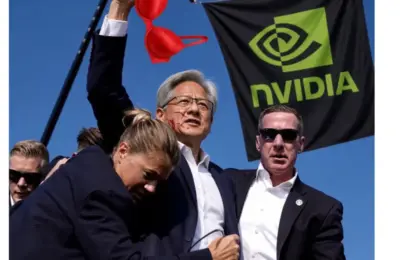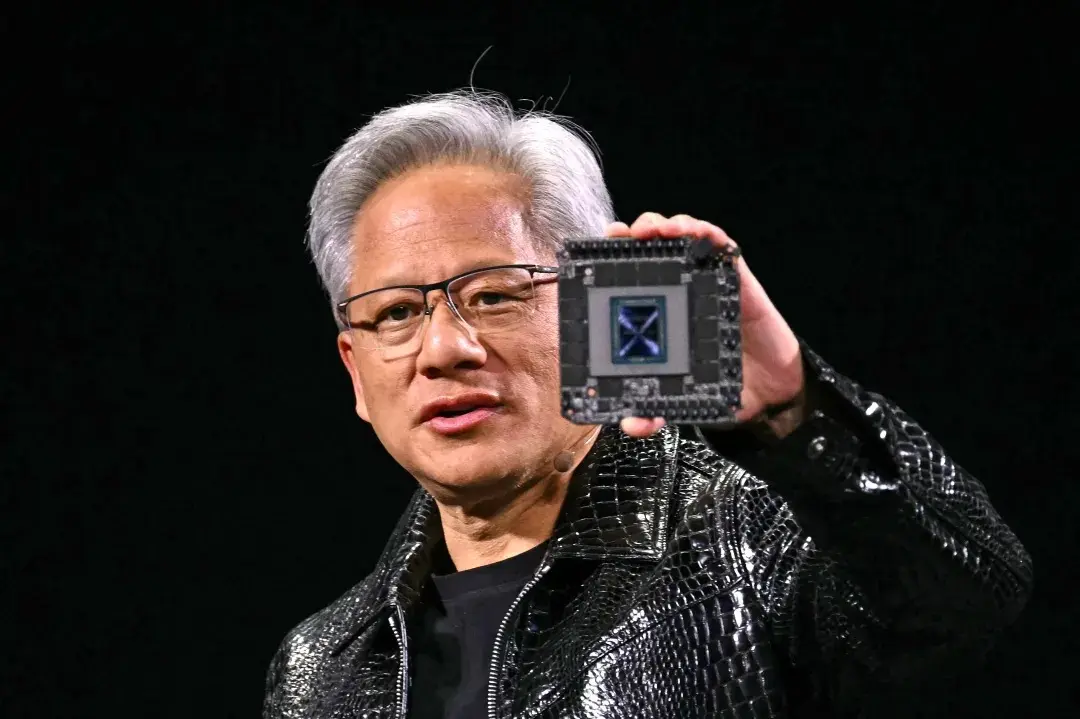
In an unprecedented turn of events at the epicenter of the global technology sector, Nvidia co-founder Jensen Huang has staged a swift return to his role as Chief Executive Officer, following a dramatic 12-day hiatus prompted by severe personal conduct disclosures and potential national security entanglements. Huang’s reinstatement was formalized following an emotional, high-stakes all-hands town hall meeting where the executive addressed employees regarding personal remorse, psychological therapy, corporate ethics, and his contentious stance on institutional succession planning.
The crisis—which erupted after Huang admitted to extramarital affairs, including one with an individual suspected by federal authorities of links to Chinese intelligence—shook Wall Street and sent shockwaves through the semiconductor supply chain. Yet, upon his return, Huang doubled down on his long-standing management philosophy, rejecting widespread demands from analysts and institutional investors for a formal executive succession plan. Huang argued before staff that Nvidia’s unique, ultra-flat organizational structure renders traditional succession mechanisms unnecessary and counterproductive to innovation.
This investigative report provides a comprehensive analysis of Huang’s turbulent return, examining the timeline of events, internal company dynamics, Nvidia’s unorthodox corporate architecture, and the growing friction between Huang’s bespoke management model and the governance expectations of a multi-trillion-dollar corporate enterprise.
Detailed Chronology: Resignation, National Security Shadows, and a 12-Day Reversal
   [EARLY NOVEMBER]           [MID-NOVEMBER]             [LATE NOVEMBER]
  Huang Resigns Amid        Colette Kress Named        Unprecedented Return &
Personal/Security Scandal  ---> Interim CEO (12 Days) --->  All-Hands Town Hall
The Sudden Resignation and Geopolitical Shockwaves
The executive crisis commenced when internal governance reviews and federal inquiries converged on Huang’s personal relationships. The chief executive acknowledged engaging in extramarital affairs with at least two individuals. The matter immediately escalated from a private ethics violation to a critical national security concern when U.S. counterintelligence authorities flagged that one of the individuals involved was under investigation as a covert operative for the Chinese state.
Given Nvidia’s central position in supplying advanced artificial intelligence microprocessors—technologies subject to stringent U.S. export controls and national security mandates—the disclosure forced an immediate emergency response from Nvidia’s Board of Directors. Facing mounting regulatory pressure and potential legal liabilities, Huang tendered his resignation.
Twelve Days in Limbo: Colette Kress and Board Deliberations
Following Huang’s resignation, the Board of Directors designated Chief Financial Officer Colette Kress as interim CEO. Kress, a veteran executive who joined Nvidia in 2013 after high-profile roles at Cisco Systems and Microsoft, stepped into the executive breach to stabilize investor confidence and manage relations with the federal government.
During Kress’s 12-day tenure, market volatility surged as institutional investors questioned whether Nvidia could sustain its overwhelming dominance in AI hardware without its visionary founder. Concurrently, intense backchannel communications unfolded between Nvidia’s legal counsel, executive board members, and officials in Washington D.C. Key stakeholders evaluated the operational risks of severing ties with Huang against the reputational and regulatory risks of restoring him to command.
The Unprecedented Comeback
The deadlock ended abruptly when the board negotiated terms for Huang’s return. The decision to reinstate Huang, while hailed by key internal operational teams, surprised corporate governance experts who viewed the move as highly unconventional given the gravity of the national security inquiries.
During the subsequent company-wide meeting, Huang publicly acknowledged the intervention of government authorities, offering explicit gratitude to the White House and federal regulators for their role in reviewing the situation and facilitating a path forward that permitted his operational reinstatement.
The All-Hands Meeting: Remorse, Therapy, and Institutional Pushback
+-------------------------------------------------------------------------+
|                    NVIDIA ALL-HANDS TOWN HALL                           |
+-------------------------------------------------------------------------+
|  • Public Remorse & Apologies                                           |
|  • Disclosure of Ongoing Psychological Therapy                          |
|  • Recommitment to Corporate Ethics & Code of Conduct                   |
|  • Strategic Pushback Against Formal Succession Planning                |
+-------------------------------------------------------------------------+
Addressing Personal Conduct and Code of Ethics
Addressing thousands of Nvidia employees globally in an internal, highly anticipated town hall, Huang offered an uncharacteristically raw presentation. Insiders present during the broadcast confirmed that Huang expressed profound remorse for his lapses in judgment, apologizing to employees, shareholders, and partners for the disruption caused to the organization.
Huang revealed to staff that he had actively engaged in professional psychological therapy to address the behavioral patterns and personal choices that precipitated the crisis. He underscored a commitment to personal reform and pledged strict adherence to Nvidia’s corporate code of conduct moving forward. Human resources executives and legal compliance directors were tasked with ensuring that corporate governance policies are rigorously enforced across all tiers of executive leadership.
The Succession Controversy: Hierarchy vs. Output
Despite the contrite tone regarding his personal conduct, Huang delivered a firm refusal regarding corporate governance reform—specifically on the topic of executive succession planning.
In the wake of his sudden exit, major institutional shareholders, proxy advisory firms, and market analysts identified the absence of a designated successor as Nvidia’s single greatest operational risk. However, during the employee address, Huang explicitly rejected the notion that Nvidia requires a formal succession framework.
According to internal accounts, Huang stated that establishing a rigid succession pipeline would introduce unnecessary bureaucracy and structural hierarchy into Nvidia’s culture. He argued that formal succession tracks foster internal politics, create artificially siloed tracks of power, and degrade the agile, real-time decision-making mechanism that propelled Nvidia to global technological dominance.
Supporting Context & Metrics: The Mechanics of an Ultra-Flat Empire
Huang’s resistance to traditional succession planning is deeply tied to Nvidia’s unique corporate governance framework—an organizational structure that stands as an anomaly among mega-cap technology firms.
The "Sixty Direct Reports" Paradigm
Unlike traditional Fortune 500 corporations that rely on deep operational hierarchies, multi-layered management tiers, and regional business-unit leads, Nvidia operates as a hyper-flat matrix organization.
Huang personally maintains approximately 60 direct reports. This structure deliberately eliminates middle-management buffers, allowing the CEO to interact directly with core engineering leads, product architects, and operational heads.
                  [ JENSEN HUANG ]
                         │
     ┌───────────────────┼───────────────────┐
     │                   │                   │
(~60 Direct Reports) (~60 Direct Reports) (~60 Direct Reports)
     │                   │                   │
[Engineering]        [Research]        [Operations]
The Five Officers at the Helm
Nvidia’s corporate governance filings reveal that despite managing an enterprise valued in the trillions, the company’s formal executive apparatus comprises just five key executive officers:
| Executive Officer | Title / Focus Area | Institutional Role |
|---|---|---|
| Jensen Huang | Chief Executive Officer | Overall Strategy, Product Architecture, Corporate Vision |
| Colette Kress | Executive VP & Chief Financial Officer | Financial Operations, Investor Relations, Interim CEO (12 Days) |
| Ajay Puri | Executive VP, Worldwide Field Operations | Global Sales, Business Development, Partner Ecosystems |
| Debora Shoquist | Executive VP, Operations | Supply Chain, Semiconductor Manufacturing, Foundry Logistics |
| Timothy Teter | Executive VP & General Counsel | Legal Strategy, Regulatory Compliance, Intellectual Property |
This lean executive committee leaves virtually no room for corporate "princes in waiting" or formal operational deputies, which explains why Huang’s temporary absence paralyzed corporate leadership decisions.
The "Hamburger" Philosophy: Rethinking Corporate Architecture
Huang’s opposition to corporate hierarchy is a long-standing operational philosophy rather than a defensive reaction to recent events. In an extended March interview with technology podcaster Lex Fridman, Huang articulated his fundamental critique of standard corporate design:
"When you’re designing a company, you should first think about what is it that you want the company to produce. You know, I see a lot of companies’ organization charts, and they all look the same. Hamburger [company] organization charts, software organization charts, and car company organization charts. They all look the same. And it doesn’t make any sense to me. You know, the goal of company is to be the machinery, the mechanism, the system that produces the output. And that output is the product that we like to create."
For Huang, an organizational chart is not a ladder for talent management or career progression; it is a system designed to build complex computational platforms. In his view, instituting a traditional corporate ladder to facilitate succession planning fundamentally compromises the efficiency of that engine.
Institutional Risk and Wall Street’s Governance Dilemma
+--------------------------------------------------------------------+
|                   KEY INSTITUTIONAL CONCERNS                       |
+--------------------------------------------------------------------+
|  1. Key-Person Risk: Total operational dependency on Huang        |
|  2. National Security: Vulnerability to foreign espionage vectors |
|  3. Board Oversight: Perception of limited independent control     |
|  4. Executive Pipeline: Absence of visible, battle-tested heirs    |
+--------------------------------------------------------------------+
The Single Point of Failure Problem
While Huang’s organizational philosophy has yielded unprecedented commercial success—propelling Nvidia from a graphics card vendor to the undisputed titan of artificial intelligence infrastructure—it presents acute challenges for long-term institutional investors.
Governance analysts contend that Huang’s management approach creates an extreme form of Key-Person Risk. By maintaining 60 direct reports and resisting a designated second-in-command, the entire company remains structurally vulnerable to sudden shocks involving a single individual. The 12-day leadership vacuum exposed this vulnerability: without Huang, the company lacked a clear operational leader equipped with the systemic knowledge required to guide its strategic vision.
Geopolitical Entanglements and Security Scrutiny
The involvement of federal agencies and national security apparatuses introduces an additional layer of complexity that cannot be solved by internal corporate policy alone.
As microchips become central to sovereign statecraft, defense systems, and economic dominance, the executive leadership of advanced semiconductor firms faces intense foreign intelligence targeting. The revelation that an executive was intimately linked to a person of interest in a counterintelligence investigation exposed critical vulnerabilities in corporate security protocol.
Investors remain concerned that Washington’s tolerance for governance lapses at Nvidia may wane if further security vulnerabilities emerge, regardless of Huang’s central role in the company’s innovation engine.
Future Outlook: Navigating Sovereignty, Security, and Governance
As Nvidia resumes normal operations under Huang’s restored leadership, the organization faces a transformed landscape marked by heightened scrutiny from both regulatory bodies and capital markets.
       [ SHORT TERM ]                   [ MEDIUM TERM ]                 [ LONG TERM ]
  Restructure Internal Ethics      Board & Shareholder Push for    Evaluation of Structural
& Compliance Benchmarks Succession Transparency Limits of the Flat Model-
Heightened Board and Regulatory Oversight:
Nvidia’s Board of Directors is expected to institute far stricter internal controls surrounding executive conduct and security protocols. While the board conceded to Huang’s return to preserve market stability and operational momentum, independent directors will face continuous pressure from institutional investors to assert greater structural oversight. -
Persistent Shareholder Friction:
Huang’s explicit rejection of succession planning during the all-hands meeting is unlikely to settle the debate on Wall Street. Major asset managers and pension funds may introduce shareholder proposals during upcoming annual meetings demanding formal contingency planning, clear key-person insurance frameworks, and defined executive development programs. -
Geopolitical Vulnerability Management:
Nvidia must actively insulate its executive leadership team from foreign intelligence risks. The firm is anticipated to deepen its engagement with U.S. defense and national security agencies to establish rigorous security clearing mechanisms for senior personnel with exposure to critical intellectual property and geopolitical strategy. -
The Sustainability of the Flat Structure:
As Nvidia expands its global workforce to accommodate the massive scaling of AI infrastructure, industry analysts question whether the "60 direct reports" model can endure. As organizational scale increases, the operational burden on a single executive may force structural adjustments, regardless of Huang’s personal preference for flat management.
While Jensen Huang’s immediate return reinforces his unassailable authority over Nvidia’s immediate operations, the crisis has permanently shifted the corporate narrative. The incident underscored that even the most dominant technology giants must balance visionary, hyper-centralized leadership against the foundational mandates of institutional continuity, security compliance, and corporate governance.