By Investigative Staff
Published May 20, 2018
Executive Overview
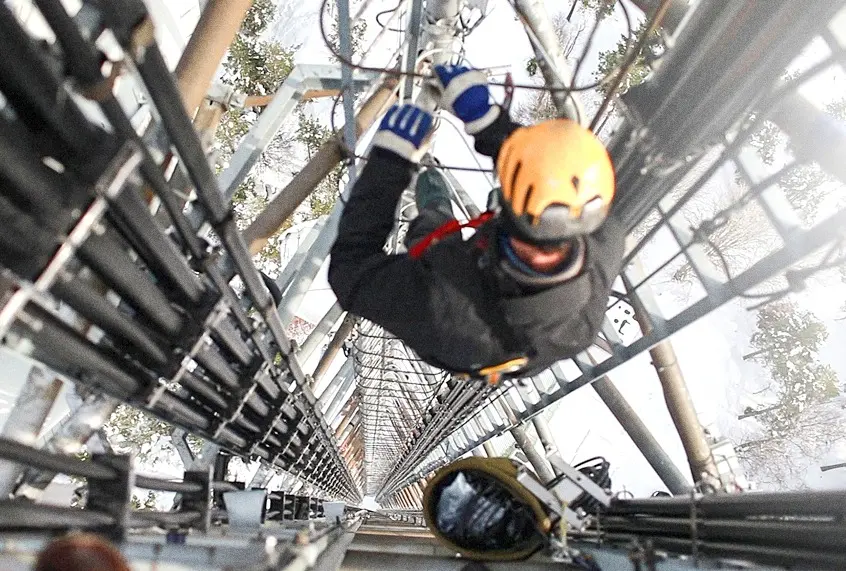
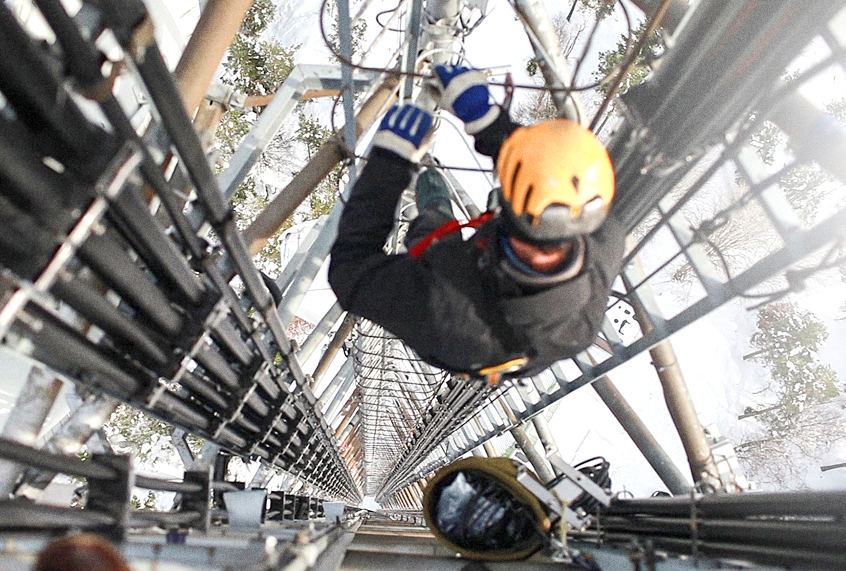
High above the sprawling suburban landscapes and rural horizons of America, a perilous race against time is underway. Spurred by sweeping regulatory mandates and the relentless commercial demand for faster, more expansive wireless and broadcast networks, communications tower technicians are routinely scaling heights of up to 2,000 feet—dwarfing architectural landmarks like One World Trade Center.
However, this breakneck telecommunications expansion is exacting a devastating human toll. As federal agencies and lawmakers push forward an aggressive timetable to overhaul the nation’s broadcast infrastructure—reassigning nearly 1,000 television stations to new frequencies and rolling out next-generation wireless networks—accidents, structural collapses, and fatal falls are surging.
Industry veterans, safety experts, and labor advocates warn that an acute shortage of qualified labor, combined with compressed deadlines and persistent regulatory gaps, has turned routine maintenance and upgrade operations into life-or-death gambles. While congressional proponents argue that the rapid transition is an economic necessity to secure the nation’s digital future, critics maintain that the government is trading human lives for corporate efficiency and accelerated broadband deployment.
Detailed Chronology: A Trail of Tragedies
The structural hazards facing tower technicians are underscored by a grim succession of recent fatalities that highlight the inherent dangers of high-altitude construction work.
September 2017: The Miami Gardens Tragedy
In September 2017, a routine antenna replacement project for WSVN-Channel 7 in Miami Gardens, Florida, turned catastrophic. Three young technicians—23-year-old Brachton Barber of Longwood, Florida; 35-year-old Benito Rodriguez of Tampa, Florida; and 31-year-old Marcus Goffena of Sidney, Ohio—were killed on the job. The incident sent shockwaves through the tightly knit community of tower erectors, exposing the severe risks associated with complex antenna swaps on congested broadcast masts.
April 2018: The Fordland Tower Collapse
Just months later, in April 2018, structural integrity failed catastrophically in rural Missouri. A massive, 1,980-foot broadcast tower utilized by Ozarks Public Television collapsed in Fordland, Missouri. The disaster claimed the life of 56-year-old Stephen Lemay of Blaine, Washington, a seasoned technician and described by loved ones as a dedicated family man. The Fordland collapse triggered immediate, ongoing investigations by state and federal authorities into the structural loads, cumulative wear-and-tear, and operational safety protocols governing aging broadcast towers.
These incidents are not isolated anomalies. According to tracking data compiled by industry observers and safety advocates, at least three tower workers had already lost their lives in the first few months of 2018 alone, continuing a grim statistical trend that has plagued the telecommunications sector for decades.
Supporting Context & Metrics: The Mechanics of the "Repack"
At the heart of the current crisis is the Federal Communications Commission’s (FCC) massive broadcast spectrum "repack." Nearly 1,000 television stations are scheduled to transition to new channels by a strict deadline of July 3, 2020. This sweeping administrative shift is designed to free up airwaves for commercial wireless broadband providers, fulfilling surging consumer and corporate demands for mobile data.
The Staggering Physical Demands
Executing this transition requires thousands of structural modifications, antenna replacements, and transmission line upgrades across hundreds of towers nationwide. These structures frequently range from 100 to 2,000 feet in height. Working at these altitudes exposes technicians to a punishing array of environmental and physical hazards:
- Gravitational Risks: Catastrophic falls remain the leading cause of death in the sector.
- Structural Instability: Aging towers, burdened by decades of accumulated hardware and supplementary antennas, are increasingly vulnerable to sudden collapse under dynamic loads.
- Environmental Pressures: High winds, extreme temperatures, and severe weather patterns complicate operations at elevated levels.
- Electrical Hazards: High-voltage RF (radio frequency) radiation and complex power setups present constant electrocution risks.
Regulatory Vacuum and OSHA Oversight
Compounding these physical hazards is a persistent lack of targeted regulatory oversight. The Occupational Safety and Health Administration (OSHA) has historically lacked specific, comprehensive standards tailored exclusively to the unique operational hazards of communications tower erection and maintenance.
While federal regulators initiated rulemaking procedures for communication tower safety during the Obama administration—prompted by a devastating spike in 2013 that saw 13 tower workers killed, eclipsing the total from the previous two years combined—progress has been slow, and enforcement remains fragmented.
Dr. David Michaels, who served as assistant secretary of labor for OSHA, did not mince words regarding the occupational hazard level:
"Tower workers have a risk of fatal injury perhaps 25 to 30 times higher than the risk for the average American worker. This is clearly unacceptable."
Thomas Fuller, an occupational health expert at Illinois State University, echoed these concerns in formal testimony to OSHA. Fuller noted that tower climbing remains a largely unregulated sector characterized by minimal external oversight.
"As towers age and additional antennae are added, they become more hazardous," Fuller warned federal regulators. "Often, workers and tower climbing companies are hesitant to report structural problems for fear of losing the work. There is no federal agency to report unsafe structural conditions to and expect a timely response."
Official Statements and Industry Friction
The clash between aggressive federal timelines and ground-level safety realities has ignited a fierce debate in Washington and across the telecommunications industry.
The Industry Warning: Quality vs. Speed
Jim Tracy, chairman of the National Association of Tower Erectors (NATE), emerged as a prominent voice urging Congress and the FCC to exercise caution and avoid artificially compressing the post-auction repack schedule. Testifying and lobbying lawmakers, Tracy highlighted a fundamental bottleneck: the severe shortage of skilled labor.

"There is one inescapable fact," Tracy stated during congressional hearings. "There are not, at present, enough qualified workers to perform all the tower work we will be required to complete."
Bill Hayes, director of engineering for Iowa Public Television, captured the existential dilemma facing station engineers and tower operators caught in the middle of the regulatory push:
"You can be gambling at best with the reliability of your station’s service, and at worst you’re gambling with people’s lives."
Congressional Push for Speed
Conversely, a powerful coalition of 56 members of Congress—including prominent Republican lawmakers such as Representative Steve Scalise of Louisiana and Representative Darrell Issa of California—pushed back against calls to relax the schedule. In formal correspondence directed to FCC Chairman Ajit Pai, these lawmakers insisted that the July 2020 deadline must be strictly enforced to expedite the expansion of rural broadband access and maintain U.S. competitiveness in the global digital economy.
"Ultimately, it’s a matter of economic necessity in today’s globally-connected world," the lawmakers wrote in their joint directive to the FCC.
The commercial stakes are exceptionally high. Financial disclosures indicate that commercial television and radio broadcasting interests spent nearly $29 million on federal lobbying efforts in 2017 alone, reflecting the massive financial interests tied to spectrum allocation, broadcast footprints, and digital infrastructure rollout.
Future Outlook: Navigating a Dangerous Crossroads
As the July 2020 deadline approaches, the telecommunications sector stands at a critical juncture. The collision between sweeping national modernization goals and the physical limits of a strained, highly dangerous labor force demands urgent reconciliation.
Safety advocates, labor unions, and engineering professionals continue to press for structural reforms. Key recommendations from industry stakeholders include:
- Specialized Federal Standards: The full implementation and rigorous enforcement of dedicated OSHA safety regulations explicitly governing tower construction, modification, and maintenance.
- Mandatory Certification Programs: Establishing universal credentialing and rigorous training mandates for all personnel operating at elevated heights to ensure baseline competency and safety awareness.
- Independent Structural Audits: Requiring certified, third-party engineering assessments of aging towers before permitting the installation of heavy new broadcast or wireless equipment.
- Flexible Regulatory Timelines: Allowing regulatory bodies to grant case-by-case timeline extensions for stations facing genuine labor shortages or complex structural engineering challenges, thereby removing the perverse incentives to cut corners on safety.
Until systemic protections are enacted and the acute labor shortage is addressed, the men and women who scale America’s communications towers will continue to bear the heaviest burden of the nation’s digital expansion—operating in an unforgiving vertical environment where a single miscalculation carries a fatal price.