efines the Market Amid 2026 Price Pressures
Executive Overview
The portable gaming landscape in 2026 is experiencing a complex economic and technological maturation. Following broader global trends affecting semiconductor components, memory modules, and high-density flash storage, handheld gaming PC pricing has experienced upward adjustments across the board. For consumers eager to dive into modern PC gaming without investing thousands of dollars into a custom desktop rig or a high-end gaming laptop, handheld PCs continue to represent the most accessible, flexible entry point.
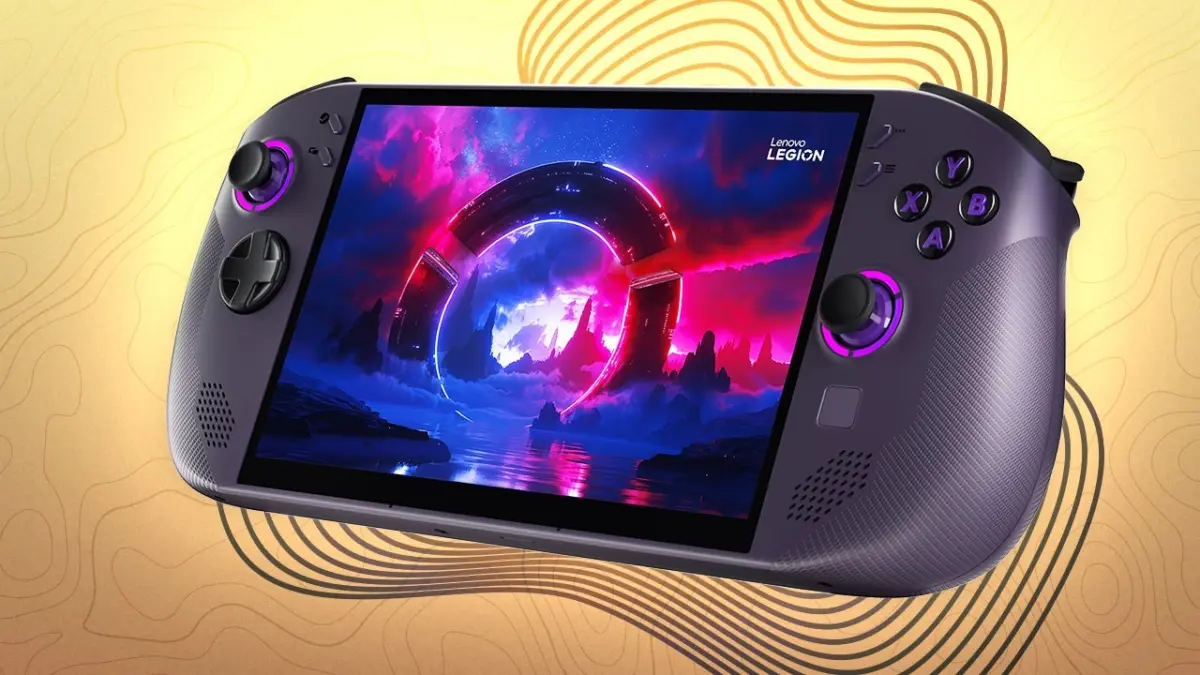
Amid these industry-wide price escalations, major hardware manufacturers are rolling out aggressive promotional campaigns to capture market share. A prime example arrives courtesy of Lenovo, which has launched a substantial Black Friday promotion on one of the most acclaimed portable systems on the market: the brand-new Lenovo Legion Go S AMD Ryzen Z1 Extreme SteamOS Edition.
Currently priced at $849.99 with free shipping—and requiring no cumbersome coupon codes or loyalty program sign-ups—this direct discount undercuts the standard $1,000 retail price found everywhere else. For enthusiasts tracking portable PC performance, this $150 saving marks a critical milestone for hardware powered by AMD’s high-performance silicon paired with Valve’s streamlined Linux-based operating system.
Detailed Chronology: From Windows Experimentation to SteamOS Integration
The journey of the Lenovo Legion Go series reflects the broader identity crisis and subsequent technical refinement that has defined the handheld gaming PC market over the last three years.
The Genesis of Windows Handhelds
When the original Legion Go launched, it arrived in a market dominated by Valve’s Steam Deck, which relied on SteamOS, and a wave of competitors rushing to utilize Windows 11. While Windows offered absolute compatibility with every game launcher—including Steam, Epic Games Store, Xbox Game Pass, and GOG—it introduced severe operational inefficiencies. Windows was fundamentally designed for mouse-and-keyboard inputs and dual-screen desktop environments, making navigation via thumbsticks and touchscreens frustratingly clunky. Background processes regularly drained battery life, and suspend/resume functions frequently failed or caused game crashes.
The Pivot to Linux and SteamOS
Recognizing that hardware prowess alone could not compensate for suboptimal user experience, engineering teams at Lenovo began exploring alternative software ecosystems. The breakthrough arrived with the integration of SteamOS onto high-end non-Valve hardware. By adopting SteamOS, Lenovo effectively combined the raw computing muscle of AMD’s Z1 Extreme APU with Valve’s masterclass in console-like UI design, suspend states, and shader pre-caching.
The Arrival of the Legion Go S
The subsequent release of the Legion Go S variant stripped away redundant features of the original flagship model—such as detachable controllers and ultra-heavy chassis elements—to focus purely on performance, ergonomics, and battery efficiency. Reviewers quickly lauded the device as a watershed moment for the category. Earning a stellar 9/10 review score upon its debut, critics highlighted it not merely as an alternative to the Steam Deck, but as a superior engineering achievement for gamers seeking higher fidelity without sacrificing portable convenience.
Supporting Context & Technical Metrics: Under the Hood of the Legion Go S
To understand why the $849.99 Black Friday price point represents exceptional value, one must examine the internal hardware specifications and how they stack up against the broader portable ecosystem.
+--------------------------+---------------------------------------------------+
| Feature                  | Lenovo Legion Go S (Z1 Extreme / SteamOS)         |
+--------------------------+---------------------------------------------------+
| Processor (APU)          | AMD Ryzen Z1 Extreme                              |
| System Memory (RAM)      | 32GB High-Speed LPDDR5X                           |
| Storage Capacity         | 1TB NVMe M.2 SSD                                  |
| Operating System         | SteamOS                                           |
| Display Specifications   | 8-inch, 1200p resolution, 120Hz Refresh Rate      |
| Maximum Charging Rate    | Up to 100W Power Delivery                         |
+--------------------------+---------------------------------------------------+
Raw Processing Power: AMD Ryzen Z1 Extreme vs. Steam Deck APU
At the heart of the Legion Go S SteamOS Edition lies the AMD Ryzen Z1 Extreme processor. Compared directly against the custom AMD APU found in the legacy Steam Deck models, the Z1 Extreme delivers a massive generational leap in computational throughput and graphical rendering capabilities.
Equipped with Zen 4 CPU architecture and RDNA 3 graphics, the Z1 Extreme effortlessly outperforms the Steam Deck across virtually every demanding metric. Modern AAA titles that force the Steam Deck to struggle at 30 frames per second (FPS) with lowered resolution scaling run smoothly on the Legion Go S. Frame pacing is cleaner, and complex physics or open-world streaming calculations handle with significantly reduced stutter.

Memory and Storage Configurations
The inclusion of 32GB of high-speed system RAM ensures that the Legion Go S is thoroughly future-proofed. Modern gaming engines increasingly demand vast frame buffers and asset streaming memory pools that routinely bottleneck 16GB systems. Combined with a spacious 1TB NVMe solid-state drive, users have ample local storage for massive modern installations like Cyberpunk 2077, Baldur’s Gate 3, and Forza Horizon, eliminating the immediate need to crack open the chassis for aftermarket upgrades.
Visual Fidelity and Display Performance
Display technology remains one of the most critical differentiators for portable hardware. The Legion Go S features a generous 8-inch display panel operating at 1200p resolution with a fluid 120Hz refresh rate.
- Sharpness: The higher pixel density makes text crisp and HUD elements legible without aggressive downscaling.
- Fluidity: The 120Hz refresh rate transforms indie platformers, racing titles, and fast-paced competitive shooters into buttery-smooth experiences that standard 60Hz panels cannot replicate.
Charging Speeds and Power Delivery
Battery anxiety is the perennial plague of portable PC gaming. While the original Steam Deck maxes out at a 40W charging profile, the Legion Go S supports an aggressive maximum charging rate of up to 100W. Using a compatible high-wattage power bank or wall brick, users can rapidly replenish the internal battery during short layovers, drastically reducing downtime between gaming sessions.
Official Statements and Critical Reception
The integration of SteamOS onto non-Valve hardware has fundamentally shifted industry perspectives on what constitutes an ideal handheld experience. Critical consensus has firmly positioned the Legion Go S as a gold standard in portable computing.
In her definitive 9/10 review for the platform, prominent tech critic Jacqueline noted that the Legion Go S (Z1 Extreme, SteamOS model) stood out as "one of the best handheld gaming PCs on the market when it first released and a legitimate Steam Deck alternative." Furthermore, despite subsequent market entries—including newly released Xbox-enhanced handheld systems running modified Windows environments—industry analysts and reviewers continue to voice a strong preference for Valve’s operating system framework.
The rationale behind this preference is simple: software stability. While competing devices often require manual driver updates, launcher patches, and cursor workarounds, SteamOS provides an uninterrupted, console-like pipeline from boot-up to gameplay. Game updates download in the background, sleep modes work reliably across complex game states, and power consumption profiles can be adjusted on the fly with granular precision.
Future Outlook: The Trajectory of Portable PC Gaming
As we progress through 2026, the handheld gaming PC market has evolved from a niche enthusiast hobby into a dominant pillar of the broader gaming industry. Several key trends are shaping the immediate horizon:
1. Operating System Diversification
The success of SteamOS on Lenovo’s hardware proves that consumers do not want to be forced into using desktop operating systems on 8-inch screens. As Valve officially expands SteamOS licensing and optimization for third-party hardware manufacturers, expect a major decline in market share for clunky Windows-based handhelds. Competitors will be forced to either develop proprietary lightweight Linux distributions or partner directly with software developers to streamline user interfaces.
2. Price Stabilization and Inflationary Pressures
While component pricing saw sharp increases heading into 2026, targeted promotions like Lenovo’s $849.99 Black Friday event demonstrate that manufacturers are willing to aggressively subsidize hardware margins to capture software and ecosystem loyalty. Over the next twelve to twenty-four months, market competition between AMD, Intel, and emerging mobile silicon architectures will likely drive baseline performance higher while keeping premium features accessible.
3. The Shift Toward Modular Ergonomics and Cloud Integration
Future iterations of devices like the Legion Go will likely lean further into hybrid use cases, bridging local offline rendering with high-speed Wi-Fi 7 cloud streaming capabilities. However, for the foreseeable future, standalone powerhouse systems equipped with high-end APUs, 32GB of RAM, and high-refresh-rate screens—such as the Legion Go S SteamOS Edition—will remain the definitive choice for gamers who demand uncompromised performance wherever they go.
Conclusion
For shoppers evaluating holiday tech discounts, the current promotion on the Lenovo Legion Go S AMD Ryzen Z1 Extreme SteamOS Edition represents an unmissable opportunity. By securing this top-tier machine for $849.99 (saving $150 off its regular $1,000 MSRP), buyers gain access to a no-compromise portable gaming rig that pairs elite AMD silicon with the unrivaled fluidity of SteamOS. Whether upgrading from an aging first-generation handheld or taking the plunge into portable PC gaming for the very first time, this configuration delivers unmatched value, performance, and long-term viability.