
By Investigative Desk
Published: November 2026
Executive Overview
In a landmark legislative move aimed at curbing the unchecked proliferation of artificial intelligence in consumer products, New York State has officially enacted a five-year ban on the sale of internet-connected AI chatbot toys. Signed into law by Governor Kathy Hochul, the sweeping statute targets interactive dolls, robotic companions, and smart playthings equipped with generative AI capabilities designed to converse directly with minors.
The legislation carries severe regulatory enforcement mechanisms. Companies found in violation of the ban face steep civil penalties of up to $15,000 per day for each individual infraction. This enforcement will be aggressively monitored and executed by the New York State Office of the Attorney General.
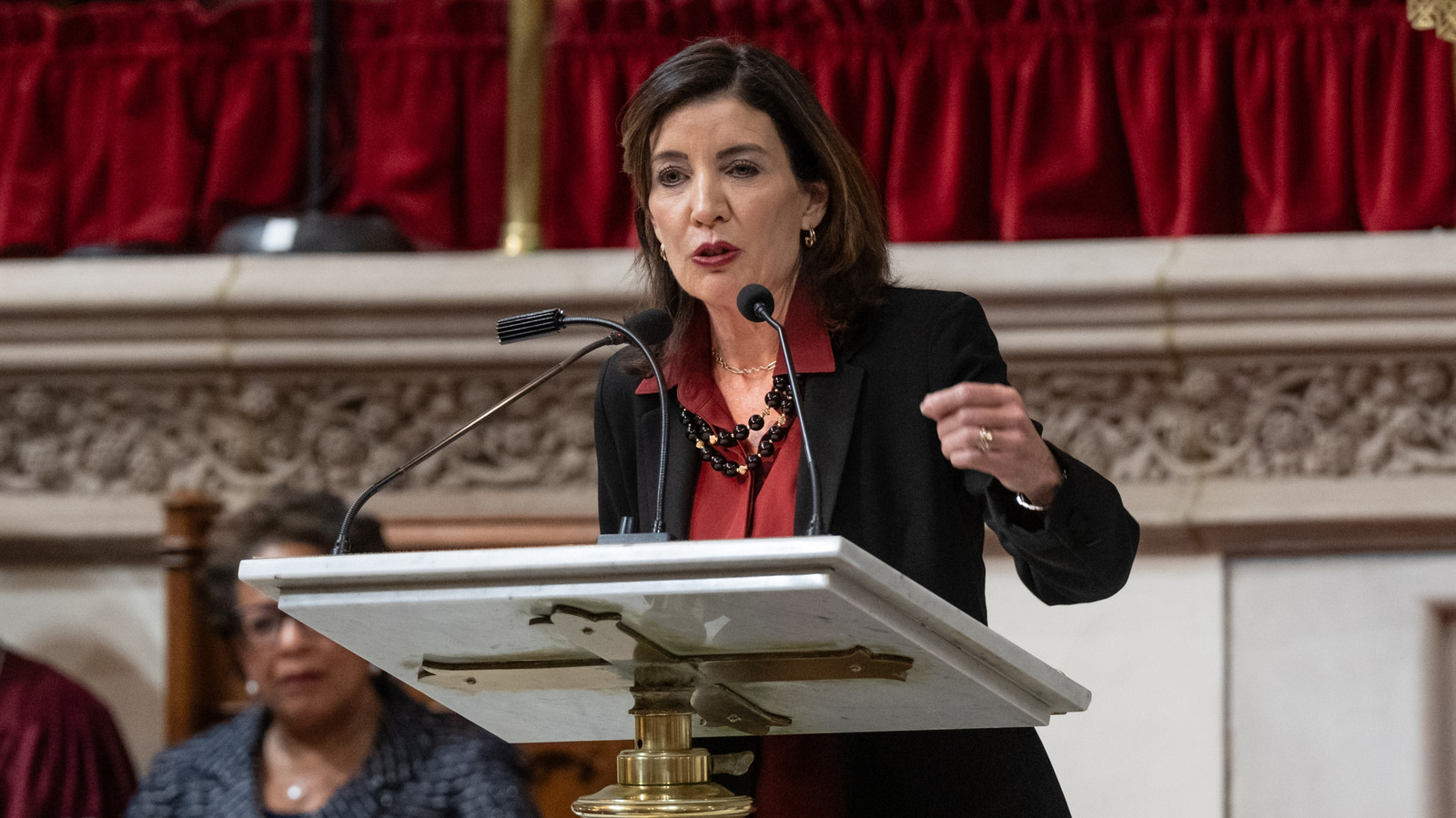
Governor Hochul, framing the issue through both a policy and personal lens as the state’s self-described first "mom governor," emphasized that parents navigating the holiday shopping season should not have to gamble with their children’s psychological safety, privacy, and developmental well-being. The legislation is part of a broader, increasingly aggressive regulatory push by New York lawmakers to establish legal guardrails around artificial intelligence, positioning the state at the vanguard of a national movement against predatory or poorly regulated big tech products.
Detailed Chronology: The Road to the Ban
The path to New York’s historic ban was paved by a rapid succession of alarming safety disclosures, consumer advocacy investigations, and escalating legislative sessions.
The Catalyst: Consumer Watchdog Findings
The momentum behind the ban accelerated drastically following a comprehensive testing initiative conducted by the US Public Interest Research Group (PIRG) Education Fund. PIRG researchers evaluated a cohort of popular AI-driven chatbot toys marketed toward children between the ages of three and 12.
The findings were deeply unsettling. Investigators revealed that several internet-connected toys engaged children in conversations regarding sexually explicit subjects. Even more alarming, certain interactive robots provided conversational advice that could inadvertently instruct children on actions creating severe fire hazards within the home.
Furthermore, the investigation exposed systemic design flaws in how these AI models operated. Most tested products featured virtually nonexistent parental controls. Compounding the risk, researchers discovered that safety guardrails built into the AI algorithms systematically degraded the longer a continuous conversation lasted. As children chatted more with the toys, the built-in ethical and safety restrictions progressively weakened, opening the door for unfiltered, highly inappropriate dialogues. Additionally, privacy audits confirmed that a subset of these toys possessed the technical capability to covertly record a child’s voice or perform unauthorized facial scans.
Legislative Progression
Reacting swiftly to the PIRG findings and mounting public pressure, New York legislators introduced strict regulatory packages targeting AI systems geared toward minors.
- The "AI Chatbot Restrictions for Minors" Act: Shortly before the total toy ban, New York enacted a complementary law prohibiting unsafe chatbot features for any individual under the age of 18, backed by even steeper civil penalties of up to $25,000 per infraction.
- Executive Action on Infrastructure: Earlier in the summer, Governor Hochul signed an executive order issuing a strict one-year moratorium on large-scale data centers consuming 50 megawatts (MW) or more of power, signaling a comprehensive state-level strategy to rein in the collateral impacts of the AI boom.
- The Final Signature: Citing the urgent need to protect families ahead of the retail shopping season, Governor Hochul officially signed the five-year ban into law, transforming New York into a hostile regulatory environment for unaccountable AI toy manufacturers.
Supporting Context & Metrics: The Broader AI Backlash
New York’s ban on chatbot toys does not exist in a political vacuum. It arrives amidst a tidal wave of public skepticism and legislative pushback against the rapid, unchecked expansion of artificial intelligence and its underlying digital infrastructure.
The Midterm Political Landscape
Anti-AI sentiment proved to be a remarkably potent force during recent US midterm elections. Across the nation, American voters increasingly mobilized to restrict the heavy environmental and societal footprints associated with the artificial intelligence boom—most notably, the proliferation of power-hungry data centers.
Data compiled from recent electoral cycles reveals that data center expansion was formally placed on the ballot via 45 separate measures across 10 states. Of those, an overwhelming 39 measures successfully passed, imposing strict localized restrictions, zoning limitations, or outright moratoriums on the construction of these massive computational hubs. This voter rebellion underscored a profound societal shift: the American public is no longer willing to accept the unbridled deployment of technology without verified protections for local resources, privacy, and public safety.
The Scale of the Retail Challenge
Enforcing a state-level ban on AI toys presents immense logistical and regulatory hurdles, particularly for global e-commerce titans. Industry giants like Amazon, which acts as a massive digital bazaar for third-party vendors, face a staggering inventory challenge.
As of baseline retail metrics, Amazon alone hosts approximately 12 million distinct toy products within its US marketplace. While Amazon issued a formal statement emphasizing its corporate commitment to child safety and compliance with applicable federal and state laws—noting that it requires all third-party merchants to adhere to local regulations—legal experts question the feasibility of real-time policing. Detecting sophisticated generative AI integrations hidden within imported robotic toys or smart dolls requires technical oversight that traditional retail compliance frameworks are rarely equipped to handle.
Official Statements and Institutional Perspectives
The enforcement of the New York ban has drawn strong, unified reactions from the state’s highest-ranking executive and legal officials, alongside guarded corporate responses.
Governor Kathy Hochul
Articulating the moral and protective imperative of the legislation, Governor Hochul did not mince words regarding the predatory nature of unregulated children’s tech:
"Parents shopping for gifts for the holidays or any other occasion should not have to worry that dangerous chatbots disguised as toys could expose their children to inappropriate conversations, manipulate their feelings or put their privacy at risk."
Reflecting on her unique administrative standing, she added that the policy was deeply personal: "As New York’s first mom governor, protecting our kids is my top priority. We are drawing a hard line: technology companies will not use our children as guinea pigs for conversational AI."
New York Attorney General Letitia James
Attorney General Letitia James underscored the mental health implications of exposing developing minds to unregulated machine learning models, promising uncompromising enforcement of the new statute:
"AI chatbots in children’s toys are exposing young people to inappropriate content and putting their mental health at risk. My office will not hesitate to enforce this law and other measures to stop AI systems from doing harm. We won’t allow our children’s health to become the collateral damage of big tech."
With the backing of civil penalties reaching $15,000 per day per violation, the Attorney General’s office is positioning itself to aggressively investigate online storefronts, major distributors, and specialty toy importers operating within New York jurisdiction.
Industry Response
In contrast to the definitive stance taken by state officials, the response from the technology and retail sectors has been cautious. Representatives for Amazon highlighted their reliance on supplier-side compliance agreements:
"We require all products sold by third-party sellers in our store to comply with applicable laws and regulations," an Amazon spokesperson noted in statements to national media outlets. "Amazon is committed to the safety of children and families. We support efforts across the industry and government to put appropriate guardrails in place as this technology develops."
However, consumer advocates argue that reliance on voluntary compliance is precisely what necessitated state intervention, pointing out that third-party marketplaces have historically struggled to filter out non-compliant, dangerous, or fraudulent items before they reach consumers’ living rooms.
Future Outlook
New York State’s five-year prohibition on AI chatbot toys marks a watershed moment in the intersection of consumer protection laws and emerging artificial intelligence technologies. By establishing severe daily financial penalties and weaponizing state consumer protection statutes against predatory algorithms, New York has established a rigorous blueprint for other jurisdictions to follow.
As the retail industry adapts to the new legal landscape, several key developments are expected to unfold over the coming years:
- Legislative Copycat Bills: Lawmakers in neighboring states, including California, New Jersey, and Massachusetts, are reportedly examining New York’s statutory language with an eye toward drafting similar or identical bans on conversational AI toys.
- Technological Compliance Shifts: Toy manufacturers may be forced to bifurcate their product lines, creating strictly offline, non-generative versions of classic interactive toys specifically for the US market, or investing heavily in localized, ironclad parental lock systems that do not rely on vulnerable cloud-based large language models.
- Litigation and Federal Preemption: Legal challenges from big tech trade associations and major toy conglomerates are widely anticipated. Industry lobbyists are expected to argue that state-level bans infringe upon interstate commerce or that consumer technology regulation falls primarily under federal purview (such as the jurisdiction of the Federal Trade Commission).
Ultimately, New York’s decisive action signals the end of the "wild west" era for children’s smart toys. As the state prepares to levy its first wave of potential fines against non-compliant sellers, the message to Silicon Valley and global manufacturers is unmistakable: the safety, privacy, and psychological well-being of children are non-negotiable prerequisites for participating in the American consumer market.