Executive Overview
In the volatile ecosystem of contemporary internet culture, virality often defies conventional logic. Algorithms and digital subcultures frequently dredge up obscure historical figures, transforming them into fleeting digital avatars. However, the sudden, widespread ascent of 19th-century German Hegelian philosopher Max Stirner across TikTok, Instagram Reels, and X (formerly Twitter) in November 2026 represents a uniquely surreal collision of intellectual history and absurd internet subculture.
Long before the advent of social media, Johann Caspar Schmidt—better known by his pen name Max Stirner—pioneered radical individualist philosophies that challenged the very fabric of societal norms, religious institutions, and collective political movements. Born in October 1806 and passing away in relative obscurity in June 1856, Stirner’s magnum opus, The Ego and Its Own (1844), laid the groundwork for individualist anarchism, existentialism, and nihilism. Yet, nearly two centuries after his death, the austere, round-spectacled philosopher has been catapulted into modern digital consciousness.
Rather than engaging in rigorous academic discourse regarding his rejection of "spooks"—mental constructs and ideologies that shackle human freedom—millions of social media users have instead embraced Stirner as a canvas for high-energy video edits, cosplay, gender-swapped fan art, and ironic memes. This unexpected cultural phenomenon highlights the paradoxical nature of modern digital platforms, where historical obscurity acts as a blank slate for hyper-modern irony. This investigation explores the mechanics of Stirner’s November 2026 virality, tracing the trajectory from academic philosophy to mainstream internet humor, evaluating platform-specific metrics, and contextualizing the cultural implications of the "Maxine Stirner" phenomenon.
Detailed Chronology: From 19th-Century Anarchism to 21st-Century Virality
Historical Roots: The Philosophy of the Ego
To understand the current wave of memes, one must examine the intellectual lineage of the man himself. Max Stirner was a fringe figure among the Young Hegelians in 1840s Berlin, a group of intellectuals who critically analyzed Christian dogma and traditional Prussian institutions. Stirner’s contributions culminated in his 1844 treatise, The Ego and Its Own (Der Einzige und sein Eigentum).
Stirner’s core philosophical proposition was aggressively radical: the individual self is the absolute center of reality and must take precedence over all external authorities, moral systems, and collective ideologies. He famously coined the concept of "spooks" (Spuk), designating socially conditioned mental constructs—such as the state, institutional religion, conventional morality, and even human rights—that exercise spectral dominion over human minds, restricting individual autonomy.
Unsurprisingly, Stirner’s fierce anti-authoritarianism spared no movement. He was deeply critical of both conservative traditionalism and emerging leftist and liberal philosophies, including communism and humanism, arguing that they merely replaced old masters with new collective abstractions. This uncompromising individualism drew immediate, fierce rebukes from contemporaries Karl Marx and Friedrich Engels. In their sprawling 1845 manuscript, The German Ideology, Marx and Engels dedicated a massive section to criticizing Stirner (mockingly referring to him as "Saint Max"), arguing that his hyper-individualist framework was philosophically incoherent, historically detached, and socially impossible.
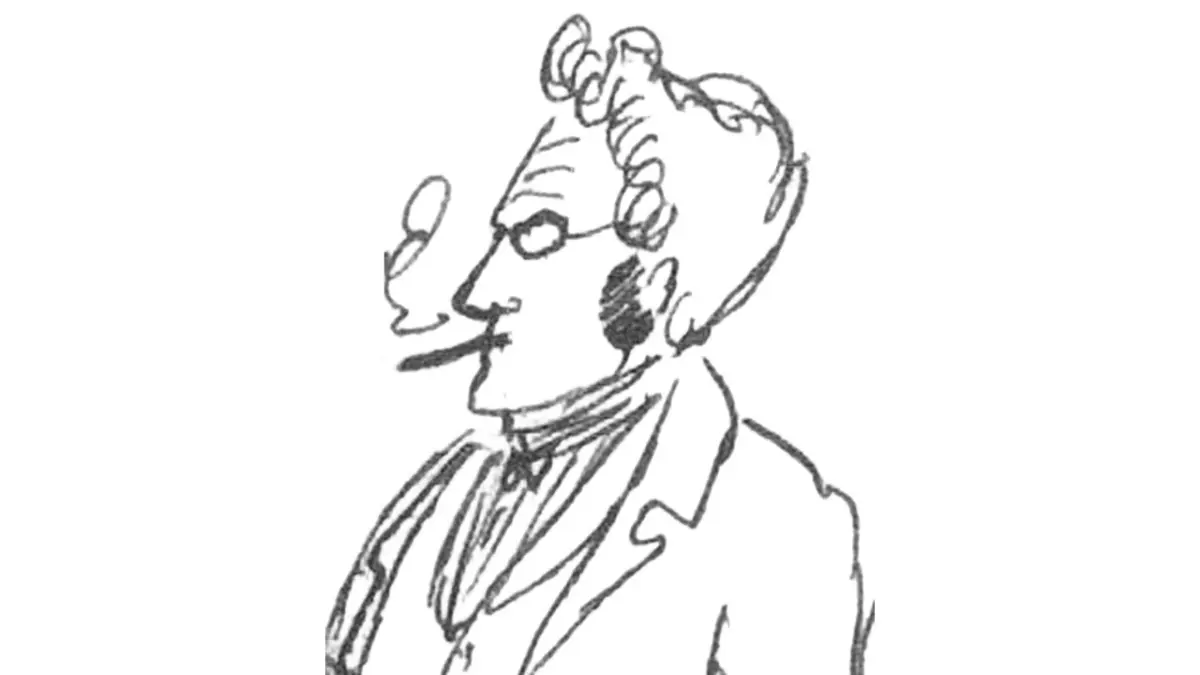
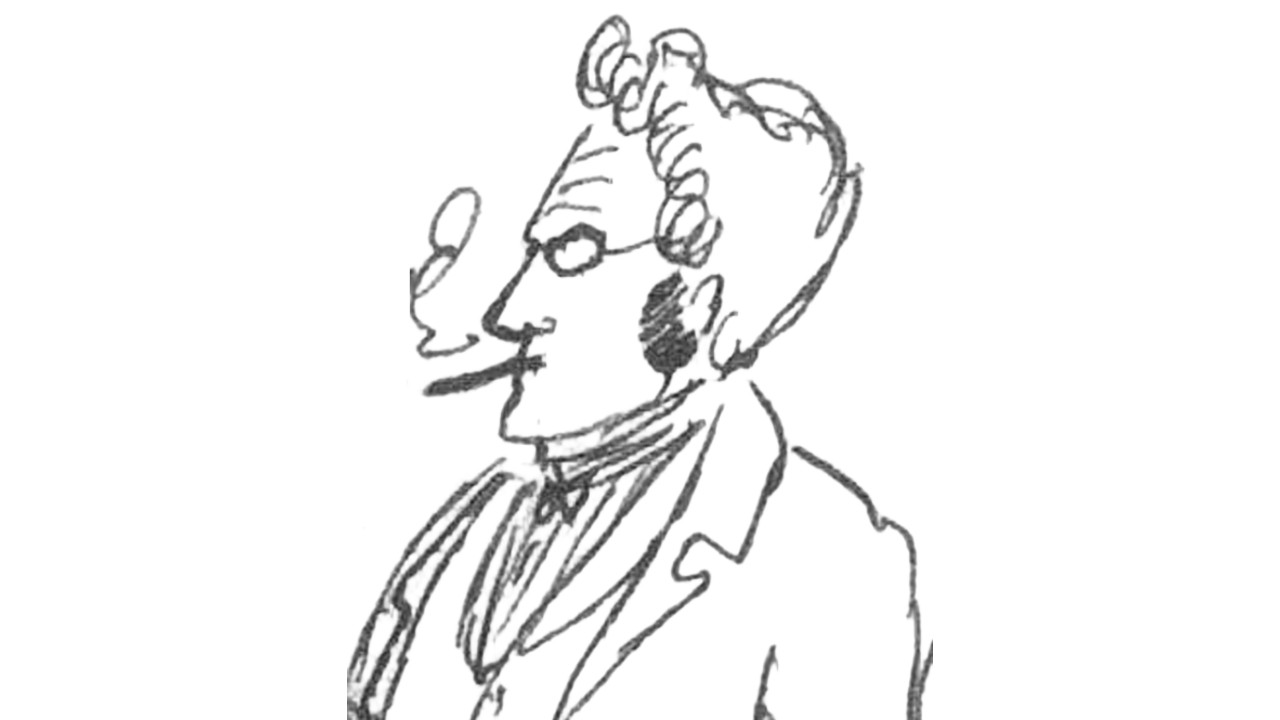
Ironically, while Marx and Engels sought to permanently relegate Stirner to the footnotes of philosophical history, Friedrich Engels inadvertently preserved Stirner’s physical likeness for future generations. Because no authentic photographs of Stirner exist, our only visual records of the philosopher are two sketches drawn by Engels. These minimalist portraits—featuring Stirner’s distinctively rounded spectacles and sharp facial features—would, more than 180 years later, become the foundational visual assets for a global meme wave.
The November 2026 Explosion
While fringe philosophical communities on Reddit and niche internet forums had long maintained an appreciation for Stirner, his transition into mainstream algorithmic virality occurred rapidly during the first three weeks of November 2026. The phenomenon did not stem from a sudden resurgence in academic interest or a major publishing milestone, but rather from the organic, decentralized machinery of short-form video platforms and image-board culture.
- Early November: The movement began coalescing on TikTok and X through high-production-value video edits. Creators utilized striking graphic portraits of Stirner—often sourced from modern graphic adaptations like the 1984 book Anarchy: A Graphic Guide—paired with fast-paced, rhythmic editing styles typically reserved for anime characters or pop-culture action heroes.
- Mid-November: The meme ecosystem diversified rapidly. On November 9th, X user @Wane34565real posted a compilation of four historical sketches of Stirner, noting his repetitive compositional angles, which quickly earned over 29,000 likes. Days later, platform aesthetics shifted into surrealist territory. TikToker @wi_ci published an edit on November 14th featuring stylized fan art that included a gender-swapped rendition of the philosopher, affectionately dubbed "Maxine Stirner," which surpassed 600,000 views in just over a week.
- Late November: The joke reached its absurd apex when X user @punishedlinusst posted a screenshot on November 15th revealing that the anime/art database site Gelbooru hosted 24 entries under the tag
max_stirner, prompting the viral declaration, "I think we’ve lost the plot guys." Physical manifestations followed suit. On November 16th, TikToker @matheogoose uploaded a cosplay video of himself dancing in character as Stirner, racking up nearly half a million views, while traditional fan artists like @murkablyad contributed high-concept illustrations to X, cementing Stirner’s status as November’s premier internet archetype.
Supporting Context & Metrics
The quantitative footprint of the Max Stirner meme wave illustrates how niche historical data can achieve massive velocity when filtered through modern content recommendation engines.
| Date (Nov 2026) | Platform | Creator / User | Content Type | Key Metric / Engagement |
|---|---|---|---|---|
| Nov 4, 2026 | TikTok | @grouwvy | Stylized Video Edit | Over 1,000,000 views within 3 weeks |
| Nov 9, 2026 | X / Twitter | @Wane34565real | Portrait Compilation | 29,000+ likes within 2 weeks |
| Nov 14, 2026 | TikTok | @wi_ci | Video Edit (incl. "Maxine") | 601,000+ views in just over a week |
| Nov 15, 2026 | X / Twitter | @punishedlinusst | Rule 34 Archive Screenshot | 1,900+ likes in 10 days |
| Nov 16, 2026 | TikTok | @matheogoose | Cosplay / Dance Video | 487,000+ views in 9 days |
| Nov 22, 2026 | X / Twitter | @murkablyad | Original Fan Art | 5,800+ likes in 3 days |
The cross-platform synergy observed in mid-November 2026 demonstrates a classic meme incubation cycle. TikTok acted as the primary engine for high-engagement, audio-driven video edits and live-action cosplay, leveraging fast-paced visual pacing to make a 19th-century German thinker feel contemporary and dynamic. Conversely, X served as the analytical hub—where users cataloged the absurdity of the trend, shared artistic interpretations, and engaged in meta-commentary regarding the inevitable internet subversion of historical icons.
Furthermore, the emergence of "Maxine Stirner" and the ironic indexing of the philosopher on adult-content and fan-art platforms underscore a broader internet tradition: the hyper-sexualization and satirical fictionalization of historical and political figures. By stripping Stirner of his dense, academic prose and reducing his likeness to a recognizable, memeable caricature, internet subcultures successfully flattened a complex critic of the state into a relatable, tongue-in-cheek mascot for modern digital alienation.
Perspectives and Industry Analysis
While cultural historians and political scientists view the phenomenon with a mixture of amusement and bewilderment, digital media analysts recognize the Max Stirner trend as a symptom of a larger shift in how younger demographics consume history and philosophy.
Dr. Elena Vance, a professor of digital culture and media sociology, notes that the weaponization of obscure historical intellectuals is a natural defense mechanism against modern socio-political exhaustion:
"When younger generations are faced with overwhelming, macro-political anxieties, traditional political discourse often feels like navigating a maze of ‘spooks’—to use Stirner’s exact terminology. By turning an uncompromising individualist philosopher into a meme, internet users are performing a deeply postmodern ritual. They are stripping institutional authority away from history, dragging a 19th-century German academic into the digital mud, and finding agency through pure, unadulterated absurdity."
Conversely, philosophical traditionalists have expressed mild dismay at the superficial treatment of Stirner’s work. Archival societies dedicated to the preservation of Young Hegelian literature reported a sharp, albeit confused, spike in web traffic originating from social media referral links. Yet, academic gatekeeping has done little to stem the tide. The sheer volume of user-generated content—ranging from meticulous historical cosplay to ironic fan art—demonstrates that once an entity enters the algorithmic bloodstream, its original intellectual integrity is permanently subordinated to the collective creativity of the crowd.
Future Outlook
As the initial wave of November 2026 virality stabilizes, the long-term trajectory of the Max Stirner meme ecosystem points toward cyclical re-emergence rather than permanent mainstream adoption. Like previous historical internet memes—such as the digital resurgence of figures like Marcus Aurelius, Niccolò Machiavelli, or Ted Kaczynski—Stirner’s digital avatar is likely to transition from an active daily trend into a permanent fixture of internet lore, resurrected periodically whenever online subcultures seek a symbol for absolute intellectual autonomy or anti-establishment detachment.
However, the legacy of this specific viral moment is secure. It has proven that no historical figure, no matter how obscure, dense, or fiercely critical of collective systems, is safe from the leveling machinery of modern social media. Max Stirner spent his life arguing that the individual ego is the ultimate reality, free from the ghosts of societal expectations. In a supreme twist of historical irony, his own likeness has now become a permanent ghost haunting the algorithms of the 21st century—a fitting monument to a thinker who dedicated his existence to slaying phantoms.