Executive Overview
For over a decade, Andrey Zvyagintsev stood as the undisputed titan of contemporary Russian cinema. Through razor-sharp, internationally acclaimed masterpieces such as Leviathan and Loveless—both of which earned Academy Award nominations—the director cultivated a reputation as an uncompromising chronicler of systemic decay, institutional corruption, and moral rot under the modern Russian state. Though Zvyagintsev famously deflected direct political labels throughout his career, the subtext of his work was undeniable. In Leviathan, a portrait of a crooked provincial mayor hung menacingly beneath a framed portrait of Vladimir Putin, establishing a visual lexicon of authoritarian impunity that resonated across the global stage.
The landscape shifted irrevocably in 2020 when Zvyagintsev left Russia, a departure compounded by a near-fatal brush with death in 2021 when a severe bout of illness plunged him into a 40-day medically induced coma. Emerging from the shadows of physical rehabilitation and exile, the 62-year-old auteur returns with Minotaur, a searing revenge-thriller that functions as his first feature film produced entirely outside of Russia. Set against the harrowing backdrop of the 2022 invasion of Ukraine, Minotaur won the prestigious Grand Prix at the Cannes Film Festival in May, cementing Zvyagintsev’s status as a formidable voice in global filmmaking, even as it ignited fierce geopolitical controversy.
In his blistering Cannes acceptance speech, Zvyagintsev directed his plea squarely at the Kremlin, demanding an end to the bloodshed in Ukraine. Yet, sitting in a London hotel months later, the director is visibly fatigued by attempts to reduce his sprawling cinematic vision to mere political rallying cries. Designated a "foreign agent" by the Kremlin in September 2026, Zvyagintsev insists that Minotaur is a work of humanist art rather than a political manifesto. Nevertheless, the film—selected as France’s official submission for the 2027 Academy Awards—has found itself caught in a crossfire of international debate, drawing both rapturous critical acclaim and sharp rebukes from Ukrainian commentators who take issue with its framing of the conflict.
As Minotaur prepares for its UK theatrical release, this piece explores the anatomy of Zvyagintsev’s exile, the making of his most controversial film, and the tightrope walk of practicing independent art in an era defined by totalized geopolitical polarization.
Detailed Chronology: From Soviet Roots to European Exile
To understand the tectonic pressures shaping Minotaur, one must trace the winding trajectory of Zvyagintsev’s career and the compounding crises that preceded his relocation to Western Europe.
The Rise of a Master (2003–2017)
Zvyagintsev burst onto the international cinema scene with his 2003 debut, The Return, which claimed the Golden Lion at the Venice Film Festival. Marking him as an heir to Andrei Tarkovsky’s philosophical rigor, his subsequent features—The Banishment (2007), Elena (2011), and Leviathan (2014)—steadily deepened his critical engagement with Russian society. Leviathan, a parable of modern Job-like suffering set against the majestic yet indifferent landscapes of the Barents Sea, earned widespread international praise and an Oscar nomination for Best Foreign Language Film. It also drew the ire of Russian conservative circles for its unvarnished portrayal of bureaucratic venality.
This tension culminated in Loveless (2017), a chillingly detached procedural about a missing child amidst a disintegrating bourgeois marriage. The film earned Zvyagintsev his second Academy Award nomination and further solidified his standing as a global auteur whose lens could pierce the veneer of contemporary nationalism.
The Turning Point: Departure and Coma (2020–2021)
In 2020, seeking broader creative horizons and facing an increasingly hostile domestic cultural apparatus, Zvyagintsev relocated to France. The transition was immediately tested by a catastrophic medical emergency. In 2021, the director contracted a severe illness that resulted in a 40-day medically induced coma. Describing the experience with characteristic austerity, Zvyagintsev notes, "I really died. You don’t exist. No dreams, no life, nothing."
Recovery was grueling, interrupting plans to direct a feature-length adaptation of Krzysztof Kieślowski’s Dekalog—a project that had been in discussion as late as 2021 before health complications derailed it. Yet, survival imbued his return to filmmaking with an unmistakable urgency.
The Genesis of Minotaur (2022–2026)
With the outbreak of the war in Ukraine in February 2022, Zvyagintsev found himself staring at a fractured world. Around this time, a long-standing ambition to adapt Claude Chabrol’s 1969 psychological thriller The Unfaithful Wife finally gained traction. Originally unable to secure the rights, Zvyagintsev received a renewed offer from a producer in 2022. Realizing the narrative’s potential, he and co-writer Simon Lyashenko re-engineered the French bourgeois drama into a contemporary Russian tragedy.
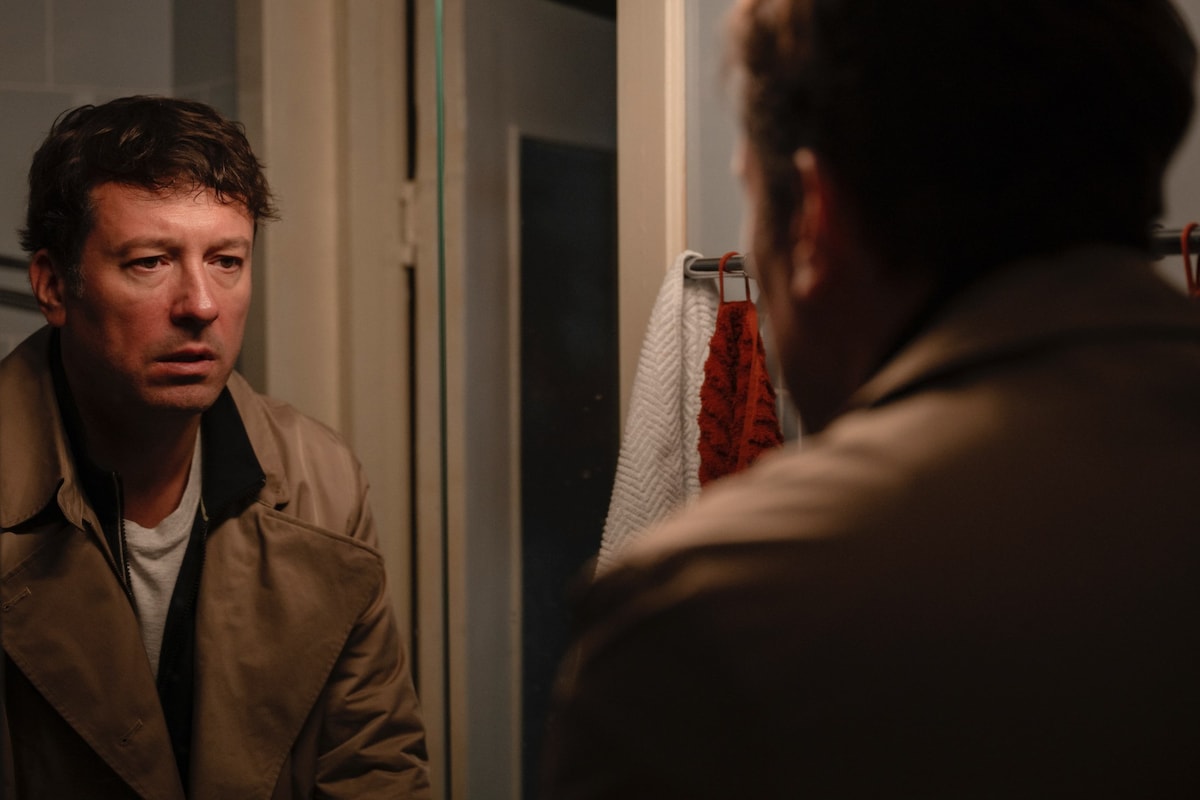
Financed through a consortium of French, Latvian, and German capital, Minotaur was shot clandestinely in parts of Latvia meticulously dressed to mimic Russian provincial landscapes. The production captured the grim reality of 2022: the sudden, bureaucratic terror of military mobilization.
The film’s trajectory accelerated sharply in May 2026, when Minotaur clinched the Grand Prix at Cannes. The victory was immediately overshadowed by the geopolitical shockwaves of Zvyagintsev’s acceptance speech, in which he directly implored Vladimir Putin to halt the massacres. By September 2026, the Kremlin officially designated Zvyagintsev a "foreign agent," cementing his permanent estrangement from his homeland.
Supporting Context & Metrics: Inside the World of Minotaur
Minotaur is structured around a deliberate collision between domestic malaise and systemic violence. Drawing its title from the classical Greek myth—in which King Minos exacts a tribute of 14 youths to be sacrificed to the labyrinthine monster every nine years—the film maps ancient cycles of sacrifice onto modern bureaucratic machinery.
Plot Mechanics and Narrative Architecture
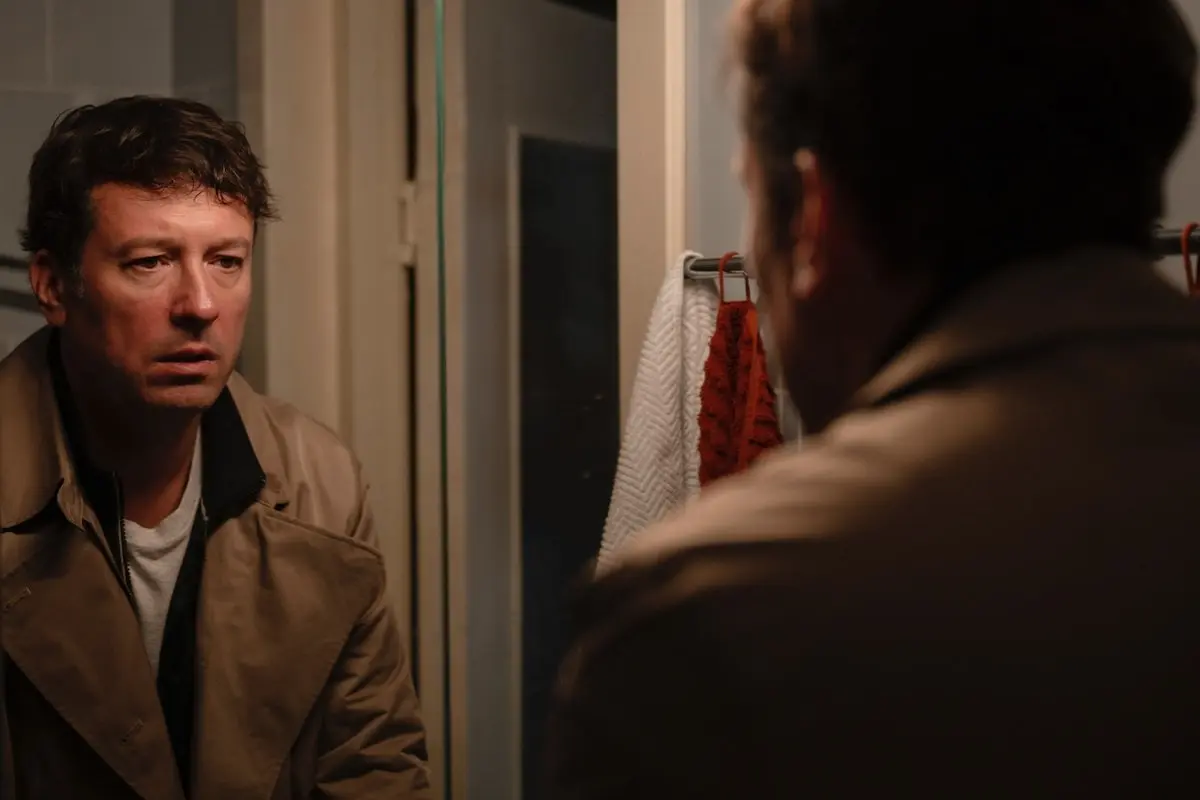
Set in the fictional, snow-dusted Russian industrial hub of Krasnoborsk, the film follows Gleb (played by Dmitriy Mazurov), a middle-class businessman desperately insulating himself from the horrors broadcasting on his television screen. Gleb’s carefully curated complacency shatters when he is summoned by the city’s corrupt mayor (Vladimir Friedman)—whose office features the obligatory portrait of Vladimir Putin—and handed an impossible quota: he must select 14 male employees from his enterprise to be shipped off as soldiers to the frontlines in Ukraine.
Parallel to this administrative death sentence is a domestic psychodrama. Gleb becomes consumed by paranoia that his wife, Galina (Iris Lebedeva), is engaging in an extramarital affair. In a sequence characteristic of Zvyagintsev’s signature pacing, Gleb murders the man he believes is sleeping with his wife. Played out in near-total silence across twenty harrowing minutes, the murder sequence acts as a psychological mirror, prefiguring the human devastation Gleb indirectly facilitates through his compliance with the mobilization quota.
Production Metrics and Cross-Border Collaboration
- Production Footprint: Filmed on location across Latvia, utilizing architectural and set-design styling to replicate Russian provincial cities.
- Financial Backing: A multi-national European co-production financed through private and public funds from France, Latvia, and Germany.
- Festival Acclaimed Debut: Premiered at the 2026 Cannes Film Festival, culminating in a major win of the Grand Prix.
- Awards Season Trajectory: Selected as France’s official submission for the Best International Feature Film category at the 2027 Academy Awards.
- Domestic Retaliation: Officially designated as a "foreign agent" by the Russian Ministry of Justice in September 2026.
Official Statements & Industry Reception
The release of Minotaur has triggered intense discourse, dividing critics, audiences, and political commentators over the limits of artistic neutrality during wartime.
The Director’s Stance: Art Versus Propaganda
In interviews conducted in London following his Cannes triumph, Zvyagintsev has repeatedly pushed back against interpretations that seek to enlist his film as an anti-Putin political weapon.
"I do art, and not political art," Zvyagintsev asserts through an interpreter, cutting off lines of questioning that probe for metaphorical parallels between domestic oppression and state-sponsored warfare. "I can’t allow myself to speak in political slogans. It’s all propaganda, from one side or the other. I’m glad if people feel empathy towards the people in the film who are doomed to be mobilised. It doesn’t matter what side they’re on; they’re being sent to the forefront. If the viewer feels compassion towards them, it says that you’re human."
When pressed on whether Gleb’s character symbolizes the complicity of the Russian middle class, Zvyagintsev remains resistant to sociological reductions. "Who wants to see their own faults? Gleb is no different than anyone else," he states tersely.
Cast Perspectives: Iris Lebedeva on Avoiding the "Political Instrument"
Lead actor Iris Lebedeva echoes the director’s philosophy, emphasizing that her performance was calibrated around psychological truth rather than geopolitical signaling.

"When I read the script, I realised there was nothing that would scare me," Lebedeva explains. "It’s not a manifesto. It’s not a slogan."
Reflecting on Zvyagintsev’s directorial approach, she notes that he actively discouraged actors from viewing the script through an overarching political lens while filming individual scenes. "He said he regrets that I got to read the whole script," she remarks with a smile. "If Andrey had chosen a specific position for this film, whether supporting it or protesting against it, I would have thought about my participation, because I don’t want to become a political instrument. I know his position, but I wouldn’t have been happy for him to express it directly. Andrey allows his audiences to make their own choices."
The Backlash: Ukrainian Critics and the Danger of "Both Sides" Framing
Despite the director’s insistence on humanist neutrality, Minotaur has faced severe condemnation from Ukrainian cultural and political figures, who argue that artistic detachment is a luxury unavailable during an existential war of aggression.
The friction largely stems from Zvyagintsev’s Cannes speech, where he invoked "millions of people on both sides of the frontline." This phrase drew immediate and furious pushback. As noted by the Washington Post, prominent Ukrainian journalist-turned-politician Mustafa Nayyem took to social media to excoriate the sentiment:
"What first shocked me was the cynical formula of ‘both sides of the frontline’—which effectively transforms Russia’s war against Ukraine into a symmetrical human tragedy with no clearly named aggressor."
For many critics in Eastern Europe, Zvyagintsev’s focus on the tragedy of mobilized Russian soldiers risks deflecting accountability from the structural architects of the war, substituting a universalist tragedy for specific geopolitical culpability. Zvyagintsev remains unmoved by these critiques, maintaining that emotional resonance and compassion for the doomed must supersede programmatic political categorization.
Future Outlook: The Global Stage Awaiting Minotaur
As Minotaur prepares for its high-profile UK theatrical release on November 27, followed by its campaign as France’s contender for the 2027 Academy Awards, Andrey Zvyagintsev finds himself occupying a uniquely lonely position in contemporary cinema. He is an artist stripped of his physical homeland, officially branded an enemy of the state by the regime he spent decades critiquing through subtle allegory, yet occasionally finding himself at odds with a Western and Ukrainian critical establishment demanding explicit, unyielding political solidarity.
Yet, it is precisely this uncomfortable friction that ensures Zvyagintsev’s work retains its vital pulse. By refusing to deliver didactic propaganda or comforting moral binaries, Minotaur forces its audience to stare directly into the labyrinth of moral compromise, where ordinary citizens become unwitting architects of catastrophe. Whether viewed as an indictment of modern authoritarianism or a timeless humanist tragedy about the fragility of the soul, Minotaur guarantees that Andrey Zvyagintsev’s voice—forged in exile and tempered by the shadow of mortality—will continue to echo across the global cultural landscape for years to come.