Executive Overview
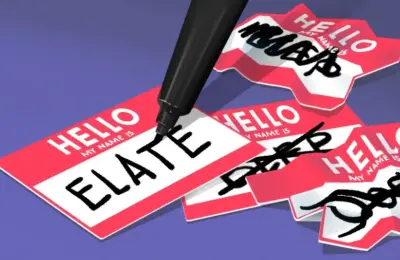
When an entrepreneur launches a new enterprise, the ritual of christening the company is often treated with a mix of sacred reverence and casual whim. Founders spend countless hours agonizing over domain availability, trademark clearances, and how a moniker will look on a pitch deck. The prevailing discourse usually centers on identification: How does one pinpoint a great startup name? How do you craft a linguistic lightning bolt that captures a market’s imagination, drives organic search traffic, and instantly communicates a disruptive value proposition?
Yet, equally crucial—and perhaps far more entertaining—is the reverse consideration: What makes for a truly awful startup name?
While brand evaluation is inherently subjective, seasoned naming consultants, linguistic experts, and corporate branding veterans generally agree on a few fundamental parameters that spell disaster. The worst offenders typically fall into three distinct categories: harsh, guttural phonetic structures that grate on the human ear; brands saddled with heavy, off-putting negative connotations; and the ubiquitous, unimaginative trend of appending "AI" to a generic noun—a crutch that branding professionals warn will soon sound hopelessly dated.
In an ecosystem where perception frequently dictates valuation, choosing the wrong name can serve as a persistent headwind, alienating global consumers, confounding investors, and ultimately consigning otherwise promising ventures to the corporate graveyard. This deep dive explores the anatomy of bad startup branding, drawing on insights from industry experts, historical case studies, and current market trends.
Detailed Chronology: The Evolution of Naming Fads and Follies
To understand how modern startups arrive at catastrophic branding decisions, it helps to examine the shifting historical paradigms of corporate nomenclature.
The Dot-Com Era and the Birth of Linguistic Chaos
During the late 1990s dot-com boom, the gold rush for dot-com domains forced founders into desperate linguistic gymnastics. Vowels were systematically purged from dictionaries, suffixes were scrambled, and phonetic spelling was thrown out the window. This era gave birth to iconic flops like Boo.com, an online fashion retailer that burned through massive amounts of venture capital before collapsing. The name itself—evoking a ghostly sound or a startled exclamation—elicited fright rather than an irresistible urge to shop for luxury apparel.
The Web 2.0 Vowel-Drop and Suffix Craze
As the startup ecosystem rebounded in the late 2000s and early 2010s, a new formula emerged. Companies systematically dropped vowels (e.g., Flickr, Tumblr) or adopted quirky, whimsical, and occasionally unpronounceable monikers. This was the golden age of companies like Xobni—"inbox" spelled backward—which left users constantly second-guessing how to pronounce the name aloud at networking events. Other historical casualties of this era, such as Doostang and Gtrot, relied on phonetic structures that felt forced, juvenile, and ultimately forgettable.
The Modern Era: Aggressive Tech and the AI Suffix Deluge
Today, the pendulum has swung toward two opposing extremes. On one end, we see hyper-aggressive, utilitarian, or militaristic names designed to project raw power in deep tech, defense, and automation. On the other, we witness a sea of lazy conformity driven by the generative artificial intelligence boom, where thousands of startups append "AI" to baseline concepts without offering a distinct brand identity.
Supporting Context & Metrics: The Mechanics of Bad Branding
What specifically makes a name fail on a psychological and linguistic level? Branding experts point to three primary fault lines.
1. Harsh-Sounding and Unpronounceable Names
Phonetics matter deeply in human communication. Certain plosive sounds—such as hard k, g, and x consonants—can evoke friction, discomfort, or aggression when clustered awkwardly.
Athol Foden of the prominent naming consultancy Brighter Naming argues that startups must actively avoid names that are unpleasant to pronounce in their native tongue, let alone across global markets. Foden has been particularly vocal regarding Grok, the chatbot developed by Elon Musk’s xAI. In comprehensive critiques, Foden characterized the brand as a linguistic cross between "a suppressed swear word and a throat condition your doctor would prescribe antibiotics for."
Foden’s critique is not rooted in personal bias; he readily praises Musk’s Starlink as an exemplary name for a global satellite internet service, noting that it is both memorable and positively evocative. Rather, his critique of Grok highlights a broader naming hazard: selecting a word that elicits visceral linguistic rejection.
Other historical victims of harsh or confusing structures include Quibi, the heavily funded short-form video streaming platform backed by Hollywood heavyweights that suffered an unceremoniously short market lifespan, and Xobni, whose backward spelling created an avoidable friction point in word-of-mouth marketing.
2. Negative Connotations and the "Hoodie Test"
A foundational rule of thumb in corporate identity is what branding experts call the "hoodie test." Bruno Benedini, co-founder of the branding consultancy Taillight, frames the principle bluntly: "We always say: This is something you should be proud to wear on a hoodie. If not, then reconsider."
When a brand name carries negative, dystopian, or deeply unsettling connotations, it fails the hoodie test immediately. A prime modern example is Warhound, a defense technology startup specializing in breeding and training dogs for military, law enforcement, and emergency response roles, which recently secured a landmark $200 million funding round. While the name is undeniably memorable and projects a stark, utilitarian edge, it strikes a jarring, overly aggressive tone. In an era dominated by pet-pampering culture—where startups routinely market canine spas, gourmet custom meals, and high-end couture—naming a company after a battlefield hound invokes imagery that many consumers and investors find deeply uncomfortable.
As Benedini dryly observed regarding the moniker, "I’d be embarrassed to have Warhound on my hoodie."
Historical archives are similarly littered with names carrying unfortunate baggage. Flud, a defunct digital news reader, combined awkward spelling with the undeniable imagery of a devastating natural disaster, subconsciously linking the user experience with catastrophe.
3. The Generative AI Suffix Trap
Perhaps the most ubiquitous naming epidemic of the current tech cycle is the mandatory inclusion of "AI." Founders across every imaginable vertical—from supply chain logistics to pet care—seem irresistibly drawn to appending "-AI" to a basic noun.
Branding veterans like Foden and Benedini universally advise against this crutch for two critical reasons:
- Temporal Decay: A name built entirely around a current technological buzzword inevitably sounds dated once the technology becomes table stakes.
- Lack of Differentiation: When every company in a pitch room incorporates AI, highlighting the feature in the company name ceases to serve as a meaningful differentiator.
If an enterprise insists on utilizing an AI-centric nomenclature, branding experts stress that the underlying brand must be strong enough to stand on its own. Major historic corporate entities understand this dynamic well; Amazon evolved its identity from Amazon.com as e-commerce became standard, and Apple dropped Computer from its corporate moniker when its product ecosystem expanded beyond desktop hardware.
Official Statements & Expert Perspectives
To gain a deeper understanding of how institutional branding agencies evaluate risk, industry leaders emphasize the psychological weight that a name carries long after the initial seed round is closed.
"When evaluating a brand, you are looking at the emotional real estate it occupies in the consumer’s mind," notes Bruno Benedini of Taillight. "If a name requires a lengthy explanation, forces awkward pronunciation, or evokes dystopian imagery, you are swimming upstream against human psychology from day one."
Athol Foden reinforces this perspective from a cross-cultural standpoint, emphasizing that global expansion exposes poor linguistic choices instantly.
"A name that sounds edgy or clever in Silicon Valley can easily translate into something offensive, guttural, or utterly unpronounceable in European or Asian markets. Global scalability begins with phonetics."
Despite these professional warnings, founders routinely break the rules. Some industry observers even harbor a secret fondness for defiant corporate rebellion. As one venture commentator mused, part of the startup ecosystem almost wishes founders would lean fully into the absurdity—giving rise to pitch decks bearing names like “Gruesome Grok AI” or “Festering Boil Labs.”
Yet, beneath the humor lies a serious commercial reality: startup naming is a high-stakes endeavor, and foundational branding errors frequently carry tangible, long-term business consequences.
Future Outlook: Navigating the Next Wave of Corporate Identity
As the venture capital landscape matures through the mid-2020s and beyond, the criteria for evaluating startup names will undoubtedly continue to evolve. Several key trends are projected to shape how the next generation of founders approaches brand architecture:
- Phonetic Optimization for Voice Search: With the proliferation of voice assistants, smart speakers, and conversational AI interfaces, hard-to-pronounce, overly stylized, or vowel-deficient names will suffer severe penalties in organic discoverability. Clean, phonetically intuitive names will command a distinct competitive advantage.
- Post-AI Maturity Branding: As artificial intelligence transitions from a speculative novelty to invisible infrastructure, startups currently relying on the "-AI" suffix will face painful rebranding initiatives. Enterprises will be forced to drop the suffix to avoid looking like relics of a bygone tech cycle.
- The Return of Evocative Storytelling: Driven by pushback against utilitarian, aggressive, or overly clinical naming conventions, upcoming venture cycles are anticipated to favor warm, metaphorical, and community-oriented brand identities that pass the "hoodie test" with flying colors.
Ultimately, while a great name cannot rescue a fundamentally flawed business model, a terrible name can erect an invisible wall between a brilliant product and its target market. For founders preparing to enter the arena, the message from the branding community is clear: choose wisely, test globally, and make sure you would actually be proud to wear your company’s name across your chest.