Executive Overview
The landscape of portable entertainment and personal computing has undergone a radical transformation over the past few years, largely driven by advancements in extended reality (XR) hardware. No longer confined to bulky, tethered headsets that induce fatigue within minutes, modern XR glasses package cinema-sized displays and high-refresh-rate gaming monitors into sleek, lightweight form factors that slip easily into a backpack.
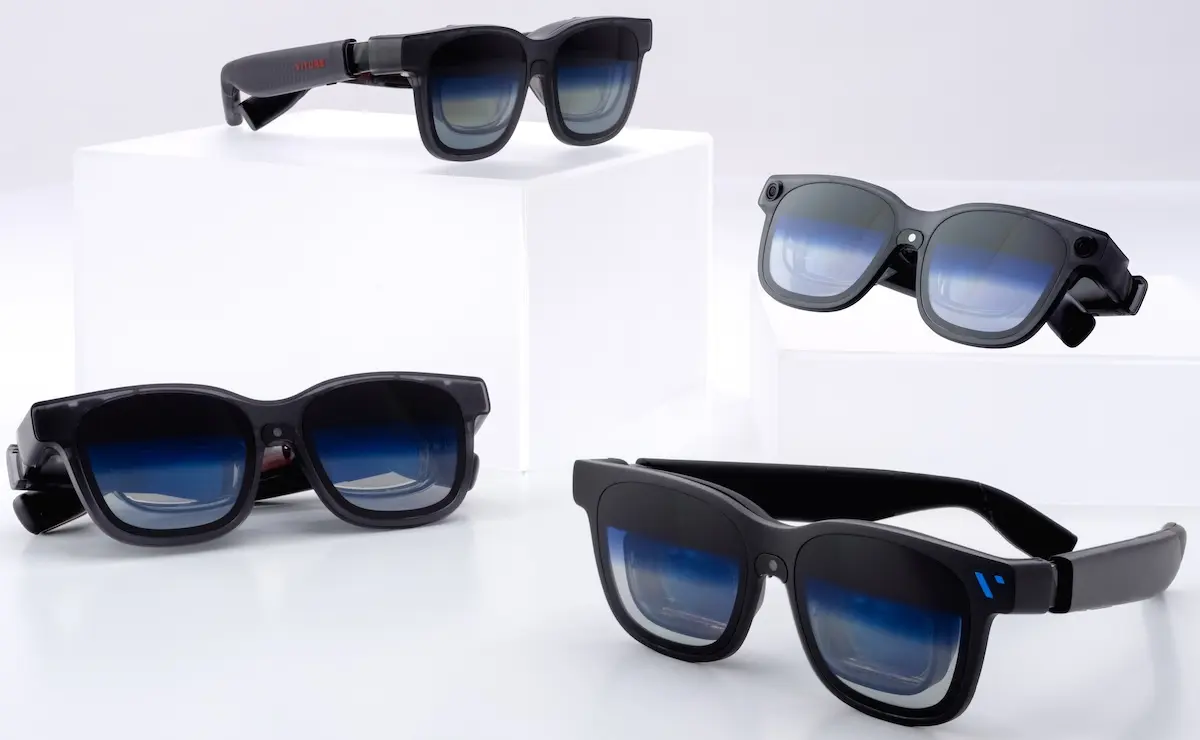
For consumers looking to bridge the gap between high-performance gaming and ultimate portability, this year’s Black Friday and Cyber Monday shopping windows have yielded unprecedented opportunities. Viture, an industry innovator known for pushing the boundaries of wearable displays, has slashed prices across its entire product ecosystem. This includes historic price drops on its acclaimed Luma series and its new flagship device, the Viture Beast XR glasses—which earned a stellar "Great" rating in our rigorous hardware evaluations.
Beyond the hardware discounts, Viture is sweetening the holiday shopping season with strategic bundling offers, including free controllers, heavily discounted mobile docks, and complimentary mounting hardware for popular consoles like the Nintendo Switch and the upcoming Switch 2. As these deals run through Cyber Monday across major retailers including Amazon, Best Buy, and Viture’s direct storefront, prospective buyers have a limited window to secure high-end wearable tech at its lowest price point to date.
Detailed Chronology: The Evolution of Viture’s XR Lineup and Holiday Rollout
The path to Viture’s current holiday promotional event is the result of a carefully orchestrated hardware rollout throughout the year, culminating in aggressive year-end retail strategies designed to capture the lucrative holiday gifting and self-purchase markets.
The Flagship Arrival: The Viture Beast
Earlier this year, Viture introduced its crown jewel to the consumer market: the Viture Beast XR glasses. Debuting at a competitive retail price of $549, the Beast was engineered to satisfy the demands of enthusiasts seeking desktop-class visual fidelity in a wearable format. Reviewers quickly highlighted its utility, with industry analysts noting how the hardware successfully transforms long-haul flights or daily commutes into immersive gaming sessions on handheld devices, entirely removing the physical strain of holding up heavier, traditional consoles or tablets for extended periods.
Recognizing the intensity of the late-November shopping season, Viture implemented an aggressive promotional schedule. Beginning ahead of Black Friday and extending through Cyber Monday, the flagship Viture Beast saw its price temporarily reduced to $489—a historic low for a device that has quickly become a benchmark in the XR space.
The Luma Series Expansion
While the Beast commands the top tier of Viture’s catalog, the Luma series forms the backbone of the company’s consumer offerings. Spanning three distinct models—the standard Luma, the Luma Pro, and the Luma Ultra—this lineup was designed to democratize high-end spatial computing and private viewing.
Throughout the promotional rollout, Viture systematically introduced sweeping discounts across the entire Luma family:
- Viture Luma (Standard): Dropped to $299, offering an accessible entry point into high-refresh-rate wearable displays.
- Viture Luma Pro: Reduced to $339, bringing advanced field-of-view enhancements and integrated spatial capabilities closer to the mainstream consumer.
- Viture Luma Ultra: Marked down to $449, delivering top-tier optical performance, extra cameras, and sophisticated hand-tracking capabilities.
Complementary Ecosystem Promotions
As part of its end-of-year sales push, Viture extended its promotional framework beyond standalone glasses. Recognizing that optimal XR integration requires seamless peripheral connectivity, the company introduced value-add incentives. Purchases of eligible XR glasses during the promotional window automatically qualify buyers for a free 8BitDo Ultimate 2C controller—a favorite among portable and PC gamers alike.
Simultaneously, Viture slashed the price of its Pro Mobile Dock to $99, providing users with extended battery reserves, versatile connectivity options, and native HDMI support. To further incentivize console gamers, buyers of the Pro Mobile Dock were granted a complementary specialty mount designed specifically for the Nintendo Switch and the upcoming Nintendo Switch 2, solidifying Viture’s ecosystem as the premier companion hardware for handheld gaming devices.
Supporting Context & Metrics: Technical Breakdown of Viture’s Hardware
To understand why Viture’s holiday pricing strategy is causing ripples across the tech community, one must examine the underlying engineering and technical specifications that define the Beast and Luma series.

The Viture Beast: Performance Under the Hood
The Viture Beast is anchored by a pair of state-of-the-art 1200p Micro-OLED displays capable of running at a fluid 120Hz refresh rate. For display technicians and gaming enthusiasts, this combination is the gold standard for motion clarity and visual responsiveness.
- Resolution and Refresh Rate: The 1200p resolution ensures crisp text rendering and sharp game assets, while the 120Hz refresh rate eliminates motion blur, ensuring silky-smooth frame transitions whether playing fast-paced shooters or navigating complex desktop operating systems.
- Luminance and Contrast: Boasting a remarkable 1,250-nit peak brightness, the Beast’s Micro-OLED panels deliver deep, inky blacks paired with high dynamic range contrast. This extreme brightness headroom is particularly crucial for outdoor or brightly lit indoor environments, ensuring visibility where lesser displays wash out.
- Electrochromic Dimming: To combat varying ambient light conditions without requiring physical lens attachments, Viture integrated electrochromic dimming technology. With a simple input, the lenses transition from transparent to opaque, cutting out external distractions and maximizing optical contrast and clarity.
- Versatility and Spatial Pinning: The Beast supports a vast array of input sources, interfacing natively with modern smartphones, laptops, and dedicated gaming handhelds like the Steam Deck and ROG Ally. Through optional adapters, it bridges effortlessly to home consoles. Users can configure the interface to act as a locked heads-up display (HUD) or utilize spatial computing software to "pin" virtual monitors in physical space, mimicking a multi-monitor desktop setup anywhere in the world.
The Luma Family: Tailored Options for Every User
The Luma series shares much of Viture’s core optical DNA while catering to distinct user priorities and budgetary requirements:
- Optical Foundation: All Luma models feature 1200p Micro-OLED displays operating at 120Hz, ensuring that buyers do not sacrifice core visual fidelity regardless of which model they choose. Peak brightness ranges competitively between 1,000 and 1,250 nits across the tier.
- Hardware Myopia Correction: A standout feature for consumers with corrective eyewear needs is the inclusion of built-in hardware focus adjustments, allowing users with myopia to dial in clear vision without wearing traditional glasses underneath the headset.
- Tiered Feature Sets:
- Luma (Base): Offers a streamlined 50-degree field of view (FoV) focused purely on high-performance private display capabilities.
- Luma Pro: Expands the field-of-view slightly, incorporates stylish ambient lighting accents, and integrates an onboard camera to unlock supplementary spatial computing functions.
- Luma Ultra: Represents the pinnacle of the Luma line, featuring an upgraded, ultra-bright panel array alongside multiple cameras designed to support advanced spatial positioning and intuitive hand-tracking gestures.
Official Statements & Industry Reception
The critical reception of Viture’s hardware ecosystem has played a pivotal role in driving consumer interest during this holiday shopping cycle. Reviewers and industry experts have consistently praised the brand for balancing bleeding-edge optical performance with practical, real-world usability.
In her official review of the flagship hardware, hardware specialist Jacqueline Thomas captured the sentiment of mobile enthusiasts:
"The Viture Beast XR glasses are a great way to kick back on a flight and play games on a handheld without having to hold up a bulky device the entire way."
This sentiment underscores a broader shift in consumer ergonomics. As gaming handhelds grow more powerful—and consequently heavier—the physical strain of extended play sessions has become a notable pain point for mobile gamers. Viture’s lightweight wearable displays effectively decouple the screen from the controller, offering an ergonomically superior alternative that preserves full gaming fidelity.
Industry analysts also point out that Viture’s aggressive promotional bundling—such as pairing their glasses with the 8BitDo Ultimate 2C controller and offering specialized console mounts—demonstrates a mature understanding of the accessory ecosystem. By lowering the barrier to entry for complete, turnkey mobile gaming setups, Viture has positioned itself distinctively against competitors who sell isolated hardware components.
Future Outlook: The Trajectory of XR and Portable Gaming
The success of Viture’s holiday sales event offers a clear window into the future of consumer electronics. As Micro-OLED manufacturing matures and spatial computing algorithms become more refined, wearable displays are rapidly shedding their niche status and entering the mainstream consciousness.
Moving Beyond the Traditional Monitor
The traditional paradigm of desktop productivity and entertainment—anchored by physical, heavy glass monitors and televisions—is increasingly being challenged by spatial alternatives. Products like the Viture Beast and the Luma Ultra prove that high-fidelity visual environments can be packed into a form factor no larger than a pair of standard sunglasses. As software support evolves to allow infinite virtual screen setups, professionals and gamers alike are expected to adopt XR glasses not merely as travel accessories, but as primary productivity and entertainment displays.
The Rise of Handheld Companion Tech
With the exploding popularity of PC gaming handhelds (such as the Steam Deck, Lenovo Legion Go, and ASUS ROG Ally) alongside traditional mobile gaming, the demand for external display solutions that do not compromise portability will only accelerate. Viture’s integration with upcoming hardware platforms—highlighted by their preemptive support for the rumored Nintendo Switch 2—signals a proactive approach to ecosystem compatibility.
What Lies Ahead
As the shopping window for Black Friday and Cyber Monday closes, the market performance of Viture’s discounted lineup will serve as an important bellwether for the XR industry heading into the new year. If consumer uptake matches the enthusiasm found in critical reviews, we can expect subsequent product iterations to feature even higher fidelity panels, extended field-of-view parameters, and deeper integration with artificial intelligence and spatial computing frameworks. For now, consumers who act before the Cyber Monday deadline have a rare opportunity to acquire some of the most advanced wearable display technology on the market at a fraction of its standard cost.