Executive Overview
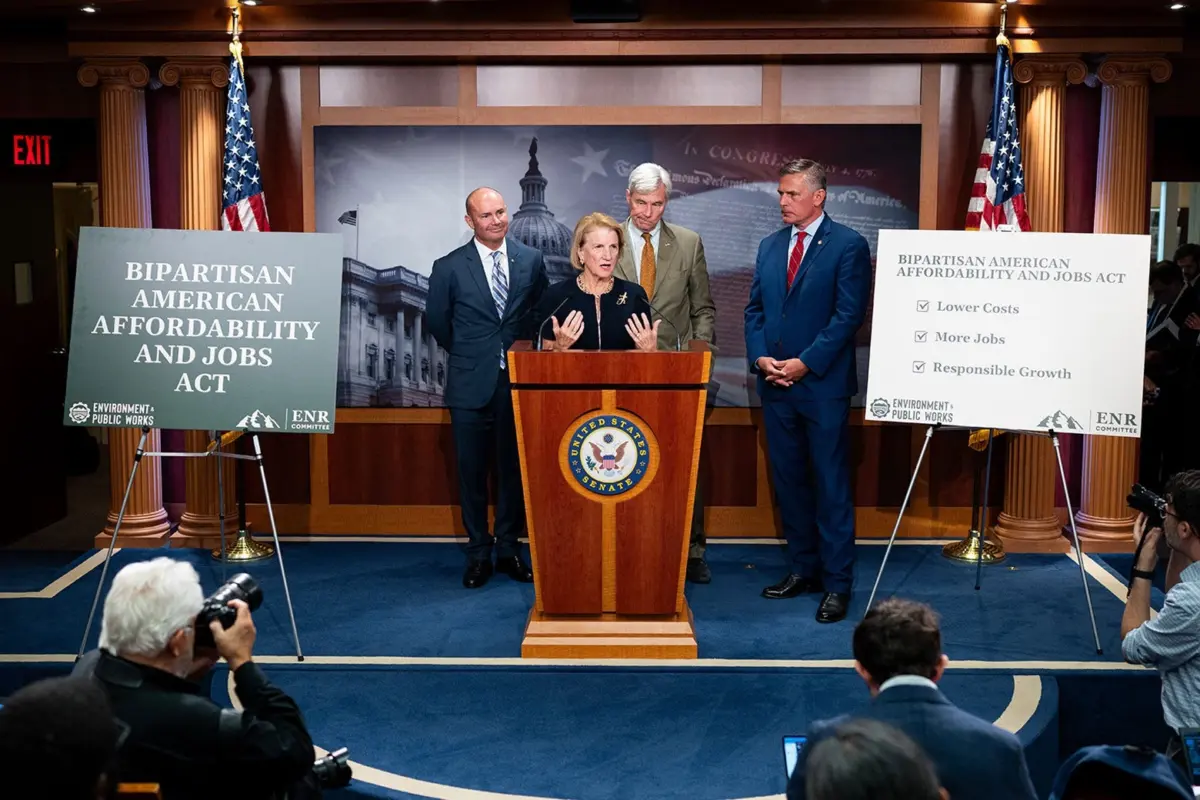
Washington, D.C., is currently witnessing one of the most improbable and fiercely contested legislative scrambles in recent memory. At the center of the storm is the Bipartisan American Affordability and Jobs Act of 2026 (BAAJA), a sprawling energy and infrastructure framework designed to overhaul the nation’s cumbersome permitting processes. Promoted by its architects as a vital modernization vehicle capable of fast-tracking renewable energy installations, transmission grids, and fossil fuel developments alike, BAAJA has managed to secure a bizarre alliance of political opposites.
On one side, MAGA loyalists and the fossil fuel industry—complete with public promotions from the American Petroleum Institute—champion the bill as an overdue correction to regulatory gridlock. On the other side, self-identified progressive Democrats and climate hawks have quietly collaborated behind closed doors to keep the package moving.
Yet, beneath the glossy rhetoric of bipartisanship and grid modernization lies a deeply contentious reality. Critics, ranging from environmental justice coalitions and legal scholars to Indigenous tribal nations and state attorneys general, warn that BAAJA is fundamentally a Trojan horse. If passed in its current form, the legislation threatens to dismantle bedrock environmental laws, shield major fossil fuel operators from financial and legal accountability, and trample tribal sovereignty—all while failing to deliver promised drops in energy costs or adequate climate protections. As the bill heads from a secretive Senate process toward the House of Representatives, it exposes a profound rift within the Democratic Party over whether compromising with the fossil fuel lobby is an acceptable price to pay for energy reform.
Detailed Chronology: From Backroom Deals to the Lame-Duck Sprint
The trajectory of BAAJA highlights how high-stakes legislation can be accelerated through Congress while evading public scrutiny.
- Late October 2026: Early drafts of the permitting reform package emerge, drawing immediate, sharp rebukes from legal experts and environmental analysts who note that the provisions go well beyond standard infrastructure streamlining, effectively defanging historic regulatory safeguards.
- October 30, 2026: Former Niskanen Center counsel David Bookbinder releases a scathing critique, warning that BAAJA presents "a serious threat to American democracy" by curtailing the enforcement of federal laws against permitted projects.
- Early November 2026: The American Petroleum Institute launches an aggressive promotional blitz on Capitol Hill, complete with free tacos for staffers, signaling the energy lobby’s intense hunger for the bill’s passage. Concurrently, groups like the NAACP and various Democratic state attorneys general issue formal condemnations.
- Veterans Day, November 2026: In an extraordinary and controversial procedural move, the United States Senate convenes on a federal holiday. Lawmakers bicker behind closed doors over whether to rush BAAJA through as-is or pause to address the mounting concerns raised by conservationists, legal scholars, and tribal leaders.
- Mid-November 2026: Key figures begin breaking ranks. Nevada Senator Catherine Cortez Masto formally withdraws her initial support following fierce pushback from her state’s Indigenous tribes. Meanwhile, President Donald Trump champions the legislation on Truth Social, and immigration hardliner Stephen Miller labels it an urgent legislative priority.
- November 18, 2026: The legislative machinery grinds forward, setting the stage for an intense lame-duck floor fight in the House of Representatives as pro-BAAJA Democrats attempt to cement a deal before the composition of Congress shifts.
Supporting Context & Metrics: The Mechanics of Permitting Reform
To understand why BAAJA has attracted such fierce debate, one must look at the mechanics of American energy development. For years, "permitting reform" has been a central buzzword among policy wonks, economists, and climate advocates. The core diagnosis is straightforward: the United States is currently experiencing a massive clean energy boom, but the infrastructure required to harness it is severely lagging.
Developers are struggling to build interstate power lines at the scale and speed necessary to connect remote solar, wind, and geothermal plants to the broader national grid. Without these transmission corridors, much of the green energy generated across the country cannot reach population centers, stalling the transition away from fossil fuels.
[Clean Energy Generation (Solar, Wind, Geothermal)]
                       │
                       ▼
       [The Bottleneck: Transmission Grid]
                       │
             (Needs BAAJA Expansion)
                       │
                       ▼
         [Delivery to National Consumers]
Pro-development liberals—often aligned with the "abundance" economic movement championed by figures like Ezra Klein—argue that cumbersome government bureaucracy and the weaponization of environmental reviews by local obstructionists (NIMBYs) are crippling green infrastructure. In theory, a well-crafted permitting bill would truncate review timelines, curb endless litigation, and allow the free market to build green infrastructure at scale.
However, critics point out that BAAJA applies these sweeping deregulation measures indiscriminately. Rather than functioning as a scalpel to remove bottlenecks for renewables, the bill acts as a sledgehammer, disproportionately benefiting fossil fuel giants. According to independent energy modeling from firms like Rhodium Group, BAAJA is projected to do very little to structurally lower consumer energy costs, nor does it guarantee the specific transmission capacity needed to achieve national climate goals. Instead, it locks in decades of greenhouse gas emissions by easing the path for pipeline expansions, natural gas facilities, and environmentally hazardous mining projects.
Official Statements and Stakeholder Perspectives
The ideological fractures laid bare by BAAJA have pitted strange bedfellows against one another, creating intense friction across civil society, legal sectors, and political offices.
The Pro-Reform Defense
Advocates within the Democratic caucus, including prominent climate hawks like Senators Sheldon Whitehouse and Martin Heinrich, have defended their continued backing of the framework through a pragmatic lens. From their perspective, the structural need to clear the backlog of green energy projects stuck in federal compliance reviews is so paramount that certain policy concessions are deemed acceptable. They argue that working with Republican colleagues to achieve baseline permitting reform is a rare opportunity that cannot be squandered, especially when framed around economic affordability.
The Environmental and Legal Backlash
Conversely, the opposition is sweeping and vociferous. Bill McKibben, a long-time advocate for large-scale solar and wind infrastructure, has criticized the bill for rolling back decades of vital environmental protections and undermining tribal sovereignty without guaranteeing substantive emissions reductions.
The threat to cultural resource management has also mobilized preservationists. Sarah Lowry, director of geophysics at New South Associates—a firm that works to identify historic and cultural sites like unmarked cemeteries under Section 106 of the National Historic Preservation Act (NHPA)—warns that BAAJA’s attempt to override these reviews will backfire completely.
"I don’t disagree that permitting reform is needed, but this bill was developed behind closed doors, and no one asked us what was going wrong with the NHPA and what didn’t work," Lowry noted. "If you don’t identify those cemeteries before groundbreaking, you can’t protect them, and if a cemetery is discovered by a bulldozer, they have to stop their work. Ironically, it would actually be more costly and add more delays than just going through the process where you identify it and then attempt to avoid it."
Lowry added that gutting Section 106 compliance standards—a primary target of the Trump administration—would devastate cultural resource management nationwide.
Future Outlook: A Mandate Ignored?
The push to pass BAAJA during the lame-duck session arrives at a peculiar historical moment. Just weeks prior, the American electorate delivered mixed, yet distinct, signals regarding environmental policy during the midterm elections. Across the country, voters frequently rejected pro-fossil fuel initiatives and embraced conservation:
- In Colorado, voters decisively defeated a ballot measure that would have enshrined natural gas production as a constitutional right, pushing back against utility-backed lobbying.
- In the heart of Texas oil country, a clean-air advocate successfully defeated a former fossil fuel executive in a closely watched congressional race.
- In Montana, voters elected their first Democratic House representative in three decades—a former smokejumper who has aggressively challenged federal public land sell-offs.
- Nationally, voters approved significant funding expansions for car-free public transit and urban green initiatives.
These electoral outcomes suggest a public appetite for pragmatic environmental progress and the protection of public lands, standing in stark contrast to the deregulation-heavy provisions embedded within BAAJA. Yet, pro-BAAJA lawmakers appear determined to finalize the agreement precisely because they fear these political headwinds will close the window of opportunity for bipartisan compromise.
Ultimately, BAAJA forces a sobering question upon the American political landscape: Is a bipartisan agreement inherently valuable if its structural concessions overwhelmingly favor the fossil fuel status quo while eroding public trust and environmental accountability? For millions of Americans who value public lands, clean air, and democratic oversight, the gamble inherent in BAAJA may prove far too costly. As the bill moves toward its final legislative tests, it serves as a stark reminder of how easily the urgent crusade for a green energy transition can be co-opted into a vehicle for deregulatory rollback.