Executive Overview
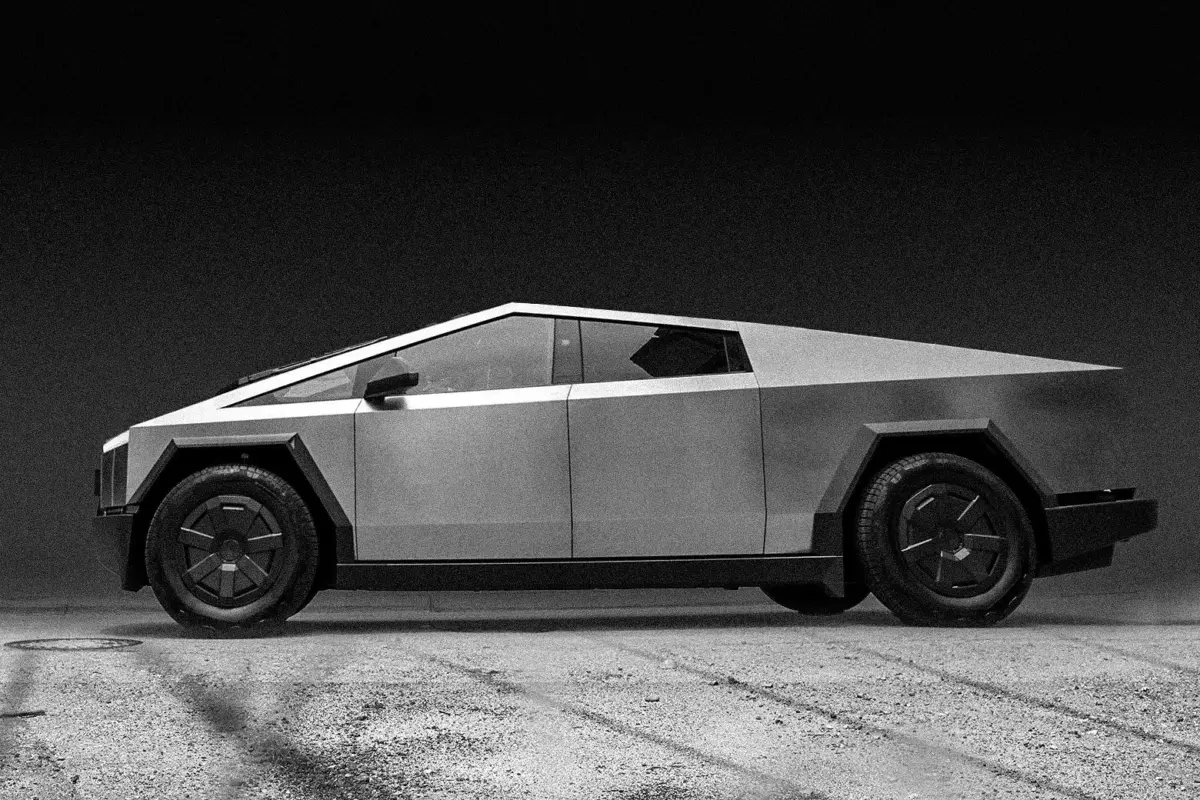
Few consumer products in modern automotive history have polarized public perception quite like the Tesla Cybertruck. From the moment its wedge-shaped, stainless-steel silhouette rolled onto a Los Angeles stage in late 2019, Elon Musk’s radical reimagining of the all-American pickup truck was met with an intoxicating mix of bewilderment, derision, and awe.
Now, barely a half-decade after its tumultuous debut, the futuristic experiment is hurtling toward an early grave. Signaling a sweeping strategic pivot away from consumer electric vehicles (EVs) and toward autonomous robotaxis and artificial intelligence, Tesla has announced that Cybertruck production will wind down in mid-2027. The manufacturing footprint in Austin, Texas, currently dedicated to the angular behemoth will be retooled to build the "Cybercab"—a gold-toned, steering-wheel-free autonomous vehicle designed to spearhead Musk’s vision of an on-demand transportation network.
For many, the demise of the Cybertruck will not be mourned. With a road presence that oscillates wildly between futuristic sci-fi fantasy and aggressive ostentation, the vehicle became a physical manifestation of Musk’s polarizing evolution. Once heralded as a climate-conscious champion of progressive tech enthusiasts, Musk’s public pivot toward right-wing politics, culture-war provocations, and high-profile political backing left the Cybertruck burdened by deep cultural baggage. Well-to-do urban liberals who once championed Tesla’s mission now resort to bumper stickers reading, "I Bought This Before Elon Went Crazy."
Yet, beneath the cultural vitriol and frequent engineering hiccups lies a fascinating business story. The Cybertruck was a massive swing for the fences—an unapologetic, high-risk gamble that sought to shatter the deeply entrenched norms of the highly lucrative North American pickup truck market. In the end, it proved to be a victim of its own impracticality, shifting corporate priorities, and a stark disconnect between Musk’s sci-fi fever dreams and the grounded needs of everyday truck buyers.
Detailed Chronology: From Back-of-the-Napkin Sketch to Assembly Line Reality
The 2019 Genesis
When the Cybertruck was unveiled in November 2019, the rollout was designed to shock and awe. According to industry lore, the brutally minimalist, geometric design sprang directly from Musk’s imagination. Legend has it that the Tesla CEO drew the vehicle with a ruler on a single sheet of paper, handing the sketch to Chief Designer Franz von Holzhausen and a team of baffled engineers with instructions to bring it to life.
Whether apocryphal or entirely true, the anecdote encapsulates Musk’s penchant for translating unvarnished, self-evidently eccentric ideas into corporate mandates. At the launch event, Tesla sought to demonstrate the vehicle’s indestructible nature by showcasing its "armored glass." In an infamous gaffe that immediately went viral, lead designer von Holzhausen threw a heavy metal ball at the window, shattering the glass twice on live television. Despite the embarrassing stumble, the truck commanded instant global attention, raking in hundreds of thousands of refundable pre-order deposits within days.
Delays and Production Purgatory
The path from the 2019 stage to customer driveways was fraught with endless delays. Originally slated to enter production in late 2021, the Cybertruck’s unique manufacturing requirements—most notably its unpainted, ultra-hard 30x cold-rolled stainless-steel exoskeleton—wreaked havoc on Tesla’s engineering teams. Stamping and bending stainless steel panels of that thickness without conventional stamping presses presented unprecedented metallurgical challenges.
Deliveries did not officially begin until early 2024, more than four years after the initial unveiling. By the time the first trucks rolled off the assembly line at Tesla’s Gigafactory Texas, the automotive landscape had shifted dramatically. Rivian had already spent years establishing a foothold in the electric adventure vehicle segment with the R1T, and traditional legacy automakers like Ford and General Motors had introduced their own credible, conventional EV pickups.
The 2027 Sunset Announcement
The final chapter of the Cybertruck’s production run was signaled in late 2024. Fresh off the political turbulence of the midterms, Musk utilized his platform on X (formerly Twitter) to confirm that Cybertruck assembly lines in Austin would be decommissioned by mid-2027. The phased shutdown is designed to clear vital floor space for the imminent mass production of the Cybercab and the humanoid Optimus robot. For a vehicle that was once billed as the cornerstone of Tesla’s expansion into utility transport, its operational lifespan will be shockingly brief.
Supporting Context & Metrics: The Economics of an Exotic Experiment
To understand why the Cybertruck is being ushered out the door, one must look closely at the numbers—both financial and operational—that dictated its fate.
The Pricing Chasm
When Musk first pulled the sheet off the Cybertruck in 2019, he promised an entry-level rear-wheel-drive model starting at a disruptive $40,000, with higher trims scaling up to roughly $70,000. These figures were instrumental in generating hundreds of thousands of early reservations.
Reality, however, proved far less accessible. By the time the vehicle finally launched, inflation, supply chain pressures, and manufacturing complexities forced Tesla to abandon its original pricing structure entirely:
- Base Model: Briefly listed at $82,490 before Tesla seemingly halted order intake.
- All-Wheel Drive Mid-Trim: Priced at $92,490.
- Top-Trim "Cyberbeast": Retailing at an eye-watering $102,490.
This massive price escalation alienated budget-conscious early adopters, transforming the Cybertruck from an accessible working-class utility vehicle into an expensive, ultra-niche lifestyle toy for affluent tech executives and crypto millionaires.
Sales and Production Discrepancies
Tesla’s Austin Gigafactory was engineered with grand ambitions, initially structured with the capacity to produce up to 250,000 Cybertrucks annually.
Yet, consumer demand fell drastically short of these lofty targets. Cumulative sales figures indicate that fewer than 75,000 units have been successfully delivered to retail customers. To absorb the excess inventory and mitigate the optics of sliding commercial momentum, corporate disclosures revealed that Musk’s aerospace company, SpaceX, stepped in to purchase tens of millions of dollars worth of Cybertrucks—highlighting how Musk frequently leverages his corporate portfolio to stabilize internal ventures.
| Metric | Projected / Promised | Actual Reality |
|---|---|---|
| Initial Base Price | $40,000 | $82,490+ (subsequently halted) |
| Annual Production Capacity | 250,000 units (Austin facility) | < 75,000 cumulative units sold |
| Timeline to Market | Late 2021 | Early 2024 |
| Production Lifespan | Indefinite ongoing flagship | Phased shutdown by mid-2027 |
Target Audience Miscalculation
The fundamental flaw of the Cybertruck lay in its profound identity crisis. It was structurally unsuited for the traditional demographics that dominate the high-profit American truck market:
- Commercial & Agricultural Users: Farmers, construction contractors, and blue-collar workers prioritize utilitarian durability, reliable payload capabilities, towing capacity, and ease of repair over rapid acceleration. A delicate, stainless-steel chassis wrapped around a luxury interior is ill-equipped for muddy job sites.
- Traditional Pickup Loyalists: Longtime buyers of the Ford F-Series—the reigning king of American trucks since the Reagan administration—found little appeal in a vehicle styled like a prop from a Mad Max sequel.
- Eco-Conscious EV Adopters: Consumers looking for practical, emissions-free utility gravitated toward the Rivian R1T, which offered genuine off-road capability wrapped in approachable, traditional pickup styling.
- Luxury Aspirational Buyers: Wealthy consumers seeking prestige and comfort opted for vehicles like the Ford F-150 King Ranch, featuring plush leather interiors, real wood accents, and sophisticated multi-speaker audio systems, rather than the austere, game-engine-inspired cabin of the Tesla.
Official Statements and Industry Reactions
As news of the impending 2027 phase-out reverberated through the financial and automotive sectors, industry analysts and company insiders offered varied perspectives on the vehicle’s legacy.
In his social media announcements outlining the factory retooling in Austin, Musk framed the decision not as a retreat, but as a necessary evolution toward the future of mobility. "Tesla’s mission is to accelerate the world’s transition to sustainable energy, but the architecture of tomorrow is autonomous," Musk posted on X, emphasizing that physical steering wheels and human-piloted commercial fleets are rapidly becoming relics of the past.
Automotive market analysts, however, offered a more critical post-mortem. Prominent industry observers have long characterized the Cybertruck as a classic example of "halo-car syndrome"—a high-visibility, low-volume vanity project meant to inject excitement into Tesla’s brand portfolio during periods of stock stagnation.
"The Cybertruck was never really designed to capture market share from Ford or Chevrolet," noted a prominent Detroit-based auto analyst who spoke on the condition of anonymity. "It was a rolling billboard for Tesla’s engineering bravado. It generated immense free marketing and satisfied a very specific, tech-obsessed demographic, but it fundamentally misunderstood the physics and culture of utility vehicles in North America."
Furthermore, the vehicle’s tenure was dogged by persistent quality control concerns. The National Highway Traffic Safety Administration (NHTSA) logged multiple recalls affecting the Cybertruck, ranging from software glitches to physical trim pieces and accelerator pedals that could loosen or detach under normal driving conditions. These persistent growing pains eroded consumer confidence and cemented the vehicle’s reputation as an immature product pushed prematurely onto public roads.
Future Outlook: The Cybertruck as a Collector’s Artifact
Despite its commercial underperformance and impending discontinuation, the Cybertruck’s story does not end with a quiet trip to the crushing yard.
Automotive historians and secondary market experts predict that the vehicle will occupy a unique, highly sought-after niche in automotive lore. Much like John DeLorean’s stainless-steel DMC-12—another star-crossed, visionary automotive misfire immortalized by pop culture—the Cybertruck is poised to transition from a divisive commercial product into a coveted collector’s item.
As production winds down toward the middle of 2027, early-edition "Cyberbeast" variants and founder-series models will likely command significant premiums among automotive enthusiasts and speculators. They will stand as physical monuments to a specific era of corporate swagger: a pre-pandemic, uninhibited moment when Tesla felt invincible enough to challenge the very concept of automotive form and function.
For better or worse, the Cybertruck was a massive swing for the fences. It challenged established conventions, provoked intense emotional responses, and tested the absolute limits of consumer tolerance for avant-garde design. And while it ultimately proved to be an expensive, impractical detour on Tesla’s roadmap, America’s highways will be a little less colorful—and a lot more conventional—once the last wedge-shaped steel titan rolls off the assembly line in Austin.