In the contemporary landscape of youth culture and artistic expression, few subcultures have experienced the paradoxical trajectory of the ballroom scene. Born out of the fierce, marginalized resilience of Black and Latinx queer communities in New York City, ballroom has evolved from an underground refuge into a global cultural engine. Its lexicon, aesthetics, and kinetic vocabulary—from the sharp punctuation of a "death drop" to the regal command of "mother"—permeate mainstream fashion, internet vernacular, and pop superstardom. Yet, this mainstream absorption frequently comes at a cost: dilution, decontextualization, and the erasure of the underground blood, sweat, and tears that sustain it.
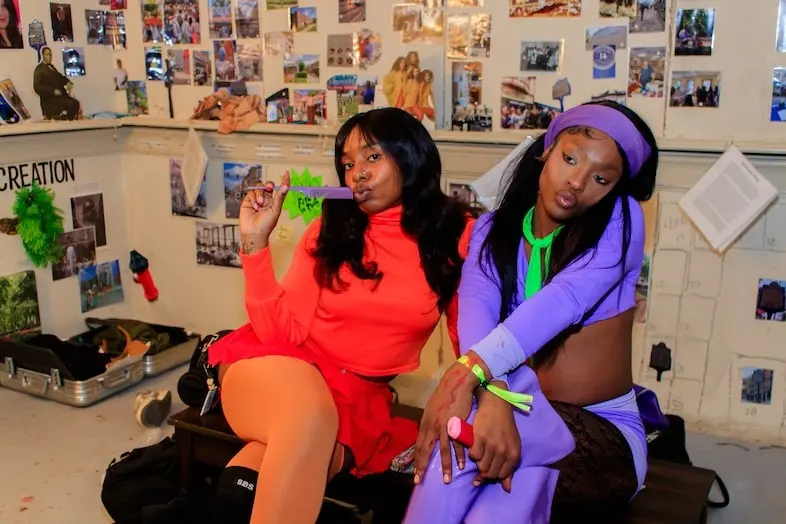
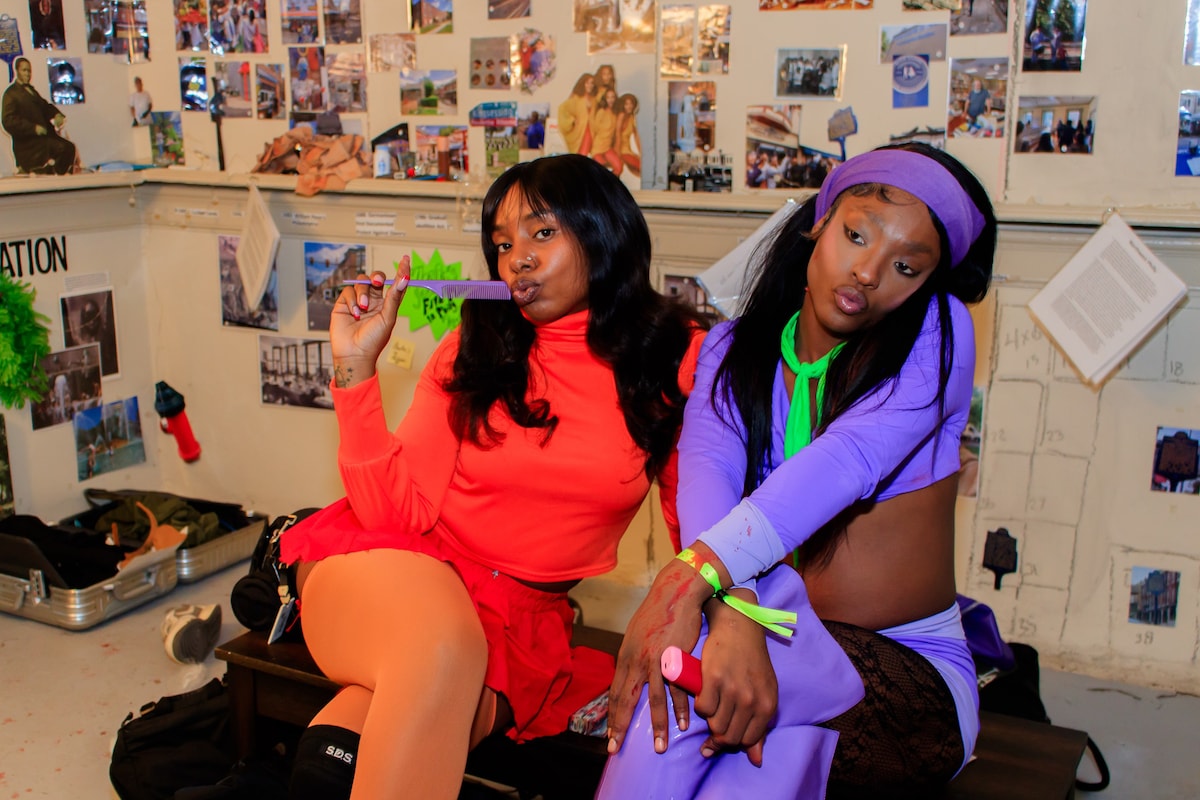
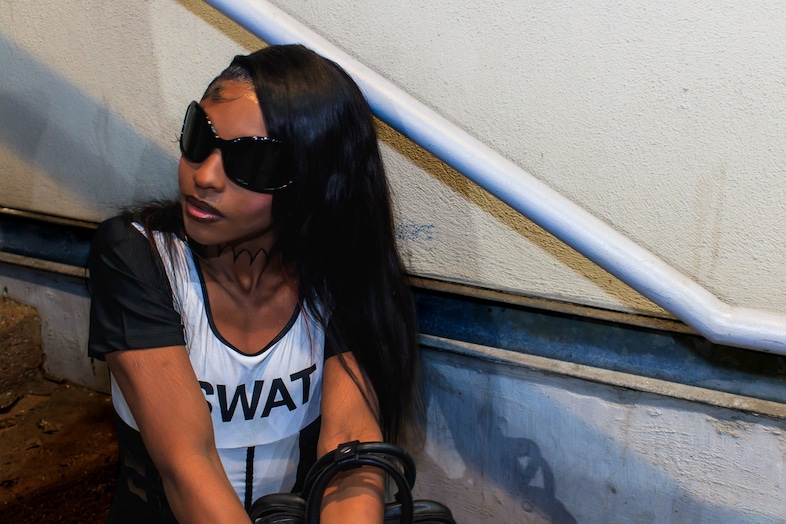
Enter State of Youth, an editorial initiative dedicated to providing rising young creators with their foundational bylines and platforms. Through this series, 22-year-old photographer and multimedia chronicler Kareem Bah turns his lens toward his hometown of Philadelphia, capturing the sweat-drenched, high-stakes atmosphere of the city’s kiki balls. Specifically focusing on events like the annual Let’s Get Spoookyyy Kiki Ball Part II, Bah’s work serves as a vital corrective to the New York-centric narrative that has long dominated ballroom historiography.
While New York is celebrated for its technical mastery and pristine execution, Philadelphia’s ballroom ecosystem offers something vastly different: an unvarnished, high-octane collision of raw essence, unfiltered attitude, and uncompromising family structures. Bah, a proud member of the legendary House of Versace, does not merely document this world as an outsider looking in; he is an active participant, performer, and historian. This comprehensive feature explores Bah’s entry into the scene, the deep roots and rich legacy of Philadelphia’s nearly 40-year-old ballroom history, the politics of cultural appropriation and internet commodification, and the enduring importance of vernacular documentation in preserving queer Black history.
Detailed Chronology: From Digital Spectator to Floor Commander
The journey of Kareem Bah into the labyrinthine, electrifying world of ballroom is emblematic of the modern digital generation’s relationship with subculture. Long before he ever stepped foot onto a wooden floor or felt the searing intensity of a judges’ panel, Bah was a digital observer. Growing up in Philadelphia, he spent countless hours consuming viral clips of ballroom battles and runway walks—videos that regularly amass hundreds of thousands of views across TikTok, Instagram, and YouTube.
However, the passive consumption of digital content can only bridge the gap to reality for so long. In May 2023, Bah made the pivotal transition from screen to space, attending his first-ever live ballroom event: a local pop-up kiki ball. Walking into the venue, he was immediately struck by the visceral gravity of the environment. Unlike traditional performance arts where the barrier between audience and performer is clearly delineated, the ballroom floor demands total exposure.
"When you vogue, when you are on the floor, all eyes are on you," Bah reflects, recalling the intense vulnerability of his early experiences. "It’s a very sporadic, in-the-moment thing because people will know if you’re in your head. Ballroom is Black gay Hollywood; you have to command the crowd and bring your A-game because somebody’s watching."
Realizing that survival and respect within the community required exhaustive foundational knowledge, Bah embarked on a rigorous, self-directed masterclass. For the year following his debut, he did not just dance; he dissected. He scoured through digitized, grainy VHS tapes of historical balls dating back to the early 2000s. He analyzed stage presence, crowd interactions, and the subtle art of "drip-feeding"—the calculated release of energy and choreography that separates a novice from a legendary performer. He tracked the multi-decade trajectories of iconic figures from their early house affiliations to their ultimate elevation to legend status.
This obsession with historical analysis birthed a profound realization: the survival of ballroom relies entirely on the act of documentation.
"Documentation has been a big part of my story in ballroom because, if it wasn’t for those tapes, I probably wouldn’t be here right now," Bah notes.
Driven by this epiphany, Bah merged his passion for performance with his eye for photography. He turned his camera directly onto the Philadelphia scene, anchoring himself within the community not just as a dancer, but as a visual historian dedicated to capturing the unvarnished reality of contemporary kiki culture.
Supporting Context & Metrics: The Anatomy of Philadelphia’s Unique Ballroom Identity
To understand the weight of Kareem Bah’s photography, one must contextualize the geographic and cultural nuances that separate Philadelphia from the tradition’s birthplace in Harlem, New York. While New York ballroom is globally renowned for its hyper-formalized categories, rigorous technical execution, and structured adherence to traditional archetypes, Philadelphia operates under an entirely different frequency.
Co-host of the Let’s Get Spoookyyy Kiki Ball Part II and a towering figure in the kiki scene known as "Legendary Rylee 007," Rylee Locker explains that Philadelphia’s scene possesses a distinct lineage that spans nearly four decades.
"Philly’s ballroom scene has been around for nearly 40 years," Locker states. "At one point in history, Philly became the city for people [in the scene] to travel to."
The city has historically birthed some of the most influential Femme Queen performers in ballroom history, including luminaries such as Niambi, Mercedes, Amina, Erica Kane, Allison, Tiffany, Lexy, and Shadera. These performers shaped the architectural blueprint of southern-adjacent East Coast performance, infusing it with a grit and emotional urgency unique to the city’s socioeconomic and cultural landscape.
Bah summarizes the dichotomy between the two major East Coast hubs succinctly:
"New York is about technique and technicality, but Philly has essence and attitude. You have the uncut version of ballroom here."
This unfiltered energy is channeled directly through the house system—specifically through Bah’s affiliation with the legendary House of Versace, which recently secured the high grand prize award at the Let’s Get Spoookyyy Kiki Ball Part II. In an ecosystem where societal safety nets for queer and trans youth are perpetually frayed, the house functions as a vital surrogate family structure.
"We’re all a unit," Bah says of his house brothers and sisters, "and my house encouraged us to be the baddest bitches we could, because that’s what Philly is about."
Beyond the local level, the mechanics of ballroom culture exist in a perpetual tension with the digital mainstream. In recent years, terms like "death drop," "clock it," and "mother" have migrated seamlessly from underground function rooms into the vernacular of internet users who have never set foot in a ball. This widespread linguistic borrowing often occurs in a vacuum, entirely stripped of its queer, Black, and Latinx origins.
Bah views this phenomenon through a pragmatic, historically grounded lens. He points out that the underground nature of ballroom allows it to continuously regenerate beneath the feet of commercial exploitation.
"As Black people, we do breed a lot of culture in the internet space, outside world, everywhere," Bah observes. "With ballroom, everything is underground and builds over time, so by the time it’s in the mainstream, we are onto something else."
Official Perspectives & Cultural Analysis: The Intersection of Art, Politics, and Mainstream Co-Optation
The mainstream popularization of ballroom aesthetics is not an isolated modern phenomenon; it has historical precedents, ranging from Madonna’s 1990 global hit Vogue to Beyoncé’s critically acclaimed 2022 house-inflected opus, Renaissance. However, Rylee Locker argues that the visibility and acceleration of ballroom culture are deeply tethered to broader socio-political climates. Art does not exist in a vacuum, particularly the art created by those holding multiple marginalized identities.
"Politics relates to where society is in creating and consuming art, and that can influence when ballroom could be trending more or less," Locker explains. "The administration coming into power in 2017 and the people growing heightened political awareness with the BLM movement in 2020 created a strong response of art as protest, and that’s why and how ballroom was created in the first place."
The genesis of ballroom in late 20th-century Harlem was a direct response to systemic racism, homophobia, transphobia, and exclusion from traditional drag pageantry spaces. Balls were—and remain—performative acts of self-determination, survival, and political resistance. When mainstream institutions or pop stars sample these elements without acknowledging the structural realities that birthed them, they commit an act of cultural extraction.
Despite these ongoing tensions with the mainstream, participants within the scene remain fiercely protective of its core values. Locker credits ballroom with providing her with a fundamental life anchor—teaching her invaluable lessons concerning purpose, family loyalty, political consciousness, mutual respect, and the ephemeral nature of fame.
For Bah, the act of photographing events like the Death Do Us Part ball, the Antarctica is Burning Ball, and preparing for fixtures like the Blonde Ball in New York is an exercise in preservation. He deliberately utilizes older media formats, viewing the reliance on digital-only, disposable content as a threat to tactile historical memory.
"I want people to understand the language and history of ballroom," Bah stresses, "because people have gone through so much for and died for this."
Future Outlook: Perpetuating the Cycle of Memory and Performance
As Kareem Bah looks toward the horizon, his ambitions extend far beyond personal artistic recognition. Having spent three years deeply immersed in the scene, he maintains the wide-eyed wonder of a newcomer coupled with the archival discipline of a seasoned historian. His ultimate aspiration within ballroom is clear: to continue learning, honing his craft, and one day earning the status of a legend.
Yet, his primary commitment remains tied to the physical tools of his trade and the continuity of the community. By keeping his old-school camcorder and camera close at hand, he is consciously fighting against the disposable nature of modern media consumption. He envisions a self-sustaining ecosystem of mutual documentation, where the current generation of youth being filmed today will eventually step into the roles of house mothers, fathers, and legends tomorrow.
"Who knows what could happen in the next ten years?" Bah muses. "Somebody could be recording me as one of the up-and-comers and my house father as one of the big legends, so the cycle can keep repeating."
Ultimately, Philadelphia’s ballroom scene has fundamentally altered Bah’s internal landscape, transforming him from a passive digital voyeur into a confident, expressive performer and visual chronicler. Summing up his philosophy on the relentless, beautiful momentum of the culture, he offers a metaphor that echoes the rhythmic, unending pulse of the underground:
"It made me into a performer, and unlocked a lot in me. I always try to remember that a ball is like a bus—there’s always one coming next."
Through the lenses of young visionaries like Kareem Bah, the raw, unfiltered energy of Philadelphia’s ballroom scene is safely secured not just in memory, but in the permanent annals of modern queer history.