Executive Overview
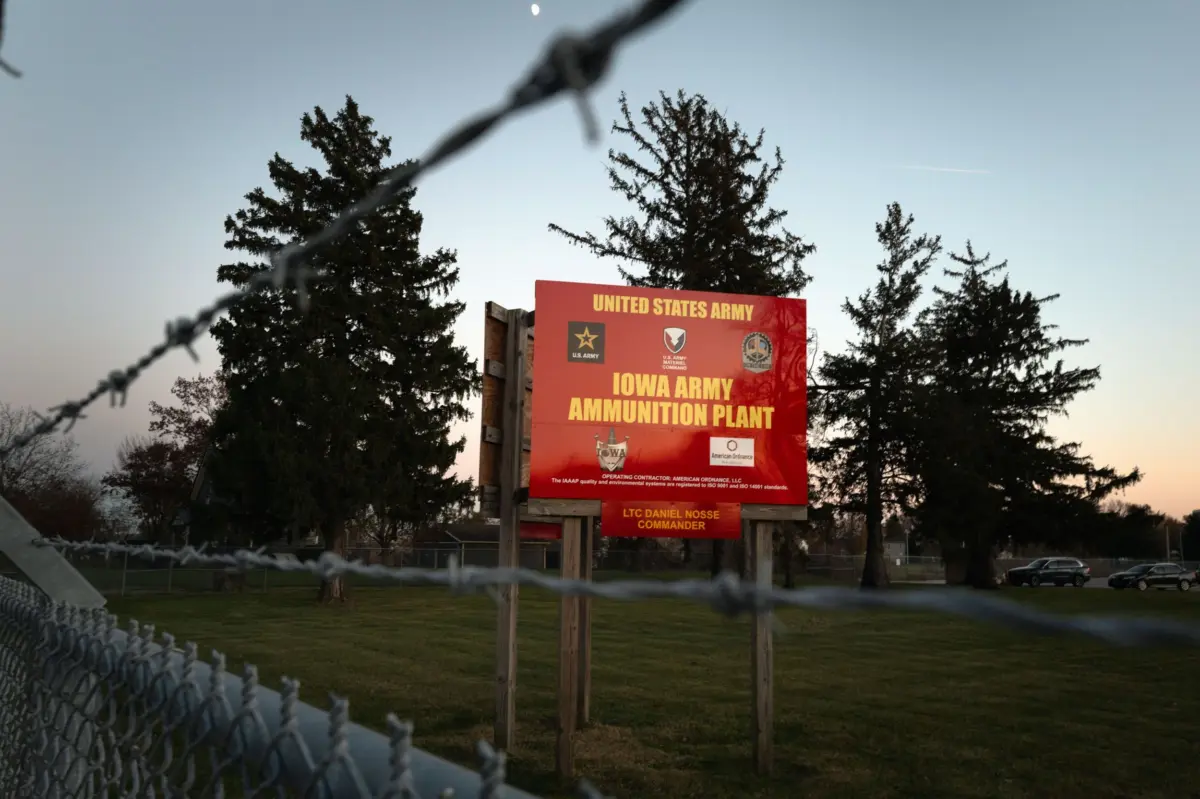
A high-stakes confrontation between local governance, federal oversight bodies, and the United States military has thrust rural Iowa into the national spotlight. At the center of the dispute is a massive cache of degraded lead azide—a volatile primary explosive—stored for over two decades at the Iowa Army Ammunition Plant near Middletown, Iowa. Citing an urgent and escalating risk of spontaneous detonation as winter temperatures drop, the Army has pushed forward with plans to execute a controlled surface explosion of 9,500 pounds of the hazardous material.
The move has triggered sweeping public alarm, intense political maneuvering, emergency courtroom battles, and swift rebukes from public health experts. Local authorities, state leadership—including Iowa Governor Kim Reynolds—and regional residents report being caught entirely off guard by the military’s abrupt rollout. Critics argue that the Army’s opaque communication strategy, late-stage policy shifts, and reliance on emergency federal powers bypass established environmental protections and represent a textbook failure of public health crisis management. As legal injunctions clash with military directives and presidential statements, communities downwind are left scrambling to balance holiday travel plans with shelter-in-place survival preparations.
Detailed Chronology of Events
The unfolding crisis is characterized by a timeline of missed communications, sudden policy pivots, and rapid legal developments that have left regional stakeholders reeling.
October 26: The First Warning
The saga began quietly on October 26, when Charles Massner, the mayor of Mediapolis, Iowa—located roughly 20 miles north of the Middletown facility—received an unembellished email from the US Army. The correspondence warned of "an intentional, controlled detonation" involving "a quantity of degraded lead azide" slated for the near future at the Iowa Army Ammunition Plant.
Crucially, the initial notice lacked essential details: no timeline was provided, no volume figures were shared, and no guidance was offered regarding potential toxic fallout or public safety protocols. The sole actionable item in the email was a request for permission to conduct environmental testing on public lands before and after the event—a request the town council granted on November 2.
November 15: The Shocking Public Advisory
Weeks passed with complete radio silence from military authorities. That silence was shattered on November 15, when the Army published a formal public advisory on its official website, announcing that the massive detonation would take place within days.
Attached to the advisory was a dispersion map meant to model potential exposure zones. The graphic depicted Mediapolis and surrounding communities directly in the path of the plume, overlaid with a dramatic reddish-yellow cloud bordered in hot pink. For local officials and residents alike, the sudden appearance of the advisory served as their first real inkling of the scale and proximity of the hazard. Governor Kim Reynolds’ office confirmed that state leadership learned of the operation through the exact same web release.
Late November: Contracts, Courts, and Countermands
As public outcry swelled, the legal and administrative landscape fractured:
- March Context Unveiled: Documents later revealed that the 68 barrels of lead azide had been officially categorized as hazardous waste back in March, kicking off a scramble for disposal alternatives.
- The Scrapped Contract: Investigations by major news outlets revealed that the Army had awarded a contract to a private environmental remediation firm in late March to handle the chemical waste safely onsite, only to abruptly cancel the contract two months later without citing performance deficiencies.
- Emergency Invocation: Facing growing resistance, the Army filed court documents on Saturday, arguing that once temperatures drop below 30 degrees Fahrenheit, the degraded chemical compound faces an "immediate risk" of spontaneous, catastrophic explosion. Bypassing standard review pathways, the military invoked emergency powers to mandate a November 24 detonation.
- Legal and Executive Intervention: A federal court order temporarily blocked the detonation, yet the Army announced late Sunday night via social media that it intended to proceed with the blast on Wednesday—just one day before Thanksgiving. This prompted a counter-statement from President Donald Trump, who posted that he was ordering the Army to halt actions pending further court review, before statements were later clarified to indicate deferral to appellate rulings.
Supporting Context & Metrics: The Science and the Danger
Understanding the gravity of the Iowa situation requires examining the physical properties of the material involved and the broader landscape of military munition disposal.
The Chemistry of Lead Azide
Lead azide ($textPb(N_3text)_2$) is an inorganic compound used extensively as a detonating initiator in commercial and military explosives. Unlike secondary high explosives that require intense shockwaves to detonate, primary explosives like lead azide are exceptionally sensitive to friction, static electricity, heat, and shock.
Over a span of 20-plus years in storage, the 68 barrels at the Middletown site have degraded. Chemical breakdown in aging lead azide can lead to the formation of unstable crystal structures, internal pressure buildup, and heightened sensitivity. According to military filings, when subjected to fluctuating winter temperatures dropping below 30 degrees Fahrenheit, the physical integrity of the degraded matrices compromises further, escalating the probability of a self-initiated detonation.
Scale of the Operation and Fallouts
While the Army has historically managed and detonated expired or degraded munitions on military reservations, the sheer volume of 9,500 pounds of degraded lead azide represents an unprecedented challenge for surface disposal in a populated region.
Environmental health specialists emphasize that while a controlled detonation aims to minimize uncontained dispersal, any disruption of heavy-metal compounds releases particulate matter into the atmosphere. Lead is a persistent toxicant with no biological utility and no safe threshold of human exposure, particularly for vulnerable populations such as infants, young children, and pregnant women.
Official Statements and Institutional Responses
The handling of the crisis has exposed deep fractures between federal military commands, environmental regulators, and state-level leadership.
The United States Army
The Army’s primary stance centers on the principle of lesser harms. In its weekend court filings, military representatives argued:
"In short, a controlled detonation is by far safer than an uncontrolled explosion."
Maintainers of the defense installation stress that waiting for alternative non-explosive neutralization methods—such as chemical stabilization treatments—carries an unacceptable window of risk. Should the barrels fail independently inside the storage bunkers, the resulting blast would be uncontrolled, uncontained, and potentially catastrophic for base personnel and nearby infrastructure.
The Environmental Protection Agency (EPA)
In a correspondence letter addressed to Governor Reynolds, the EPA Region 7 administrator noted that the federal agency was only formally apprised of the dangerous state of the degradation in March. The EPA evaluated multiple prospective strategies alongside the military—including chemical neutralization—but acknowledged that virtually all active intervention methodologies carried residual risks of triggering premature chain reactions.
Academic and Public Health Experts
The communication vacuum surrounding the operation drew sharp rebukes from independent scientific authorities. Dr. Peter Thorne, a professor of environmental health at the University of Iowa and former chair of the EPA’s Science Advisory Board, described his reaction upon reading the press release:
"My first reaction was, They’re going to do what?"
Thorne noted that his laboratory was immediately inundated with inquiries from pediatricians, concerned parents, and industrial facility managers. Criticizing the military’s outreach strategy, Thorne stated:
"Best practice is not what they’ve done—I think this is closer to worst practice, from a public health perspective."
He outlined what a proper crisis communications protocol should have entailed:
- Extensive, multi-channel public town halls.
- Comprehensive, transparent Question-and-Answer forums and published FAQs.
- Clear cost-benefit analyses explaining why detonation was selected over other remediation paths.
- Proactive, early engagement utilizing local media, social channels, and direct municipal briefings.
Instead, local leaders like Mayor Massner were left interpreting aggressive weather-plume maps that appeared to indicate imminent life-threatening danger without clear instructions on protective actions. As Massner observed regarding the red-drenched dispersion model:
"When you see a map covered in red, you’re supposed to run for shelter immediately—your life is in danger."
Future Outlook & Ongoing Resolution
As the legal battles wind through the appellate courts and political figures weigh in on the chain of command, the immediate future of the Middletown munitions remains precariously balanced.
Mediapolis residents and neighboring communities find themselves trapped in an agonizing holding pattern. Holiday travel schedules have been thrown into disarray, vulnerable residents have temporarily evacuated the potential fallout footprint, and local officials continue demanding absolute transparency regarding air-monitoring protocols and post-blast environmental testing.
Regardless of whether the detonation occurs this week, is further delayed by judicial intervention, or is ultimately routed through an alternative chemical neutralization pathway, the incident has exposed critical vulnerabilities in emergency preparedness and intergovernmental communication. Restoring public trust in federal management of hazardous materials located near civilian population centers will require a fundamental overhaul of how the military assesses risk, communicates environmental hazards, and collaborates with the local communities that live in the shadow of national defense infrastructure.