Executive Overview
In the spring of 2023, the streets of Paris transformed into a theater of generational frustration and civic unrest. Sparked by President Emmanuel Macron’s controversial decision to force through pension reforms—raising the retirement age from 62 to 64—millions of French citizens took to the boulevards. While traditional media outlets broadcasted the unfolding drama from behind barricades or inside studio panels, a different kind of journalism was taking shape on the digital frontlines.
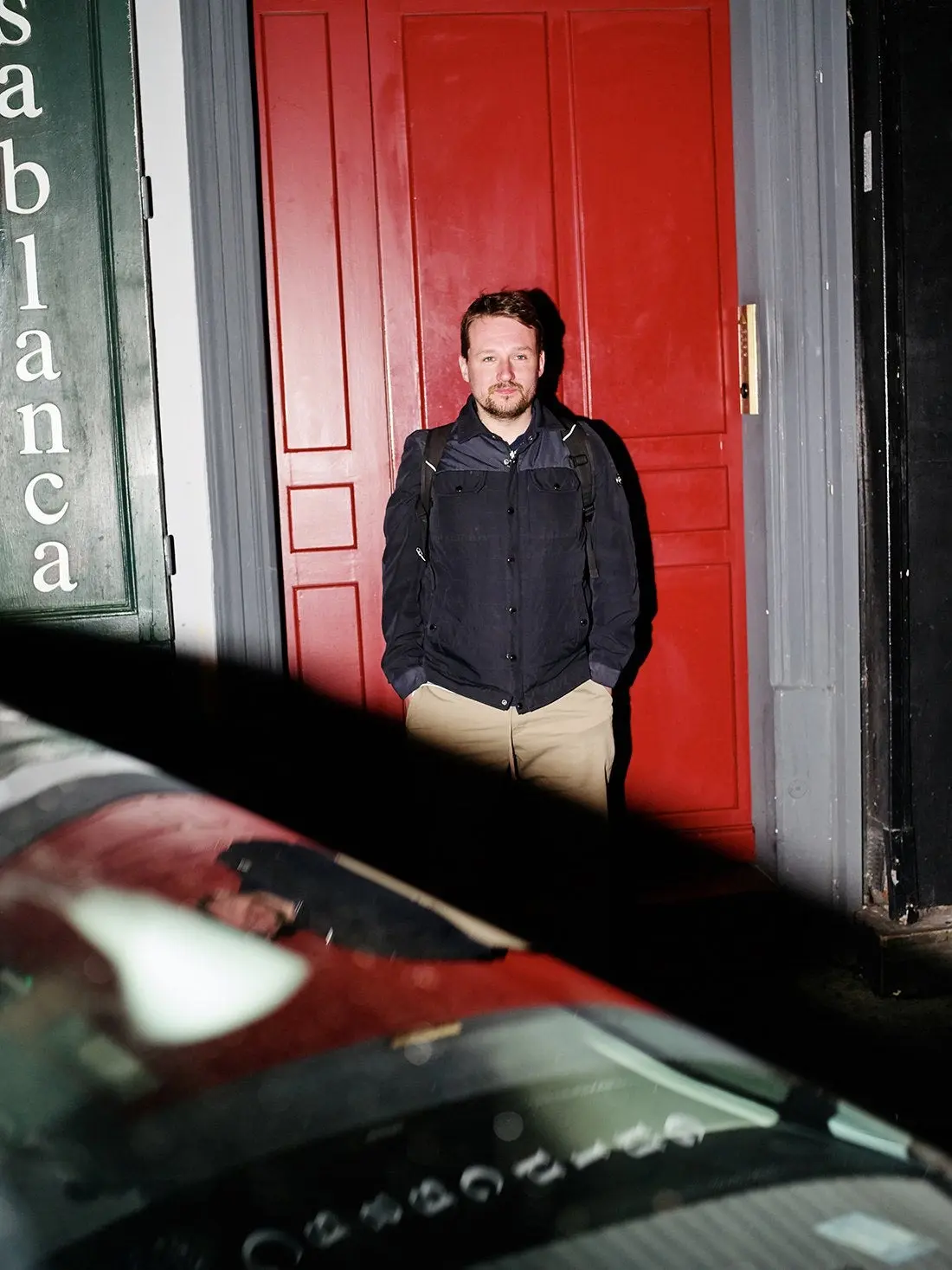
At the center of this paradigm shift is Rémy Buisine, a 32-year-old video journalist for the French digital-native media outlet Brut. Armed with little more than dual smartphones, a gas mask, and an unwavering commitment to unedited documentation, Buisine has become an indispensable lens for millions worldwide. His marathon livestreams—spanning up to eight hours through teargas-hazed riots—have fundamentally rewritten the rules of news dissemination.
This deep dive explores the mechanics of Buisine’s ground-level reporting during the height of the French protests, the socioeconomic underpinnings of his rise, the transformation of legacy news structures in the TikTok era, and the physical and psychological toll exacted by hyper-connected, real-time crisis journalism.
Detailed Chronology: A Day on the Frontlines with Rémy Buisine
Afternoon: The Gathering Storm
The April 6 protest was already well underway when I rendezvoused with Buisine. Navigating a crowd estimated anywhere from 57,000 (according to police) to 400,000 (according to union organizers), Buisine defied the classic visual tropes of a conflict journalist. Eschewing neon-yellow press armbands in favor of a light navy puffer jacket and blue jeans, he blended seamlessly into the sea of demonstrators.
Despite his casual appearance, Buisine operates with military precision. Before we could exchange more than a few words, he was already directing a colleague to capture the tail end of the march. As we walked toward the vanguard of the demonstration, Buisine juggled two phones—one dedicated to professional communications, the other for capturing Instagram and TikTok content—while constantly pausing to greet fans, peers, and volunteer street medics.
Approaching Montparnasse station, near Brut’s Paris headquarters, the atmosphere shifted. Buisine retreated to his backpack, extracting hermetically sealed goggles and a gas mask. He looped the mask over his neck, slipped the goggles into his outer right pocket, and stowed tear-gas decontaminant spray within arm’s reach.
The Escalation: Vavin Metro and the Gendarmerie
At 3:29 p.m., a concussive blast echoed down the boulevard. The crowd erupted into jeers and chants of "ACAB," rendered in distinct French cadences. Near the Café de la Rotonde, a contingent of the gendarmerie—a militarized police force—formed a wall of riot shields across the width of the avenue.
By 3:37 p.m., warning shots cracked through the air. The crowd tensed; as moderate protesters retreated, Buisine surged forward, phone raised, capturing the sudden appearance of black-clad youth groups banging metal barricades against the asphalt. Knowing the protocol—and lacking the protective equipment and legal safety net afforded to accredited press—I stepped back as Buisine donned his helmet. Seconds later, the first tear gas canister arched into the crowd. Buisine was already live.
Evening: Kettling, Barricades, and the Place d’Italie
As daylight faded, the intensity escalated. Buisine documented protesters breaching a building after an object was thrown from a window, and captured the terrifying moment the awning of the Café de la Rotonde went up in flames. For nearly half an hour, he found himself trapped inside a vandalized bank surrounded by law enforcement.
At the Place d’Italie, as the protest dissolved into a tense standoff, police kettled the remaining defiant demonstrators near a metro station entrance. In a surreal display of modern celebrity, the trapped protesters began singing in Buisine’s honor: "Ah Rémy, allez, allez, allez!"
Released hours later, the crowd surged down Avenue d’Italie, constructing makeshift barricades out of burning wood and garbage bins near the Tolbiac metro station. Three members of the French National Assembly—operating without their traditional tricolor sashes—stopped to give brief interviews to Buisine.
Finally, at 10:54 p.m., after logging over 28,000 steps and seven and a half hours of uninterrupted broadcasting, Buisine ended his livestream. On TikTok alone, 1.8 million viewers had tuned in. Yet, even as fires raged nearby and fresh tear gas canisters hissed into the dark, his workday was far from over.
Supporting Context & Metrics: The Rise of Social-First News
The Democratization of the Newsroom
Buisine’s journey to becoming one of France’s most recognizable media figures is emblematic of the disruption sweeping modern journalism. Growing up in a working-class village in northeastern France without familial connections to the media industry, traditional avenues of advancement were closed to him. Poor academic testing ruled out elite universities, leading him instead to graduate from a horticultural technical high school.
His entry into media was unconventional: managing social media accounts for soccer players before transitioning to community management for Parisian radio stations in 2013. The turning point arrived in 2015, when he began utilizing the nascent livestreaming app Periscope to broadcast protests against the El Khomri labor reforms. Learning the craft in real-time through audience feedback and advice from veteran reporters, Buisine’s raw, unfiltered approach caught the attention of Brut founders, who hired him as an inaugural team member in 2016.
Metrics of Engagement
The impact of Buisine’s approach on Brut’s digital footprint is staggering:
- Follower Surge: During the height of the 2023 pension protests, Brut’s TikTok account gained 1 million new followers in a single month, pushing its total to 4.2 million.
- Audience Reach: Individual livestreams regularly peak at 70,000 concurrent viewers, with total views per broadcast frequently crossing the multi-million mark.
- Accessibility: Unlike traditional news broadcasts that rely on soundbites and studio curation, Buisine’s streams often feature uncut, 10-to-20-minute uninterrupted interviews with ordinary citizens, giving voice to marginalized socioeconomic demographics.
Official Statements and Institutional Reactions
The rise of digital-native streaming journalists has fundamentally disrupted the relationship between the French political establishment and the media.
In the early days of Brut, traditional politicians viewed the platform with extreme skepticism. "Some politicians were chilly about coming on Brut because they were scared of communicating on social media," Buisine reflects. However, the immense cultural shift toward digital-first platforms forced a reckoning. By 2020, President Emmanuel Macron himself sat down with Buisine for a grueling, two-and-a-half-hour livestreamed interview—a testament to the outlet’s undeniable political clout.
Conversely, law enforcement agencies have maintained a fraught relationship with field journalists. Despite legal protections for members of the press, independent reporters covering French street protests have frequently faced police violence, including targeted tear-gassing and baton strikes. Paradoxically, these violent encounters often serve as catalysts for digital engagement; whenever Buisine is attacked or gassed on camera, viewer metrics skyrocket, illuminating a public hunger for accountability that legacy broadcasters often fail to satisfy.
Future Outlook: The Physical Toll and the Next Horizon
As the clock ticked past 1 a.m. following the April 6 protests, Buisine sat in a local kebab restaurant, unable to finish his meal. Hours of inhaling chemical irritants had paralyzed his appetite, yet his body remained flooded with adrenaline.
"Sometimes I sit down, eat, and can’t get back up without falling back down," he admitted, noting that true sleep was still hours away. Despite finishing his shift in the early morning hours, Buisine was required to wake up at 9:30 a.m. to lead an editorial meeting in his capacity as Brut’s head of short-form content.
After a brief, highly compressed weekend recovery window, a catastrophic building explosion in Marseille prompted Buisine to pack his bags once more, board a train, and return to the frontlines of crisis reporting.
The Evolution of Crisis Reporting
Buisine’s trajectory signals a permanent shift in how civil unrest and societal crises are documented globally. As trust in institutional media continues to erode among younger demographics, the demand for radical transparency, unscripted access, and empathetic listening will only intensify.
For news organizations worldwide, the challenge moving forward is not merely adopting new platforms, but matching the authentic, physical dedication required to meet audiences where they are: in the streets, behind the barricades, and live on the screen.