Executive Overview
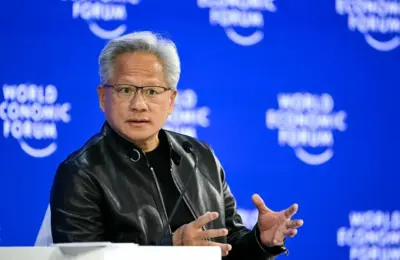
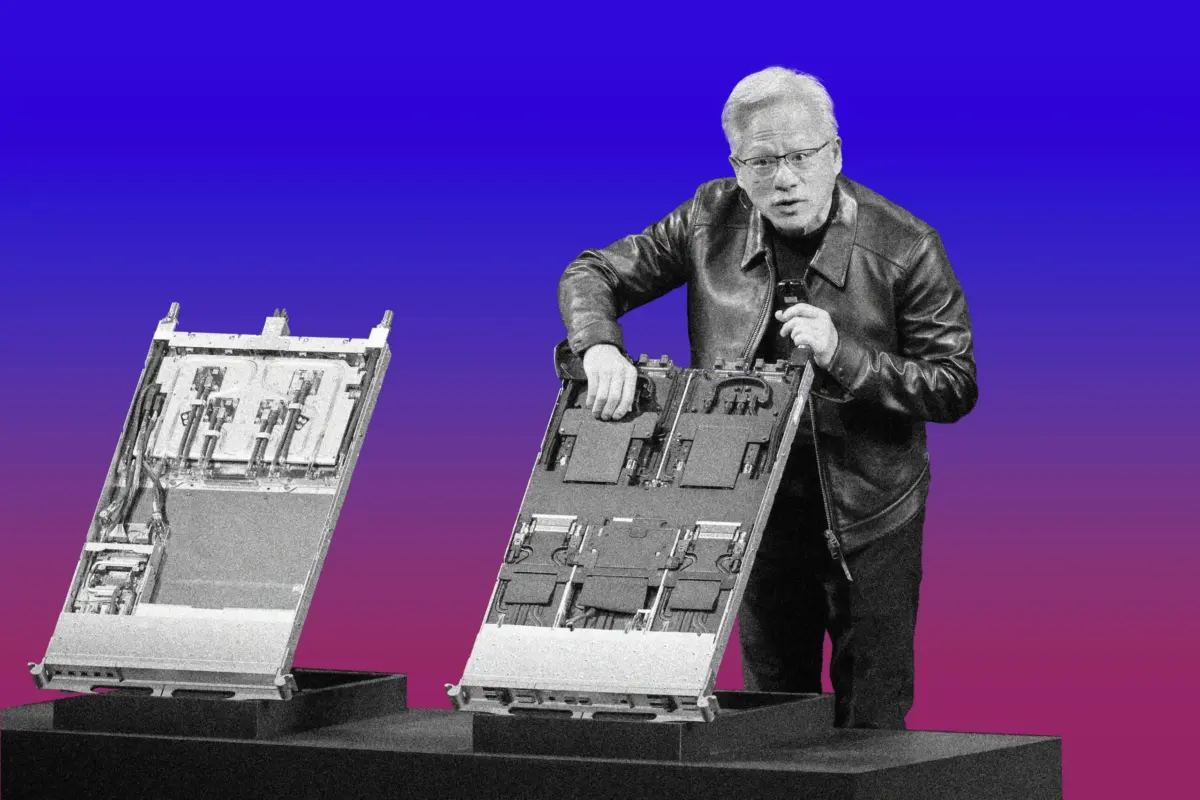
For the better part of a decade, the architecture of the modern artificial intelligence boom was tethered to a single, singular figure: Jensen Huang. As the co-founder and Chief Executive Officer of Nvidia, Huang did not merely build a trillion-dollar semiconductor colossus; he engineered the foundational hardware layer upon which the entire generative AI revolution was constructed. Sporting his signature leather jacket and commanding the stage at keynote addresses with the theatricality of a rock star, Huang became the ultimate architect of the AI gold rush. He also evolved into an improbable political operator—a tech titan capable of navigating the volatile, transactional corridors of Washington, D.C., successfully whispering to the Trump administration and subsequent policymakers alike to shape the trajectory of technological regulation, trade policy, and export controls.
However, the technology landscape is entering a turbulent, uncharted chapter: the post-Huang era.
As Nvidia faces shifting market dynamics, intensifying regulatory crosswinds, and the inevitability of leadership or strategic transitions, the ripple effects extend far beyond Silicon Valley balance sheets. They are fundamentally altering the geopolitical calculus of nations. Nvidia is no longer the sole undisputed monarch of high-performance computing, and the United States is no longer the uncontested architect of global tech supremacy. From Beijing to Brussels, governments are confronting a reality where the fate of a single company and its visionary leader carries systemic, macroeconomic, and national security consequences.
This deep-dive investigative feature examines the twilight of Jensen Huang’s singular reign, the geopolitical shockwaves triggered by Nvidia’s evolving market position, and what the dawn of the post-Huang era means for international relations, supply chain sovereignty, and the future of artificial intelligence.
Detailed Chronology: The Rise, Peak, and Turning Point of Nvidia’s Hegemony
To understand the profound geopolitical tremors accompanying the end of the Huang era, it is essential to retrace the deliberate, decades-long ascent that positioned Nvidia at the center of global power dynamics.
Phase One: The GPU Genesis (1993–2012)
Founded in 1993, Nvidia initially targeted the niche market of 3D graphics for personal computers and video games. Under Huang’s leadership, the company placed a massive, counter-intuitive bet on Graphics Processing Units (GPUs)—processors designed to handle parallel computations rather than the sequential processing of traditional Central Processing Units (CPUs). This architectural choice, while initially optimized for rendering polygons in video games, laid the dormant groundwork for deep learning.
Phase Two: The Deep Learning Awakening (2012–2019)
The turning point arrived in the early 2010s when researchers discovered that Nvidia’s GPUs could accelerate the training of neural networks at speeds unimaginable to traditional computing hardware. Recognizing this paradigm shift before anyone else, Huang mobilized the entire company, pivoting hardware design and software ecosystems—most notably CUDA, Nvidia’s proprietary parallel computing platform—toward AI research. During this era, Nvidia transitioned from a hardware component manufacturer into an indispensable ecosystem provider, locking researchers and developers into its software stack.
Phase Three: The Generative AI Gold Rush and Political Whisperer (2020–2024)
The public debut of OpenAI’s ChatGPT in late 2022 transformed Nvidia from an industry titan into a geopolitical superpower. Demand for Nvidia’s H100 and subsequent chips outstripped supply, turning the company into a multi-trillion-dollar juggernaut.
Simultaneously, Jensen Huang stepped into a unique diplomatic role. Recognizing that advanced semiconductors had become the oil of the twenty-first century, Huang navigated the treacherous waters of U.S.-China relations. He walked a tightrope between complying with tightening U.S. export controls—designed to starve China of advanced AI hardware—and maintaining access to vital global supply chains, most notably Taiwan Semiconductor Manufacturing Company (TSMC). His ability to converse with regulators, lawmakers, and the White House earned him a reputation as a master "whisperer" of political power, capable of securing carve-outs and shaping trade policy discourse.
Phase Four: The Post-Huang Horizon (Late 2024–Present)
As the industry reaches saturation points, faces mounting antitrust scrutiny, and confronts aggressive domestic alternatives from hyperscalers (such as Google’s TPUs, Amazon’s Trainium, and Microsoft’s Maia), Nvidia’s monopoly is beginning to fracture. Coupled with potential shifts in leadership dynamics and macroeconomic headwinds, the "post-Huang era" has officially commenced, forcing allies and adversaries alike to recalibrate their digital and geopolitical strategies.
Supporting Context & Metrics: The Anatomy of a Silicon Superpower
The immense geopolitical leverage wielded by Nvidia under Huang cannot be understood without examining the stark economic and infrastructural metrics that underpinned its rise.
+-----------------------------------------------------------------+
|               KEY METRICS OF THE NVIDIA ERA                     |
+--------------------------+--------------------------------------+
| Market Capitalization    | Peaked above $3 Trillion (2024)      |
+--------------------------+--------------------------------------+
| GPU Market Share (AI)    | Estimated 70% to 80%+ globally       |
+--------------------------+--------------------------------------+
| Key Foundry Partner      | TSMC (Taiwan) - Concentration Risk   |
+--------------------------+--------------------------------------+
| Primary Vulnerability    | Geopolitical choke point of Taiwan   |
+--------------------------+--------------------------------------+
The Monopoly of the Stack
Nvidia’s true defensive moat was never just its silicon; it was CUDA. For nearly two decades, software developers wrote code tailored specifically to Nvidia’s hardware ecosystem. This created a profound network effect: companies bought Nvidia chips because all AI software was written for CUDA, and developers optimized for CUDA because everyone had Nvidia chips. This proprietary lock-in gave Huang unprecedented pricing power and turned Nvidia into the tollbooth operator for the entire generative AI economy.
The Geopolitical Choke Point
Despite its American headquarters, Nvidia’s supply chain exposed a glaring geopolitical vulnerability. The company is fundamentally fabless—it designs the chips, but the physical manufacturing is concentrated heavily in Taiwan via TSMC. This geographic concentration placed Nvidia—and by extension, U.S. national security—at the mercy of the Taiwan Strait. Huang’s diplomatic maneuvering was largely an exercise in managing this existential risk, balancing aggressive U.S. restrictions on sales to China with the reality that Chinese markets and Asian manufacturing ecosystems remained vital to the global semiconductor life cycle.
Official Statements and Industry Perspectives
The structural shift away from unbridled Nvidia dominance has elicited sharp commentary from geopolitical analysts, technology journalists, and economic policymakers alike.
-
Charlie Warzel, Staff Writer at The Atlantic and Host of Galaxy Brain:
"As the founder-CEO of Nvidia, and famous Trump whisperer, Jensen Huang was uniquely positioned to influence where the A.I. industry was going and how it would be regulated. As we enter the post-Huang era, Nvidia isn’t the only company—and America isn’t the only country—wondering where we’re headed now."
Warzel’s analysis underscores the personalized nature of tech governance over the past decade. When regulatory frameworks are dependent on the charismatic lobbying of a single founder-CEO, any institutional evolution or market correction exposes a vacuum in leadership and predictability.
-
Washington Trade and Regulatory Officials ( anonymized policy consensus):
Federal trade bodies have increasingly viewed the hyper-concentration of AI hardware power with alarm. While early export controls were blunt instruments designed to freeze China’s technological advancement, policymakers acknowledge that the post-Huang landscape demands a more nuanced, multilateral approach to semiconductor sovereignty. -
Competing Tech Giants (Hyperscalers):
Executives across major cloud providers have privately and publicly signaled that reliance on a single hardware vendor is a strategic vulnerability. Consequently, billions of dollars are being poured into custom silicon development, accelerating the decentralization of the AI hardware market and diluting Nvidia’s historical pricing power.
Future Outlook: Geopolitics in the Post-Huang Landscape
As the technology sector transitions away from the hyper-personalized, centralized model defined by Jensen Huang, the global geopolitical chessboard is reshaping itself across three distinct vectors:
1. The Fragmentation of the AI Hardware Market
Nvidia will undoubtedly remain a dominant force, but the days of uncontested, near-total market share are drawing to a close. As tech giants build their own application-specific integrated circuits (ASICs) and alternative chipmakers (such as AMD and emerging startups) capture market share, the hardware layer will fragment. For geopolitics, this means that technological leverage will no longer be concentrated in the boardrooms of a single corporation. Governments seeking to control AI development will have to contend with a decentralized web of suppliers, making comprehensive export controls exponentially harder to enforce.
2. Sovereign AI and National Industrial Policies
In the post-Huang era, nations are no longer content to rely on American corporations or singular charismatic CEOs for their technological destiny. From the European Union’s stringent AI Act to massive state-sponsored semiconductor subsidies in Japan, India, and the Middle East, the concept of Sovereign AI has taken center stage. Countries are rushing to build domestic data centers, fund indigenous silicon research, and secure independent supply chains. The era of Silicon Valley dictating global AI standards is giving way to a multipolar technological order where state intervention is the rule rather than the exception.
3. The Re-evaluation of Tech Diplomacy
The departure or strategic evolution of figures like Jensen Huang exposes the fragility of "founder diplomacy." Future interactions between governments and tech monoliths will likely be institutionalized rather than personalized. Regulatory bodies in the U.S., Europe, and Asia are building formal, bureaucratic frameworks to manage AI safety, compute thresholds, and intellectual property, reducing the capacity of individual executives to sway national security policy through direct lobbying.
Conclusion
Jensen Huang’s tenure at the helm of Nvidia will be remembered as a defining epoch of the digital age—a period when silicon, software, and sheer force of personality converged to spark a global revolution. Yet, history demonstrates that apex predators inevitably trigger systemic adaptations.
As Nvidia’s absolute monopoly softens and the world navigates the post-Huang era, the implications stretch far beyond corporate earnings reports. We are witnessing the birth of a more complex, contested, and nationalized technological landscape. In this new world, nations are learning that controlling the future of artificial intelligence requires more than just buying the best chips from the most charismatic CEO; it demands systemic resilience, sovereign capabilities, and a fundamental rethinking of global power in the age of intelligent machines.